TLP:CLEAR · Disclosure is not limited.
Israel-Gaza and Lebanon: Strikes Persist, Ceasefires Under Strain
Time window: Last 7 days · Audience: General analyst · Type: Situation report · DTG: 2026-10-09 13:10Z · Overall confidence: MEDIUM
BLUF
Israeli strikes in Gaza are likely to remain near-daily over the next 14 days, while Israel is likely to sustain its forward military posture in southern Lebanon. The reporting does not establish a sustained Hezbollah-Israel campaign, and conflicting accounts of US preparations for Iran keep a high-impact regional escalation scenario open.
Executive summary
BBC reporting says Israeli strikes in Gaza have continued almost every day during the ceasefire that began on 10 October 2025. Gaza's health ministry reports more than 1,400 people killed since the ceasefire began, including more than 300 children, and more than 30 deaths in the week before 8 October; these figures have not been independently reconciled in the supplied reporting. In Lebanon, Reuters reports continued Israeli strikes despite a ceasefire agreed in June 2026, an Israeli security zone covering dozens of villages, and Israeli troops still occupying East Zawtar. Reporting also describes a forward and offensive IDF posture in southern Lebanon and preparations for winter positions. The US-backed pilot-zone process has not expanded beyond its first test at West Zawtar. The evidence does not establish renewed sustained Hezbollah attacks. Separately, President Donald Trump says the US will not strike Iran before the 3 November midterm elections, while media reports cite US and Israeli officials describing Pentagon planning and CENTCOM preparations for possible operations.
Change from previous assessment
Since the 8 October brief, the assessment that Israeli strikes in Gaza are likely to continue remains unchanged, with medium confidence. This brief adds a more specific Lebanon judgment: Reuters reports continued Israeli strikes, occupation of East Zawtar and a security zone covering dozens of villages, while reporting describes preparations for a forward posture through winter. The pilot-zone process remains stalled. The evidence gap on sustained Hezbollah activity remains; low-confidence drone reporting and differing readings of Naim Qassem's remarks do not resolve it. New reporting on Trump's stated pause before 3 November and reported Pentagon and CENTCOM preparations adds a US-Iran escalation wildcard.
Key judgments
- Israeli strikes in Gaza are likely to continue near-daily over the next 0-14 days, further weakening the 10 October 2025 ceasefire in practice; the reporting does not establish that the ceasefire has formally ended. BBC reporting describes near-daily strikes and more than 30 deaths in the preceding week, attributed to Gaza's health ministry. The ministry's casualty totals remain reported figures rather than independently reconciled counts. (Confidence: medium · ASSESSED)
- I&W: BBC or another established news outlet reports Israeli strikes in Gaza on at least three separate days, with Gaza health ministry casualty updates. (0-14 days)
- I&W: A full seven-day period passes without a reported Israeli strike in Gaza in BBC coverage or Gaza health ministry incident updates. (0-14 days)
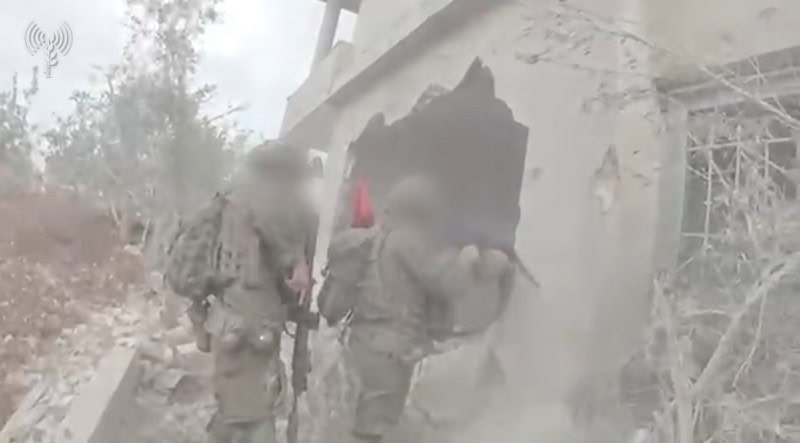
- Israel is likely to maintain its forward military presence and continue strikes in southern Lebanon over the next 1-3 months. Reuters reports Israeli troops occupying a self-declared security zone that includes dozens of Lebanese villages, while reporting based on Ynet describes the IDF shifting towards a forward and offensive defence posture and preparing positions for winter. The scale and duration of the reported deployment partly rely on Israeli military statements and an unnamed source. (Confidence: medium · ASSESSED)
- I&W: Reporting or imagery continues to show Israeli troops in East Zawtar or positions along the reported security-zone line, including the 55th Brigade sector roughly 12 kilometres from the Israeli border. (1-3 months)
- I&W: The IDF announces and implements a withdrawal from East Zawtar and the wider security zone, alongside a new withdrawal arrangement with Lebanese authorities. (1-3 months)
- The US-backed pilot-zone process in southern Lebanon is unlikely to expand over the next 1-3 months. Reuters reports that no further zones had been agreed two months after Israeli troops withdrew from West Zawtar; Israeli forces remain in nearby East Zawtar, and most of the 16 prefabricated houses delivered to West Zawtar remain unoccupied because water and electricity are unavailable. This forecast rests mainly on one Reuters account and a US State Department statement supporting the process. (Confidence: medium · ASSESSED)
- I&W: Lebanese and Israeli authorities announce and begin implementing a second named pilot zone beyond West Zawtar. (1-3 months)
- I&W: No additional pilot zone is announced, and Israeli troops remain in East Zawtar. (1-3 months)
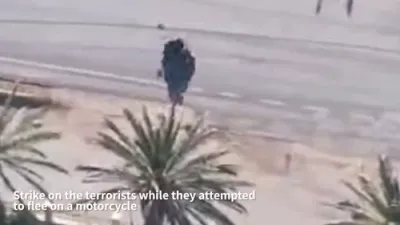
- The likelihood of renewed sustained Hezbollah-Israel hostilities is not responsibly calibrable from the supplied reporting. Naim Qassem's 6 October remarks are presented both as a refusal to disarm while Israeli actions continue and as openness to discuss state control of arms without a commitment to surrender Hezbollah's arsenal. A claim of Hezbollah FPV drone use is low-confidence reporting, not sufficient evidence of a sustained campaign. (Confidence: insufficient · ASSESSED)
- I&W: Two independently corroborated Hezbollah attacks on IDF positions are reported, each followed by a documented Israeli response. (0-14 days)
- I&W: A verified agreement on Hezbollah's weapons is followed by an announced Israeli withdrawal from southern Lebanon. (1-3 months)
- US strikes on Iran before 3 November are unlikely, but the forecast is uncertain. Trump publicly said he would not order strikes before the midterm elections, while major media outlets reported conditional Pentagon plans and Axios cited US and Israeli officials describing CENTCOM preparations for major combat operations. The planning reports rely on unnamed officials and do not establish that Trump has authorised an attack. (Confidence: medium · ASSESSED)
- I&W: Trump publicly rescinds his stated pause or the White House announces authorisation for US strikes on Iran. (0-14 days)
- I&W: Trump reiterates the pause and the Pentagon or CENTCOM publicly denies that imminent combat operations have been ordered. (0-14 days)
Outlook & scenarios
Contained attrition (60%)
Israeli strikes in Gaza continue, and Israel retains its positions in southern Lebanon while carrying out further strikes. The West Zawtar pilot-zone process remains stalled. No sustained Hezbollah campaign is established in reporting.
Expanded Israel-Hezbollah exchanges (25%)
Repeated, corroborated Hezbollah attacks on IDF positions prompt a wider Israeli response in southern Lebanon. Israel's forward posture and the unresolved dispute over Hezbollah's weapons make this a plausible escalation path, but current reporting does not establish that sustained exchanges have begun.
US-Iran shock with regional spillover (15%)
Low-probability, high-impact wildcard: the US authorises strikes on Iran before 3 November despite Trump's public statement. A US attack would likely raise the risk of wider regional escalation while Israeli strikes in Gaza and Lebanon continue.
Recommendations
- For the next 14 days, maintain separate Gaza and southern Lebanon incident logs. Record the date, named locality, reported actor, casualty source, and any IDF statement; keep ministry-reported casualty figures distinct from independently verified incident details.
- Track Israeli positions in East Zawtar and the reported southern Lebanon security zone, including any announced winter positions, troop withdrawals, or new pilot-zone agreements. Treat claims based on unnamed sources as unconfirmed until corroborated.
- Do not assess Hezbollah's current operational tempo from the low-confidence FPV footage alone. Seek independent confirmation of any claimed attack and a documented Israeli response before assessing a sustained campaign.
- Monitor the US-Iran discrepancy through 3 November. Record any change in Trump's public commitment, confirmed authorisation, or official Pentagon and CENTCOM statements, and keep conditional contingency planning separate from evidence of an authorised strike.
Confidence & uncertainty
Overall confidence is medium. BBC and Reuters provide credible reporting on Gaza strikes and Israeli activity in Lebanon, with additional reporting on IDF posture based partly on Ynet and Israeli security sources. Gaza casualty totals are attributed to the Gaza health ministry and are not independently reconciled here. The Iran assessment rests on conflicting public statements and reports citing unnamed officials; the Hezbollah evidence is too limited and contested to support a calibrated forecast.
Intelligence gaps
- [EEI 1.1 · UNCOVERED] Number, type and geolocated coordinates of projectiles (rockets, mortars, anti-tank guided missiles) fired from Lebanon into Israel in the last 24/72 hours, including time-stamped launch and impact locations. Recommended collection: signals/intel
- [EEI 1.2 · UNCOVERED] Satellite or aerial imagery showing movement, concentration, or forward displacement of Hezbollah-associated military assets (armored vehicles, artillery pieces, mobile rocket launchers, logistics convoys) to positions within 0-10 km of the Israel-Lebanon border. Recommended collection: satellite/imagery
- [EEI 1.3 · UNCOVERED] Intercepted or captured Hezbollah command-and-control communications or orders explicitly directing cross-border operations or coordinated strikes with Palestinian groups (time-stamped messages, unit identifiers, orders to fire/move). Recommended collection: signals/intel
- [EEI 1.4 · PARTIAL] Observable changes in Israeli northern-front posture within Israel (numbers and types of reinforcements deployed to northern brigades, activation of reserves, air defense redeployments, evacuation orders or shelter alerts in northern towns), including timestamps and unit IDs where available. Recommended collection: human/intel
- [EEI 2.1 · PARTIAL] Official or corroborated reports of IDF reservist mobilization and unit-level deployment orders (number of reservists called, named brigades/units ordered to deploy, deployment timelines). Recommended collection: open-source/media
- [EEI 2.2 · UNCOVERED] Satellite or ground imagery showing concentrations of IDF heavy equipment (tanks, infantry fighting vehicles, engineering vehicles), staging areas, field hospitals or forward supply dumps within X km of the Gaza border and at known crossing points. Recommended collection: satellite/imagery
- [EEI 2.3 · PARTIAL] Change in strike patterns consistent with pre-ground-attack shaping: sustained high-frequency airstrikes on tunnel networks, command nodes, coastal launch sites, and known insurgent concentrations (strike counts, munition types, locations, times). Recommended collection: open-source/media
- [EEI 2.4 · UNCOVERED] Logistics indicators: verified convoys of fuel/ammunition entering staging areas, establishment of forward logistics or medical bases, or documented requisitioning orders for bulk combat supplies with timestamps and quantities. Recommended collection: human/intel
- [EEI 3.1 · UNCOVERED] Number, participants and content of diplomatic contacts or negotiation sessions in the last 48 hours involving mediators (Egypt, Qatar, US, UN), including any proposed ceasefire text, prisoner/exchange lists, timelines or verification mechanisms. Recommended collection: diplomatic
- [EEI 3.2 · UNCOVERED] Public statements, press releases or verified communiqués from Hamas and other Gaza armed groups specifying acceptance, rejection, or conditions for a ceasefire (explicit conditions such as prisoner release lists, withdrawal terms, lifting of blockades), with timestamps and speaker attribution. Recommended collection: open-source/media
- [EEI 3.3 · UNCOVERED] Humanitarian indicators relevant to ceasefire: establishment and operation of agreed humanitarian corridors/checkpoints, number of aid deliveries admitted, civilian evacuations completed, and NGO/hospital reports of access denials or safe-passage violations. Recommended collection: humanitarian/NGO reports
- [EEI 3.4 · PARTIAL] Operational evidence of a de facto pause: verified sustained reduction (e.g., ≥12 hours) in strikes or launches from either side in specific sectors, supported by strike/impact logs, radar tracks and incident reports. Recommended collection: open-source/media
Cited sources
[1] BBC · 'Every day there is killing': Gazans face Israeli strikes despite ceasefire as peace deal stalls (A) · 8 October 2026 · sha256:b0d7e29ef407 [2] Reuters · Drones, explosions and soldiers in bulldozers: surrounded by Israelis in Lebanon's 'model town' (A) · 8 October 2026 · sha256:9b58308887f6 [3] Foundation for Defense of Democracies (Long War Journal) · IDF shifts southern Lebanon forces toward ‘forward-defense’ posture as troops prepare for winter (C) · 7 October 2026 · sha256:54b7c886de45 [4] ABL.news (ahblicklive.com) · MOTORCYCLE HUNT: Israeli Drone Takes Out Two Hezbollah Fighters Mid-Escape - ABL.news (E) · sha256:f5074c4fdefc [5] Al Jazeera · Is Trump signalling a return to war with Iran after the midterms? (A) · 9 October 2026 · sha256:1ef799caa518
Source content hashes were computed at collection time; the cited text is preserved unmodified for the life of this product.
Red cell review: CONCUR
TLP:CLEAR