TLP:CLEAR · Disclosure is not limited.
Israel-Gaza Escalation: Ceasefire Strikes, Lebanon Tensions and Iran Risk
Time window: Last 7 days · Audience: General analyst · Type: Situation report · DTG: 2026-10-22 13:12Z · Overall confidence: HIGH
BLUF
The Gaza ceasefire has not stopped Israeli strikes, and reporting on Hezbollah activity in Beirut adds to the risk of renewed Israel-Lebanon fighting. US and Israeli plans for strikes on Iran are reported, but there is no supplied evidence of an order to attack; the chance of an Iranian or Hezbollah attack on Israel before the 27 October Israeli election remains unlikely, with low confidence.
Executive summary
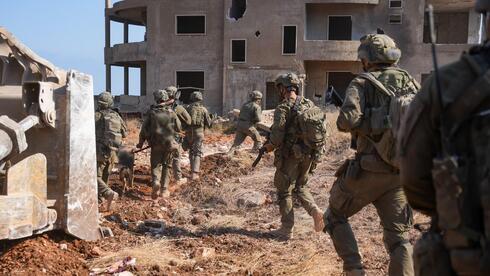
Reporting through 22 October describes near-daily Israeli strikes in Gaza, Israeli control of more than half the territory, and continuing severe humanitarian conditions. The Hamas-run Gaza health authority reports more than 74,000 Palestinian deaths since the war began; UN data cited in the reporting says about 82 per cent of Gaza's structures are damaged. In Lebanon, military talks involving Israel, Lebanon and the US began in Tampa on 21 October, while reporting describes a Hezbollah-linked tunnel found in eastern Beirut and Hezbollah military rebuilding. The New York Times reports US and Israeli plans for renewed strikes on Iran after the US midterm elections. An Israeli Air Force practice sortie reached the Iranian border on 21 October, and the IRGC announced a shift to an offensive and asymmetrical doctrine. These reports heighten concern but do not establish an imminent strike order. A separate Hamas warning of an attack on the scale of 7 October is confirmed as having been conveyed to an Israeli official; reporting also questions Hamas's capacity to carry one out.
Change from previous assessment
Since the 21 October brief, reporting adds a 22 October account of near-daily Israeli strikes in Gaza and a cumulative death toll above 74,000, as well as more specific reports of Hezbollah-linked activity in Beirut, including a tunnel uncovered by the Lebanese Armed Forces. New Iran-related signals include an IRGC announcement of an offensive doctrine, an Israeli Air Force practice sortie to the Iranian border, and reported US-Israeli plans for strikes after the US midterm elections. Hamas has also issued a warning of an attack on the scale of 7 October, while the same reporting questions its capacity to carry one out. These developments increase the number of escalation indicators, but the assessment that an Iranian or Hezbollah attack before the Israeli election is unlikely remains unchanged and low confidence.
Key judgments
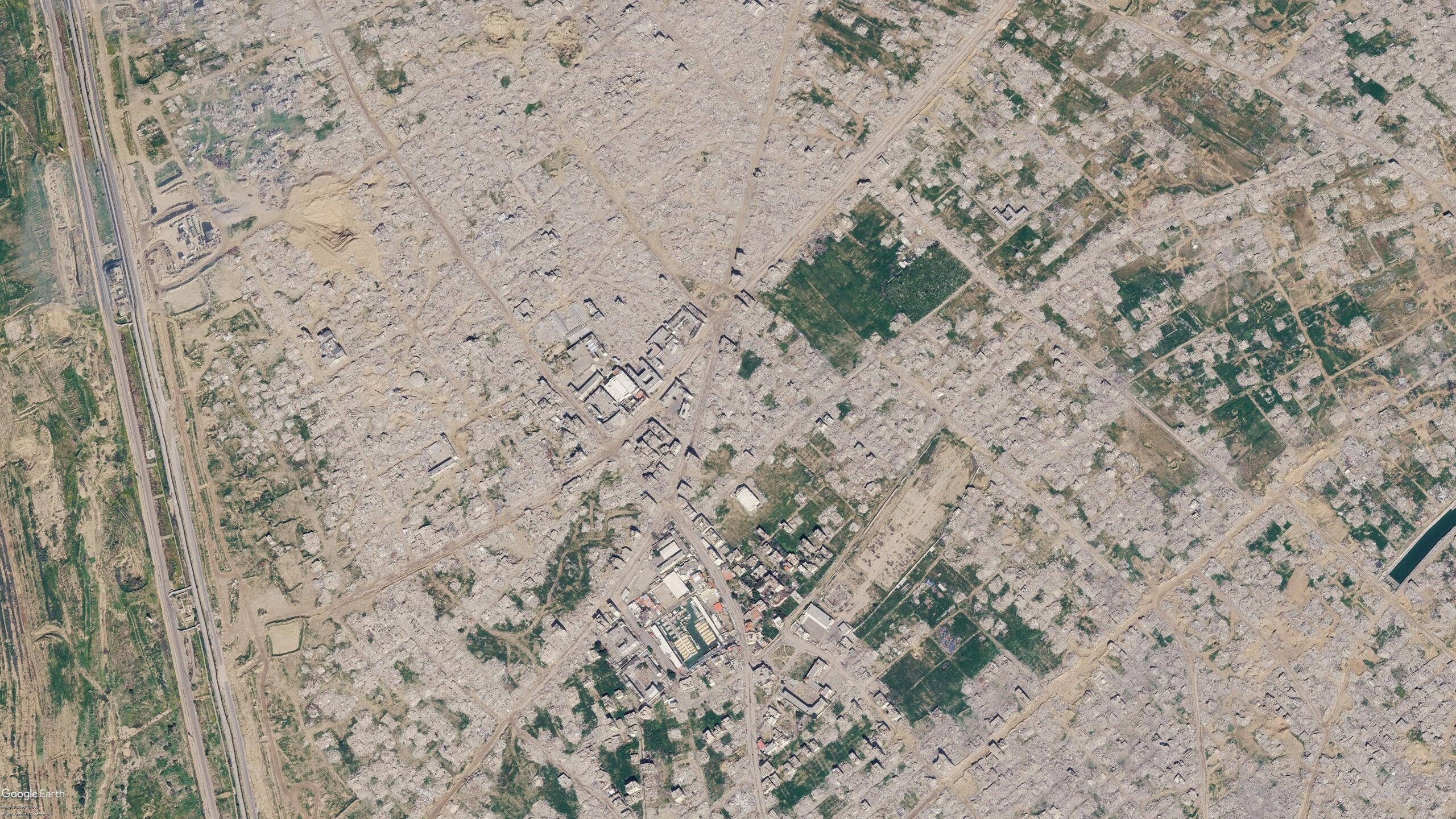
- Very likely, Israeli strikes in Gaza will continue over the next 30 days despite the ceasefire. A report published on 22 October describes near-daily strikes and Israeli control of more than half of Gaza. Bellingcat's September Planet Labs analysis documents demolitions and IDF outposts in Shujaiya, Jabaliya and Bani Suheila, but that imagery predates the current reporting period. NASA FIRMS detected 26 thermal anomalies in Gaza between 21 and 22 October, none classified as high-confidence, so those detections do not independently confirm strikes. (Confidence: medium · ASSESSED)
- I&W: Confirm: major media and Gaza medical authorities report another dated Israeli strike or casualty incident in Gaza, with a named location such as Jabaliya, Shujaiya, Rafah or Tal al-Hawa. (0-14 days)
- I&W: Break: no Gaza strike or gunfire incident is reported for 14 consecutive days, and Israeli authorities announce a halt to strikes. (0-14 days)
- Likely, Israel-Lebanon military friction will persist over the next month, and the Tampa talks will not quickly resolve the dispute over Hezbollah's weapons and infrastructure. Military representatives from Israel, Lebanon and the US began three days of talks on 21 October; Israel has accused the Lebanese Armed Forces of failing to enforce existing security understandings. The Lebanese Armed Forces' discovery of a Hezbollah-linked tunnel in Roueissat el-Jadida provides a separate reported example of military infrastructure in Beirut. Claims of broader Hezbollah rebuilding in Beirut, Tyre and southern Lebanon rely in part on a security official cited in media reporting, so confidence in the scale of that activity is limited. (Confidence: medium · ASSESSED)
- I&W: Confirm: the IDF reports a strike or troop operation in southern Lebanon, or the Lebanese Armed Forces announce discovery of another Hezbollah tunnel or weapons site in Beirut or a southern pilot zone. (0-14 days)
- I&W: Break: Israel, Lebanon and the US announce an agreement that includes verified Lebanese Armed Forces dismantling of Hezbollah sites and an Israeli withdrawal from areas south of the Litani River. (1-3 months)
- An Israeli or US strike on Iran before Israel's 27 October election is unlikely, while US-Israeli contingency planning appears to remain active. The New York Times reported detailed plans for renewed strikes after the US midterm elections, and media reported that dozens of Israeli Air Force jets and refuelling aircraft flew a practice sortie as far as the Iranian border on 21 October. Those reports describe plans and training, not an order to strike. Donald Trump's remarks that action would happen soon and the IRGC's announced offensive doctrine add to the rhetoric, but do not establish a decision to attack. (Confidence: medium · ASSESSED)
- I&W: Confirm: Israel or the US publicly authorises strikes on Iran, or a strike is reported against an Iranian nuclear, energy, missile or drone site. (0-14 days)
- I&W: Break: no strike or public authorisation occurs before the Israeli election on 27 October. (Through 27 October)
- Unlikely, Iran or Hezbollah will deliberately attack Israel before the 27 October election, but confidence is low. Israel Katz warned of possible attacks timed to influence the election, and an Israeli analyst reported debate within Iran's leadership over pre-emptive action. A separate report says there is no concrete intelligence of an Iranian or Hezbollah attack plan. The IDF scenario describing Hezbollah attacks on Israel's home front is conditional on a US or Israeli strike on Iran, not evidence of a current decision by Hezbollah. (Confidence: low · ASSESSED)
- I&W: Confirm: Iranian forces launch a strike at Israel, or Hezbollah claims and carries out a cross-border attack on Israeli forces or the Israeli home front. (Through 27 October)
- I&W: Break: the 27 October election passes without an Iranian or Hezbollah attack, and no specific operational warning is reported. (Through 27 October)
- Unlikely, Hamas can presently carry out an attack on the scale of 7 October 2023, although its warning should not be treated as proof of either capability or intent. Hamas warned Israel of a repeat attack; COGAT confirmed that the threat was conveyed to one of its officials. The original assault killed about 1,200 people and took more than 250 hostages. Experts cited in reporting questioned Hamas's ability to repeat an operation of that scale after three years of war, noting reports of recruits with little experience or military training. This capacity assessment rests on limited expert reporting and is low confidence. (Confidence: low · ASSESSED)
- I&W: Confirm: reliable reporting identifies Hamas assault cells, trained assault teams or coordinated weapons preparations in Israel or the occupied West Bank. (0-3 months)
- I&W: Break: Hamas withdraws the threat and no independently documented attack preparations emerge in Israel or the occupied West Bank. (0-3 months)
- Likely, elevated maritime and energy risk around the Strait of Hormuz will persist over the next month, although the evidence does not tie every shipping incident directly to the Israel-Gaza conflict. UK Maritime Trade Operations reported 32 attacks on ships around the Arabian Peninsula through 21 October, compared with 16 during all of September. Morgan Stanley analysts described increased attacks around the Strait while judging oil flows resilient; Brent crude rose above $110 a barrel on 22 October. Estimates of Persian Gulf flows differ by 6.6 million barrels a day between Kpler and Vortexa, and most tankers have their tracking signals off, limiting confidence in the precise flow picture. (Confidence: medium · ASSESSED)
- I&W: Confirm: UK Maritime Trade Operations records another attack on a merchant ship around the Arabian Peninsula or Strait of Hormuz. (0-14 days)
- I&W: Break: UK Maritime Trade Operations records no new ship attacks for 14 consecutive days and Brent remains below $110 a barrel during that period. (0-14 days)
Outlook & scenarios
Continued Gaza strikes and contained regional tension (55%)
This is the most likely path over the next month. Israeli strikes continue in Gaza, while the Tampa talks do not resolve the dispute over Hezbollah's weapons and Israeli military presence. Tehran avoids a direct attack on Israel before the Israeli election, and reports of contingency planning do not become an order to strike.
Iran-Israel exchange draws in Hezbollah (25%)
A US or Israeli strike on Iran is followed by Iranian retaliation and Hezbollah attacks on Israeli home-front targets. The IDF then resumes fighting in Lebanon. This follows a scenario presented to IDF Chief of Staff Lt.-Gen. Eyal Zamir, but depends on an attack on Iran that is not currently reported as ordered.
Negotiated containment (15%)
Israel, Lebanon and the US reach practical arrangements on the two southern Lebanon pilot zones, and the Lebanese Armed Forces take visible action against Hezbollah sites. Washington and Tehran also negotiate around Iran's seven-day proposal to restore Hormuz shipping. Gaza strikes decline, though the ceasefire remains fragile.
Wildcard: pre-emptive attack and wider regional conflict (5%)
A pre-emptive Iranian attack or an Israeli or US strike on Iran triggers Hezbollah attacks on Israel and raises the risk to US bases and shipping around the Strait of Hormuz. This is a low-probability, high-impact path. Reporting of Iranian leadership debate is uncorroborated, and the IDF's Hezbollah scenario is conditional.
Recommendations
- Maintain a dated Gaza incident log that separates reported strikes, medical casualty reports and satellite observations. Do not treat the 21-22 October NASA thermal anomalies as confirmed strikes or September Planet Labs imagery as evidence of activity this week.
- Track Israeli and US statements, deployments and authorisations separately. Distinguish reported contingency plans, the 21 October Israeli Air Force practice sortie and political rhetoric from evidence of an operational order against Iran.
- Follow official readouts from the Tampa talks and Lebanese Armed Forces reporting on the two southern Lebanon pilot zones. Verify claims about Hezbollah infrastructure in Beirut, Tyre and south of the Litani before assessing the scale of rebuilding.
- Check UK Maritime Trade Operations incident reports against shipping and market data. Preserve the Kpler and Vortexa flow estimates as separate figures, and flag the tracking limitations rather than selecting one estimate.
- Treat the Hamas warning as a threat report, not a measure of operational capacity. Seek independently documented evidence of trained assault units, weapons preparations or attack planning before raising the assessment of near-term capability.
Confidence & uncertainty
High confidence applies to the broad situation picture: major-media reporting, official statements, UN data and satellite observations support the assessment of continued Gaza violence, humanitarian damage, Lebanon tensions and heightened Iran-related rhetoric. Confidence in forecasts is lower. Reports about Iranian pre-emptive debate and Hezbollah rebuilding rely partly on single-source accounts, Gaza imagery is not current, and shipping-flow estimates diverge materially.
Alternative analysis (red cell)
A lower-capability interpretation of Hamas is not established by the available evidence. Claim fa70cc1b-d698-41e9-9d8a-e43bd6de235f reports expert doubts and inexperienced recruits, but claims, and d495f819-5105-4225-a995-c5fbdacea728 show a specific warning conveyed through an official channel. The evidence therefore supports continued uncertainty over whether Hamas retains the capability for a large attack, rather than a directional judgment that such an attack is unlikely.
Intelligence gaps
- [EEI 1.1 · UNCOVERED] Number, type and geolocated coordinates of projectiles (rockets, mortars, anti-tank guided missiles) fired from Lebanon into Israel in the last 24/72 hours, including time-stamped launch and impact locations. Recommended collection: signals/intel
- [EEI 1.2 · PARTIAL] Satellite or aerial imagery showing movement, concentration, or forward displacement of Hezbollah-associated military assets (armored vehicles, artillery pieces, mobile rocket launchers, logistics convoys) to positions within 0-10 km of the Israel-Lebanon border. Recommended collection: satellite/imagery
- [EEI 1.3 · UNCOVERED] Intercepted or captured Hezbollah command-and-control communications or orders explicitly directing cross-border operations or coordinated strikes with Palestinian groups (time-stamped messages, unit identifiers, orders to fire/move). Recommended collection: signals/intel
- [EEI 1.4 · UNCOVERED] Observable changes in Israeli northern-front posture within Israel (numbers and types of reinforcements deployed to northern brigades, activation of reserves, air defense redeployments, evacuation orders or shelter alerts in northern towns), including timestamps and unit IDs where available. Recommended collection: human/intel
- [EEI 2.1 · UNCOVERED] Official or corroborated reports of IDF reservist mobilization and unit-level deployment orders (number of reservists called, named brigades/units ordered to deploy, deployment timelines). Recommended collection: open-source/media
- [EEI 2.2 · PARTIAL] Satellite or ground imagery showing concentrations of IDF heavy equipment (tanks, infantry fighting vehicles, engineering vehicles), staging areas, field hospitals or forward supply dumps within X km of the Gaza border and at known crossing points. Recommended collection: satellite/imagery
- [EEI 2.3 · PARTIAL] Change in strike patterns consistent with pre-ground-attack shaping: sustained high-frequency airstrikes on tunnel networks, command nodes, coastal launch sites, and known insurgent concentrations (strike counts, munition types, locations, times). Recommended collection: open-source/media
- [EEI 2.4 · UNCOVERED] Logistics indicators: verified convoys of fuel/ammunition entering staging areas, establishment of forward logistics or medical bases, or documented requisitioning orders for bulk combat supplies with timestamps and quantities. Recommended collection: human/intel
- [EEI 3.1 · PARTIAL] Number, participants and content of diplomatic contacts or negotiation sessions in the last 48 hours involving mediators (Egypt, Qatar, US, UN), including any proposed ceasefire text, prisoner/exchange lists, timelines or verification mechanisms. Recommended collection: diplomatic
- [EEI 3.2 · UNCOVERED] Public statements, press releases or verified communiqués from Hamas and other Gaza armed groups specifying acceptance, rejection, or conditions for a ceasefire (explicit conditions such as prisoner release lists, withdrawal terms, lifting of blockades), with timestamps and speaker attribution. Recommended collection: open-source/media
- [EEI 3.3 · PARTIAL] Humanitarian indicators relevant to ceasefire: establishment and operation of agreed humanitarian corridors/checkpoints, number of aid deliveries admitted, civilian evacuations completed, and NGO/hospital reports of access denials or safe-passage violations. Recommended collection: humanitarian/NGO reports
- [EEI 3.4 · PARTIAL] Operational evidence of a de facto pause: verified sustained reduction (e.g., ≥12 hours) in strikes or launches from either side in specific sectors, supported by strike/impact logs, radar tracks and incident reports. Recommended collection: open-source/media
Red cell review: PARTIAL DISSENT
TLP:CLEAR