TLP:CLEAR · Disclosure is not limited.
Israel-Gaza Escalation: Gaza Strikes, Hezbollah Rebuilding and Election Uncertainty
Time window: Last 7 days · Audience: General analyst · Type: Situation report · DTG: 2026-10-27 13:24Z · Overall confidence: HIGH
BLUF
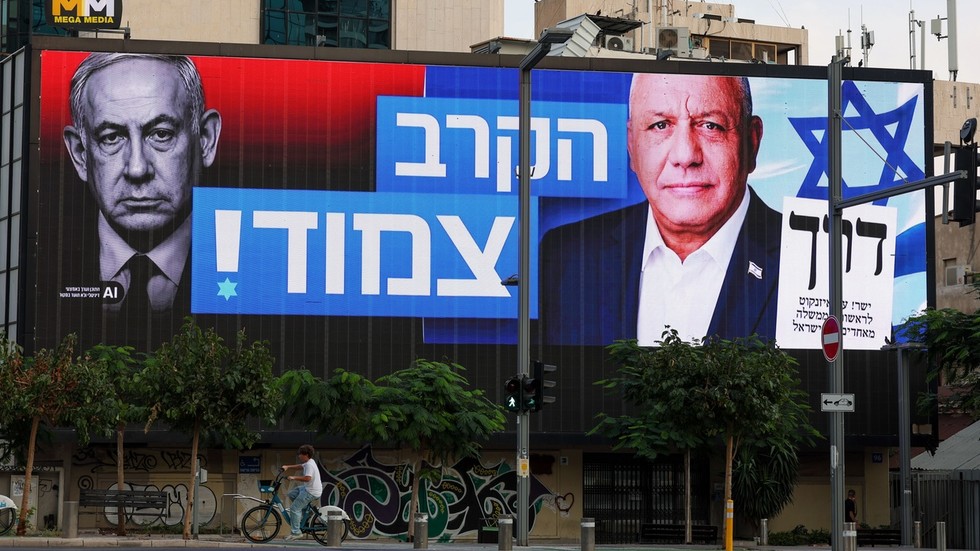
Israel's 27 October election is taking place amid projections that neither Benjamin Netanyahu's nor Gadi Eisenkot's bloc will secure a majority. Reported near-daily Israeli strikes in Gaza continue during the ceasefire, while the latest casualty accounts conflict; reports of Hezbollah rebuilding in Lebanon raise concern about renewed exchanges, but do not establish that a new exchange has occurred.
Executive summary
Reporting through 27 October describes near-daily Israeli strikes in Gaza during the ceasefire. Local accounts report four Palestinians killed and 14 injured on Monday, while a Nasser Hospital source described three bodies after an airstrike and gunfire near Khan Younis; a social-media post instead claims 14 deaths. NASA FIRMS recorded six thermal anomalies over Gaza on 26-27 October, none high confidence, and the data do not identify their cause. In Lebanon, Lebanese security sources cited by Reuters say Hezbollah is rebuilding its military capacity with Iranian funding. Hezbollah-linked sources also report that Tehran does not want Hezbollah to join a future war, while warning of a response if Israel crosses existing lines. Israel's election is under way, but polling projections do not give either main bloc the 61 seats needed for a majority. Reports about a possible Israeli operation against Iran conflict on authorisation and timing.
Change from previous assessment
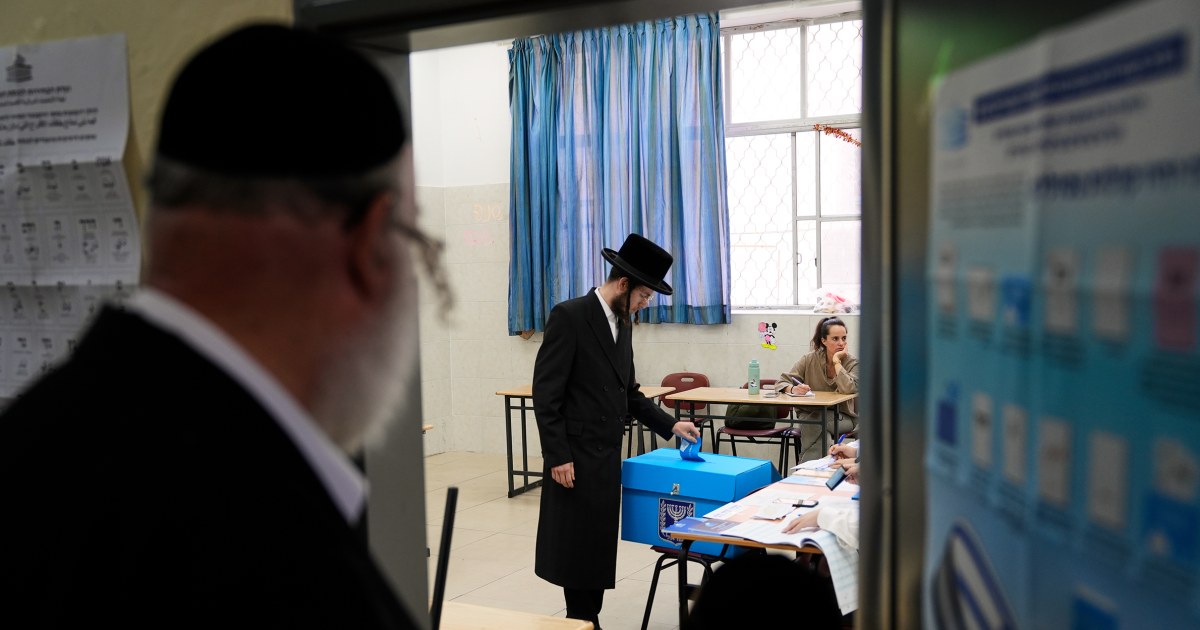
Since the prior brief on 27 October, new election reporting adds an interim turnout figure of 31.5 per cent while projections still leave both main blocs short of a majority. New Reuters-sourced reporting says Hezbollah is rebuilding explosives, drones and command structures with Iranian funding; this raises concern about Lebanon's front but does not document a new Israel-Hezbollah exchange during the reporting window. The Gaza casualty discrepancy remains unresolved, and current NASA FIRMS reporting records six thermal anomalies, none high confidence, without attributing their cause. Reporting on a possible Israeli operation against Iran remains conflicted and does not establish that a strike has been authorised or carried out.
Key judgments
- Very likely Israeli forces continued near-daily strikes in Gaza during the ceasefire through 27 October. Local reporting says Monday's attacks killed four Palestinians, including a seven-year-old girl, and injured 14; a Nasser Hospital source separately described three bodies after an airstrike and gunfire in Bir 19, west of Khan Younis. A social-media post instead claims 14 people were killed, leaving the Monday death toll disputed and the local accounts potentially overlapping. NASA FIRMS recorded six thermal anomalies over Gaza on 26-27 October, none high confidence; these detections show heat, not its cause. The broad strike reporting appears in major media, but the casualty details remain unreconciled. (Confidence: medium · REPORTED)
- I&W: A dated report from Nasser Hospital or another Gaza hospital independently confirms deaths from a new Israeli strike, with the location and casualty count specified. (0-14 days)
- I&W: The Israeli military announces a halt to strikes and local hospital reporting records no new strike casualties for two consecutive days. (0-14 days)
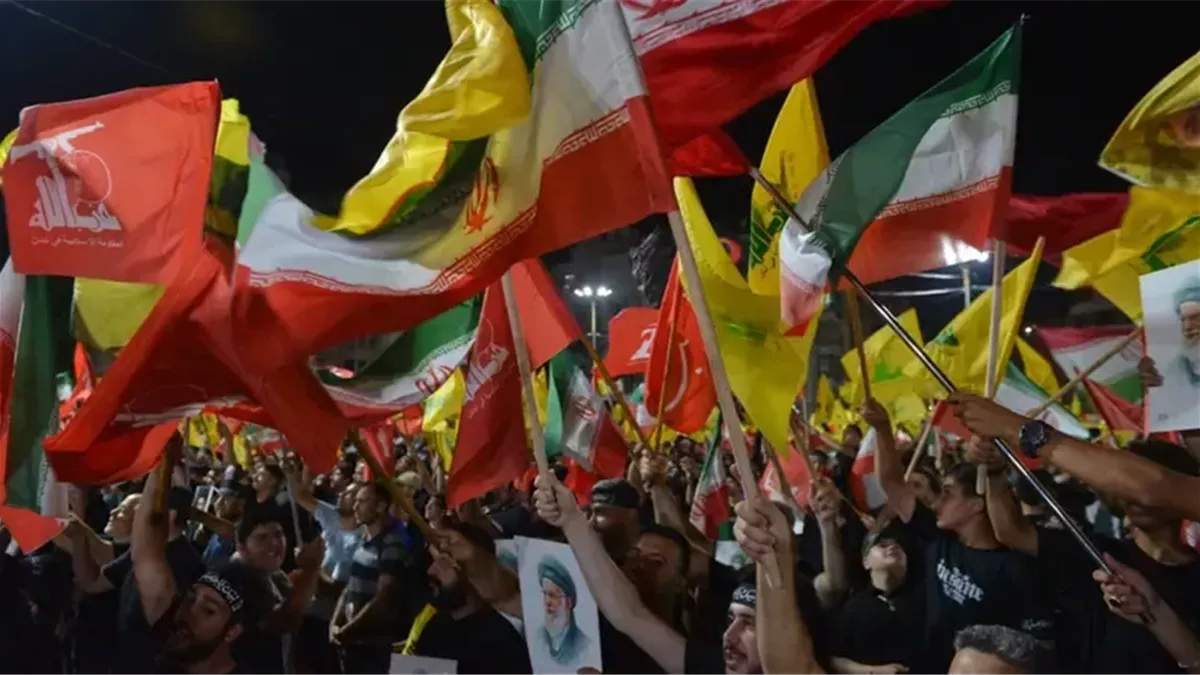
- Likely Hezbollah has used the lull since June 2026 to rebuild military capacity, including explosives, drones and command structures, with Lebanese security sources cited by Reuters reporting tens of millions of dollars in Iranian funding. Hezbollah rejects the claim that its command-and-control system had collapsed. The rebuilding and funding accounts rely chiefly on anonymous sources in Reuters reporting, so independent public verification is limited. Separate Hezbollah-linked reporting says Tehran does not want Hezbollah to join a future war, while warning that Hezbollah would respond if Israel crosses existing lines. (Confidence: medium · REPORTED)
- I&W: Lebanese authorities disclose a new seizure of Hezbollah explosives or drones intended for use against Israel. (0-3 months)
- I&W: Reuters withdraws or materially corrects its reporting on Hezbollah's military rebuilding or Iranian funding. (0-3 months)
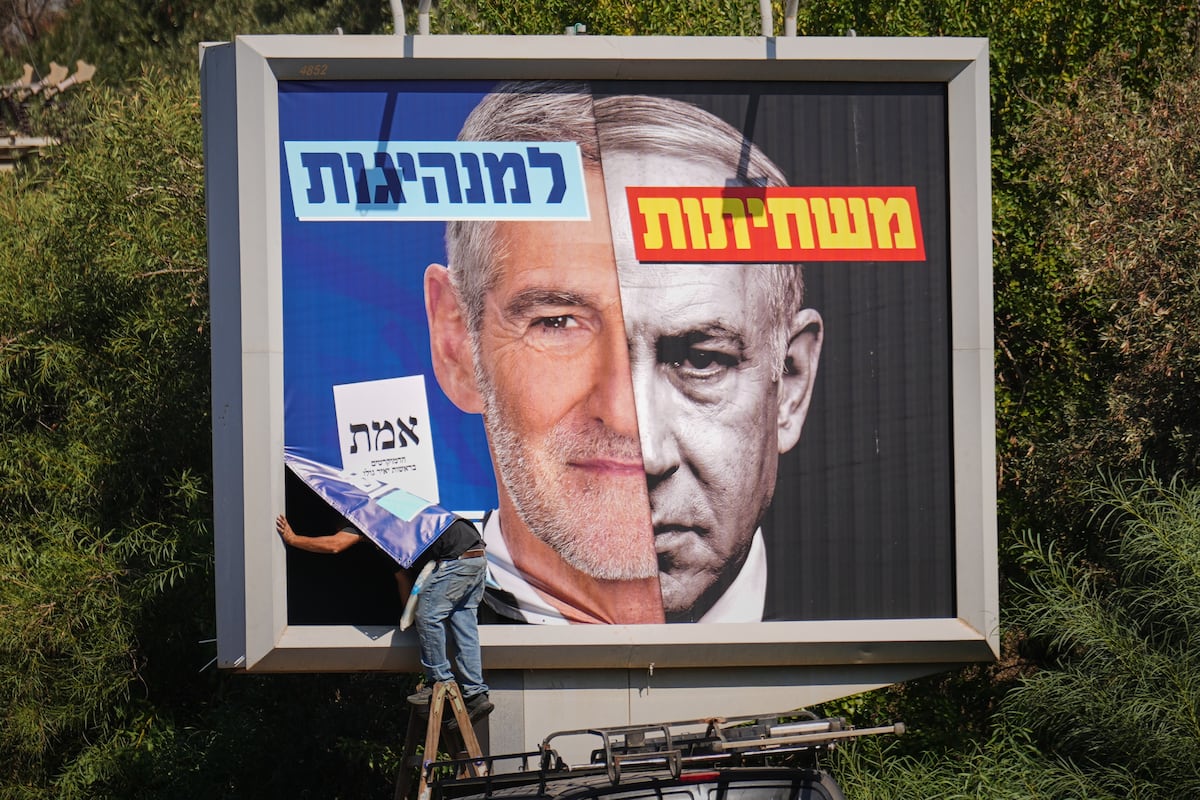
- Likely Israel will enter coalition bargaining rather than produce an immediate single-bloc government after the 27 October election. Polling reported before the vote projects both Netanyahu's bloc and Eisenkot's bloc below the 61 seats needed for a Knesset majority. The 31.5 per cent turnout figure is an interim count, and the projections are not final results. (Confidence: medium · ASSESSED)
- I&W: Published final counts show either Netanyahu's bloc or Eisenkot's bloc with at least 61 Knesset seats. (0-14 days)
- I&W: The two blocs remain short of 61 seats and publicly begin negotiations with potential coalition partners. (0-14 days)
- Unlikely the supplied reporting establishes that Israel has authorised an imminent strike on Iran. Channel 12 reported a government-approved operation and a confrontation between Benjamin Netanyahu and IDF Chief of Staff Eyal Zamir; CNN separately reported that Donald Trump refused Netanyahu's request for new US strikes, which Netanyahu denied. A think-tank account refers to plans for renewed Israeli strikes after the election, and Trump publicly raised the prospect of renewed strikes. The reports conflict on timing and authority, and none documents an operation being carried out. The authorisation question rests on contested reporting, so confidence is low. (Confidence: low · ASSESSED)
- I&W: The Israeli government or IDF publicly confirms that an operation against Iran has been authorised. (0-14 days)
- I&W: The Israeli government or IDF explicitly states that no operation has been authorised, with no strike reported during the period. (0-14 days)
- Likely Israel's agreement to the Board of Peace's phased Gaza disarmament plan and International Stabilization Force deployment will remain absent during the immediate post-election period. A think-tank account reports that Israel has refused the plan; the refusal is not independently corroborated in the supplied reporting. Coalition uncertainty adds a further reason to treat the forecast cautiously. (Confidence: low · ASSESSED)
- I&W: The Israeli government formally endorses the phased disarmament plan and International Stabilization Force deployment. (0-14 days)
- I&W: An Israeli government statement or coalition agreement explicitly maintains refusal of the plan or force deployment. (1-3 months)
Outlook & scenarios
Fragile Gaza ceasefire and prolonged Israeli coalition bargaining (55%)
Over the next one to three months, Israeli forces continue reported strikes in Gaza, while casualty accounts remain difficult to reconcile. Netanyahu's and Eisenkot's blocs bargain over government formation, and agreement on the Gaza disarmament plan and stabilisation force remains pending. No new Israel-Hezbollah exchange is reported in this scenario.
Renewed Israel-Hezbollah exchange in southern Lebanon (25%)
An Israeli action that Hezbollah describes as crossing existing lines prompts a response from Hezbollah, whose reported rebuilding has focused on explosives and drones. Israeli checkpoints and positions in southern Lebanon remain part of the immediate context. Iran's reported preference that Hezbollah stay out of a future war restrains, but does not remove, the risk of a renewed exchange.
Iran strike escalation, low probability and high impact (10%)
An Israeli or US strike on Iran triggers a wider confrontation. Iran's reported preparations include plans to target undersea Gulf internet cables, while Hezbollah-linked sources say Tehran does not want Hezbollah to enter a future war. The scenario would test that restraint and expose the region to a broader escalation.
Recommendations
- Track Israel's final election count and any public coalition negotiations separately from pre-election polling. Do not treat seat projections or interim turnout as final results.
- Seek independent confirmation of the Gaza casualty reports from Nasser Hospital and other local medical reporting. Keep the four-killed, 14-injured account separate from the social-media claim of 14 deaths until reconciled.
- Record NASA FIRMS detections as thermal observations only. Do not use them to attribute a strike, identify an actor or confirm casualties.
- Monitor for publicly reported Lebanese seizures of Hezbollah explosives or drones, Hezbollah statements about Israeli actions in southern Lebanon, and Israeli military activity at its reported positions.
- Distinguish reports of a proposed or approved operation against Iran from confirmation of an executed strike. Check for direct Israeli government or IDF statements and separate US statements before revising the assessment.
Confidence & uncertainty
Overall confidence is high for the broad situation picture: major media reporting corroborates the Israeli election and polling context, an official electoral body supplied the interim turnout figure, and NASA FIRMS provides direct thermal observations. The principal uncertainties are narrower but material: Gaza casualty reports conflict, Hezbollah rebuilding claims rely heavily on anonymous sources reported by one outlet, and accounts of Israeli plans for Iran conflict on timing and authorisation. The headline confidence reflects confidence in the broad developments, not in every individual allegation.
Alternative analysis (red cell)
Pre-election polling in claims 361c6b5e-5b07-4838-9765-cffe8beefea1 and 19036062-3579-4979-9171-62fe25480bf6 makes coalition bargaining plausible, but it does not establish the post-election outcome or rule out a governing majority. Similarly, claim 5ef682ae-a226-40fa-8561-2c0d2ed262ff provides only an uncorroborated account of refusal, while claims 361c6b5e-5b07-4838-9765-cffe8beefea1 and 19036062-3579-4979-9171-62fe25480bf6 show uncertainty rather than a specific policy trajectory. The supplied evidence therefore supports uncertainty about both outcomes more directly than either forecast.
Intelligence gaps
- [EEI 1.1 · UNCOVERED] Number, type and geolocated coordinates of projectiles (rockets, mortars, anti-tank guided missiles) fired from Lebanon into Israel in the last 24/72 hours, including time-stamped launch and impact locations. Recommended collection: signals/intel
- [EEI 1.2 · UNCOVERED] Satellite or aerial imagery showing movement, concentration, or forward displacement of Hezbollah-associated military assets (armored vehicles, artillery pieces, mobile rocket launchers, logistics convoys) to positions within 0-10 km of the Israel-Lebanon border. Recommended collection: satellite/imagery
- [EEI 1.3 · UNCOVERED] Intercepted or captured Hezbollah command-and-control communications or orders explicitly directing cross-border operations or coordinated strikes with Palestinian groups (time-stamped messages, unit identifiers, orders to fire/move). Recommended collection: signals/intel
- [EEI 1.4 · UNCOVERED] Observable changes in Israeli northern-front posture within Israel (numbers and types of reinforcements deployed to northern brigades, activation of reserves, air defense redeployments, evacuation orders or shelter alerts in northern towns), including timestamps and unit IDs where available. Recommended collection: human/intel
- [EEI 2.1 · UNCOVERED] Official or corroborated reports of IDF reservist mobilization and unit-level deployment orders (number of reservists called, named brigades/units ordered to deploy, deployment timelines). Recommended collection: open-source/media
- [EEI 2.2 · UNCOVERED] Satellite or ground imagery showing concentrations of IDF heavy equipment (tanks, infantry fighting vehicles, engineering vehicles), staging areas, field hospitals or forward supply dumps within X km of the Gaza border and at known crossing points. Recommended collection: satellite/imagery
- [EEI 2.3 · PARTIAL] Change in strike patterns consistent with pre-ground-attack shaping: sustained high-frequency airstrikes on tunnel networks, command nodes, coastal launch sites, and known insurgent concentrations (strike counts, munition types, locations, times). Recommended collection: open-source/media
- [EEI 2.4 · UNCOVERED] Logistics indicators: verified convoys of fuel/ammunition entering staging areas, establishment of forward logistics or medical bases, or documented requisitioning orders for bulk combat supplies with timestamps and quantities. Recommended collection: human/intel
- [EEI 3.1 · PARTIAL] Number, participants and content of diplomatic contacts or negotiation sessions in the last 48 hours involving mediators (Egypt, Qatar, US, UN), including any proposed ceasefire text, prisoner/exchange lists, timelines or verification mechanisms. Recommended collection: diplomatic
- [EEI 3.2 · UNCOVERED] Public statements, press releases or verified communiqués from Hamas and other Gaza armed groups specifying acceptance, rejection, or conditions for a ceasefire (explicit conditions such as prisoner release lists, withdrawal terms, lifting of blockades), with timestamps and speaker attribution. Recommended collection: open-source/media
- [EEI 3.3 · UNCOVERED] Humanitarian indicators relevant to ceasefire: establishment and operation of agreed humanitarian corridors/checkpoints, number of aid deliveries admitted, civilian evacuations completed, and NGO/hospital reports of access denials or safe-passage violations. Recommended collection: humanitarian/NGO reports
- [EEI 3.4 · PARTIAL] Operational evidence of a de facto pause: verified sustained reduction (e.g., ≥12 hours) in strikes or launches from either side in specific sectors, supported by strike/impact logs, radar tracks and incident reports. Recommended collection: open-source/media
Red cell review: PARTIAL DISSENT
TLP:CLEAR