TLP:CLEAR · Disclosure is not limited.
Israel-Gaza Escalation: Gaza Strikes, Humanitarian Strain and Lebanon Risk
Time window: Last 7 days · Audience: General analyst · Type: Situation report · DTG: 2026-09-22 13:11Z · Overall confidence: HIGH
BLUF
Very likely Israeli military activity will continue to render the Gaza ceasefire operationally ineffective over the next 0-14 days, while humanitarian pressure in Gaza is likely to worsen over 1-3 months. Israeli-Hezbollah tension in southern Lebanon is likely to remain fragile, but the current evidence is thinner and relies mainly on Israeli military reporting.
Executive summary
As of 22 September, the Gaza ceasefire remains ineffective in practice. The IDF reported 14 violations between 4 and 15 September, while major-media reporting described Israeli strikes in Gaza City and a 19 September drone strike that killed the son of Gaza's Health Ministry director-general. Humanitarian conditions remain severe, with nearly 84 per cent of Gaza's population living in overcrowded displacement sites or damaged shelters, restricted medical evacuations and widespread loss of livelihoods. In southern Lebanon, Israeli reporting of Hezbollah rockets, a launcher and tunnel demolitions indicates continued tension around Mount Dov and the Ali al-Taher ridge, but the current run lacks independent corroboration. The 27 October Israeli election remains the main reported constraint on Gaza roadmap implementation.
Change from previous assessment
Compared with the 21 September prior brief, the core assessments on Gaza ceasefire erosion, worsening humanitarian pressure and limited roadmap implementation remain unchanged. New reporting strengthens the Gaza assessment through the 16 September Gaza City strike and building collapse, the 17 September medical evacuation restriction, the 19 September drone strike and the 22 September livelihood reporting. Confidence in the southern Lebanon judgment is lowered from medium to low because the current run provides only Israeli-attributed reports of Hezbollah rockets, a launcher and tunnels, without independent corroboration. A wider Red Sea spillover line is added as a scenario, not as a core judgment, because the available claims do not establish a direct Gaza-Lebanon link.
Key judgments
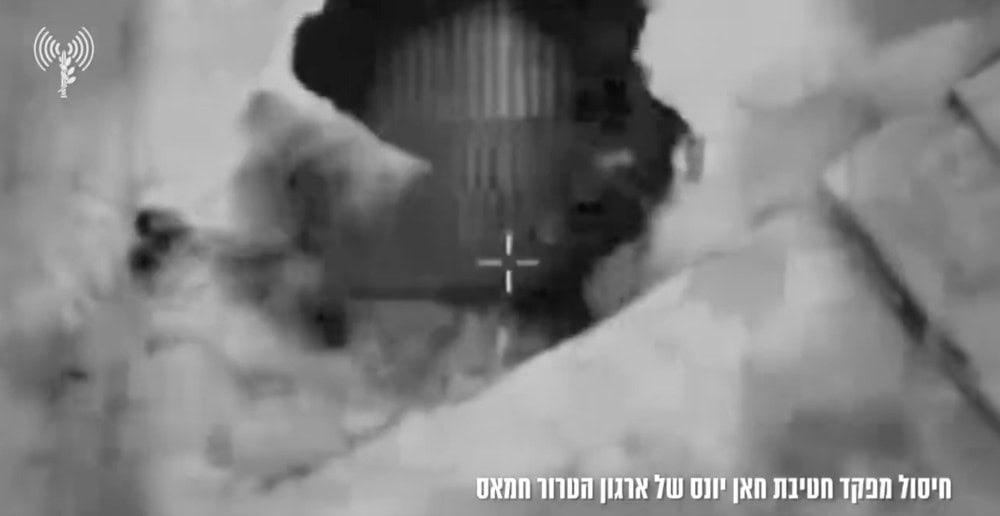
- Very likely Israeli military activity will continue to render the Gaza ceasefire operationally ineffective over the next 0-14 days. The IDF reported 14 ceasefire violations between 4 and 15 September. Major-media reporting also recorded an Israeli double-tap strike in Gaza City on 16 September that killed two people, including a 15-year-old boy, and a 19 September Israeli drone strike that killed the eldest son of Gaza's Health Ministry director-general. A major-media account reported at least 1,381 people killed and 4,757 wounded in Gaza since the ceasefire, but that casualty baseline rests on one account and remains less secure than the evidence of continued violence. (Confidence: high · ASSESSED)
- I&W: Confirm: the IDF reports another ceasefire violation, or major media documents an Israeli airstrike in Gaza City, northern Gaza or Khan Younis. (0-14 days)
- I&W: Break: a continuous 14-day period passes without an IDF-reported violation or major-media reporting of Israeli strikes in Gaza. (0-14 days)
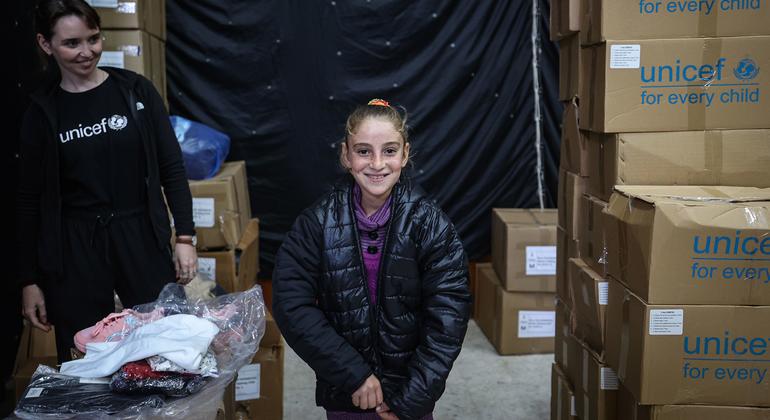
- Likely humanitarian pressure in Gaza will worsen over the next 1-3 months. Nearly 84 per cent of Gaza's population, more than 1.76 million people, reportedly live in overcrowded displacement sites or damaged shelters. More than 80 per cent of people in Gaza have no job, while cooking fuel and firewood costs can exceed food costs. Israeli authorities reduced a medical evacuation convoy from 136 patients and family members to 61 on 17 September. An OCHA allocation of $2 million for health-facility power provides limited mitigation but does not demonstrate reduced exposure to the underlying risks. Reports of a bomb-damaged building collapse that killed 21 people place the incident on 16, 17 or 18 September, so the date is unresolved even though the humanitarian trend is consistent. (Confidence: high · ASSESSED)
- I&W: Confirm: Israeli authorities again restrict a medical evacuation convoy from Gaza, or the number of permitted patients and family members remains below 136. (0-14 days)
- I&W: Break: a subsequent convoy permits at least 136 patients and family members to reach Egypt, while health-facility power and cooking-fuel access improve without new reported restrictions. (1-3 months)
- Likely implementation of the Gaza roadmap will remain limited through Israel's 27 October election. Roughly 16,500 of 283,000 Palestinian police applicants have passed Israeli security vetting, but Israel has not permitted them to leave Gaza for training in Egypt. Jared Kushner attributed the implementation impasse to Israeli politics, while an unnamed Board of Peace official said the panel did not expect to regain meaningful leverage over Israel until after the election. The blockage is directly reported, but the political explanation and post-election forecast rely partly on single-source and unnamed-official reporting. (Confidence: medium · ASSESSED)
- I&W: Confirm: Israel continues to prevent vetted Palestinian police trainees from leaving Gaza for training in Egypt after the 27 October election. (0-3 months)
- I&W: Break: Israel authorises the departure of the vetted trainees and the Board of Peace publicly resumes implementation measures before or immediately after 27 October. (0-3 months)
- Likely Israeli-Hezbollah military tension will remain fragile in southern Lebanon over the next 0-14 days, but confidence is low because the current evidence is thin and lacks independent corroboration. The IDF reported finding Hezbollah rockets and a launcher in the Mount Dov area, while the Israeli military announced the demolition of Hezbollah tunnels beneath the Ali al-Taher ridge. France, Lebanon and Jordan held talks on Lebanon's security needs, but the talks do not establish a reduction in military activity. (Confidence: low · ASSESSED)
- I&W: Confirm: the IDF or Israeli military reports another Hezbollah rocket or launcher finding, tunnel demolition or related operation around Mount Dov or the Ali al-Taher ridge. (0-14 days)
- I&W: Break: 14 consecutive days pass without a new Israeli operation or weapons finding in the cited areas, alongside publicly reported implementation of the Paris security dialogue. (0-14 days)
Outlook & scenarios
Continued Gaza violence with localised Lebanon tension (70%)
Likely baseline. Israeli strikes and reported ceasefire violations continue in northern Gaza, Gaza City and Khan Younis. Humanitarian conditions deteriorate through restricted medical access, displacement and loss of livelihoods. Israeli-Hezbollah tension remains concentrated around Mount Dov and the Ali al-Taher ridge, without a confirmed wider Lebanon front.
Partial Gaza roadmap implementation after the election (25%)
Unlikely before 27 October but plausible afterwards. Israel permits vetted Palestinian police trainees to travel from Gaza to Egypt, and the Board of Peace regains some leverage. Israeli military activity declines enough to support limited implementation, while humanitarian pressure remains high because displacement and economic damage persist.
Lebanon escalation wildcard (15%)
Very unlikely on current evidence, but high-impact. A confirmed Hezbollah rocket or launcher incident near Mount Dov or the Ali al-Taher ridge triggers Israeli operations beyond the current pattern. The resulting pressure would weaken the Gaza ceasefire environment and strain the security dialogue involving France, Lebanon and Jordan.
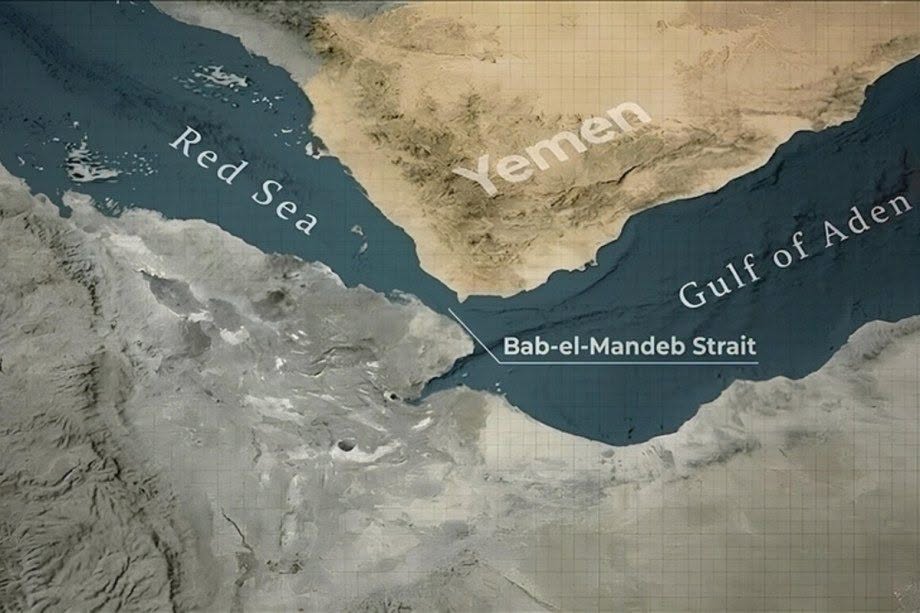
Wider Red Sea spillover without a direct Gaza-Lebanon link (25%)
Likely Houthi attacks on Saudi Arabia and Red Sea shipping continue, prompting additional defensive requests from Saudi Arabia, France, the UK and the EU. Kaja Kallas continues pressing for more Operation Aspides assets. This scenario increases regional military and economic pressure but does not by itself establish a direct connection to Gaza or southern Lebanon.
Recommendations
- Maintain a separate Gaza incident baseline that distinguishes IDF-reported ceasefire violations from major-media accounts of casualties and strikes. Record the 16, 17 and 18 September building-collapse dates as unresolved rather than treating them as three confirmed incidents.
- Prioritise collection on three Gaza indicators: new IDF-reported violations, medical evacuation approvals compared with the previous limit of 61 people, and access to fuel and power for health facilities and communal ovens.
- Use 27 October as the principal collection and assessment date for Gaza roadmap implementation. Seek direct confirmation of whether Israel permits the 16,500 vetted Palestinian police trainees to leave Gaza for training in Egypt.
- Seek independent confirmation of the IDF and Israeli military reports concerning Hezbollah rockets and a launcher near Mount Dov and tunnel demolitions beneath the Ali al-Taher ridge. Do not treat these reports alone as confirmation of current Hezbollah operational activity.
- Track Red Sea developments as a separate regional warning line. Monitor Houthi attacks on Saudi Arabia and shipping, Saudi requests for support, EU decisions on Operation Aspides and any change in the defensive scope of UK or French assistance.
Confidence & uncertainty
Overall confidence is high because the central Gaza judgments draw on repeated reporting from the IDF, major media, UN and UNICEF-linked reporting, OCHA and the ICRC. The evidence converges on continued Israeli military activity, severe displacement and humanitarian strain, even though exact casualty figures and the date of one building collapse remain disputed. Confidence is lower for the Lebanon judgment because the current claims are mainly Israeli military reporting without independent corroboration, and for the Gaza roadmap forecast because parts of the political assessment rely on an unnamed Board of Peace official.
Intelligence gaps
- [EEI 1.1 · PARTIAL] Number, type and geolocated coordinates of projectiles (rockets, mortars, anti-tank guided missiles) fired from Lebanon into Israel in the last 24/72 hours, including time-stamped launch and impact locations. Recommended collection: signals/intel
- [EEI 1.2 · PARTIAL] Satellite or aerial imagery showing movement, concentration, or forward displacement of Hezbollah-associated military assets (armored vehicles, artillery pieces, mobile rocket launchers, logistics convoys) to positions within 0-10 km of the Israel-Lebanon border. Recommended collection: satellite/imagery
- [EEI 1.3 · UNCOVERED] Intercepted or captured Hezbollah command-and-control communications or orders explicitly directing cross-border operations or coordinated strikes with Palestinian groups (time-stamped messages, unit identifiers, orders to fire/move). Recommended collection: signals/intel
- [EEI 1.4 · UNCOVERED] Observable changes in Israeli northern-front posture within Israel (numbers and types of reinforcements deployed to northern brigades, activation of reserves, air defense redeployments, evacuation orders or shelter alerts in northern towns), including timestamps and unit IDs where available. Recommended collection: human/intel
- [EEI 2.1 · PARTIAL] Official or corroborated reports of IDF reservist mobilization and unit-level deployment orders (number of reservists called, named brigades/units ordered to deploy, deployment timelines). Recommended collection: open-source/media
- [EEI 2.2 · UNCOVERED] Satellite or ground imagery showing concentrations of IDF heavy equipment (tanks, infantry fighting vehicles, engineering vehicles), staging areas, field hospitals or forward supply dumps within X km of the Gaza border and at known crossing points. Recommended collection: satellite/imagery
- [EEI 2.3 · PARTIAL] Change in strike patterns consistent with pre-ground-attack shaping: sustained high-frequency airstrikes on tunnel networks, command nodes, coastal launch sites, and known insurgent concentrations (strike counts, munition types, locations, times). Recommended collection: open-source/media
- [EEI 2.4 · UNCOVERED] Logistics indicators: verified convoys of fuel/ammunition entering staging areas, establishment of forward logistics or medical bases, or documented requisitioning orders for bulk combat supplies with timestamps and quantities. Recommended collection: human/intel
- [EEI 3.1 · UNCOVERED] Number, participants and content of diplomatic contacts or negotiation sessions in the last 48 hours involving mediators (Egypt, Qatar, US, UN), including any proposed ceasefire text, prisoner/exchange lists, timelines or verification mechanisms. Recommended collection: diplomatic
- [EEI 3.2 · UNCOVERED] Public statements, press releases or verified communiqués from Hamas and other Gaza armed groups specifying acceptance, rejection, or conditions for a ceasefire (explicit conditions such as prisoner release lists, withdrawal terms, lifting of blockades), with timestamps and speaker attribution. Recommended collection: open-source/media
- [EEI 3.3 · PARTIAL] Humanitarian indicators relevant to ceasefire: establishment and operation of agreed humanitarian corridors/checkpoints, number of aid deliveries admitted, civilian evacuations completed, and NGO/hospital reports of access denials or safe-passage violations. Recommended collection: humanitarian/NGO reports
- [EEI 3.4 · PARTIAL] Operational evidence of a de facto pause: verified sustained reduction (e.g., ≥12 hours) in strikes or launches from either side in specific sectors, supported by strike/impact logs, radar tracks and incident reports. Recommended collection: open-source/media
Cited sources
[1] The Long War Journal (Foundation for Defense of Democracies) · Israeli elections stall Board of Peace plans, IDF reports 14 Gaza ceasefire violations Sept. 4–15 (C) · Tue Sep 15 2026 20:09:25 GMT+0000 (Coordinated Universal Time) · sha256:01ead2ab80d1 [2] Al Jazeera · Israeli ‘double-tap’ air strike responsible for killing schoolboy in Gaza (B) · Wed Sep 16 2026 15:00:20 GMT+0000 (Coordinated Universal Time) · sha256:aefc813a2c82 [3] Al Jazeera · Palestine weekly: Violent disruptions from olive groves to Al-Aqsa Mosque (A) · Tue Sep 22 2026 11:22:51 GMT+0000 (Coordinated Universal Time) · sha256:559c6c9f74ad [4] news.un.org · World News in Brief: Winter aid for Gaza, West Bank; Haiti food production; migrant deaths at sea; human rights funding (F) · Thu Sep 17 2026 19:58:51 GMT+0000 (Coordinated Universal Time) · sha256:c7a558703a33 [5] Al Jazeera · Palestinians turn to communal ovens to bake bread in Gaza (A) · Tue Sep 22 2026 07:26:16 GMT+0000 (Coordinated Universal Time) · sha256:22c212eb7d96 [6] arabamericannews.com · Middle East on the Brink: Iran War Fuels Wider Regional Crisis (F) · Fri Sep 18 2026 07:56:25 GMT+0000 (Coordinated Universal Time) · sha256:d4dfaedfe6b8 [7] The Jerusalem Post · Live Updates: Latest from Israel, Iran, and the Middle East | The Jerusalem Post (B) · Tue Sep 15 2026 05:36:42 GMT+0000 (Coordinated Universal Time) · sha256:204593ad24e5
Source content hashes were computed at collection time; the cited text is preserved unmodified for the life of this product.
Red cell review: CONCUR WITH COMMENT
TLP:CLEAR