TLP:CLEAR · Disclosure is not limited.
Israel-Gaza escalation: Gaza strikes persist, northern front brittle as Gulf spillover risk grows
Time window: Last 7 days · Audience: General analyst · Type: Situation report · DTG: 2026-07-13 13:13Z · Overall confidence: MEDIUM
BLUF
Israeli strikes across Gaza are very likely ongoing this week while the Israel-Lebanon front remains brittle with continued Israeli air operations and no IDF withdrawal order. Simultaneous US-Iran exchanges across the Gulf, including Iranian fire into Jordan, Bahrain, Kuwait and Oman, very likely elevate regional spillover and maritime risk around Hormuz even as the southern shipping lane remains open.
Executive summary
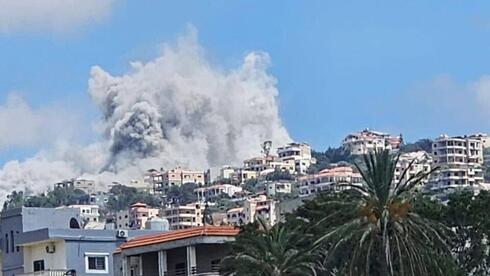
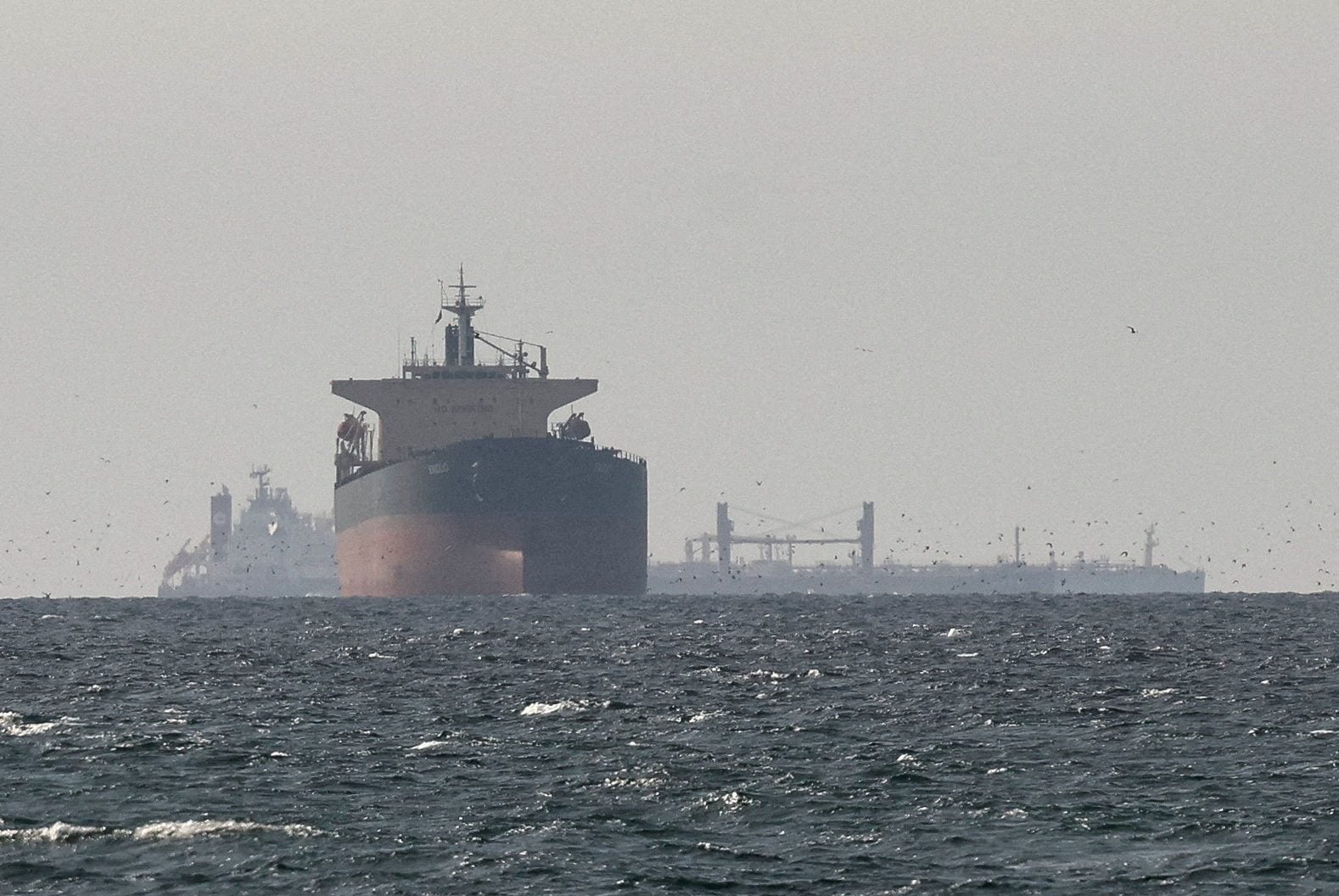
Reporting indicates continued Israeli strike activity across Gaza, alongside acute humanitarian constraints and limited shelter relief efforts. On the northern front, Israeli Air Force strikes in southern Lebanon continue and Israeli defence officials cite no order to withdraw, while Hezbollah has rejected a truce and senior Israeli figures condition any pullback on Hezbollah vacating pilot zones. Regionally, US-Iran exchanges escalated with Iranian missile and drone activity reported against US-linked sites in Jordan, Bahrain and Kuwait, Jordanian interceptions, and US strikes across Iran. Maritime risk around the Strait of Hormuz remains high, with a container ship struck near Oman, crews rescued but one missing, widespread AIS darkening, and a severe threat advisory, though the southern route remained open to shipping.
Change from previous assessment
Since the prior brief, reporting detailed Iranian missile and drone activity targeting Jordan’s Prince Hassan Air Base and US-linked sites in Bahrain and Kuwait, Jordan’s interception of four missiles, and additional US strikes across Iran, raising assessed spillover risk. Maritime updates note the southern Hormuz route remained open despite a severe advisory and continued AIS darkening and stranded crews, refining the shipping threat picture. On the northern front, Israeli Air Force strikes in southern Lebanon persisted and officials reiterated no withdrawal order and conditions tying any pullback to Hezbollah’s removal from pilot zones, while talks are expected in Rome. Humanitarian updates highlighted UNDP transitional shelters and persistent rubble-clearance constraints. These developments strengthened judgments on ongoing combat activity and elevated regional risk, while maintaining caution on prospects for a near-term northern de-escalation.
Key judgments
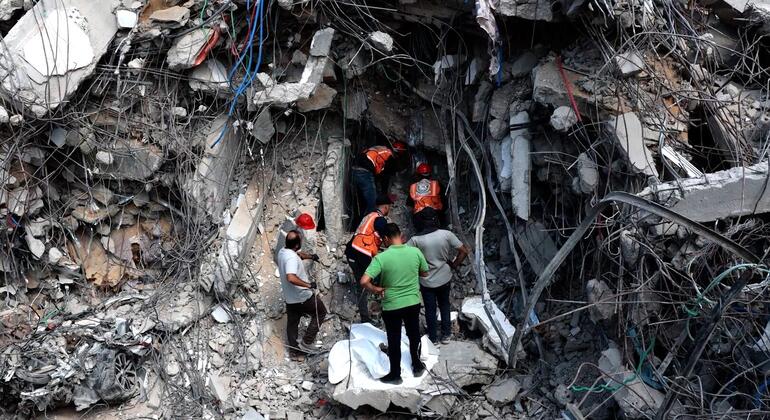
- Israeli combat operations in Gaza are very likely ongoing this week, with multiple strikes reported across Gaza including over Gaza City. (Confidence: high · REPORTED)
- I&W: Additional multi-sourced reporting of new Israeli airstrikes in Gaza City and central Gaza (0-14 days)
- I&W: A publicly announced and observed halt in Israeli strike activity across Gaza for at least 48 hours (0-14 days)
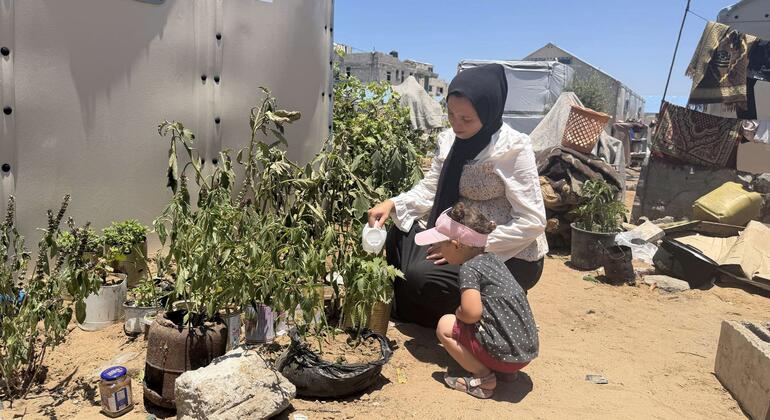
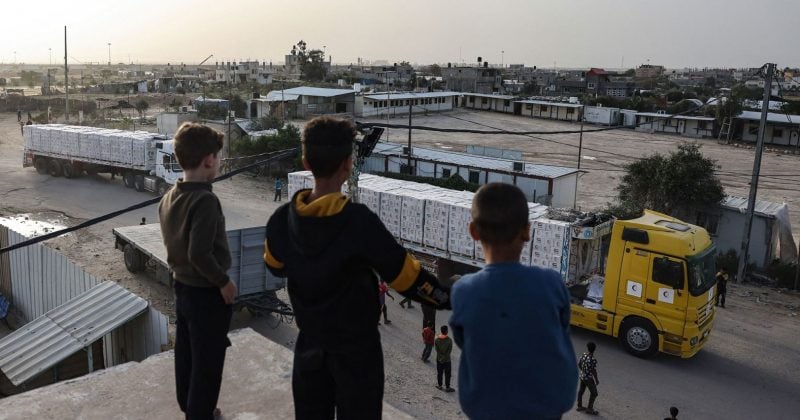
- Humanitarian conditions in Gaza remain severe, with rubble clearance hampered by equipment shortages and entry restrictions, while UNDP is providing transitional shelters funded by Germany, the Republic of Korea and Sweden. (Confidence: high · REPORTED)
- I&W: Official easing of restrictions on heavy equipment entry to Gaza and visible acceleration of rubble removal operations (1-3 months)
- I&W: Expanded UNDP distribution of transitional shelters with published delivery figures and locations (0-3 months)
- A durable halt to hostilities along the Israel-Lebanon frontier is unlikely in the near term: Israeli Air Force strikes in southern Lebanon continue and Israeli defence officials report no withdrawal order, while Hezbollah has rejected a 4 June truce and senior Israeli officials condition withdrawal on Hezbollah’s removal from pilot zones. (Confidence: medium · ASSESSED)
- I&W: Public order issued for IDF withdrawal from positions in Lebanon or observed phased pullback (0-6 weeks)
- I&W: Hezbollah acceptance of a ceasefire and redeployment north of pilot zones verified by Lebanese or third-party statements (0-6 weeks)
- Displacement pressures around the Israel-Lebanon frontier remain high, with roughly 96,000 displaced from northern Israel and over 1.4 million displaced in Lebanon. (Confidence: high · REPORTED)
- I&W: Official reporting of sustained returns to northern Israel communities and service restoration timelines (1-3 months)
- I&W: Lebanon authorities or UN updates showing reductions in internal displacement totals (1-3 months)
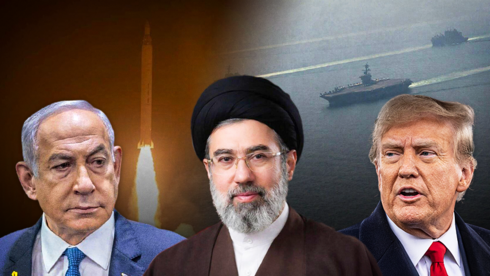
- Regional spillover risk is very likely elevated as the United States and Iran exchange strikes, including IRGC-claimed attacks into Jordan, Bahrain and Kuwait, Jordan’s interception of four missiles, and new US strikes announced by CENTCOM against targets across Iran. (Confidence: high · REPORTED)
- I&W: Additional Iranian missile or drone launches into Jordan, Bahrain or Kuwait acknowledged by host governments (0-14 days)
- I&W: A public statement from Tehran and Washington committing to resumed negotiations and a verified lull in cross-Gulf strikes (0-14 days)
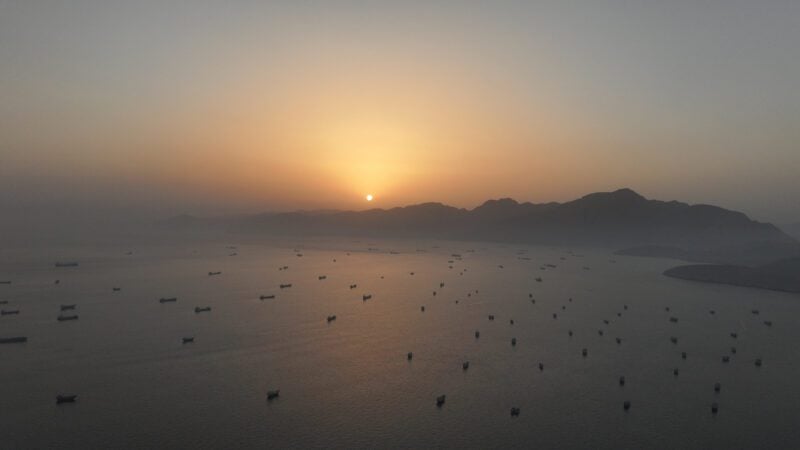
- Maritime risk in the Strait of Hormuz is high despite the southern lane remaining open: a Cyprus-flagged container ship was struck near Oman, crews were rescued but one is missing, around 6,000 seafarers remain stranded, AIS darkening is reported, and a severe advisory level remains in place. (Confidence: medium · ASSESSED)
- I&W: Multiple additional vessel strikes or boardings reported near the Omani coast and suspension of insurer cover for transits (0-14 days)
- I&W: Observed increase in escorted convoys and restoration of normal AIS transmissions on southbound traffic (0-14 days)
- Talks on Israel-Lebanon de-escalation are likely to continue, but a near-term Israeli pullback is unlikely without Lebanese Armed Forces receptivity to pilot zones and Hezbollah repositioning. (Confidence: medium · ASSESSED)
- I&W: Rome talks conclude without agreement on LAF deployments to pilot zones and no Israeli withdrawal order follows (0-14 days)
- I&W: Public LAF deployment announcements into agreed pilot zones and an IDF General Staff order initiating phased pullback (0-6 weeks)
- Israel is coordinating closely with the United States as Gulf tensions rise, which likely shapes IDF posture on the northern front. (Confidence: medium · ASSESSED)
- I&W: Further official statements noting IDF-US planning synchronisation tied to Gulf strike cycles (0-14 days)
- I&W: Noticeable decoupling of IDF activities in Lebanon from US-Iran strike tempo (0-1 month)
Outlook & scenarios
Managed containment across fronts (55%)
Israeli strike tempo in Gaza persists at current levels and Israeli Air Force strikes continue in southern Lebanon, but without a large ground expansion. Rome talks proceed but stall on conditions for Hezbollah’s repositioning and LAF deployments, leaving the IDF in place with no withdrawal order. US-Iran exchanges subside after public calls to resume negotiations, with no further confirmed Iranian fire into Jordan, Bahrain or Kuwait. Hormuz traffic continues via the southern lane under severe-risk advisories and periodic AIS darkening.
Northern front flares (35%)
Talks falter and Hezbollah increases fire from southern Lebanon, prompting intensified Israeli air and artillery strikes and potential ground push to enforce pilot zones. Israeli officials maintain conditions tying withdrawal to Hezbollah’s removal, and no order to withdraw is issued. US-Iran exchanges continue at a low level, sustaining elevated regional tension that reinforces Israeli caution.
Hormuz disruption widens (30%)
Additional vessel strikes near the Omani coast and persistent Iranian harassment lead to more stranded crews, increased convoying, and insurer pullbacks. The advisory threat level remains severe. Although the southern route remains nominally open, operators voluntarily delay transits, raising costs and fuelling political pressure as US-Iran exchanges drag on.
Pilot-zone deal unlocks partial pullback (20%)
Rome talks yield a framework for LAF deployments into pilot zones. Hezbollah scales back frontline presence, enabling a limited IDF pullback southward while Israeli air activity reduces. Verification arrangements start, but the arrangement remains fragile and contingent on continued US mediation.
Recommendations
- Maintain daily geolocation and timeline of Israeli strike activity across Gaza and southern Lebanon to detect any change in tempo or targets; cross-reference with casualty and damage reporting to inform risk baselines.
- Task collection to track any formal IDF order regarding withdrawal from Lebanon and visible force posture changes at known positions; pair with monitoring of Lebanese Armed Forces statements on pilot-zone deployments.
- Establish an open-source watch on Rome talks: participant announcements, agendas, and any communiqués on LAF deployments, Hezbollah repositioning, or verification modalities.
- Sustain a maritime risk dashboard for Hormuz covering vessel strikes, AIS darkening rates, escorted transit counts, advisory levels, and insurer guidance; flag anomalies within 12 hours.
- Track and reconcile US and Iranian strike claims with host-government statements in Jordan, Bahrain, Kuwait and Oman to refine spillover indicators relevant to Israel’s northern posture.
- Monitor humanitarian access metrics in Gaza, especially heavy equipment entry for rubble removal and the scale and siting of UNDP transitional shelter deliveries, to assess civilian vulnerability hotspots.
Confidence & uncertainty
Overall confidence is medium. Several judgments rest on multiple consistent and reliable reports, notably Israeli strike activity in Gaza, continued Israeli Air Force operations in southern Lebanon with no withdrawal order, and US-Iran exchanges across the Gulf backed by host-government statements and multilateral reporting. Maritime risk around Hormuz is well evidenced by vessel-strike and advisory reporting, but conflicting claims about closure versus continued traffic and mixed reporting on convoying and AIS practices introduce uncertainty. Assessments on near-term diplomacy and withdrawal conditions rely on reported positions and medium-confidence sources, warranting a medium headline level.
Alternative analysis (red cell)
Alternative reading: the Lebanon front and de‑escalation talks admit plausible near‑term outcomes other than a sustained non‑withdrawal. The reporting is dominated by medium/low‑admiralty condition statements (e.g., 59023e5f; e3441b25; f14fb14d; 332643c2) and contradictions on truce status (d10699ca vs. 84953938-..), so it is equally plausible that talks and pressure could produce localized pauses or phased pullbacks tied to verification by the Lebanese Armed Forces rather than an outright, enduring stalemate.
Intelligence gaps
- [EEI 1.1 · UNCOVERED] Number, type and geolocated coordinates of projectiles (rockets, mortars, anti-tank guided missiles) fired from Lebanon into Israel in the last 24/72 hours, including time-stamped launch and impact locations. Recommended collection: signals/intel
- [EEI 1.2 · UNCOVERED] Satellite or aerial imagery showing movement, concentration, or forward displacement of Hezbollah-associated military assets (armored vehicles, artillery pieces, mobile rocket launchers, logistics convoys) to positions within 0–10 km of the Israel-Lebanon border. Recommended collection: satellite/imagery
- [EEI 1.3 · UNCOVERED] Intercepted or captured Hezbollah command-and-control communications or orders explicitly directing cross-border operations or coordinated strikes with Palestinian groups (time-stamped messages, unit identifiers, orders to fire/move). Recommended collection: signals/intel
- [EEI 1.4 · UNCOVERED] Observable changes in Israeli northern-front posture within Israel (numbers and types of reinforcements deployed to northern brigades, activation of reserves, air defense redeployments, evacuation orders or shelter alerts in northern towns), including timestamps and unit IDs where available. Recommended collection: human/intel
- [EEI 2.1 · UNCOVERED] Official or corroborated reports of IDF reservist mobilization and unit-level deployment orders (number of reservists called, named brigades/units ordered to deploy, deployment timelines). Recommended collection: open-source/media
- [EEI 2.2 · UNCOVERED] Satellite or ground imagery showing concentrations of IDF heavy equipment (tanks, infantry fighting vehicles, engineering vehicles), staging areas, field hospitals or forward supply dumps within X km of the Gaza border and at known crossing points. Recommended collection: satellite/imagery
- [EEI 2.3 · UNCOVERED] Change in strike patterns consistent with pre-ground-attack shaping: sustained high-frequency airstrikes on tunnel networks, command nodes, coastal launch sites, and known insurgent concentrations (strike counts, munition types, locations, times). Recommended collection: open-source/media
- [EEI 2.4 · UNCOVERED] Logistics indicators: verified convoys of fuel/ammunition entering staging areas, establishment of forward logistics or medical bases, or documented requisitioning orders for bulk combat supplies with timestamps and quantities. Recommended collection: human/intel
- [EEI 3.1 · UNCOVERED] Number, participants and content of diplomatic contacts or negotiation sessions in the last 48 hours involving mediators (Egypt, Qatar, US, UN), including any proposed ceasefire text, prisoner/exchange lists, timelines or verification mechanisms. Recommended collection: diplomatic
- [EEI 3.2 · UNCOVERED] Public statements, press releases or verified communiqués from Hamas and other Gaza armed groups specifying acceptance, rejection, or conditions for a ceasefire (explicit conditions such as prisoner release lists, withdrawal terms, lifting of blockades), with timestamps and speaker attribution. Recommended collection: open-source/media
- [EEI 3.3 · UNCOVERED] Humanitarian indicators relevant to ceasefire: establishment and operation of agreed humanitarian corridors/checkpoints, number of aid deliveries admitted, civilian evacuations completed, and NGO/hospital reports of access denials or safe-passage violations. Recommended collection: humanitarian/NGO reports
- [EEI 3.4 · UNCOVERED] Operational evidence of a de facto pause: verified sustained reduction (e.g., ≥12 hours) in strikes or launches from either side in specific sectors, supported by strike/impact logs, radar tracks and incident reports. Recommended collection: open-source/media
Cited sources
[1] cryptobriefing.com · Israel conducts multiple airstrikes across Gaza amidst ceasefire violations (B) · sha256:60e8a7faa2e3 [2] UN News · ‘We face a new ordeal’: Gaza's search for the dead goes on (A) · sha256:3c8adf559f6a [3] UN Development Programme (UNDP) · Reviving communities home by home in Gaza (A) · sha256:22887ca14102 [4] ynetnews.com · IDF prepares for long stay in Lebanon as Hezbollah regroups under ceasefire (B) · sha256:e3d362716aca [5] Wikipedia · Hezbollah–Israel conflict (2023–present) (B) · sha256:0524547deeb8 [6] jpost.com · IDF to remain in Lebanon if Hezbollah refuses to leave pilot zones, Ambassador Leiter says (B) · sha256:7ecb5cce84f5 [7] aljazeera.com · New Iran strikes on Gulf as US attacks escalate: What we know (A) · sha256:f9719fb4407c [8] ynetnews.com · Israel 'closely' following developments in Iran amid expected escalation (B) · sha256:322279bec563 [9] United Nations · UN chief urges Iran and US to ‘urgently resume negotiations’ as Gulf strikes escalate (A) · sha256:66414c0da26a [10] gcaptain.com · Hormuz Route Open Despite Iran Declaration, Maritime Group Says (B) · sha256:f1e27206a0c7 [11] gcaptain.com · One Indian National Missing After Attack On Vessel Off Oman (B) · sha256:9f7f2efc9583 [12] gcaptain.com · U.S. Launches Fourth Wave of Strikes Against Iran as Hormuz Shipping Crisis Deepens (B) · sha256:28b71f20f052 [13] The Jerusalem Post · Live Updates: Latest from Israel, Iran, and Middle East | The Jerusalem Post (A) · sha256:a203b7d7e0cd [14] jpost.com · IDF coordinates with US military, prepares for possible strikes as US, Iran fighting escalates (B) · sha256:4869a5a33484
Source content hashes were computed at collection time; the cited text is preserved unmodified for the life of this product.
Red cell review: PARTIAL DISSENT
TLP:CLEAR