TLP:CLEAR · Disclosure is not limited.
Israel, Gaza escalation, Lebanon front friction, and Hormuz shock: week-in-review
Time window: Last 7 days · Audience: General analyst · Type: Situation report · DTG: 2026-07-12 13:13Z · Overall confidence: HIGH
BLUF
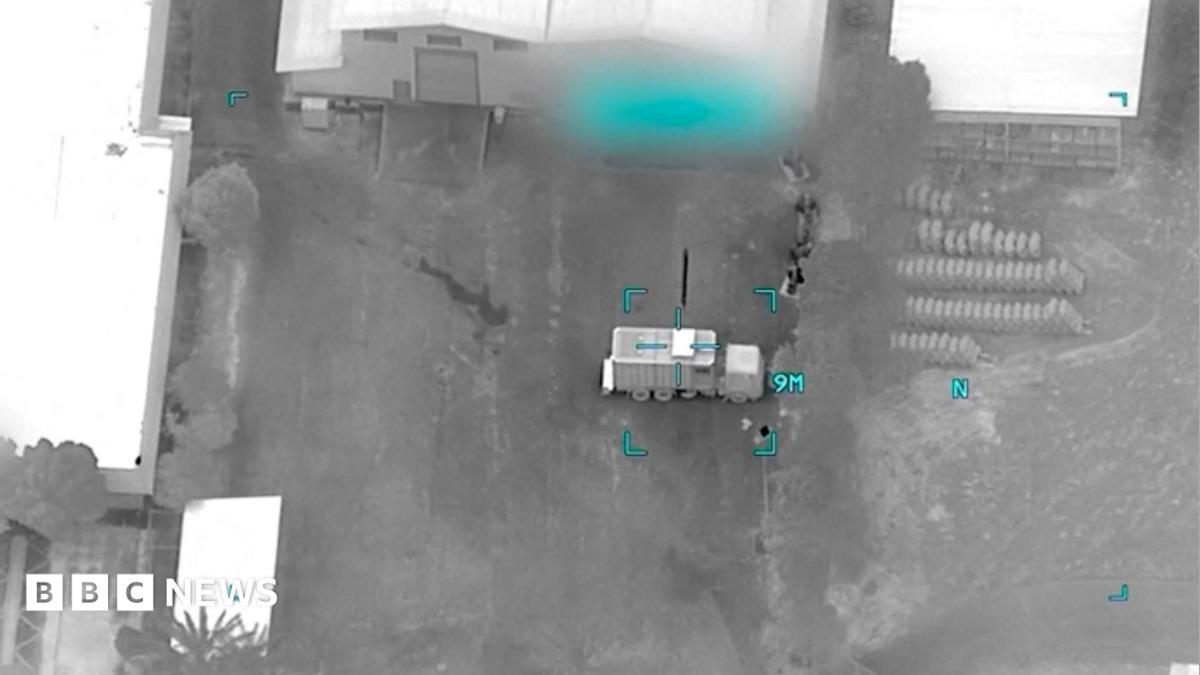
IDF combat in Gaza is very likely ongoing while the Israel, Lebanon front remains brittle with daily Resolution 1701 violations and continued Israeli operations north of the Blue Line. Simultaneous US, Iran tit-for-tat strikes and Iran’s declared closure of the Strait of Hormuz have very likely depressed tanker traffic, raising near-term maritime and regional escalation risk.
Executive summary
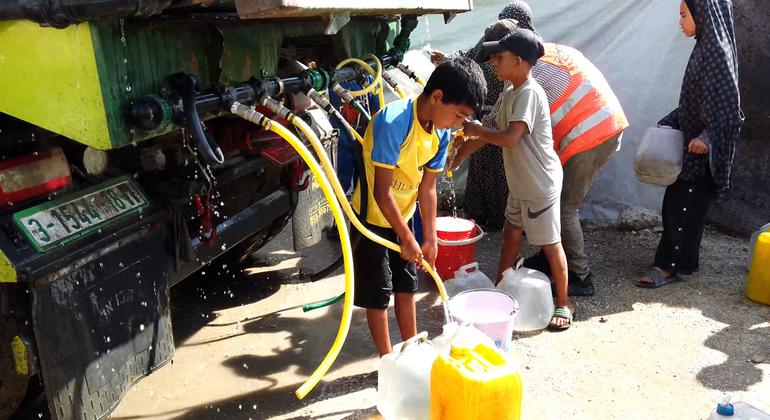
In Gaza, Israeli strikes and targeted killings of Hamas figures continued through 6-8 July, alongside reports of at least nine Palestinians killed in recent strikes. Humanitarian needs remain acute: UNRWA moved roughly 79 million litres of water in late June, WHO is supporting high-need infants, and debris clearance is hampered by restrictions on heavy equipment. Along the Israel, Lebanon frontier, UNIFIL reports reduced violence yet daily Resolution 1701 violations, while Israeli Air Force strikes in southern Lebanon and drone strikes in Tebnine and Majdal Zoun persisted as Israeli forces continue operating north of the Blue Line with no withdrawal order issued. Regionally, Iran’s IRGC declared the Strait of Hormuz closed until further notice, the US and Iran exchanged strikes for a second day, and missile alerts and interceptions were reported in Bahrain, the UAE and Kuwait. Cairo talks on Gaza’s future involved Egyptian, Qatari and Turkish mediation but remain stuck on Hamas disarmament, with civil service payrolls seen as solvable.
Change from previous assessment
Since the prior brief, reporting added detail on named IDF targeted killings in Gaza on 6-8 July and reiterated at least nine Palestinians killed in recent strikes. UNIFIL continued to log daily Resolution 1701 violations while Israeli forces remain north of the Blue Line with no withdrawal order, and Israeli air and drone strikes were reported in southern Lebanon. Regionally, Iran’s IRGC publicly declared the Strait of Hormuz closed until further notice, the US and Iran exchanged strikes for a second day, and missile alerts or interceptions were reported in Bahrain, the UAE and Kuwait, with shipping data indicating sharply reduced tanker flows. Diplomatically, Cairo talks over Gaza’s future ran Friday to Saturday and remain stuck on disarmament, though civil servant payrolls appear solvable. Overall judgments are retained with reinforced confidence on maritime risk and the Lebanon front’s brittleness.
Key judgments
- Israeli combat operations in Gaza are very likely ongoing, including targeted killings of Hamas figures and airstrikes that killed at least nine Palestinians in recent days. (Confidence: high · ASSESSED)
- I&W: Further IDF communiqués naming senior Hamas operatives killed and independent reporting of new strike days in Gaza. (0-14 days)
- I&W: A verified 72-hour halt in IDF air and artillery strikes in Gaza accompanied by public ceasefire announcements. (0-14 days)
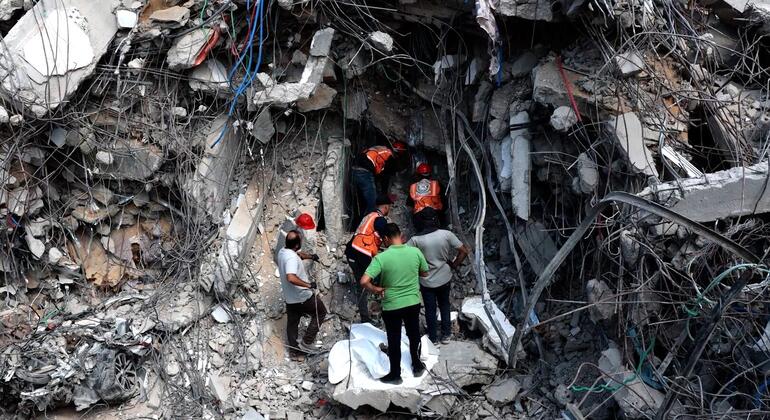
- Humanitarian conditions in Gaza remain acute, with large-scale emergency water trucking, specialised infant support, thousands still missing under rubble, and debris removal constrained by limits on heavy equipment entry. (Confidence: high · REPORTED)
- I&W: Humanitarian updates continue to cite restrictions on heavy machinery entry and sustained reliance on water trucking at late-June volumes. (0-14 days)
- I&W: Public approval and arrival of heavy machinery convoys with reported increases in rubble clearance and restored piped water coverage. (1-3 months)
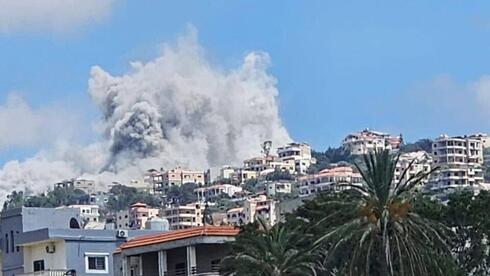
- A durable halt to hostilities along the Israel, Lebanon frontier is unlikely in the near term: UNIFIL records daily Resolution 1701 violations despite reduced violence, Israeli forces continue operating north of the Blue Line, and Israeli air and drone strikes in southern Lebanon persist while the IDF prepares for a prolonged deployment with no withdrawal order issued. (Confidence: high · ASSESSED)
- I&W: UNIFIL daily logs continue to record multiple Resolution 1701 violations and Israeli activity north of the Blue Line. (0-14 days)
- I&W: Publicly announced Israel, Lebanon talks yield a verified timetable for IDF redeployment behind the Blue Line and cessation of IAF strikes. (1-3 months)
- Displacement pressures along the Israel, Lebanon frontier remain high, with roughly 96,000 displaced from northern Israel and over 1.4 million displaced in Lebanon, even as some Lebanese families return south. (Confidence: high · REPORTED)
- I&W: Official updates maintain displacement in Lebanon above one million and in Israel near 96,000. (1-3 months)
- I&W: Verified municipal and UN reporting of sustained large-scale returns that materially reduce Lebanon’s displaced population below one million. (1-3 months)
- Civilian security risk across Lebanon is very likely elevated, with authorities unable to guarantee safety, continued terrorist plotting risks, potential drone and missile strikes nationwide, kidnapping threats, and strict US Government movement restrictions. (Confidence: high · REPORTED)
- I&W: Continuation or tightening of US Embassy Beirut travel restrictions and public security warnings. (0-14 days)
- I&W: Public easing of movement restrictions or rescission of ordered departure guidance by US authorities. (1-3 months)
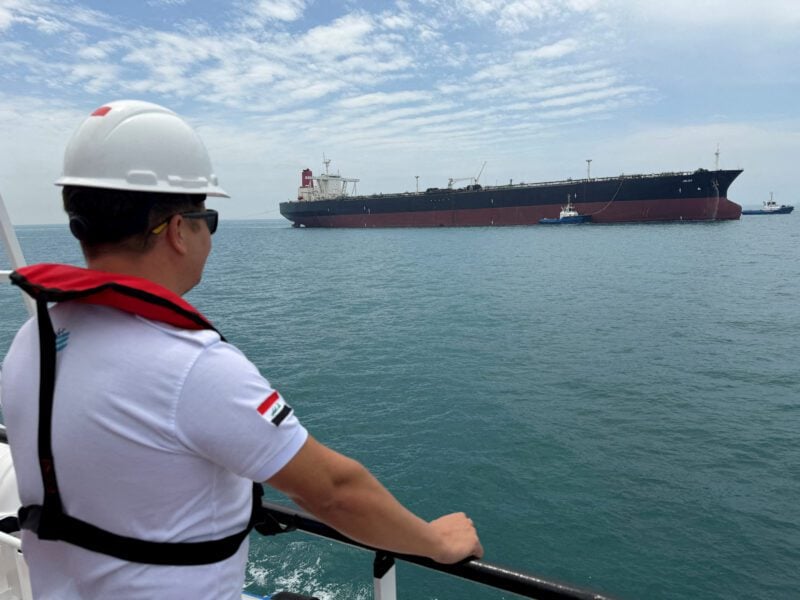
- Maritime risk in the Strait of Hormuz is very likely elevated: Iran’s IRGC declared the waterway closed until further notice, tanker transits have fallen sharply, and US, Iran military exchanges persist alongside missile alerts and interceptions in Bahrain, the UAE and Kuwait. (Confidence: high · ASSESSED)
- I&W: Shipping association or tracking data show southern-route transits in single digits and northern-route traffic remaining well below 50 daily, with additional US or IRGC strike announcements. (0-14 days)
- I&W: Public rescission of IRGC closure language and sustained recovery of tanker traffic toward pre-escalation levels. (1-3 months)
- Cairo talks on Gaza’s future are very likely stalled on Hamas disarmament, while civil service payrolls appear solvable; mediators engaged include Egypt, Qatar and Turkey. (Confidence: high · REPORTED)
- I&W: Public statements from mediators or Palestinian factions reiterate disarmament as the core obstacle without linkage to Israeli redeployment. (0-14 days)
- I&W: Announcement of a framework separating payroll funding from disarmament or sequencing Israeli redeployment against verified disarmament steps. (1-3 months)
Outlook & scenarios
Managed containment: low-level conflict persists (60%)
IDF continues targeted strikes and raids in Gaza while humanitarian relief scales only modestly. Along the Blue Line, UNIFIL continues to log daily Resolution 1701 violations, Israeli forces remain north of the Blue Line, and IAF strikes recur in southern Lebanon as some Lebanese families keep returning despite insecurity. In the Gulf, the US, Iran exchange remains episodic, Iran’s closure posture chills traffic, and tanker flows stay depressed but not halted.
Hormuz crisis intensifies and regional fire spreads (35%)
Further IRGC actions against shipping and additional US strike packages drive more missile alerts and interceptions in Bahrain, the UAE and Kuwait. Tanker traffic drops further, insurers widen exclusions, and partners harden postures. Israel maintains high alert while the Lebanon front risks sharper engagements if miscalculation occurs.
Narrow de-escalation window opens (25%)
Technical channels via Oman and others yield a public signal limiting Iranian interference with maritime flows, and shipping traffic on the northern route recovers. In Gaza diplomacy, mediators unlock a payroll mechanism while parking the disarmament file, easing humanitarian access. On the Lebanon front, talks resume and some positions thin, but daily violations continue.
Recommendations
- Maintain a daily watch on UNIFIL reporting for Resolution 1701 violations and map any verified IDF redeployments relative to the Blue Line to detect shifts toward or away from a halt in hostilities.
- Task maritime domain monitoring to track AIS-based tanker flows on both Hormuz routes and correlate with shipping association bulletins and public Iranian and US strike claims to gauge escalation risk to commercial shipping.
- Track IDF operational communiqués and independent reporting of named Hamas figures targeted to assess the tempo and focus of Gaza operations.
- Prioritise humanitarian indicators: watch for announcements permitting entry of heavy machinery into Gaza and changes in water trucking volumes to assess the feasibility of rubble clearance and service restoration.
- Follow Cairo-mediated talks closely for any movement on civil service payrolls or new language linking Israeli redeployment to disarmament, and prepare decision briefs on potential sequencing options and risks.
- Sustain an updated Lebanon threat picture for civilian movement: integrate US Government restriction updates, kidnapping risk advisories and drone or missile incident reports into travel risk products and contingency planning.
Confidence & uncertainty
High confidence is warranted because multiple independent and generally reliable sources corroborate the central dynamics. UN bodies report daily Resolution 1701 violations and humanitarian conditions in Gaza, major media detail named IDF strikes and targeted killings, and trade publications and official statements describe Iran’s declared closure of the Strait of Hormuz and depressed tanker traffic alongside US, Iran strike exchanges and Gulf air-defence activity. Remaining uncertainties include the durability of any de-escalatory steps in the Gulf and the precise pace of talks on Gaza governance, and some elements rely on single-outlet reportage. These do not materially alter the core judgments.
Alternative analysis (red cell)
The reporting record contains mixed-admiralty sources, dated items, and unresolved contradictions (see tradecraft_lint_findings 'contradiction_unaddressed' and conflicting transit/timeline claims), so more cautious formulations are warranted. Combat and humanitarian needs are evident, but the scale, recentness, and operational implications are less certain than the brief asserts; similarly, frontier stability and maritime disruption show divergent indicators that permit alternative, less definitive assessments pending event-level corroboration.
Intelligence gaps
- [EEI 1.1 · UNCOVERED] Number, type and geolocated coordinates of projectiles (rockets, mortars, anti-tank guided missiles) fired from Lebanon into Israel in the last 24/72 hours, including time-stamped launch and impact locations. Recommended collection: signals/intel
- [EEI 1.2 · UNCOVERED] Satellite or aerial imagery showing movement, concentration, or forward displacement of Hezbollah-associated military assets (armored vehicles, artillery pieces, mobile rocket launchers, logistics convoys) to positions within 0–10 km of the Israel-Lebanon border. Recommended collection: satellite/imagery
- [EEI 1.3 · UNCOVERED] Intercepted or captured Hezbollah command-and-control communications or orders explicitly directing cross-border operations or coordinated strikes with Palestinian groups (time-stamped messages, unit identifiers, orders to fire/move). Recommended collection: signals/intel
- [EEI 1.4 · UNCOVERED] Observable changes in Israeli northern-front posture within Israel (numbers and types of reinforcements deployed to northern brigades, activation of reserves, air defense redeployments, evacuation orders or shelter alerts in northern towns), including timestamps and unit IDs where available. Recommended collection: human/intel
- [EEI 2.1 · UNCOVERED] Official or corroborated reports of IDF reservist mobilization and unit-level deployment orders (number of reservists called, named brigades/units ordered to deploy, deployment timelines). Recommended collection: open-source/media
- [EEI 2.2 · UNCOVERED] Satellite or ground imagery showing concentrations of IDF heavy equipment (tanks, infantry fighting vehicles, engineering vehicles), staging areas, field hospitals or forward supply dumps within X km of the Gaza border and at known crossing points. Recommended collection: satellite/imagery
- [EEI 2.3 · UNCOVERED] Change in strike patterns consistent with pre-ground-attack shaping: sustained high-frequency airstrikes on tunnel networks, command nodes, coastal launch sites, and known insurgent concentrations (strike counts, munition types, locations, times). Recommended collection: open-source/media
- [EEI 2.4 · UNCOVERED] Logistics indicators: verified convoys of fuel/ammunition entering staging areas, establishment of forward logistics or medical bases, or documented requisitioning orders for bulk combat supplies with timestamps and quantities. Recommended collection: human/intel
- [EEI 3.1 · UNCOVERED] Number, participants and content of diplomatic contacts or negotiation sessions in the last 48 hours involving mediators (Egypt, Qatar, US, UN), including any proposed ceasefire text, prisoner/exchange lists, timelines or verification mechanisms. Recommended collection: diplomatic
- [EEI 3.2 · UNCOVERED] Public statements, press releases or verified communiqués from Hamas and other Gaza armed groups specifying acceptance, rejection, or conditions for a ceasefire (explicit conditions such as prisoner release lists, withdrawal terms, lifting of blockades), with timestamps and speaker attribution. Recommended collection: open-source/media
- [EEI 3.3 · UNCOVERED] Humanitarian indicators relevant to ceasefire: establishment and operation of agreed humanitarian corridors/checkpoints, number of aid deliveries admitted, civilian evacuations completed, and NGO/hospital reports of access denials or safe-passage violations. Recommended collection: humanitarian/NGO reports
- [EEI 3.4 · UNCOVERED] Operational evidence of a de facto pause: verified sustained reduction (e.g., ≥12 hours) in strikes or launches from either side in specific sectors, supported by strike/impact logs, radar tracks and incident reports. Recommended collection: open-source/media
Cited sources
[1] jpost.com · IDF killed 12 terrorists in Gaza, including senior Hamas figures, Oct. 7 perpetrators (B) · sha256:15a93a1e251d [2] ynetnews.com · IDF eliminates Hamas Nukhba commander who led Oct. 7 raid on Re'im base (A) · sha256:06b759c31058 [3] nbcnews.com · Gaza doctor held without charges in Israel more than 18 months as calls grow for release (A) · sha256:3fd70f4a2817 [4] United Nations · Diplomats go virtual to witness Gaza displacement site up close (A) · sha256:aca3c8ec4ac1 [5] UN News · ‘We face a new ordeal’: Gaza's search for the dead goes on (A) · sha256:3c8adf559f6a [6] United Nations · Grim homecoming: Devastation greets Lebanon’s war-weary returnees (A) · sha256:d573f0df6555 [7] ynetnews.com · IDF prepares for long stay in Lebanon as Hezbollah regroups under ceasefire (B) · sha256:e3d362716aca [8] Wikipedia · Hezbollah–Israel conflict (2023–present) (B) · sha256:0524547deeb8 [9] U.S. Department of State · Lebanon Travel Advisory | Travel.State.gov (A) · sha256:a9c302d69f7c [10] aljazeera.com · US forces launch new strikes on Iran; Tehran closes Strait of Hormuz (A) · sha256:afd526932d55 [11] bbc.co.uk · US launches fresh strikes as Iran closes Strait of Hormuz (A) · sha256:87a3f265e25f [12] ynetnews.com · Iran attacks ship in Strait of Hormuz, declares waterway 'closed until further notice' (B) · sha256:a6ef492db3f4 [13] gcaptain.com · INTERTANKO: Hormuz Tanker Transits Via Southern Route Fall to Single Digits After Renewed Fighting (C) · sha256:ec7edd5042d6 [14] nbcnews.com · U.S.-Iran tensions remain high after days of exchanging strikes (A) · sha256:1c45aff82470 [15] Al Jazeera · Missiles and drones fired at Gulf states after night of US strikes on Iran (A) · sha256:d271abdf7e5e [16] haaretz.com · Hamas disarmament and Israeli withdrawal dominate Cairo talks on Gaza's future (A) · sha256:25d7fadf2fa6
Source content hashes were computed at collection time; the cited text is preserved unmodified for the life of this product.
Red cell review: PARTIAL DISSENT
TLP:CLEAR