TLP:CLEAR · Disclosure is not limited.
Israel-Gaza Escalation: Persistent Gaza Strikes, West Bank Violence and Unresolved Iran Risk
Time window: Last 7 days · Audience: General analyst · Type: Situation report · DTG: 2026-10-16 13:09Z · Overall confidence: HIGH
BLUF
The Gaza ceasefire has not stopped near-daily Israeli strikes, and reported Palestinian deaths since it began exceed 1,400. Humanitarian needs remain acute, while UN reporting and BBC-observed incidents point to high West Bank settler violence; reports about possible action against Iran before Israel’s 27 October election remain contradictory.
Executive summary
Reporting through 16 October describes continued Israeli strikes in Gaza, although large-scale bombardment has stopped, and more than 1,400 Palestinians killed in strikes since the ceasefire began in October 2025. The Palestinian Health Ministry reports severe child malnutrition and forecasts a food crisis affecting more than 1.4 million people in Gaza by the end of 2026; the UK says more than 8,000 shelter kits remain outside Gaza. UN reporting describes record levels of settler violence in the West Bank, and the BBC witnessed attacks during the olive harvest. In contrast, accounts of a separate 16 October confrontation in the Binyamin Region disagree about how it began. Reporting on an Israeli pre-election strike against Iran is also contested. A social-media account presenting itself as Mossad has published Arabic-language appeals in Lebanon, but its affiliation is not established.
Change from previous assessment
Since the 15 October brief, reporting has added an explicit account of near-daily Israeli strikes in Gaza and a figure above 1,400 Palestinian deaths since the ceasefire began. New reporting also details more than 8,000 shelter kits outside Gaza, severe child malnutrition and record West Bank settler violence during the olive harvest. The Iran assessment is now more contested: reports of a possible pre-election strike sit alongside Netanyahu’s comments, a reported Israeli establishment preference for restraint and denials from Netanyahu’s office and the White House. No new supplied reporting substantiates Hezbollah mobilisation; the Lebanese online-recruitment reporting does not change that assessment.
Key judgments
- Israeli strikes have continued almost every day in Gaza despite the ceasefire, although large-scale bombardment has stopped; reporting puts Palestinian deaths from Israeli strikes since the ceasefire began above 1,400. This indicates persistent ceasefire erosion, but the supplied reporting does not establish that the strike tempo is rising. (Confidence: medium · REPORTED)
- I&W: UN or other independently sourced reporting continues to record Israeli strikes in Gaza on most days. (0-14 days)
- I&W: A sustained period with no independently verified Israeli strikes in Gaza would break the reported near-daily pattern. (0-14 days)
- Humanitarian conditions in Gaza are likely to remain severe through the end of 2026. The Palestinian Health Ministry reports 158,000 children with acute malnutrition, including 28,000 in life-threatening condition, and forecasts more than 1.4 million people facing a food crisis by year-end; the UK reports that more than 8,000 shelter kits remain outside Gaza. These figures come from different reporting channels, but several of the health estimates rely on the Ministry’s reporting. (Confidence: medium · ASSESSED)
- I&W: Updated UN or aid-agency delivery records continue to show the 8,000 shelter kits outside Gaza rather than admitted. (0-30 days)
- I&W: A new food-security assessment confirms crisis-level conditions or worsening child malnutrition in Gaza. (1-3 months)
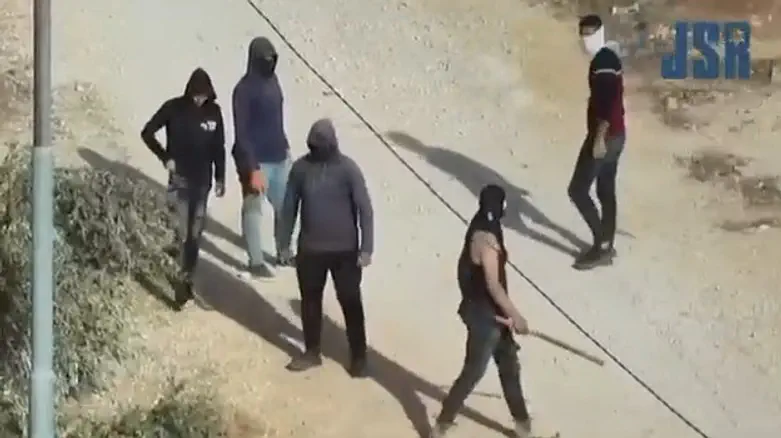
- Settler violence in the West Bank is likely to remain elevated during the olive harvest. UN reporting describes record levels in 2026 and 51 attacks in one September week; the BBC also witnessed settlers attack Palestinians and set fire to olive trees. Accounts of the separate 16 October Binyamin Region confrontation conflict over who initiated it, so responsibility for that incident is less certain than the broader pattern. (Confidence: high · ASSESSED)
- I&W: UN weekly reporting continues to record West Bank settler attacks causing casualties or property damage during the harvest. (0-14 days)
- I&W: A new UN harvest-season tally reports no attacks or a clear fall in incidents compared with the same period last year. (1-3 months)
- An Israeli strike on Iran before the 27 October election is unlikely, but confidence is low because reporting on Israeli intent conflicts. Netanyahu described pre-emptive strikes as inconvenient and Ynet reported a widespread view in Israel’s political and security establishment against an attack before the election. Channel 12 reported that Netanyahu urged Washington to strike Iran before the vote, while an unnamed US official reportedly thought he wanted to resume action; Netanyahu’s office and the White House denied related claims. Trump has repeatedly threatened to resume bombing if Iran does not accept his terms, and US media report that the Pentagon prepared strike plans. (Confidence: low · ASSESSED)
- I&W: A verified Israeli strike on Iranian territory before the election would break this judgement. (0-14 days)
- I&W: The 27 October election passes without an Israeli strike on Iran, supporting the assessment of pre-election restraint. (0-14 days)
- Online recruitment-style contact activity directed at Lebanese users is likely to remain a security concern, but the account presenting itself as Mossad is not authenticated by the supplied reporting. Al Jazeera reports that the account posted Arabic-language appeals for confidential contact, and that Lebanon’s General Security Directorate had previously warned against interacting with the same account. This reporting does not establish Hezbollah mobilisation or an imminent attack. (Confidence: medium · ASSESSED)
- I&W: The same account publishes further Arabic-language appeals for confidential contact with Lebanese users. (0-30 days)
- I&W: Lebanon’s General Security Directorate issues a new warning naming the account or reports an investigation into its activity. (0-30 days)
Outlook & scenarios
Contained ceasefire erosion (65%)
Israeli strikes continue in Gaza without a return to large-scale bombardment, while humanitarian access remains constrained and West Bank violence stays elevated during the olive harvest. This is the most likely near-term pattern in the supplied reporting.
Pre-election restraint on Iran (65%)
Israel does not strike Iran before 27 October, consistent with Netanyahu’s public comments and the reported view inside Israel’s political and security establishment. US threats and reported military planning maintain pressure, but do not by themselves establish a decision to resume strikes.
Regional strike exchange, high-impact wildcard (12%)
A US or Israeli strike on Iran triggers Iranian or proxy rocket attacks on Israel and Israeli retaliation, with spillover into Lebanon. This is unlikely on the current reporting, which contains conflicting accounts of intent and no verified evidence of Hezbollah mobilisation. If it occurs, it would sharply widen the conflict.
Recommendations
- Maintain a daily Gaza incident log that separates verified strike events, reported casualty totals and source attribution. Do not infer a rising strike tempo from the cumulative death toll alone.
- Request updated UN and aid-agency reporting on whether the 8,000 shelter kits have entered Gaza, alongside current food-security and child-malnutrition assessments.
- Track UN weekly West Bank incident figures through the olive harvest. For individual confrontations, record competing accounts of who initiated violence separately from independently witnessed events.
- For Iran-related reporting, distinguish on-record statements from unnamed-source claims and track any verified strike or official authorisation before the 27 October election.
- Monitor the named Lebanese social-media account and statements from Lebanon’s General Security Directorate. Do not treat the account’s claimed Mossad identity as established or infer Hezbollah mobilisation from recruitment appeals alone.
Confidence & uncertainty
Overall confidence is high for the core situation picture because reporting from the UN, BBC, major media and official UK sources converges on continuing Gaza strike activity, acute humanitarian constraints and high West Bank settler violence. Confidence is lower on some specific figures, the initiation of the 16 October Binyamin confrontation, attribution of the Lebanese social-media account and Israeli intent towards Iran. The headline confidence applies to the reported events, not to those contested attributions or forward-looking judgements.
Alternative analysis (red cell)
The supplied reporting does not justify a directional estimate that an Israeli strike on Iran before the election is unlikely. Public statements and the reported establishment view point against immediate action, but reports of Netanyahu's advocacy, a US official's assessment, Trump's threats, and prepared US plans indicate a meaningful pre-election strike possibility. The most defensible reading is that the outcome remains indeterminate at low confidence, rather than that the balance of evidence favors non-action.
Intelligence gaps
- [EEI 1.1 · UNCOVERED] Number, type and geolocated coordinates of projectiles (rockets, mortars, anti-tank guided missiles) fired from Lebanon into Israel in the last 24/72 hours, including time-stamped launch and impact locations. Recommended collection: signals/intel
- [EEI 1.2 · UNCOVERED] Satellite or aerial imagery showing movement, concentration, or forward displacement of Hezbollah-associated military assets (armored vehicles, artillery pieces, mobile rocket launchers, logistics convoys) to positions within 0-10 km of the Israel-Lebanon border. Recommended collection: satellite/imagery
- [EEI 1.3 · UNCOVERED] Intercepted or captured Hezbollah command-and-control communications or orders explicitly directing cross-border operations or coordinated strikes with Palestinian groups (time-stamped messages, unit identifiers, orders to fire/move). Recommended collection: signals/intel
- [EEI 1.4 · UNCOVERED] Observable changes in Israeli northern-front posture within Israel (numbers and types of reinforcements deployed to northern brigades, activation of reserves, air defense redeployments, evacuation orders or shelter alerts in northern towns), including timestamps and unit IDs where available. Recommended collection: human/intel
- [EEI 2.1 · UNCOVERED] Official or corroborated reports of IDF reservist mobilization and unit-level deployment orders (number of reservists called, named brigades/units ordered to deploy, deployment timelines). Recommended collection: open-source/media
- [EEI 2.2 · UNCOVERED] Satellite or ground imagery showing concentrations of IDF heavy equipment (tanks, infantry fighting vehicles, engineering vehicles), staging areas, field hospitals or forward supply dumps within X km of the Gaza border and at known crossing points. Recommended collection: satellite/imagery
- [EEI 2.3 · PARTIAL] Change in strike patterns consistent with pre-ground-attack shaping: sustained high-frequency airstrikes on tunnel networks, command nodes, coastal launch sites, and known insurgent concentrations (strike counts, munition types, locations, times). Recommended collection: open-source/media
- [EEI 2.4 · UNCOVERED] Logistics indicators: verified convoys of fuel/ammunition entering staging areas, establishment of forward logistics or medical bases, or documented requisitioning orders for bulk combat supplies with timestamps and quantities. Recommended collection: human/intel
- [EEI 3.1 · PARTIAL] Number, participants and content of diplomatic contacts or negotiation sessions in the last 48 hours involving mediators (Egypt, Qatar, US, UN), including any proposed ceasefire text, prisoner/exchange lists, timelines or verification mechanisms. Recommended collection: diplomatic
- [EEI 3.2 · UNCOVERED] Public statements, press releases or verified communiqués from Hamas and other Gaza armed groups specifying acceptance, rejection, or conditions for a ceasefire (explicit conditions such as prisoner release lists, withdrawal terms, lifting of blockades), with timestamps and speaker attribution. Recommended collection: open-source/media
- [EEI 3.3 · PARTIAL] Humanitarian indicators relevant to ceasefire: establishment and operation of agreed humanitarian corridors/checkpoints, number of aid deliveries admitted, civilian evacuations completed, and NGO/hospital reports of access denials or safe-passage violations. Recommended collection: humanitarian/NGO reports
- [EEI 3.4 · PARTIAL] Operational evidence of a de facto pause: verified sustained reduction (e.g., ≥12 hours) in strikes or launches from either side in specific sectors, supported by strike/impact logs, radar tracks and incident reports. Recommended collection: open-source/media
Cited sources
[1] BBC · China tells Israel to stop 'forced establishment' of West Bank settlements (A) · 16 October 2026 · sha256:cb144f6427fd [2] Government of the United Kingdom (GOV.UK) · The United Kingdom has acted in defence of the two-state solution, and we continue to work with partners to secure lasting peace and security for Israelis and for Palestinians alike (A) · 15 October 2026 · sha256:d0fb0ed58145 [3] Anadolu Agency (AA), republished by haberler.com · Gazze'de açlık felaket düzeyine ulaştı, çocuklar ve yaşlılar olumsuz etkileniyor (B) · 16 October 2026 · sha256:db0ad0675d4d [4] Bellingcat · Viral Google Maps Images Shared Widely This Week Show Gaza Ruins. We Obtained More Recent Satellite Imagery - bellingcat (B) · 1 October 2026 · sha256:2d0e4dc853e8 [5] BBC · Israeli settlers attack Palestinians in West Bank during olive harvest (A) · 16 October 2026 · sha256:a0e50d5a6cf4 [6] Israel National News (Arutz Sheva) · During olive harvest: Israelis injured as Palestinian Arab rioters set fire to Jewish farm (B) · 16 October 2026 · sha256:73a639ae4aca [7] RT · Israel unlikely to attack Iran before elections – media (B) · 16 October 2026 · sha256:92745f916c1a [8] Al Jazeera · Suspected Israeli online operations cause alarm in Iran and Lebanon (A) · 14 October 2026 · sha256:ad9e962aa610
Source content hashes were computed at collection time; the cited text is preserved unmodified for the life of this product.
Red cell review: PARTIAL DISSENT
TLP:CLEAR