TLP:CLEAR · Disclosure is not limited.
Israel, Gaza escalation watch: Gaza operations persist, Lebanon front brittle, Hormuz traffic depressed
Time window: Last 7 days · Audience: General analyst · Type: Situation report · DTG: 2026-07-11 13:14Z · Overall confidence: MEDIUM
BLUF
Israeli combat operations in Gaza are very likely ongoing and expanding, while the Israel, Lebanon front remains brittle with daily Resolution 1701 violations despite some returns in the south. Regional spillover elevates maritime risk: Strait of Hormuz tanker traffic has fallen sharply amid US, Iran strikes and Tehran’s routing demands.
Executive summary
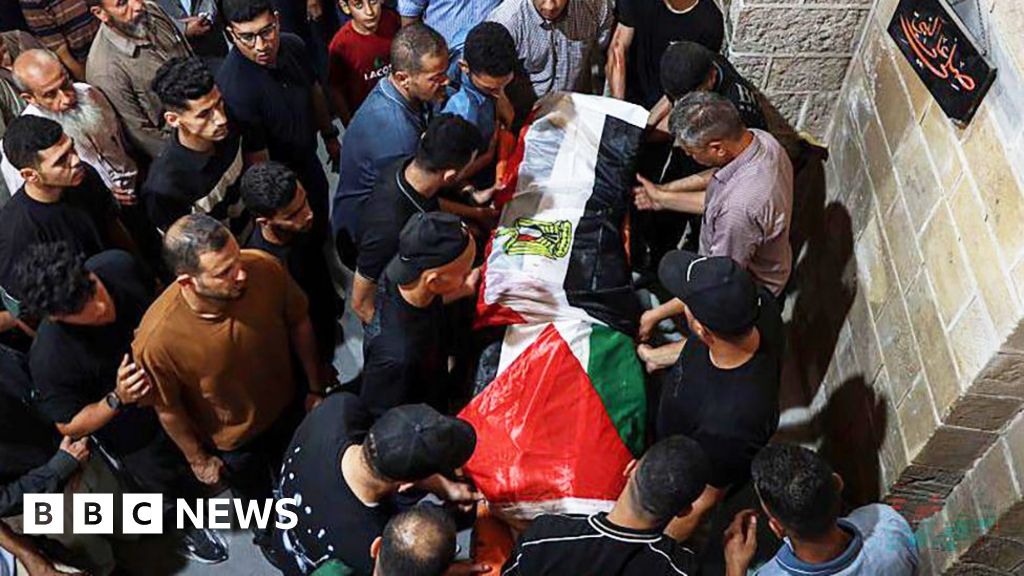
By 10 July, Israeli forces had expanded control to nearly 70 percent of Gaza amid continued strikes and fresh satellite thermal detections, pointing to sustained combat activity. Humanitarian needs in Gaza remain acute, with severe water insecurity despite substantial UNRWA distributions and targeted WHO support. Along the Israel, Lebanon frontier, UNIFIL reports daily Resolution 1701 violations even as some displaced families return to the south, and Israeli forces reportedly continue operating north of the Blue Line. In the Gulf, commercial traffic through the Strait of Hormuz has fallen sharply following reciprocal US, Iran strikes and Iranian warnings to use Tehran-approved routes, with industry data showing southern-route transits dropping into single digits and northern-route traffic well below post-June peaks. Muscat-hosted safe-passage talks and ongoing technical channels may temper immediate escalation, while Israeli assessments judge near‑term direct Iranian targeting of Israel as unlikely and the IDF remains on high alert.
Change from previous assessment
Since the 10 July brief, new reporting indicates Israeli control in Gaza has expanded to nearly 70 percent and NASA registered 12 thermal anomalies on 10 July, reinforcing that combat remains active. Reciprocal US, Iran strikes occurred on 10 July and Jordan intercepted Iranian fire, while Muscat‑hosted talks and technical channels reopened for safe passage in the Strait of Hormuz. Maritime indicators now show southern‑route transits dropping into single digits and northern‑route traffic holding above 20 but below post‑June peaks, alongside renewed Iranian routing warnings. On the Israel, Lebanon front, UNIFIL continues to log daily Resolution 1701 violations, Hezbollah has publicly rejected diplomatic frameworks, and some Lebanese families are returning south amid UXO and debris hazards. Confidence remains medium, but indicators for maritime disruption and Gaza operational tempo have strengthened.
Key judgments
- Israeli combat operations in Gaza are very likely ongoing, with Israeli forces expanding control from about half to nearly 70 percent by 10 July, continued Israeli strikes killing at least nine Palestinians, and 12 NASA thermal detections over the past two days signalling active combat zones. (Confidence: high · REPORTED)
- I&W: FIRMS or VIIRS thermal detections in Gaza remain above 10 per 48-hour period for two consecutive reporting cycles (0-14 days)
- I&W: Official IDF communiqués announce additional neighbourhoods brought under control in central or southern Gaza (0-14 days)
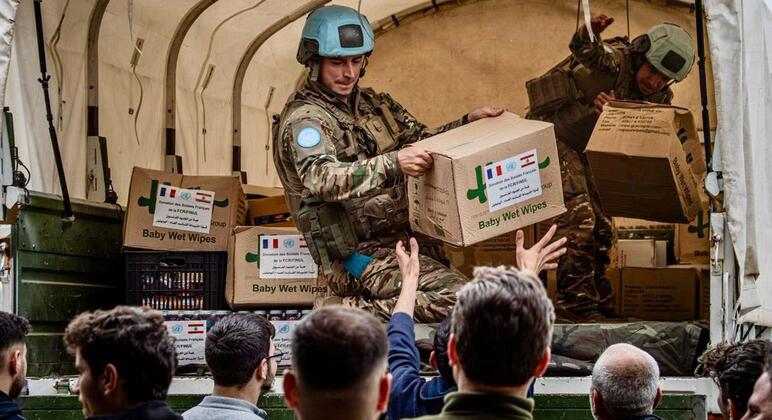
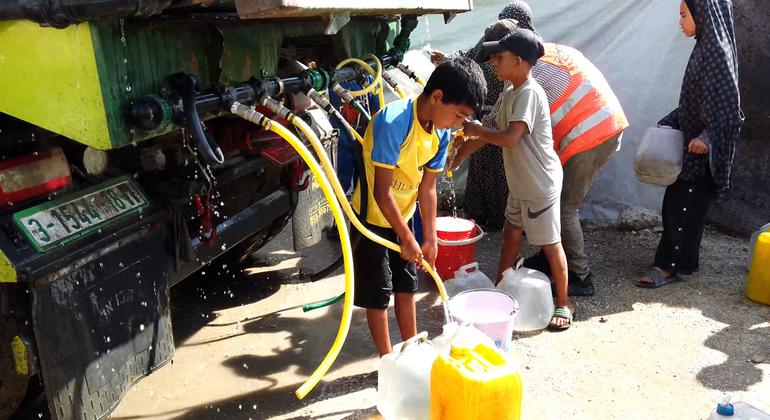
- Humanitarian conditions in Gaza likely remain acute, with June monitoring finding 84 percent of assessed households facing moderate-to-high water insecurity, UNRWA trucking roughly 79 million litres over 16-30 June to reach over 860,000 people daily, WHO providing specialised feeding bottles for 45 infants with cleft conditions, and the UN recording at least 593 aid workers killed since the war began. (Confidence: high · ASSESSED)
- I&W: Israel implements a trial reopening of Rafah and daily aid convoy throughput rises above late‑June water delivery baselines (0-14 days)
- I&W: Health cluster or hospital reporting shows a spike in waterborne disease or acute malnutrition admissions in central or southern Gaza (0-14 days)
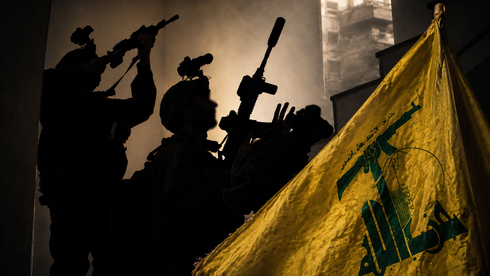
- A durable halt to hostilities along the Israel, Lebanon frontier is unlikely in the near term: UNIFIL records daily Resolution 1701 violations despite reduced violence, Hezbollah publicly rejected a US‑brokered deal and a June truce, and reporting indicates Israeli forces continue to operate north of the Blue Line and remain in parts of southern Lebanon, even as some displaced Lebanese families return to the south amid movement hazards from rubble and unexploded ordnance. (Confidence: medium · ASSESSED)
- I&W: UNIFIL daily Resolution 1701 violation tallies fall to near‑zero for two consecutive weeks (1-3 months)
- I&W: Official IDF reports of new strikes or eliminations inside a designated Lebanese security zone north of the Blue Line (0-14 days)
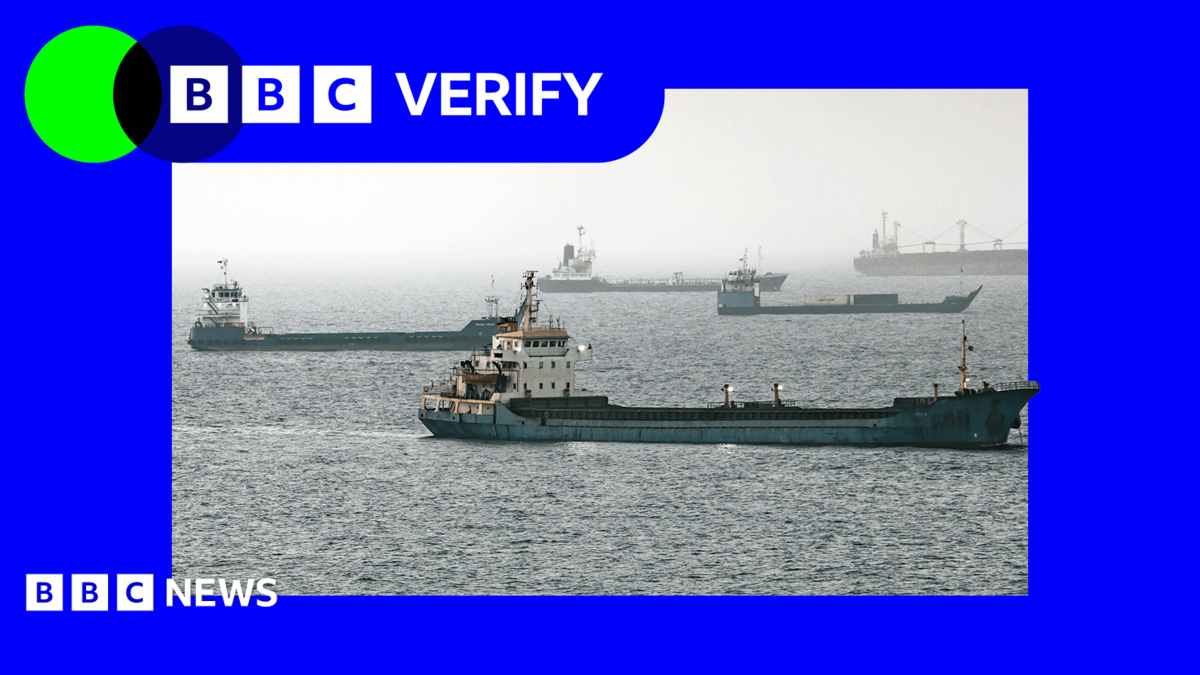
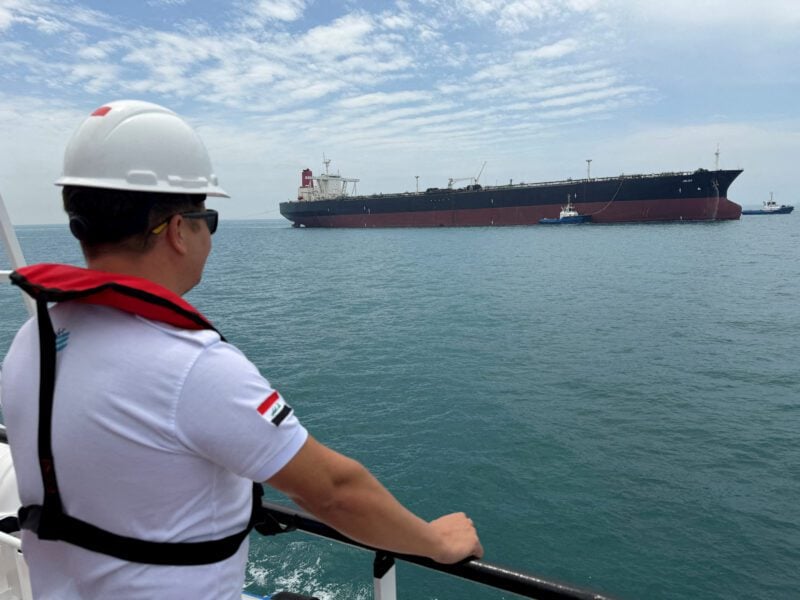
- Commercial traffic through the Strait of Hormuz has very likely fallen sharply and remains vulnerable, with southern‑route tanker transits dropping into single digits after 7 July, northern‑route traffic holding above 20 but far below post‑June peaks, and Iranian authorities warning vessels to use routes it approves. (Confidence: high · REPORTED)
- I&W: Verified rebound to more than 70 daily Strait transits for at least seven consecutive days (1-3 months)
- I&W: New documented harassment, interdiction, or mine incidents attributed to the IRGC in or near the Strait (0-14 days)
- Immediate further escalation between the United States and Iran has a roughly even chance of pausing in the near term, given active talks on safe passage and continued technical channels, despite reciprocal strikes on 10 July and Jordan’s interception of Iranian fire, while the IDF remains on high alert. (Confidence: medium · ASSESSED)
- I&W: Public readouts from Muscat confirm agreed navigation procedures or military deconfliction mechanisms (0-14 days)
- I&W: Additional US or Iranian strikes announced against targets in Iran or Gulf states within one week (0-14 days)
- Near‑term direct Iranian attacks on Israel are unlikely, according to Israeli assessments, though the IDF is maintaining high alert. (Confidence: medium · ASSESSED)
- I&W: Iranian state media announces direct missile launches toward Israeli territory (0-14 days)
- I&W: Consistent official briefings in Israel reiterate no imminent Iranian attack for two consecutive weeks (0-14 days)
- Civilian security risk across Lebanon, including Beirut, is very likely elevated, with ongoing risks of terrorist plotting, kidnapping, landmines and the possibility of drone or missile strikes, compounded by US Government movement restrictions, ordered departure and limited consular support, and the Lebanese state's inability to guarantee safety. (Confidence: high · ASSESSED)
- I&W: US Embassy Beirut issues additional security notices expanding no‑go zones or curfew guidance (0-14 days)
- I&W: UNIFIL or local reporting confirms drone or missile activity in or near Beirut (0-14 days)
- Displacement pressures along the Israel, Lebanon frontier very likely remain high: about 96,000 people from northern Israel are displaced and over 1.4 million were reported displaced in Lebanon during 2023, although some Lebanese families have begun returning to the south. (Confidence: medium · ASSESSED)
- I&W: Official Israeli reporting continues to list approximately 96,000 evacuees from northern communities without sustained reduction (1-3 months)
- I&W: UN or NGO field updates record week‑on‑week increases in returns to municipalities in southern Lebanon (1-3 months)
Outlook & scenarios
Protracted low‑intensity confrontation with maritime friction (60%)
Israeli operations continue across Gaza with periodic air and ground actions, while the Israel, Lebanon front sees daily but contained Resolution 1701 violations and occasional targeted strikes. In the Gulf, Tehran’s routing demands remain in place and traffic stays below late‑June peaks, with sporadic incident risk. Humanitarian access in Gaza improves only marginally.
Escalatory spiral across the Levant and Gulf (35%)
Reciprocal US, Iran strikes resume, Jordan intercepts additional projectiles, and Hezbollah intensifies fire, prompting broader Israeli actions in Lebanon. Strait of Hormuz incidents increase and transits drop further, raising energy‑market and insurance stress. Displacement grows on both sides of the Blue Line and humanitarian operations face new access constraints.
Managed de‑escalation and partial maritime stabilisation (30%)
Muscat‑facilitated arrangements establish safe‑passage procedures that reduce harassment risk and lift transits off recent lows. The Israel, Lebanon front cools somewhat, with fewer recorded violations. A trial reopening window at Rafah is used to move additional aid, modestly improving Gaza’s access to essentials.
Recommendations
- Maintain a daily geospatial watch on Gaza using FIRMS/VIIRS and fuse with IDF communiqués to map areas of control and active combat.
- Produce a standing maritime risk dashboard tracking Strait of Hormuz transits by route and operator using INTERTANKO/Kpler data and log Iranian routing advisories.
- Task Lebanon analysts to pull UNIFIL daily Resolution 1701 violation reporting and geolocate incidents relative to the Blue Line to detect trend shifts.
- Prepare a short methodology note reconciling casualty figures by source and timeframe in Gaza to inform senior briefings where numbers diverge.
- Engage humanitarian liaisons to verify WASH Cluster conditions against UNRWA distribution baselines and flag any disease‑surge signals within 24 hours.
- Set collection on Muscat talks and technical channels, requesting readouts or diplomatic notes that would indicate agreed maritime deconfliction.
- Update Lebanon posture assumptions using official restrictions: reflect ordered departure, movement limits, terrorism and kidnapping risks, and UXO hazards in trip‑planning and risk models.
- Define tripwires for escalation monitoring: additional US, Iran strikes announcements, Jordanian intercept reports, or new IDF claims of eliminations in a Lebanese security zone.
Confidence & uncertainty
Overall confidence is medium. Several judgments rest on multiple independent and reliable sources: UN agencies and industry data corroborate Gaza humanitarian conditions and depressed Hormuz traffic, while official and major‑media reporting corroborate Gaza combat activity and UNIFIL’s daily 1701 violations. Other elements rely on single‑source or again‑contested reporting, notably the mix of ceasefire and truce claims in Lebanon and assessments of Iranian intent toward Israel. Social‑media assertions of ceasefire collapse were treated cautiously. These sourcing asymmetries and timeline inconsistencies warrant a medium confidence call.
Alternative analysis (red cell)
Several key judgments rely on single-source reporting or lower‑grade technical indicators that do not provide conclusive, multi‑source support. Alternative, defensible readings include: combat in Gaza may be intense but localized rather than reflecting a validated ~70% territorial-control shift; the Israel–Lebanon frontier is fragile but episodic violations do not by themselves prove a durable halt is impossible; and reciprocal strikes between the US and Iran increase the risk of continued tit‑for‑tat escalation absent documented diplomatic restraint. Israeli public assessments that downplay Iranian intent should be treated as one input among others, not definitive without corroborating intelligence.
Intelligence gaps
- [EEI 1.1 · PARTIAL] Number, type and geolocated coordinates of projectiles (rockets, mortars, anti-tank guided missiles) fired from Lebanon into Israel in the last 24/72 hours, including time-stamped launch and impact locations. Recommended collection: signals/intel
- [EEI 1.2 · PARTIAL] Satellite or aerial imagery showing movement, concentration, or forward displacement of Hezbollah-associated military assets (armored vehicles, artillery pieces, mobile rocket launchers, logistics convoys) to positions within 0–10 km of the Israel-Lebanon border. Recommended collection: satellite/imagery
- [EEI 1.3 · UNCOVERED] Intercepted or captured Hezbollah command-and-control communications or orders explicitly directing cross-border operations or coordinated strikes with Palestinian groups (time-stamped messages, unit identifiers, orders to fire/move). Recommended collection: signals/intel
- [EEI 1.4 · PARTIAL] Observable changes in Israeli northern-front posture within Israel (numbers and types of reinforcements deployed to northern brigades, activation of reserves, air defense redeployments, evacuation orders or shelter alerts in northern towns), including timestamps and unit IDs where available. Recommended collection: human/intel
- [EEI 2.1 · UNCOVERED] Official or corroborated reports of IDF reservist mobilization and unit-level deployment orders (number of reservists called, named brigades/units ordered to deploy, deployment timelines). Recommended collection: open-source/media
- [EEI 2.2 · UNCOVERED] Satellite or ground imagery showing concentrations of IDF heavy equipment (tanks, infantry fighting vehicles, engineering vehicles), staging areas, field hospitals or forward supply dumps within X km of the Gaza border and at known crossing points. Recommended collection: satellite/imagery
- [EEI 2.3 · PARTIAL] Change in strike patterns consistent with pre-ground-attack shaping: sustained high-frequency airstrikes on tunnel networks, command nodes, coastal launch sites, and known insurgent concentrations (strike counts, munition types, locations, times). Recommended collection: open-source/media
- [EEI 2.4 · UNCOVERED] Logistics indicators: verified convoys of fuel/ammunition entering staging areas, establishment of forward logistics or medical bases, or documented requisitioning orders for bulk combat supplies with timestamps and quantities. Recommended collection: human/intel
- [EEI 3.1 · PARTIAL] Number, participants and content of diplomatic contacts or negotiation sessions in the last 48 hours involving mediators (Egypt, Qatar, US, UN), including any proposed ceasefire text, prisoner/exchange lists, timelines or verification mechanisms. Recommended collection: diplomatic
- [EEI 3.2 · UNCOVERED] Public statements, press releases or verified communiqués from Hamas and other Gaza armed groups specifying acceptance, rejection, or conditions for a ceasefire (explicit conditions such as prisoner release lists, withdrawal terms, lifting of blockades), with timestamps and speaker attribution. Recommended collection: open-source/media
- [EEI 3.4 · PARTIAL] Operational evidence of a de facto pause: verified sustained reduction (e.g., ≥12 hours) in strikes or launches from either side in specific sectors, supported by strike/impact logs, radar tracks and incident reports. Recommended collection: open-source/media
Cited sources
[1] kunc.org · U.S.-Iran fighting appears to pause. And, life inside Israel's military zones in Gaza (A) · sha256:1e3577cd2c11 [2] nbcnews.com · Gaza doctor held without charges in Israel more than 18 months as calls grow for release (A) · sha256:3fd70f4a2817 [3] NASA · NASA FIRMS thermal detections — Gaza (2d) (A) · sha256:7103531b1ceb [4] United Nations · Diplomats go virtual to witness Gaza displacement site up close (A) · sha256:aca3c8ec4ac1 [5] bbc.com · Palestinians mourn Gaza World Cup screenings organiser killed in Israeli strike (A) · sha256:6c7f3152bd4a [6] United Nations · Grim homecoming: Devastation greets Lebanon’s war-weary returnees (A) · sha256:d573f0df6555 [7] ynetnews.com · How a push to disarm Hezbollah is deepening divisions in Lebanon, raising fears of civil war (B) · sha256:e6b05bfee443 [8] Wikipedia · 2026 Israel–Lebanon ceasefire (B) · sha256:c0cc91cecd1b [9] gcaptain.com · INTERTANKO: Hormuz Tanker Transits Via Southern Route Fall to Single Digits After Renewed Fighting (C) · sha256:d4540b21f2bf [10] BBC · US-Iran strikes: Strait of Hormuz ship traffic falls steeply (A) · sha256:09b7c3ea88ae [11] maritime-executive.com · Hormuz Attacks and Counterattacks Mark a Change in Strategy (B) · sha256:e7e2a2f63244 [12] haaretz.com · Iran says it hits U.S. military targets in Gulf, buries slain leader Khamenei (A) · sha256:785512786936 [13] U.S. Department of State · Lebanon Travel Advisory | Travel.State.gov (A) · sha256:a9c302d69f7c [14] Wikipedia · Hezbollah–Israel conflict (2023–present) (B) · sha256:96fe3549b020
Source content hashes were computed at collection time; the cited text is preserved unmodified for the life of this product.
Red cell review: PARTIAL DISSENT
TLP:CLEAR