TLP:CLEAR · Disclosure is not limited.
Israel, Gaza, Lebanon: entrenched IDF posture, fraying ceasefires, and widening maritime risk
Time window: Last 7 days · Audience: General analyst · Type: Situation report · DTG: 2026-07-04 13:15Z · Overall confidence: HIGH
BLUF
Israel is very likely to keep IDF forces inside a southern Lebanon security zone while Gaza hostilities persist under a nominal ceasefire. Large-scale demolitions along the Yellow Line, fresh IDF, Hezbollah strikes, settlement signalling for Gaza, and Iranian actions at sea keep escalation risks high on short tactical warning.
Executive summary
Since mid-April truce announcements on the Lebanon front, both the IDF and Hezbollah have continued operations. On 3 July the IDF conducted multiple strikes on Hezbollah targets in southern Lebanon, while extensive demolitions inside the IDF Yellow Line continue, including a 450‑tonne tunnel demolition in Qantara and widespread damage documented by satellite imagery in Qantara and Aadshit. Israeli leaders signal no timetable for withdrawal: Israel will not leave a southern Lebanon security zone until the Lebanese Armed Forces control all areas south of the Litani and Hezbollah is disarmed. In Gaza, the IDF controls most of the Strip while Hamas holds the remainder, with lethal enforcement of access restrictions, continued strikes despite a ceasefire, and UN verification of deaths near IDF deployment areas. Negotiation tracks continue in Cairo and via U.S. channels with Hamas, but Israeli political signalling on new settlements and IDF planning to resume operations increase the risk of renewed large‑scale fighting. Regionally, Iranian forces have attacked shipping in the Strait of Hormuz and struck targets in Bahrain and Kuwait, while CENTCOM maintains a high‑readiness posture, keeping maritime spillover risk elevated.
Change from previous assessment
Since the 3 July brief, Israel’s ambassador publicly tied any Lebanon withdrawal to LAF control south of the Litani and Hezbollah’s disarmament, hardening the outlook for a prolonged security zone. Fresh IDF strikes on 3 July and new demolition evidence in Qantara and Aadshit reinforced judgments about a fragile truce and large‑scale damage along the Yellow Line. In Gaza, additional indicators point to continued lethal access enforcement and ongoing strike activity despite ceasefire language, while Israeli settlement signalling and Southern Command planning increased the risk of renewed offensive operations. Regionally, Iranian attacks in Bahrain and Kuwait and a reported Hormuz interdiction kept maritime spillover risk elevated. Overall confidence is unchanged but supported by additional corroboration.
Key judgments
- Israel will very likely keep IDF forces inside a security zone in southern Lebanon for months, with withdrawal conditioned on the Lebanese Armed Forces controlling all areas south of the Litani and the removal of Hezbollah’s armed presence. (Confidence: medium · ASSESSED)
- I&W: Open-source imagery and field reporting show IDF fixed positions, checkpoints or new berming remaining active inside villages such as Aadshit and Qantara, with no public withdrawal orders issued. (0-14 days)
- I&W: Documented LAF battalion deployments south of the Litani with joint LAF, UNIFIL checkpoint enforcement and official Israeli announcements of unit pullbacks. (1-3 months)
- The Lebanon ceasefire framework is very likely to keep fraying, with continued IDF, Hezbollah strikes and Hezbollah’s political rejection of the agreement preventing consolidation. (Confidence: high · ASSESSED)
- I&W: Additional geolocated IDF precision strikes or Hezbollah cells operating south of the Litani documented by independent monitors. (0-14 days)
- I&W: Verified Hezbollah redeployment north of the Litani and routine LAF, UNIFIL enforcement along the Blue Line. (1-3 months)
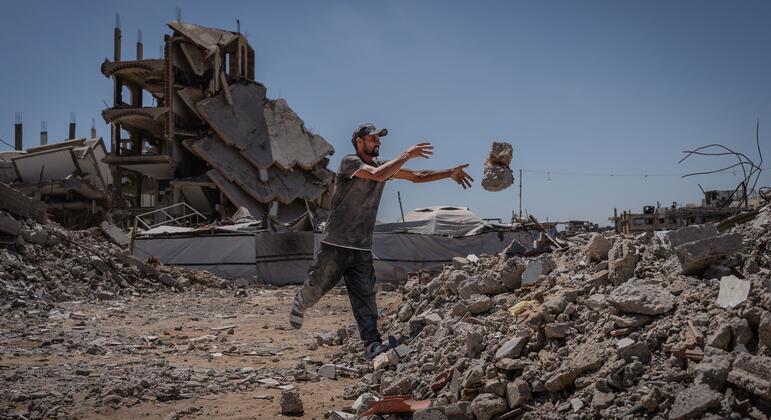
- Southern Lebanon’s Yellow Line towns have almost certainly suffered extensive demolition by IDF operations in recent weeks, which will impede large‑scale civilian return and municipal recovery. (Confidence: high · REPORTED)
- I&W: New high‑resolution satellite imagery shows additional building footprints razed in Qantara, Aadshit and nearby villages. (0-14 days)
- I&W: Verified reconstruction works and recorded civilian returns above 10,000 across Yellow Line localities. (1-3 months)
- Gaza hostilities and coercive access control are very likely continuing under a nominal ceasefire: the IDF controls most of the Strip while Hamas holds the remainder, and lethal enforcement and ongoing strikes continue amid severe access restrictions. (Confidence: medium · ASSESSED)
- I&W: Further UN‑verified fatalities near IDF deployment zones and continued high‑confidence FIRMS hotspots in northern Gaza. (0-14 days)
- I&W: Formal IDF orders lifting access restrictions in specified districts and a sustained drop in FIRMS detections for 30 days. (1-3 months)
- Israeli settlement signalling for Gaza and IDF planning likely raise the risk of a renewed large‑scale campaign against Hamas, complicating Cairo‑based and U.S. back‑channel diplomacy. (Confidence: medium · ASSESSED)
- I&W: Public approval or tendering for new settlements in northern Gaza, combined with IDF mobilisation orders for division‑level manoeuvre. (1-3 months)
- I&W: Announcement of a detailed disarmament protocol accepted by Hamas interlocutors and IDF operational pause orders. (1-3 months)
- Spillover risk at sea is likely to persist: IRGC actions in the Strait of Hormuz and Iran’s strikes in Bahrain and Kuwait, alongside a high U.S. readiness posture, keep prospects for further maritime disruption elevated. (Confidence: medium · ASSESSED)
- I&W: New IRGC interdictions or declared inspections of commercial vessels in Hormuz, or a fresh UN Security Council emergency session on Gulf attacks. (0-14 days)
- I&W: Thirty days without reported interdictions and visible carrier strike group repositioning out of the Arabian Gulf. (1-3 months)
Outlook & scenarios
Static security zone and chronic skirmishing on the Lebanon front (60%)
The IDF maintains entrenched positions inside southern Lebanon with no withdrawal orders. Hezbollah probes across the Blue Line while avoiding deep‑strike salvos. Demolitions continue within the Yellow Line, complicating LAF deployment and civilian return. Truce language persists on paper but is routinely violated by precision IDF strikes and Hezbollah cells south of the Litani.
Limited war relapse in southern Lebanon (30%)
A Hezbollah attack causing mass Israeli casualties triggers multi‑brigade IDF manoeuvre north of the Litani and expanded airstrikes on command nodes and tunnel networks around Nabatieh, Qantara and Aadshit. Hezbollah responds with guided rockets and anti‑tank teams, drawing sustained cross‑border fires for weeks and displacing additional civilians on both sides.
Gaza re‑escalation amid settlement push (50%)
Israeli political authorisation to advance new settlements in northern Gaza, coupled with Southern Command’s operational planning, drives a renewed IDF campaign against Hamas strongholds. Negotiations in Cairo and U.S. channels stall. Access‑restricted areas expand, with continued lethal enforcement and intermittent strikes despite ceasefire language.
Maritime shock in the Strait of Hormuz (30%)
Further IRGC interdictions or attacks in Hormuz disrupt tanker and container flows, raising insurance premiums and diverting traffic. CENTCOM sustains carrier and helicopter presence, reducing but not eliminating risk. Israel‑bound cargo faces delays and rerouting, while regional aerial routing adjustments increase flight times and costs.
Recommendations
- Task imagery collection to update damage baselines for Qantara, Aadshit and adjacent Yellow Line localities; generate a return‑to‑habitability index to quantify civilian re‑entry barriers.
- Establish a standing watch on IDF and Defence Ministry communications and orders of battle for indications of withdrawal planning or new entrenchment in southern Lebanon; cross‑cue with open‑source geolocation of earthworks and fixed checkpoints.
- Develop a Blue Line compliance tracker that logs geolocated IDF strikes and Hezbollah cell activity south of the Litani; share weekly with policy customers to characterise truce durability.
- Instrument NASA FIRMS thermal detections for Gaza as an adjunct indicator only; require corroboration by imagery or ground reporting before treating hotspots as strike proxies.
- Map Gaza access‑restricted areas and changes over time; integrate UN‑verified casualty reporting near IDF deployments to quantify humanitarian risk under the ceasefire.
- Monitor Israeli political signalling and bureaucratic actions related to Gaza settlements, including tenders or planning approvals; tie to IDF mobilisation indicators for a re‑escalation alerting model.
- Maintain a maritime risk posture log for Hormuz: track AIS anomalies, IRGC communications, carrier group movements and UN Security Council convenings; provide 72‑hour advisories for Israel‑linked cargoes.
- Engage LAF and UNIFIL reporting streams to detect credible south‑of‑Litani deployment plans, logistics flows and checkpoint activation that could enable an eventual IDF drawdown.
Confidence & uncertainty
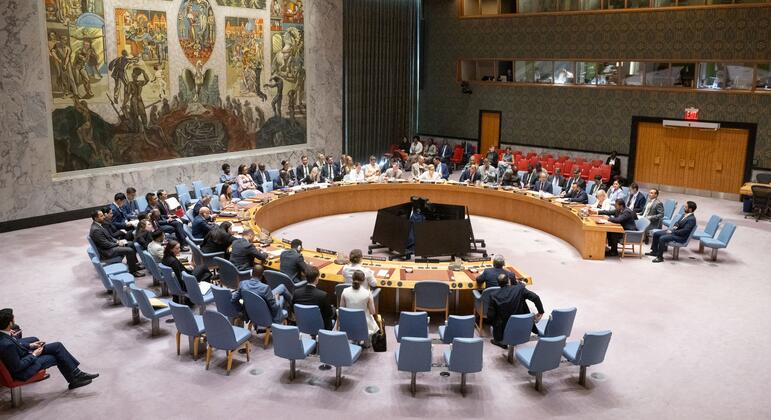
The assessment rests on multiple, mutually reinforcing sources: UN reporting, official government advisories, and major media document ongoing IDF, Hezbollah strikes, extensive demolitions in southern Lebanon, Israeli leadership statements conditioning any withdrawal on LAF control, and continued hostilities and access enforcement in Gaza. Maritime risk judgments are supported by reported IRGC actions, a UN Security Council meeting on Gulf attacks, and clear evidence of a sustained U.S. readiness posture. Remaining uncertainties include contested ceasefire timelines and partial discrepancies over the share of Gaza under IDF control, and casualty reporting that relies in part on local authorities. These gaps temper confidence on some forward‑looking elements but do not undercut the core picture.
Alternative analysis (red cell)
Many judgments conflate political statements, contingency planning, and episodic incidents with robust operational trajectories. The evidence supports conditional intent and elevated risks in multiple theaters, but it also plausibly supports alternative outcomes—temporary deployments, a fragile but partially functioning ceasefire, localized rather than systemic control in Gaza, and episodic maritime harassment that U.S. posture may deter. Resolving these uncertainties requires targeted operational, ISR, and diplomatic collection.
Intelligence gaps
- [EEI 1.1 · PARTIAL] Number, type and geolocated coordinates of projectiles (rockets, mortars, anti-tank guided missiles) fired from Lebanon into Israel in the last 24/72 hours, including time-stamped launch and impact locations. Recommended collection: signals/intel
- [EEI 1.2 · UNCOVERED] Satellite or aerial imagery showing movement, concentration, or forward displacement of Hezbollah-associated military assets (armored vehicles, artillery pieces, mobile rocket launchers, logistics convoys) to positions within 0–10 km of the Israel-Lebanon border. Recommended collection: satellite/imagery
- [EEI 1.3 · UNCOVERED] Intercepted or captured Hezbollah command-and-control communications or orders explicitly directing cross-border operations or coordinated strikes with Palestinian groups (time-stamped messages, unit identifiers, orders to fire/move). Recommended collection: signals/intel
- [EEI 1.4 · PARTIAL] Observable changes in Israeli northern-front posture within Israel (numbers and types of reinforcements deployed to northern brigades, activation of reserves, air defense redeployments, evacuation orders or shelter alerts in northern towns), including timestamps and unit IDs where available. Recommended collection: human/intel
- [EEI 2.1 · UNCOVERED] Official or corroborated reports of IDF reservist mobilization and unit-level deployment orders (number of reservists called, named brigades/units ordered to deploy, deployment timelines). Recommended collection: open-source/media
- [EEI 2.2 · UNCOVERED] Satellite or ground imagery showing concentrations of IDF heavy equipment (tanks, infantry fighting vehicles, engineering vehicles), staging areas, field hospitals or forward supply dumps within X km of the Gaza border and at known crossing points. Recommended collection: satellite/imagery
- [EEI 2.3 · PARTIAL] Change in strike patterns consistent with pre-ground-attack shaping: sustained high-frequency airstrikes on tunnel networks, command nodes, coastal launch sites, and known insurgent concentrations (strike counts, munition types, locations, times). Recommended collection: open-source/media
- [EEI 2.4 · UNCOVERED] Logistics indicators: verified convoys of fuel/ammunition entering staging areas, establishment of forward logistics or medical bases, or documented requisitioning orders for bulk combat supplies with timestamps and quantities. Recommended collection: human/intel
- [EEI 3.1 · PARTIAL] Number, participants and content of diplomatic contacts or negotiation sessions in the last 48 hours involving mediators (Egypt, Qatar, US, UN), including any proposed ceasefire text, prisoner/exchange lists, timelines or verification mechanisms. Recommended collection: diplomatic
- [EEI 3.2 · UNCOVERED] Public statements, press releases or verified communiqués from Hamas and other Gaza armed groups specifying acceptance, rejection, or conditions for a ceasefire (explicit conditions such as prisoner release lists, withdrawal terms, lifting of blockades), with timestamps and speaker attribution. Recommended collection: open-source/media
- [EEI 3.4 · PARTIAL] Operational evidence of a de facto pause: verified sustained reduction (e.g., ≥12 hours) in strikes or launches from either side in specific sectors, supported by strike/impact logs, radar tracks and incident reports. Recommended collection: open-source/media
Cited sources
[1] jpost.com · Lebanon deal focused on dismantling Hezbollah, not Israeli withdrawal, ambassador Leiter says (B) · sha256:2da63a6ee5f2 [2] ynetnews.com · Israel-Lebanon agreement touted as success but now it depends on Iran (B) · sha256:b80563dbbb46 [3] Euronews · "لن ننسحب". إسرائيل: بقاؤنا في لبنان سيكون "طويل الأمد" وهدفنا التطبيع مع بيروت (B) · sha256:de396923d6f3 [4] Rep. Becca Balint's Office · Rep. Balint Leads 75 Colleagues in Condemning Israeli Military Engagement in Lebanon, Destruction of Civilian Homes and Infrastructure (A) · sha256:dd02b724c61a [5] jpost.com · IDF destroys tunnels, kills terrorists, arrests over 60 terror suspects in North, South, West Bank (B) · sha256:d71eb30abf9a [6] Wikipedia · Hezbollah–Israel conflict (2023–present) (B) · sha256:022df6ca6e7c [7] bellingcat.com · Satellite Imagery Shows Ongoing Demolitions Across Southern Lebanon - bellingcat (B) · sha256:052733cd55f8 [8] ynetnews.com · US Gaza shift leaves Israel isolated as Hamas keeps its weapons (B) · sha256:318d6b0d8397 [9] jpost.com · IDF working to strengthen ISF as it prepares for possibility of renewed Gaza operations (B) · sha256:9dba8f7d7378 [10] United Nations · Expanding areas under Israeli control in Gaza increase risks to civilians, UN warns (A) · sha256:b9775900f7da [11] swissinfo.ch · الحرب في الشرق الأوسط تقلّص الاهتمام بمصير قطاع غزة (A) · sha256:bfecb1d3a993 [12] NASA · NASA FIRMS thermal detections — Gaza (2d) (A) · sha256:689c42decda8 [13] Al Jazeera · Could Israel really build settlements in Gaza? (B) · sha256:17787280b8ce [14] gcaptain.com · Japan Weighs Return to Iranian Oil as Shipping Risks Cloud Sanctions Waiver (A) · sha256:422058aef7bb [15] United Nations · Security Council LIVE: Emergency meeting on Iranian attack in Bahrain (A) · sha256:8a0d2c085c67 [16] maritime-executive.com · US Forces Still Poised in the Arabian Gulf Area (B) · sha256:bc323b87762b
Source content hashes were computed at collection time; the cited text is preserved unmodified for the life of this product.
Red cell review: PARTIAL DISSENT
TLP:CLEAR