TLP:CLEAR · Disclosure is not limited.
Israel, Gaza, Lebanon: fragile deconfliction, entrenched IDF posture, and continued strikes
Time window: Last 7 days · Audience: General analyst · Type: Situation report · DTG: 2026-07-05 13:13Z · Overall confidence: MEDIUM
BLUF
A 5 July US, Iran deconfliction understanding and a new Israel, Lebanon agreement lower immediate miscalculation risk along the border, but Israel is very likely to keep IDF units inside a southern Lebanon security zone while low‑level exchanges and stringent access controls persist in Gaza. Humanitarian conditions in Gaza remain acute under extensive access restrictions and ongoing Israeli strikes.
Executive summary
On 5 July, Washington and Tehran reached an understanding on a Lebanon deconfliction mechanism, alongside Israel and Lebanon announcing their first agreement since 1983. Hezbollah is signalling resistance and alleging Israeli ceasefire violations, while Israel is signalling a long‑term presence in southern Lebanon and has not issued withdrawal orders. Reporting points to widespread demolition in Yellow Line localities, including major tunnel demolitions at Qantara, hampering prospects for near‑term civilian return. In Gaza, roughly two‑thirds of the territory is access‑restricted, Israeli forces have used lethal enforcement of those restrictions, and strikes continued this week, with satellite thermal detections corroborating fresh fire activity. The UN Security Council met on escalating Gulf tensions after reported Iranian attacks in Bahrain and Kuwait, keeping the risk of regional spillover elevated.
Change from previous assessment
New 5 July developments include a US, Iran deconfliction understanding for Lebanon and an Israel, Lebanon agreement, which we assess as lowering near‑term miscalculation risk while not altering Israel’s likely long‑term posture in southern Lebanon. Reporting this week adds detail on extensive demolitions inside the Yellow Line and continued IDF artillery near the border as some northern Israeli residents return. In Gaza, satellite thermal detections and fresh strike reports confirm continued hostilities under stringent access restrictions; our confidence on Gaza dynamics is slightly higher due to multiple corroborating multilateral sources. We add a spillover judgment tied to UN Security Council action on Iranian attacks in Bahrain and Kuwait.
Key judgments
- The 5 July understandings, including a US, Iran deconfliction mechanism for Lebanon and a new Israel, Lebanon agreement, are likely to reduce immediate miscalculation risk along the border, but implementation will be fragile given Hezbollah’s threats in Beirut and its accusations of Israeli violations. (Confidence: medium · ASSESSED)
- I&W: Observable redeployment of Hezbollah units north of the Litani River and public confirmation of security responsibilities south of the Litani by Lebanese authorities. (1-3 months)
- I&W: Organised Hezbollah shows‑of‑force or attacks in Beirut or renewed cross‑border fire causing casualties along the Israel, Lebanon frontier. (0-14 days)
- Israel is very likely to retain IDF units inside a southern Lebanon security zone for months, conditioning any pullback on Hezbollah’s repositioning north of the Litani and external validation of local security control. (Confidence: medium · ASSESSED)
- I&W: Continued Israeli statements that no withdrawal orders have been issued and ongoing IDF releases showing security and engineering activity in southern Lebanon. (0-14 days)
- I&W: Formal Israeli announcement of a phased pullback linked to Lebanese state security presence south of the Litani. (1-3 months)
- Localities inside the IDF ‘Yellow Line’ in southern Lebanon have likely suffered extensive demolition in recent weeks that will delay large‑scale civilian return. (Confidence: medium · ASSESSED)
- I&W: Lebanese authorities keep evacuation or no‑return notices in force for most towns within the Yellow Line and report high percentages of uninhabitable structures. (1-3 months)
- I&W: Official announcements of safe‑return corridors and reconstruction tenders for specific Yellow Line towns with measurable household returns. (1-3 months)
- In Gaza, hostilities and coercive access control are continuing under a nominal ceasefire: around two‑thirds of the Strip remains access‑restricted, Israeli forces have used lethal enforcement, and airstrikes persisted this week amid dire displacement and search‑and‑recovery conditions. (Confidence: high · ASSESSED)
- I&W: Sustained satellite thermal detections of new fire activity across Gaza and continued UN reporting that roughly two‑thirds of land remains access‑restricted. (0-14 days)
- I&W: Public lifting of access restrictions by Israeli authorities with a marked reduction in restricted‑area coverage and a verified multi‑week halt in airstrikes. (1-3 months)
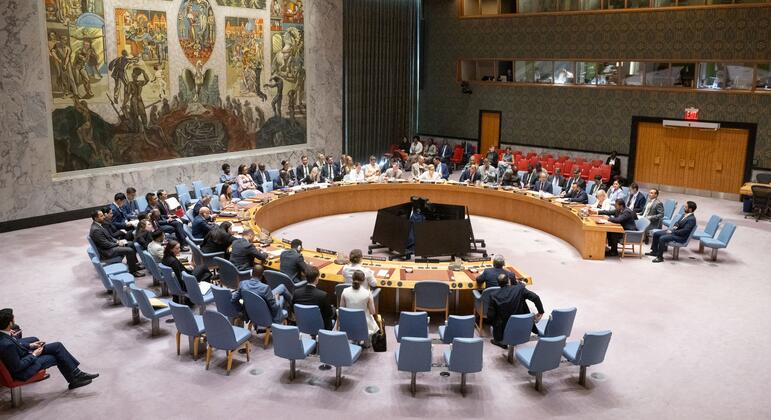
- Regional spillover risk likely persists: reported Iranian attacks in Bahrain and Kuwait and ongoing US, Iran strikes around the Strait of Hormuz have already drawn UN Security Council attention. (Confidence: medium · ASSESSED)
- I&W: Additional UN Security Council emergency sessions on Gulf incidents or official claims of new cross‑border strikes by Iran, the United States, or partners. (0-14 days)
- I&W: Public US, Iran statements signalling a pause in reciprocal strikes and deconfliction measures expanding beyond Lebanon. (1-3 months)
- Northern Israel is unlikely to normalise fully in the near term despite some returns, given ongoing IDF artillery aimed at pushing Hezbollah away from the border and continued incidents across the frontier. (Confidence: medium · ASSESSED)
- I&W: Israeli civil defence posture and IDF daily artillery activity remain in effect across the Galilee without multi‑day pauses. (0-14 days)
- I&W: Public easing of civil defence measures and a two‑week cessation of routine IDF bombardment audible along the border. (0-14 days)
Outlook & scenarios
Managed deconfliction along the Israel, Lebanon border holds, with low‑level violations (45%)
Washington and Tehran’s Lebanon deconfliction mechanism and the 5 July Israel, Lebanon agreement reduce immediate misfires. Hezbollah limits activity south of the Litani River on paper while contesting implementation in rhetoric. IDF maintains a tactical zone near the border pending conditions. Cross‑border incidents persist at low intensity but stop short of large‑scale escalation.
Escalation spiral on short warning (35%)
Hezbollah resists implementation and stages intimidation in Beirut, while continued IDF artillery and air activity provoke denser exchanges along the frontier. A fatal incident triggers rapid escalation, overwhelming the deconfliction channel. Israel reinforces its security zone and expands strikes deeper into southern Lebanon.
Protracted Gaza stalemate under coercive access control (60%)
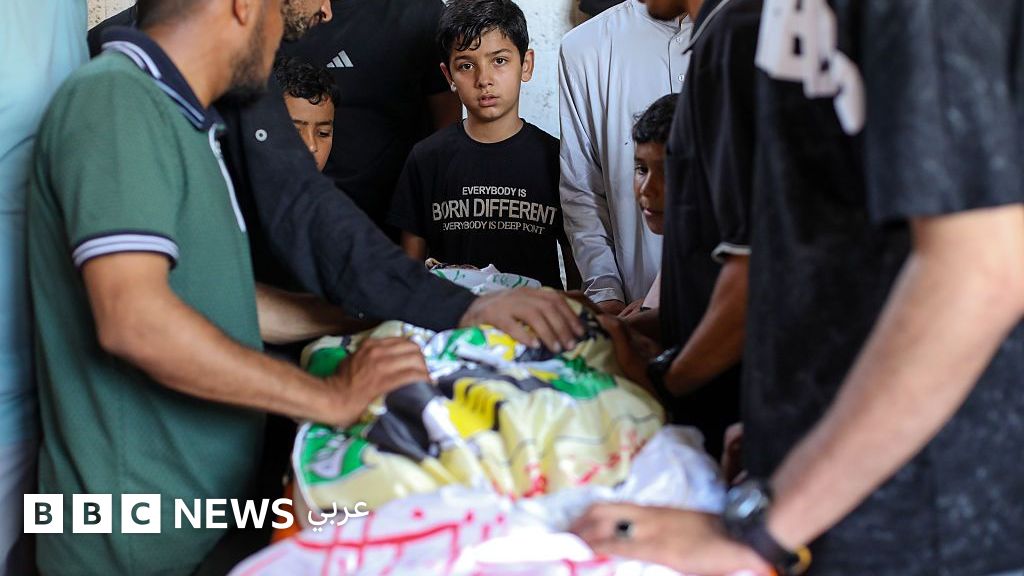
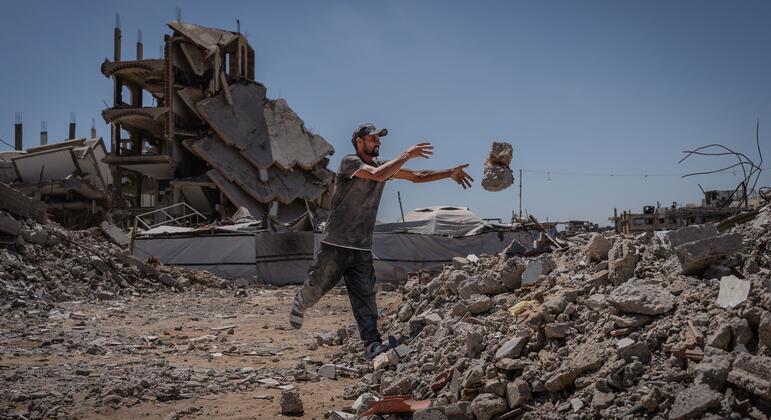
Cairo talks continue without breakthrough. Around two‑thirds of Gaza remains access‑restricted, Israeli forces enforce the regime lethally, and intermittent strikes continue. Displacement remains near universal, with bodies still being recovered and public health hazards only partly mitigated by limited clean‑up campaigns.
Wildcard: Gulf incident cascades into the Levant (20%)
A high‑profile maritime or missile incident in the Gulf prompts retaliatory strikes, galvanising Hezbollah and other Iran‑aligned actors. Cross‑border fire intensifies beyond the capacity of the Lebanon deconfliction mechanism, collapsing the border arrangement and forcing rapid international crisis management.
Recommendations
- Task a standing watch on official and militia channels for evidence of Hezbollah redeployment north of the Litani River and compile a geo‑referenced tracker of reported positions against ceasefire terms.
- Maintain a Gaza access‑control and strike tracker that fuses UN updates, commercial satellite thermal detections, and geolocated open‑source footage to flag new closures and strike clusters within 24 hours.
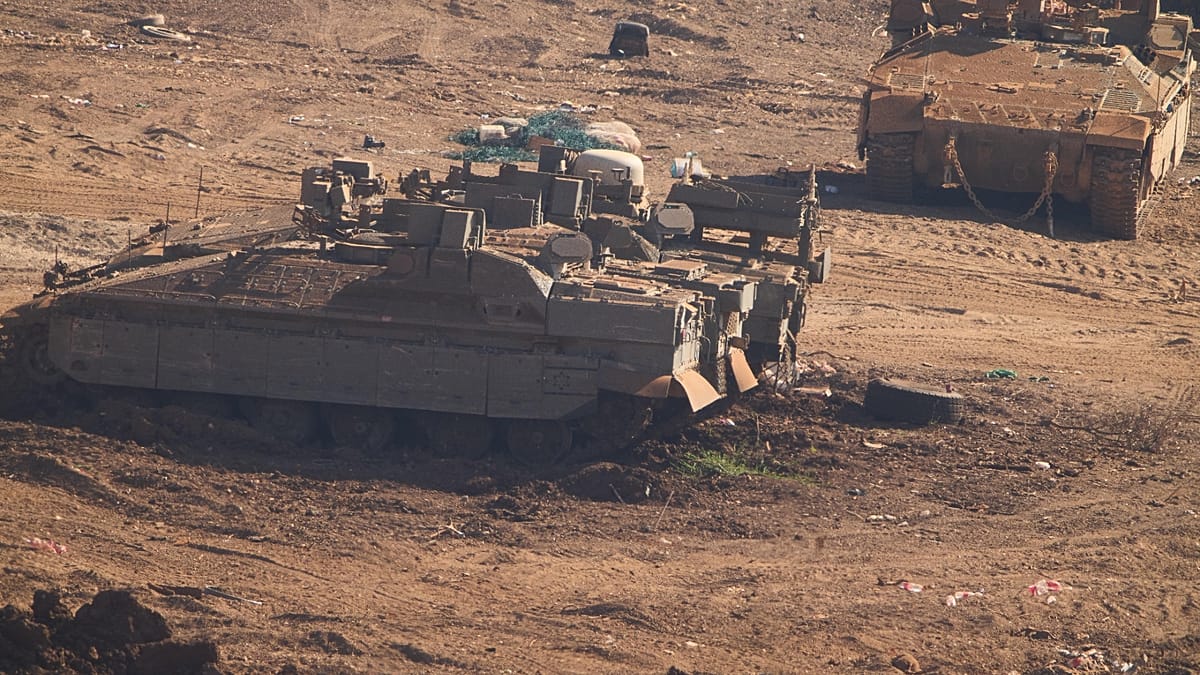
- Exploit IDF public releases for demolition and tunnel‑clearing footage; geolocate to Yellow Line localities to update a damage baseline and estimate timeframes for any civilian return.
- Monitor Israeli government and military communiqués for any shift from ‘no withdrawal orders’ to phased pullback language tied to Lebanese state security presence south of the Litani.
- Establish an alerting feed for UN Security Council scheduling and official statements on Gulf incidents to anticipate spillover that could disrupt the Lebanon deconfliction mechanism.
- Coordinate with U.S. mission security reporting on Lebanon and integrate travel‑advisory restrictions into movement‑risk models for Beirut and the south, given the continued risk of strikes and kidnapping.
- Track major carriers’ Gulf posture and advisories, including CMA CGM, to assess maritime‑trade exposure that might influence regional actors’ escalation calculus.
Confidence & uncertainty
Multiple high‑ and medium‑confidence reports corroborate the 5 July diplomatic moves, Hezbollah’s rejectionist signalling, Israel’s intent to retain a tactical presence in southern Lebanon, and deteriorated humanitarian access and ongoing strikes in Gaza. Some elements rely on medium‑confidence or contested reporting, including the precise scope and extensions of earlier ceasefire arrangements and the extent of Yellow Line demolitions. Independent verification in Gaza is constrained by journalist access restrictions, and casualty and activity timelines vary across sources. These factors support an overall medium confidence level.
Alternative analysis (red cell)
The July 5 diplomatic reporting is largely declarative and based on lower‑grade B2/B6 sources without independent verification; Hezbollah’s public threats and capabilities (B1/A1 claims) create a plausible alternative that the understandings are fragile and may not reduce near‑term miscalculation risk. Likewise, reported demolition inside the Yellow Line relies on military-sourced material lacking systematic independent geolocation, so it is defensible to view destruction as significant in some localities but not uniformly widespread enough to preclude localized civilian returns.
Intelligence gaps
- [EEI 1.1 · UNCOVERED] Number, type and geolocated coordinates of projectiles (rockets, mortars, anti-tank guided missiles) fired from Lebanon into Israel in the last 24/72 hours, including time-stamped launch and impact locations. Recommended collection: signals/intel
- [EEI 1.2 · UNCOVERED] Satellite or aerial imagery showing movement, concentration, or forward displacement of Hezbollah-associated military assets (armored vehicles, artillery pieces, mobile rocket launchers, logistics convoys) to positions within 0–10 km of the Israel-Lebanon border. Recommended collection: satellite/imagery
- [EEI 1.3 · UNCOVERED] Intercepted or captured Hezbollah command-and-control communications or orders explicitly directing cross-border operations or coordinated strikes with Palestinian groups (time-stamped messages, unit identifiers, orders to fire/move). Recommended collection: signals/intel
- [EEI 1.4 · PARTIAL] Observable changes in Israeli northern-front posture within Israel (numbers and types of reinforcements deployed to northern brigades, activation of reserves, air defense redeployments, evacuation orders or shelter alerts in northern towns), including timestamps and unit IDs where available. Recommended collection: human/intel
- [EEI 2.1 · UNCOVERED] Official or corroborated reports of IDF reservist mobilization and unit-level deployment orders (number of reservists called, named brigades/units ordered to deploy, deployment timelines). Recommended collection: open-source/media
- [EEI 2.2 · UNCOVERED] Satellite or ground imagery showing concentrations of IDF heavy equipment (tanks, infantry fighting vehicles, engineering vehicles), staging areas, field hospitals or forward supply dumps within X km of the Gaza border and at known crossing points. Recommended collection: satellite/imagery
- [EEI 2.3 · PARTIAL] Change in strike patterns consistent with pre-ground-attack shaping: sustained high-frequency airstrikes on tunnel networks, command nodes, coastal launch sites, and known insurgent concentrations (strike counts, munition types, locations, times). Recommended collection: open-source/media
- [EEI 2.4 · PARTIAL] Logistics indicators: verified convoys of fuel/ammunition entering staging areas, establishment of forward logistics or medical bases, or documented requisitioning orders for bulk combat supplies with timestamps and quantities. Recommended collection: human/intel
- [EEI 3.1 · UNCOVERED] Number, participants and content of diplomatic contacts or negotiation sessions in the last 48 hours involving mediators (Egypt, Qatar, US, UN), including any proposed ceasefire text, prisoner/exchange lists, timelines or verification mechanisms. Recommended collection: diplomatic
- [EEI 3.2 · UNCOVERED] Public statements, press releases or verified communiqués from Hamas and other Gaza armed groups specifying acceptance, rejection, or conditions for a ceasefire (explicit conditions such as prisoner release lists, withdrawal terms, lifting of blockades), with timestamps and speaker attribution. Recommended collection: open-source/media
- [EEI 3.3 · UNCOVERED] Humanitarian indicators relevant to ceasefire: establishment and operation of agreed humanitarian corridors/checkpoints, number of aid deliveries admitted, civilian evacuations completed, and NGO/hospital reports of access denials or safe-passage violations. Recommended collection: humanitarian/NGO reports
- [EEI 3.4 · UNCOVERED] Operational evidence of a de facto pause: verified sustained reduction (e.g., ≥12 hours) in strikes or launches from either side in specific sectors, supported by strike/impact logs, radar tracks and incident reports. Recommended collection: open-source/media
Cited sources
[1] jpost.com · How the new Israel-Lebanon agreement changes the rules of the game - opinion (B) · sha256:8e8187efa95f [2] Euronews · "لن ننسحب". إسرائيل: بقاؤنا في لبنان سيكون "طويل الأمد" وهدفنا التطبيع مع بيروت (B) · sha256:de396923d6f3 [3] U.S. Department of State · Lebanon Travel Advisory | Travel.State.gov (A) · sha256:98e17f2ad3e2 [4] Wikipedia · Hezbollah–Israel conflict (2023–present) (B) · sha256:13b2a11745e3 [5] bellingcat.com · Satellite Imagery Shows Ongoing Demolitions Across Southern Lebanon - bellingcat (B) · sha256:052733cd55f8 [6] United Nations · Expanding areas under Israeli control in Gaza increase risks to civilians, UN warns (A) · sha256:b9775900f7da [7] CNN · Bodies lie unclaimed and rats run rampant as months on Gaza’s ceasefire remains unfulfilled | CNN (A) · sha256:4d8483e287d0 [8] NASA · NASA FIRMS thermal detections — Gaza (2d) (A) · sha256:6a48197a24c3 [9] BBC News عربي · الجيش الإسرائيلي يشن غارات على قطاع غزة، ومفاوضات بين حماس وممثلين عن مجلس السلام - BBC News عربي (A) · sha256:847ca281579c [10] United Nations · Security Council LIVE: Emergency meeting on Iranian attack in Bahrain (A) · sha256:8a0d2c085c67 [11] haaretz.com · After 1,000 days of war, Israel's north is running out of resilience (A) · sha256:53eff3e94104
Source content hashes were computed at collection time; the cited text is preserved unmodified for the life of this product.
Red cell review: PARTIAL DISSENT
TLP:CLEAR