TLP:CLEAR · Disclosure is not limited.
Israel-Gaza: lethal mid-July strikes as Rome border talks face headwinds
Time window: Last 7 days · Audience: General analyst · Type: Situation report · DTG: 2026-07-15 13:29Z · Overall confidence: HIGH
BLUF
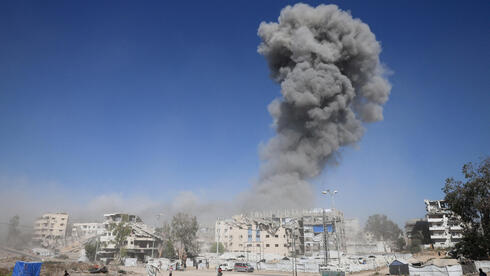
Israeli strikes on 14-15 July killed civilians across Gaza, including police personnel in Jabalia and a family of three in Deir el-Balah, while the IDF reported killing Hamas commanders. Border de-escalation with Lebanon remains uncertain as Rome talks proceed amid Israeli demands on Hezbollah and ‘pilot zones’ planning. Gaza’s post-October 2025 ceasefire death toll now exceeds 1,100 and aid access to the north remains tightly constrained.
Executive summary
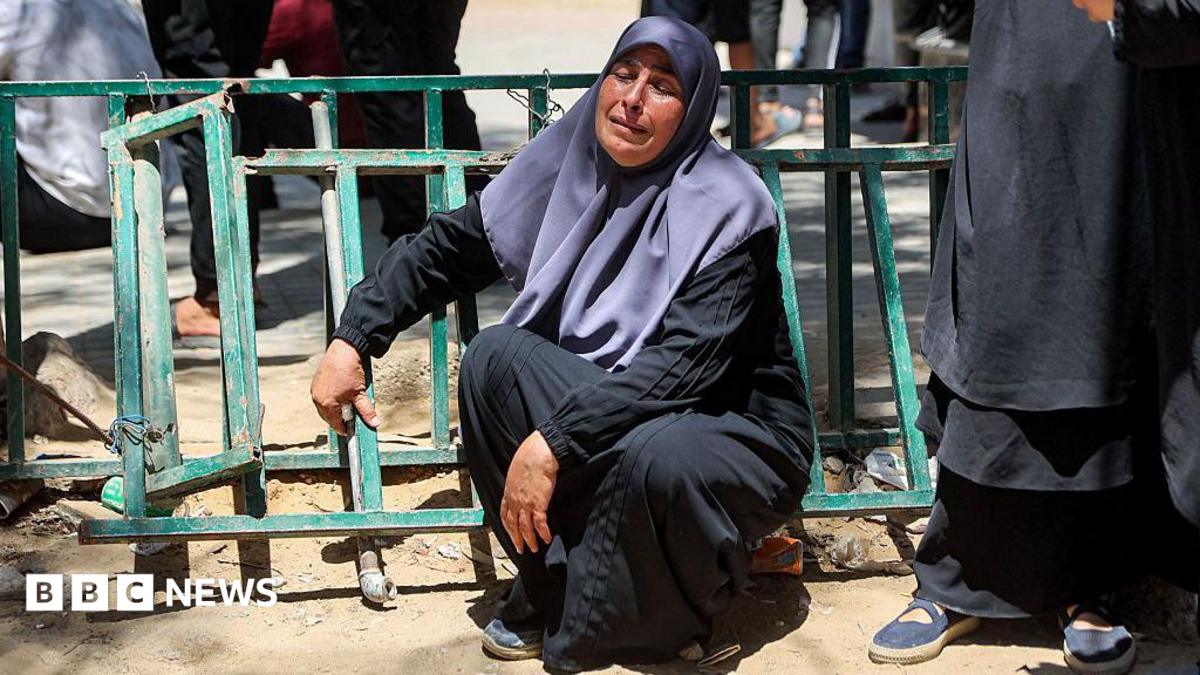
Palestinian and Israeli accounts report at least 10 people killed across the Gaza Strip on 14 July, including a drone strike on a Jabalia police post that killed Colonel Mohammed Marwan Salem and other officers. On 15 July, an Israeli air strike in Deir el-Balah killed a father, mother and their six-year-old daughter, with the army confirming the attack, and reports also noted a 10-year-old killed in Rafah. The IDF said it eliminated a Hamas naval cell commander and other commanders, underscoring continued targeted operations. Gaza health authorities now place deaths since the 10 October 2025 ceasefire above 1,100, while the World Food Programme says access to northern Gaza is restricted to limited routes. On the northern front, Israeli and Lebanese ambassadors are due to meet in Rome without military representatives, as Israel presses for Hezbollah’s withdrawal south of the Litani River, promotes ‘pilot zones’ in southern Lebanon, and urges deeper Lebanese Armed Forces action. The Lebanese army signals readiness to assume control where the IDF withdraws, but near-term de-escalation remains uncertain.
Change from previous assessment
New since the 14 July brief: corroborated details on the Jabalia police post strike including the death of Colonel Mohammed Marwan Salem, additional fatalities reported on 15 July in Deir el‑Balah with the army confirming the attack, and continued reports of targeted killings of Hamas commanders. Gaza’s post‑10 October 2025 fatality count is reaffirmed above 1,100. The Rome channel remains without concrete de‑escalation deliverables; our confidence on near‑term easing along the northern front remains medium.
Key judgments
- Very likely Israeli forces conducted multiple lethal strikes across Gaza on 14-15 July, including a drone strike on a Jabalia police post that killed Colonel Mohammed Marwan Salem and other officers, an air attack in Deir el-Balah that killed a family of three, and wider strikes that left at least 10 dead on 14 July with additional fatalities reported on 15 July. (Confidence: high · REPORTED)
- I&W: Daily Gaza hospital bulletins report new fatalities from Israeli air or drone strikes in Jabalia, Deir el-Balah or Gaza City. (0-14 days)
- I&W: IDF spokesperson updates show a pause of at least 72 hours in Gaza air operations. (0-14 days)
- Very likely the IDF continues targeted killings of Hamas leadership, including a Hamas naval cell commander and other commanders eliminated in mid-July. (Confidence: high · REPORTED)
- I&W: IDF announces additional named Hamas commanders killed, with imagery or battle damage details. (0-14 days)
- I&W: Hamas media releases credible proof of life for commanders Israel previously claimed to have killed. (0-14 days)
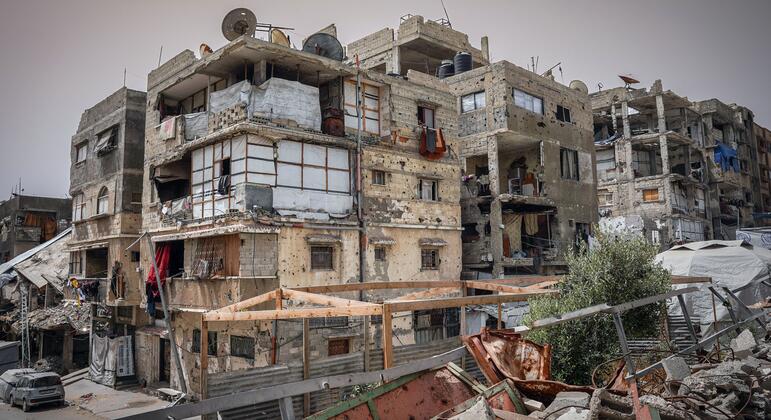
- Gaza’s humanitarian operating environment is very likely highly constrained by security-driven access limits and degraded civil policing functions, impeding aid delivery to the north and local public order. (Confidence: medium · ASSESSED)
- I&W: WFP or UN operational updates continue to cite limited usable roads for convoys to northern Gaza. (0-14 days)
- I&W: Public announcements of new, regularly used corridors enabling sustained convoy movements into northern Gaza. (1-3 months)
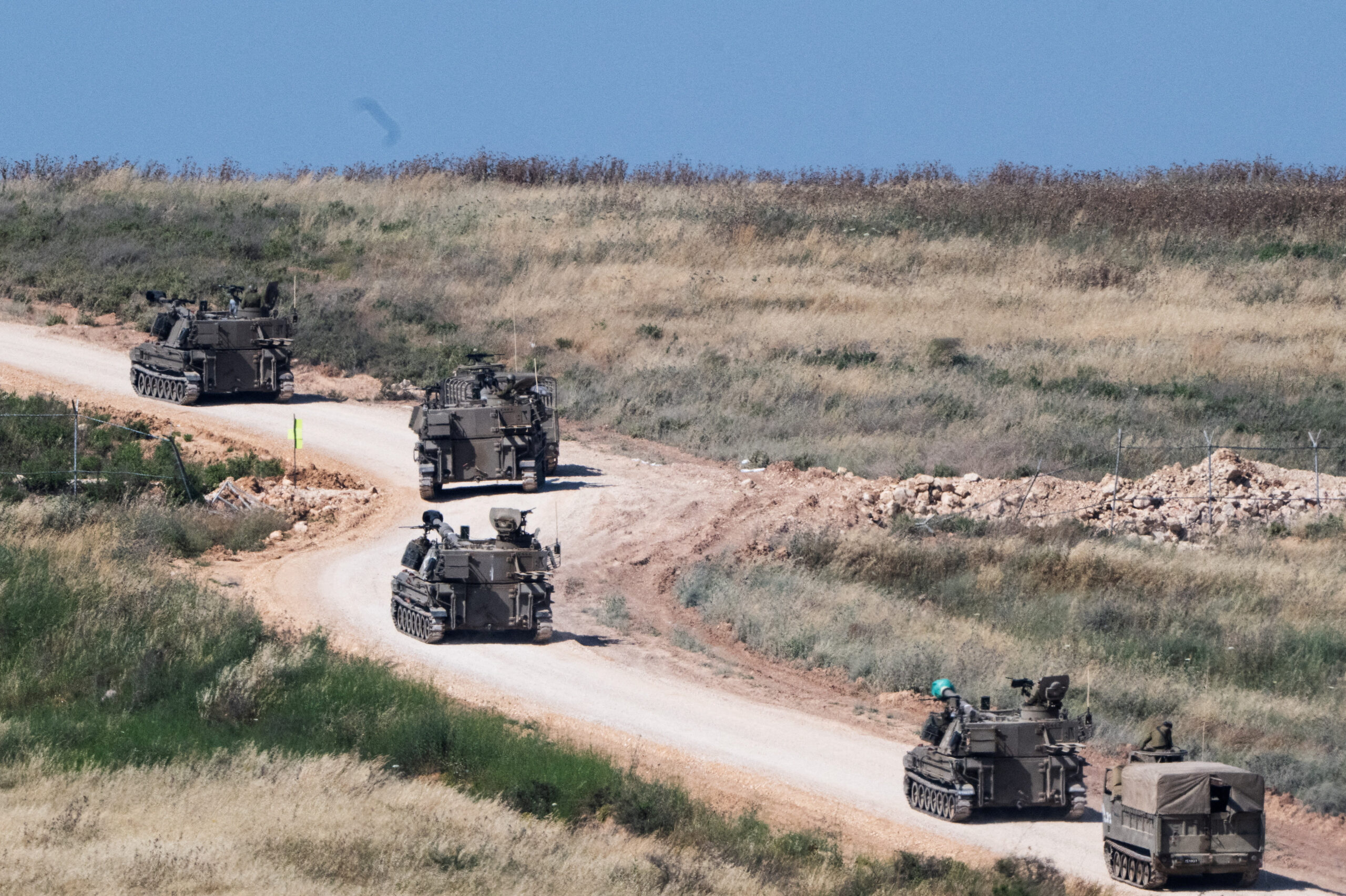
- There is a roughly even chance the Rome track yields no near-term de-escalation on the Israel, Lebanon frontier, given Israel’s insistence on Hezbollah’s withdrawal south of the Litani, continued promotion of ‘pilot zones’, and calls for deeper Lebanese Army action, despite LAF signalling readiness to assume control where the IDF withdraws. (Confidence: medium · ASSESSED)
- I&W: No joint Rome communique sets timelines for LAF deployment or IDF repositioning along the Blue Line. (1-3 months)
- I&W: Announcement of phased pilot zones with LAF units deploying south of the Litani into areas vacated by the IDF. (1-3 months)
- Very likely more than 1,100 Palestinians have been killed in Gaza since the 10 October 2025 ceasefire took effect, with fatal incidents continuing in mid-July. (Confidence: high · REPORTED)
- I&W: Gaza health authorities update the cumulative post-10 October 2025 death toll above 1,110. (0-14 days)
- I&W: Authoritative revision lowers the cumulative post-10 October 2025 fatality count below 1,000. (1-3 months)
Outlook & scenarios
Baseline: sustained Israeli strike tempo in Gaza while border talks stall (60%)
Israeli air and drone strikes persist across Gaza with periodic mass-casualty incidents, including further hits on security and residential sites, alongside continued targeted killings of Hamas commanders. Rome discussions produce no actionable timelines, with Israel maintaining demands on Hezbollah and piloting zone concepts as LAF readiness remains largely declaratory.
Managed containment on the northern front (30%)
The Rome track delivers a limited roadmap: Israel signals readiness to reposition if Hezbollah pulls back, pilot zones are specified, and LAF units begin phased deployments into selected localities south of the Litani. Sporadic fire continues but the risk to major population centres declines as coordination channels solidify.
Border flare-up: intensified Israel, Hezbollah exchanges (20%)
Absent progress in Rome and with uncompromising demands, exchanges along the frontier increase in pace and depth, drawing on the established pattern of cross-border strikes. Civilian displacement risk in northern Israel and southern Lebanon rises and diplomatic bandwidth is absorbed by crisis management rather than implementation steps.
Recommendations
- Maintain a running log of Gaza strike locations, target types and reported casualties, cross-referencing IDF communiques with Gaza hospital and ministry updates to track patterns and civilian risk.
- Catalogue named Hamas commanders claimed killed, noting roles and units, to assess effects on Hamas naval and battalion networks and to flag any subsequent proof-of-life rebuttals.
- Task monitoring of WFP and other UN operational updates for road access to northern Gaza to anticipate aid bottlenecks and adjust movement risk profiles.
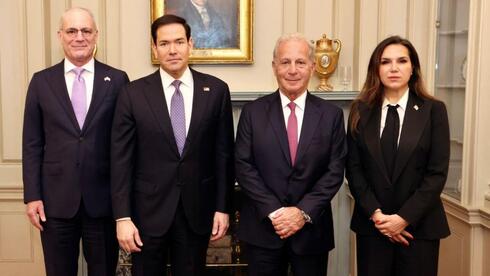
- Track outputs from the Rome channel and statements by Israeli and Lebanese interlocutors on pilot zones, LAF deployments and conditions for IDF repositioning; set alerts for any joint communiques.
- Prepare tripwire watchlists tied to this brief’s indicators, including LAF movement south of the Litani, Israeli demands linking withdrawal to Hezbollah pullback, and any announcements that alter Gaza access routes.
- Map and avoid clustering of recent strike sites around policing and administrative facilities in analytic products to reflect heightened risk to civil functions.
Confidence & uncertainty
High overall confidence is warranted because multiple independent major media and UN‑sourced reports corroborate the lethal 14-15 July Gaza strikes, named fatalities at the Jabalia police post, the Deir el‑Balah incident, and the IDF’s claimed eliminations of Hamas commanders. Gaza fatality totals since the 10 October 2025 ceasefire are consistently reported above 1,100 by several outlets. The aid‑access constraint is anchored in a WFP official’s on‑the‑record statement and complemented by UN human rights reporting on attacks on police, though operational metrics remain limited, which lowers confidence for that judgment. The northern outlook draws on documented negotiating positions and publicly stated conditions, but the lack of a contemporaneous joint communique and competing reports on truce arrangements introduce uncertainty, hence medium confidence there.
Alternative analysis (red cell)
The source set documents mid‑July strikes, leadership‑targeting claims, and constraints on aid and policing in Gaza, but much of the reporting is actor‑sourced, sometimes duplicated, and at times internally inconsistent. A more cautious analytic posture is warranted: lethal incidents and leadership-targeting announcements are plausible, humanitarian access and policing have been disrupted in places, and Rome diplomatic efforts show competing positions, yet the evidence does not uniformly support high‑confidence, systemic conclusions without independent corroboration.
Intelligence gaps
- [EEI 1.1 · PARTIAL] Number, type and geolocated coordinates of projectiles (rockets, mortars, anti-tank guided missiles) fired from Lebanon into Israel in the last 24/72 hours, including time-stamped launch and impact locations. Recommended collection: signals/intel
- [EEI 1.2 · PARTIAL] Satellite or aerial imagery showing movement, concentration, or forward displacement of Hezbollah-associated military assets (armored vehicles, artillery pieces, mobile rocket launchers, logistics convoys) to positions within 0–10 km of the Israel-Lebanon border. Recommended collection: satellite/imagery
- [EEI 1.3 · UNCOVERED] Intercepted or captured Hezbollah command-and-control communications or orders explicitly directing cross-border operations or coordinated strikes with Palestinian groups (time-stamped messages, unit identifiers, orders to fire/move). Recommended collection: signals/intel
- [EEI 1.4 · PARTIAL] Observable changes in Israeli northern-front posture within Israel (numbers and types of reinforcements deployed to northern brigades, activation of reserves, air defense redeployments, evacuation orders or shelter alerts in northern towns), including timestamps and unit IDs where available. Recommended collection: human/intel
- [EEI 2.1 · UNCOVERED] Official or corroborated reports of IDF reservist mobilization and unit-level deployment orders (number of reservists called, named brigades/units ordered to deploy, deployment timelines). Recommended collection: open-source/media
- [EEI 2.2 · UNCOVERED] Satellite or ground imagery showing concentrations of IDF heavy equipment (tanks, infantry fighting vehicles, engineering vehicles), staging areas, field hospitals or forward supply dumps within X km of the Gaza border and at known crossing points. Recommended collection: satellite/imagery
- [EEI 2.3 · PARTIAL] Change in strike patterns consistent with pre-ground-attack shaping: sustained high-frequency airstrikes on tunnel networks, command nodes, coastal launch sites, and known insurgent concentrations (strike counts, munition types, locations, times). Recommended collection: open-source/media
- [EEI 2.4 · UNCOVERED] Logistics indicators: verified convoys of fuel/ammunition entering staging areas, establishment of forward logistics or medical bases, or documented requisitioning orders for bulk combat supplies with timestamps and quantities. Recommended collection: human/intel
- [EEI 3.1 · UNCOVERED] Number, participants and content of diplomatic contacts or negotiation sessions in the last 48 hours involving mediators (Egypt, Qatar, US, UN), including any proposed ceasefire text, prisoner/exchange lists, timelines or verification mechanisms. Recommended collection: diplomatic
- [EEI 3.2 · UNCOVERED] Public statements, press releases or verified communiqués from Hamas and other Gaza armed groups specifying acceptance, rejection, or conditions for a ceasefire (explicit conditions such as prisoner release lists, withdrawal terms, lifting of blockades), with timestamps and speaker attribution. Recommended collection: open-source/media
- [EEI 3.3 · PARTIAL] Humanitarian indicators relevant to ceasefire: establishment and operation of agreed humanitarian corridors/checkpoints, number of aid deliveries admitted, civilian evacuations completed, and NGO/hospital reports of access denials or safe-passage violations. Recommended collection: humanitarian/NGO reports
- [EEI 3.4 · PARTIAL] Operational evidence of a de facto pause: verified sustained reduction (e.g., ≥12 hours) in strikes or launches from either side in specific sectors, supported by strike/impact logs, radar tracks and incident reports. Recommended collection: open-source/media
Cited sources
[1] haaretz.com · Israeli fire kills 10 in Gaza, including a 10-year-old, officials say (A) · sha256:50af40b8c5b1 [2] arabic.china.org.cn · 7 قتلى بينهم ضباط وعناصر شرطة بحماس في قصف إسرائيلي على نقطة أمنية في غزة (B) · sha256:12a6ae3d243e [3] BBC · Israeli strike on police post in Gaza kills seven, officials say (A) · sha256:c627bb686844 [4] Al Jazeera · Israeli air attack on Gaza apartment kills family of three (A) · sha256:47083e7873e2 [5] شينخوا · 7 قتلى بينهم ضباط وعناصر شرطة بحماس في قصف إسرائيلي على نقطة أمنية في غزة (A) · sha256:b1db581c3f18 [6] ynetnews.com · Israel strikes Gaza police post, Hamas-run ministry says station chief killed (A) · sha256:95cc8d762aec [7] The Jerusalem Post · Live Updates: Latest from Israel, Iran, and Middle East | The Jerusalem Post (A) · sha256:b153de25ec40 [8] United Nations · World News in Brief: Aid deliveries to Gaza restricted, UN prepares El Nino response, El Salvador eliminates disease (A) · sha256:814f15558088 [9] Al Jazeera · ‘Cycle of chaos’: Israel killing Gaza civil officials to derail its future (A) · sha256:bea933809ec1 [10] ynetnews.com · 'If Hezbollah stays, we stay': Israel sets terms before Lebanon talks in Rome (B) · sha256:ae9c77d6b558 [11] Atlantic Council · Israel and the new reality of buffer zones (C) · sha256:b7b2ed6cdbb3
Source content hashes were computed at collection time; the cited text is preserved unmodified for the life of this product.
Red cell review: PARTIAL DISSENT
TLP:CLEAR