TLP:CLEAR · Disclosure is not limited.
Israel-Gaza Regional Escalation: 7 November 2026
Time window: Last 7 days · Audience: General analyst · Type: Situation report · DTG: 2026-11-07 13:15Z · Overall confidence: HIGH
BLUF
The US-Iran confrontation has moved from threats to reported US strikes on Iran, including Qeshm Island, while Iran’s Revolutionary Guard says it has lifted its self-imposed 2,000km missile-range limit. Further military action is likely over the next 30 days; the immediate spillover risks are continued disruption to Strait of Hormuz shipping and further Israeli operations in southern Lebanon. In Gaza, the first winter storm flooded about 70,000 displacement tents, worsening an already acute shelter emergency.
Executive summary
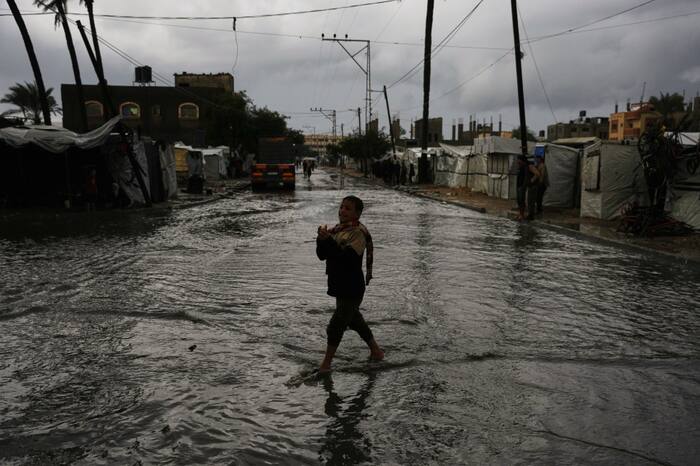
Donald Trump confirmed US strikes on Qeshm Island, described as minor. Accounts date the projectile impacts to the night of 6 November, while Trump spoke about the strikes on 7 November; earlier US strikes were reported around Qeshm, Hengam and Bandar Abbas on 2 November. Iran’s Revolutionary Guard announced that its self-imposed 2,000km missile-range limit had been lifted, but the announcement does not establish a new operational capability. UKMTO recorded 11 ships attacked in and around the Strait of Hormuz in the week ending 6 November, with three reported sunk, and transits about 65% below pre-conflict levels. In southern Lebanon, Israeli forces reported operations and artillery fire on 6 and 7 November despite the April ceasefire and June framework agreement. In Gaza, UN reporting says 294,250 families need rainy-season shelter assistance, with supplies sufficient for partial help to only 18%; the Gaza Government Media Office reported 70,000 flooded tents after the first winter storm. Israel’s coalition process remains unresolved ahead of President Isaac Herzog’s announced decision on 8 November. Donald Trump’s aid-cut pledge remains an announcement, with no reporting here that it has been implemented.
Change from previous assessment
Since the 6 November brief, reporting has moved the US-Iran risk from a low-confidence prospect of further strikes to reported US strikes on Qeshm, with accounts dating the impacts to the night of 6 November and Trump confirming strikes on 7 November. Iran’s Revolutionary Guard has now publicly announced that its self-imposed 2,000km missile-range limit is lifted. The maritime picture is more concrete, with UKMTO reporting 11 ships attacked and three sunk in the week ending 6 November, alongside transits about 65% below pre-conflict levels. Lebanon’s ceasefire assessment remains fragile, but new reports specify Israeli operations in southern Lebanon on 6 and 7 November. Gaza’s shelter assessment has worsened after reports that the first winter storm flooded about 70,000 tents and the UN reported supplies sufficient for partial assistance to only 18% of families in need. The coalition and aid judgments remain unresolved: Herzog’s decision is due on 8 November, while Trump’s aid pledge has not been shown to be implemented.
Key judgments
- Further US-Iran military action is likely over the next 30 days. Trump confirmed US strikes on Qeshm Island, with reporting placing projectile impacts there on the night of 6 November; separate reporting describes US strikes around Qeshm, Hengam and Bandar Abbas on 2 November. Iran’s Revolutionary Guard says it has lifted its self-imposed 2,000km missile-range limit, and Supreme Leader Ayatollah Mojtaba Khomeini warned of a response to US or Israeli threats without geographic limits. These statements and the reported strikes support an escalation assessment, but do not establish an Iranian decision to retaliate or a missile capability beyond 2,000km. (Confidence: medium · ASSESSED)
- I&W: US authorities confirm another strike on Iranian territory, or Iranian authorities report a direct retaliatory strike. (0-14 days)
- I&W: Both governments announce a halt to strikes and no new strike is reported for 14 consecutive days. (0-30 days)
- Disruption to commercial shipping in the Strait of Hormuz is very likely to continue over the next 30 days. UKMTO recorded at least 11 ships attacked in and around the strait during the week ending 6 November, three of which it said sank; it also reported 170 outbound and 155 inbound transits, about 65% below pre-conflict levels. The reported attack totals and the separate cumulative count of 88 projectile strikes use figures that have not been reconciled, so the exact incident rate remains uncertain. (Confidence: medium · ASSESSED)
- I&W: UKMTO reports another attack in or near the strait and weekly transits remain at least 50% below its pre-conflict comparison level. (0-14 days)
- I&W: UKMTO reports weekly inbound and outbound transits returning to within 20% of its pre-conflict comparison level, with no new ship attack in the same reporting period. (1-3 months)
- The Israel-Hezbollah ceasefire is likely to remain fragile over the next three months. Israeli forces were reported firing artillery or conducting operations near Bani Hayyan, Khiam, Wadi al-Hujair, Mansouri, Bayut al-Sayyad, Baraachit and Wadi Zibqin on 6 and 7 November. The April ceasefire and June framework provide for Israeli withdrawal from agreed areas and Lebanese army deployment, while reporting says Israel still occupies parts of southern Lebanon. The claims establish Israeli activity and an incomplete or unclear withdrawal status, but do not establish a Hezbollah attack in this reporting period. (Confidence: medium · ASSESSED)
- I&W: Further Israeli artillery fire, demolitions or search operations are reported in southern Lebanon, or Hezbollah publicly claims an attack across the border. (0-14 days)
- I&W: Reporting confirms Israeli withdrawal from a June framework pilot zone, Lebanese army deployment there and no cross-border strikes for 30 consecutive days. (1-3 months)
- Gaza’s shelter emergency is very likely to remain severe through the next one to three months. The UN humanitarian office reported that 294,250 families need rainy-season shelter assistance and that available supplies can provide partial help to only 18% of them. More than 1.6 million Palestinians were reported living in tents or makeshift shelters, and the Gaza Government Media Office said about 70,000 tents flooded within 12 hours of the first winter storm. Gaza authorities gave different tent-need estimates, about 200,000 and more than 300,000, so those totals should not be treated as a single verified requirement. (Confidence: medium · ASSESSED)
- I&W: The UN humanitarian office’s next update still reports shelter supplies sufficient for partial assistance to 18% or less of families in need, or reports further tent flooding after rainfall. (0-14 days)
- I&W: The UN humanitarian office reports shelter assistance reaching more than half of families in need and no additional large-scale tent flooding after a rainfall event. (1-3 months)
- Gadi Eisenkot is likely to receive the first opportunity to form Israel’s next government, but his 67 recommendations do not establish a governing coalition. His core bloc holds 48 seats, while the 19 seats held by Arab-led parties are included in the 67 recommendations; Avigdor Lieberman has said he will not join a government with Arab parties, and Eisenkot has set conditions for their participation. Herzog has said he will announce his choice on 8 November. The coalition outlook remains uncertain because recommendations, coalition conditions and a signed agreement are distinct measures of support. (Confidence: medium · ASSESSED)
- I&W: Isaac Herzog formally gives Eisenkot the mandate to form a government. (0-3 days)
- I&W: Eisenkot announces a coalition agreement with named parties whose combined Knesset seats reach at least 61, or announces that negotiations have failed to produce that support. (1-6 weeks)
- Donald Trump’s pledge to end roughly $3.8-4 billion in annual assistance to Israel by the end of 2026 is not shown to have been implemented. Reporting differs on whether the pledge covers military aid specifically or annual aid more broadly, and gives 2 November and 3 November as the announcement date. Israel’s defence establishment has reportedly reacted with concern, but no claim here reports a formal termination or suspended payment. (Confidence: medium · ASSESSED)
- I&W: The US government issues a formal notice specifying the amount, funding category and effective date of the aid reduction. (0-2 months)
- I&W: US budget or payment records show assistance continuing at the existing level through the end of 2026, or a payment being suspended. (0-2 months)
Outlook & scenarios
Constrained confrontation and continued pressure (55%)
The most likely path is continued direct US-Iran tension without a sustained wider campaign. US and Iranian strikes or threats remain focused on Iran and the Gulf, Strait of Hormuz shipping remains disrupted, and Israeli military activity in southern Lebanon continues without clear evidence that the April ceasefire framework has been abandoned.
Escalation spreads to Lebanon (25%)
Further US-Iran strikes and Iranian retaliation widen the confrontation. Israel intensifies operations in southern Lebanon, and the April ceasefire becomes harder to sustain as Israeli forces remain in occupied areas and the June withdrawal and Lebanese army deployment framework stalls.
Diplomatic restraint and partial implementation (15%)
Qatar’s mediation contributes to a pause in US-Iran attacks. Israel and Lebanon make limited progress on the June framework, with Israeli forces withdrawing from agreed pilot zones and the Lebanese army taking on security responsibilities there. Strait of Hormuz transit levels begin to recover.
Wildcard: Iran demonstrates longer-range missile capability (5%)
Very unlikely over the next three months, Iran conducts a publicly confirmed ballistic missile test beyond 2,000km. Such a test would give operational meaning to the Revolutionary Guard’s announcement that its self-imposed range limit has been lifted. Current reporting says Iran is not known to possess missiles exceeding that range, making this a low-probability, high-impact scenario.
Recommendations
- For the next 14 days, maintain a dated event log separating US strike announcements, reported strike times and Iranian statements. Reconcile whether the Qeshm impacts occurred on 6 or 7 November before using them to establish an escalation sequence.
- Use UKMTO’s weekly transit and vessel-incident reporting to track Strait of Hormuz conditions. Do not combine the weekly count of ships attacked with the cumulative projectile-strike count until their periods and definitions are reconciled.
- Track independently reported Israeli fire, raids and demolitions in southern Lebanon alongside evidence of Israeli withdrawal and Lebanese army deployment under the June framework. Do not treat the framework agreement as proof of compliance.
- Prioritise the UN humanitarian office’s next Gaza shelter update. Track the number of families assisted, the share of needs covered, and whether additional supplies arrive before further rainfall; keep Gaza authorities’ different tent-need estimates separate.
- After Isaac Herzog’s announced decision on 8 November, distinguish a mandate to form a government from a signed coalition agreement and a demonstrated majority of at least 61 Knesset seats.
- Treat Trump’s aid-cut pledge as unimplemented unless a formal US notice or payment record establishes the amount, scope and effective date.
Confidence & uncertainty
High overall confidence reflects multiple major-media and wire reports on the reported US strikes, corroborated by Trump’s public statements, alongside UN humanitarian reporting and UKMTO maritime figures. Confidence in individual judgments is lower where the evidence is based on official claims, reporting from a single outlet, or unresolved differences in dates, definitions and totals. In particular, the record does not establish Iranian retaliation, the implementation status of the US aid pledge, or the precise extent of Israeli withdrawal from southern Lebanon.
Intelligence gaps
- [EEI 1.1 · UNCOVERED] Number, type and geolocated coordinates of projectiles (rockets, mortars, anti-tank guided missiles) fired from Lebanon into Israel in the last 24/72 hours, including time-stamped launch and impact locations. Recommended collection: signals/intel
- [EEI 1.2 · UNCOVERED] Satellite or aerial imagery showing movement, concentration, or forward displacement of Hezbollah-associated military assets (armored vehicles, artillery pieces, mobile rocket launchers, logistics convoys) to positions within 0-10 km of the Israel-Lebanon border. Recommended collection: satellite/imagery
- [EEI 1.3 · UNCOVERED] Intercepted or captured Hezbollah command-and-control communications or orders explicitly directing cross-border operations or coordinated strikes with Palestinian groups (time-stamped messages, unit identifiers, orders to fire/move). Recommended collection: signals/intel
- [EEI 1.4 · UNCOVERED] Observable changes in Israeli northern-front posture within Israel (numbers and types of reinforcements deployed to northern brigades, activation of reserves, air defense redeployments, evacuation orders or shelter alerts in northern towns), including timestamps and unit IDs where available. Recommended collection: human/intel
- [EEI 2.1 · UNCOVERED] Official or corroborated reports of IDF reservist mobilization and unit-level deployment orders (number of reservists called, named brigades/units ordered to deploy, deployment timelines). Recommended collection: open-source/media
- [EEI 2.2 · UNCOVERED] Satellite or ground imagery showing concentrations of IDF heavy equipment (tanks, infantry fighting vehicles, engineering vehicles), staging areas, field hospitals or forward supply dumps within X km of the Gaza border and at known crossing points. Recommended collection: satellite/imagery
- [EEI 2.3 · PARTIAL] Change in strike patterns consistent with pre-ground-attack shaping: sustained high-frequency airstrikes on tunnel networks, command nodes, coastal launch sites, and known insurgent concentrations (strike counts, munition types, locations, times). Recommended collection: open-source/media
- [EEI 2.4 · UNCOVERED] Logistics indicators: verified convoys of fuel/ammunition entering staging areas, establishment of forward logistics or medical bases, or documented requisitioning orders for bulk combat supplies with timestamps and quantities. Recommended collection: human/intel
- [EEI 3.1 · UNCOVERED] Number, participants and content of diplomatic contacts or negotiation sessions in the last 48 hours involving mediators (Egypt, Qatar, US, UN), including any proposed ceasefire text, prisoner/exchange lists, timelines or verification mechanisms. Recommended collection: diplomatic
- [EEI 3.2 · UNCOVERED] Public statements, press releases or verified communiqués from Hamas and other Gaza armed groups specifying acceptance, rejection, or conditions for a ceasefire (explicit conditions such as prisoner release lists, withdrawal terms, lifting of blockades), with timestamps and speaker attribution. Recommended collection: open-source/media
- [EEI 3.3 · PARTIAL] Humanitarian indicators relevant to ceasefire: establishment and operation of agreed humanitarian corridors/checkpoints, number of aid deliveries admitted, civilian evacuations completed, and NGO/hospital reports of access denials or safe-passage violations. Recommended collection: humanitarian/NGO reports
- [EEI 3.4 · UNCOVERED] Operational evidence of a de facto pause: verified sustained reduction (e.g., ≥12 hours) in strikes or launches from either side in specific sectors, supported by strike/impact logs, radar tracks and incident reports. Recommended collection: open-source/media
Red cell review: CONCUR WITH COMMENT
TLP:CLEAR