TLP:CLEAR · Disclosure is not limited.
Israel, Gaza Regional Escalation: Border Skirmishes, Stalled Talks, and Hormuz Jitters
Time window: Last 7 days · Audience: General analyst · Type: Situation report · DTG: 2026-06-26 13:17Z · Overall confidence: MEDIUM
BLUF
Israel is keeping pressure on Hezbollah with air and drone strikes in southern Lebanon while publicly rejecting withdrawal, as US-mediated talks continue without a clear breakthrough. In Gaza, the IDF is targeting recently built Hamas rocket sites amid ongoing shortages, and maritime security around Hormuz remains fragile after a containership was hit off Oman and the IMO paused its evacuation scheme.
Executive summary
Reporting indicates continued Israeli air and drone strikes in southern Lebanon, casualties on both sides of the border, and explicit Israeli denials of any withdrawal. Negotiations under US mediation have been extended and focus on Hezbollah’s future and security mechanisms, but are constrained by Israel’s demand for disarmament and Hezbollah’s insistence on full withdrawal with timelines. In Gaza, the IDF struck newly built Hamas rocket platforms while UN agencies describe ongoing shortages; thermal detections suggest intermittent kinetic activity. Regionally, an attack on a Singapore-flagged containership off Oman and renewed IRGC control assertions disrupted the IMO’s phased evacuation, even as some traffic had shown signs of recovery. These dynamics keep the risk of renewed escalation elevated on the northern front and at sea.
Change from previous assessment
Since the 25 June brief, reporting details fresh Israeli strikes in southern Lebanon, including a drone strike with reported fatalities, alongside categorical denials of any Israeli withdrawal. Israeli, Lebanese talks have been extended into a fourth day with focus on Hezbollah’s future and security mechanisms. In Gaza, the IDF struck newly built Hamas rocket positions amid continued shortages. At sea, a Singapore‑flagged containership was hit off Oman and the IMO paused its evacuation scheme, sharpening near‑term maritime risk. Judgments on the thinness of the deconfliction regime and on stalled negotiations are maintained, with added emphasis on maritime volatility.
Key judgments
- It is very likely the Israel, Lebanon ceasefire framework is functioning only as a thin deconfliction mechanism: the IDF continues air and drone strikes in southern Lebanon while Israeli leaders and officials rule out any near‑term withdrawal. (Confidence: high · REPORTED)
- I&W: Additional IDF air or drone strikes reported in Nabatieh district or along the Ali al‑Taher axis. (0-14 days)
- I&W: A verified Israeli announcement of phased pullbacks from named positions in southern Lebanon or third‑party geolocation showing IDF vacating current lines. (1-3 months)
- Negotiations under US mediation are likely to continue without near‑term resolution given incompatible opening positions on Hezbollah disarmament and Israeli withdrawal terms. (Confidence: medium · REPORTED)
- I&W: Public scheduling of follow‑on sessions in Washington or the region and US mentions of a CENTCOM monitoring role. (0-14 days)
- I&W: A joint announcement that drops either Israel’s disarmament demand or Hezbollah’s insistence on full withdrawal with timelines. (1-3 months)
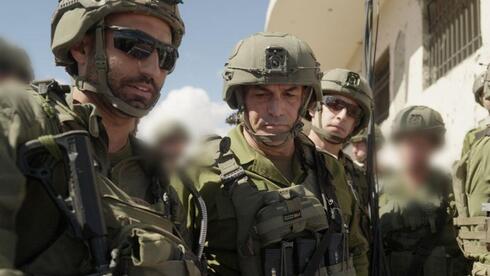
- IDF rules of engagement on the northern front very likely permit immediate responses to perceived imminent threats, sustaining a high tempo of small‑unit contacts. (Confidence: medium · ASSESSED)
- I&W: IDF communiqués citing 'immediate threat' language after fresh incidents near the Ali al‑Taher Ridge. (0-14 days)
- I&W: Publication of revised ROE that tighten engagement criteria or a marked drop in daily contact reports along the border. (1-3 months)
- In Gaza, Hamas is likely rebuilding limited rocket infrastructure during lulls, and the IDF is striking these sites while humanitarian shortages persist. (Confidence: medium · ASSESSED)
- I&W: Further IDF announcements of strikes on newly built launchers or rocket‑firing positions in Gaza. (0-14 days)
- I&W: Independent reporting that Hamas has paused reconstruction of firing infrastructure and a reduction in thermal anomaly clusters near suspected sites. (1-3 months)
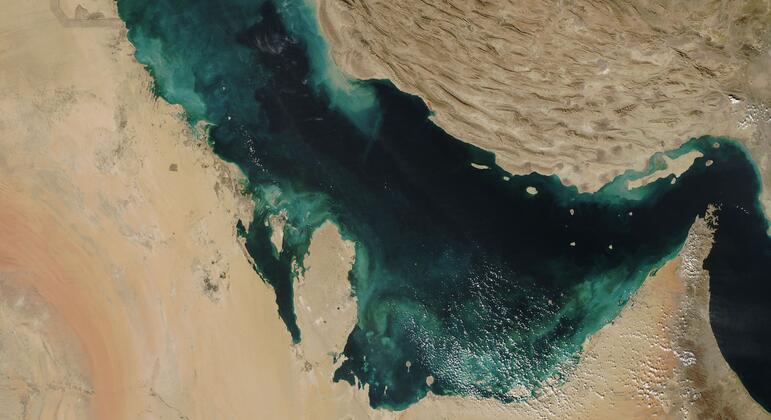
- Maritime security in and around the Strait of Hormuz is likely to remain fragile in the short term, with IRGC control assertions and a recent attack off Oman disrupting evacuation transits despite partial traffic recovery. (Confidence: high · REPORTED)
- I&W: Additional UKMTO incident advisories or IRGC radio warnings telling ships to obtain permission and use designated routes. (0-14 days)
- I&W: Formal resumption of the IMO evacuation scheme and two weeks of uninterrupted transits without harassment or attacks. (1-3 months)
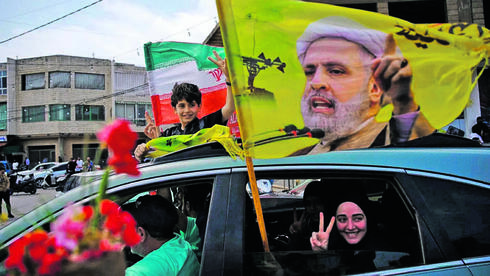
- Hezbollah very likely retains significant leverage inside Lebanon, reducing the near‑term likelihood of disarmament through negotiations. (Confidence: medium · ASSESSED)
- I&W: Hezbollah leaders repeat public rejection of weapons restrictions and tie de‑escalation to full Israeli withdrawal with timelines. (0-14 days)
- I&W: Hezbollah signals readiness to discuss arms limits, monitoring, or integration with Lebanese Armed Forces in southern sectors. (1-3 months)
Outlook & scenarios
Managed containment along the northern front (60%)
Border incidents persist as the IDF continues limited strikes against Hezbollah targets judged to pose imminent threats, with no Israeli withdrawal and talks rolling on without a breakthrough. Gaza remains tense with intermittent IDF strikes on emerging rocket infrastructure and constrained humanitarian access. Maritime tensions around Hormuz flicker but remain below blockade levels.
Partial diplomatic arrangement without Hezbollah disarmament (30%)
US‑mediated talks yield a limited security package, monitored by a CENTCOM‑linked mechanism, that sets pilot sectors or contact rules but skirts the core issue of Hezbollah disarmament. Israel adjusts some deployments but avoids a declared withdrawal. Gaza sees a temporary reduction in kinetic activity while humanitarian flows modestly improve.
Escalation and spillover, including at sea (20%)
A lethal incident on the border triggers several days of intensified exchanges. Hezbollah expands the envelope of action and the IDF responds with broader targeting in Nabatieh district. Simultaneously, IRGC enforcement and further incidents off Oman deter transits and extend the IMO pause, producing shipping delays that elevate regional risk perceptions.
Recommendations
- Maintain a geospatial watch on southern Lebanon’s Nabatieh district, including Nabatieh al‑Fawqa, Mayfadoun, and the Ali al‑Taher Ridge, to detect fresh strike damage and any IDF repositioning.
- Set up a daily indicators log for Israeli withdrawal signalling: official statements, cabinet leaks, and OSINT geolocations of IDF units vacating or consolidating positions.
- Track NASA FIRMS thermal anomalies across Gaza against reports of IDF strikes and known or suspected rocket‑launch areas; cross‑cue with commercial SAR or optical imagery when clusters appear.
- Establish a standing maritime alert feed that ingests UKMTO advisories, IMO notices, and open‑source captures of IRGC radio broadcasts; issue rapid notes to stakeholders when warnings resume or ships report harassment.
- Monitor the Israel, Lebanon talks calendar and agendas; collect on US CENTCOM travel and any public outline of a monitoring mechanism to gauge the depth of a potential arrangement.
- Catalogue Hezbollah and Lebanese government statements on withdrawal and security arrangements; flag shifts in language that might indicate movement on weapons restrictions or sector‑based deployments.
- Prepare a decision matrix for likely border flashpoints with tripwires and response options, including media and diplomatic messaging lines should casualty‑heavy incidents occur.
Confidence & uncertainty
Overall confidence is medium. Multiple independent, generally reliable sources corroborate ongoing IDF strikes in southern Lebanon, explicit Israeli denials of withdrawal, continued negotiation rounds, IDF action against Hamas rocket sites, and renewed maritime risk around Hormuz. Some elements rely on single‑outlet reporting or older official statements for rules of engagement. Casualty figures in Lebanon differ across reports, and the maritime picture mixes improving traffic with a fresh incident and an IMO pause. These gaps and contradictions temper confidence even as the core trends are well supported.
Alternative analysis (red cell)
The reporting documents continued incidents, public negotiating positions, and maritime warnings, but is uneven (contradictory casualty counts, mixed admiralty levels, and reliance on rhetoric). Strong structural inferences in the brief (e.g., that the ceasefire is only a thin deconfliction mechanism or that disarmament is very unlikely) outrun the available evidence; a more cautious estimate is that tensions and episodic violence will persist while negotiators and mediators determine whether limited, enforceable arrangements or targeted exceptions become the durable pattern.
Intelligence gaps
- [EEI 1.1 · UNCOVERED] Number, type and geolocated coordinates of projectiles (rockets, mortars, anti-tank guided missiles) fired from Lebanon into Israel in the last 24/72 hours, including time-stamped launch and impact locations. Recommended collection: signals/intel
- [EEI 1.2 · UNCOVERED] Satellite or aerial imagery showing movement, concentration, or forward displacement of Hezbollah-associated military assets (armored vehicles, artillery pieces, mobile rocket launchers, logistics convoys) to positions within 0–10 km of the Israel-Lebanon border. Recommended collection: satellite/imagery
- [EEI 1.3 · UNCOVERED] Intercepted or captured Hezbollah command-and-control communications or orders explicitly directing cross-border operations or coordinated strikes with Palestinian groups (time-stamped messages, unit identifiers, orders to fire/move). Recommended collection: signals/intel
- [EEI 1.4 · PARTIAL] Observable changes in Israeli northern-front posture within Israel (numbers and types of reinforcements deployed to northern brigades, activation of reserves, air defense redeployments, evacuation orders or shelter alerts in northern towns), including timestamps and unit IDs where available. Recommended collection: human/intel
- [EEI 2.1 · UNCOVERED] Official or corroborated reports of IDF reservist mobilization and unit-level deployment orders (number of reservists called, named brigades/units ordered to deploy, deployment timelines). Recommended collection: open-source/media
- [EEI 2.2 · UNCOVERED] Satellite or ground imagery showing concentrations of IDF heavy equipment (tanks, infantry fighting vehicles, engineering vehicles), staging areas, field hospitals or forward supply dumps within X km of the Gaza border and at known crossing points. Recommended collection: satellite/imagery
- [EEI 2.3 · PARTIAL] Change in strike patterns consistent with pre-ground-attack shaping: sustained high-frequency airstrikes on tunnel networks, command nodes, coastal launch sites, and known insurgent concentrations (strike counts, munition types, locations, times). Recommended collection: open-source/media
- [EEI 2.4 · UNCOVERED] Logistics indicators: verified convoys of fuel/ammunition entering staging areas, establishment of forward logistics or medical bases, or documented requisitioning orders for bulk combat supplies with timestamps and quantities. Recommended collection: human/intel
- [EEI 3.2 · PARTIAL] Public statements, press releases or verified communiqués from Hamas and other Gaza armed groups specifying acceptance, rejection, or conditions for a ceasefire (explicit conditions such as prisoner release lists, withdrawal terms, lifting of blockades), with timestamps and speaker attribution. Recommended collection: open-source/media
- [EEI 3.4 · PARTIAL] Operational evidence of a de facto pause: verified sustained reduction (e.g., ≥12 hours) in strikes or launches from either side in specific sectors, supported by strike/impact logs, radar tracks and incident reports. Recommended collection: open-source/media
Cited sources
[1] Al Jazeera · Iran war day 119: Israel hits Lebanon as IAEA says it will return to Iran (A) · sha256:039d30759369 [2] haaretz.com · Iran slams joint U.S.-Gulf statement as 'interventionist and irresponsible' (A) · sha256:c34c83f67933 [3] haaretz.com · Three killed in Israeli drone strike on vehicle in south Lebanon, local reports say (A) · sha256:2d8588e1b314 [4] jpost.com · Israel-Lebanon talks continue under US mediation despite deadlock over Hezbollah disarmament (B) · sha256:44dbd0033555 [5] gcaptain.com · Trump Row With Republican Senator Clouds US Drive to Sell Iran Deal to Gulf Allies (B) · sha256:5b3902477e56 [6] ynetnews.com · Waltz with Naim: Trump's agreement inspires optimism in Hezbollah (B) · sha256:96e84c78497f [7] ynetnews.com · IDF chief spars with ministers over Lebanon ceasefire restrictions (B) · sha256:2a710c78e556 [8] jpost.com · CENTCOM chief Cooper to visit Zamir as Lebanon ceasefire, withdrawal terms in play (B) · sha256:31178f306e69 [9] Jerusalem Post · WATCH: IDF strikes four new Hamas rocket-firing positions built in Gaza post-ceasefire (B) · sha256:c58d2a4231d5 [10] United Nations · From Lebanon to the Strait of Hormuz, a Middle East hanging on fragile peace talks (A) · sha256:d0d950f95951 [11] NASA · NASA FIRMS thermal detections — Gaza (2d) (A) · sha256:954758d9292a [12] gcaptain.com · Day of the Seafarer 2026: The Human Cost of Keeping World Trade Moving (B) · sha256:7a5dfd48b26a [13] gcaptain.com · Ship Attack Off Oman Derails IMO's Hormuz Evacuation Effort (B) · sha256:693c5a0ec6f4 [14] gcaptain.com · Ship Hit Off Oman After IRGC Renewed Hormuz Transit Warnings (B) · sha256:8087946de71c [15] Jerusalem Post · Pushing Iran, Hamas regimes towards collapse might not be possible, military expert says (B) · sha256:861930fd7d30
Source content hashes were computed at collection time; the cited text is preserved unmodified for the life of this product.
Red cell review: PARTIAL DISSENT
TLP:CLEAR