TLP:CLEAR · Disclosure is not limited.
Israel, Gaza Regional Escalation: Ceasefire Frays in the North as Gaza Fighting and Humanitarian Squeeze Endure
Time window: Last 7 days · Audience: General analyst · Type: Situation report · DTG: 2026-06-24 13:14Z · Overall confidence: MEDIUM
BLUF
Despite Washington talks and a nominal ceasefire, cross‑border incidents and Israeli statements indicate hostilities with Hezbollah are very likely to persist, while satellite data point to ongoing low‑level combat in Gaza. Humanitarian conditions remain acute in Gaza and severe war damage and displacement in southern Lebanon will impede returns.
Executive summary
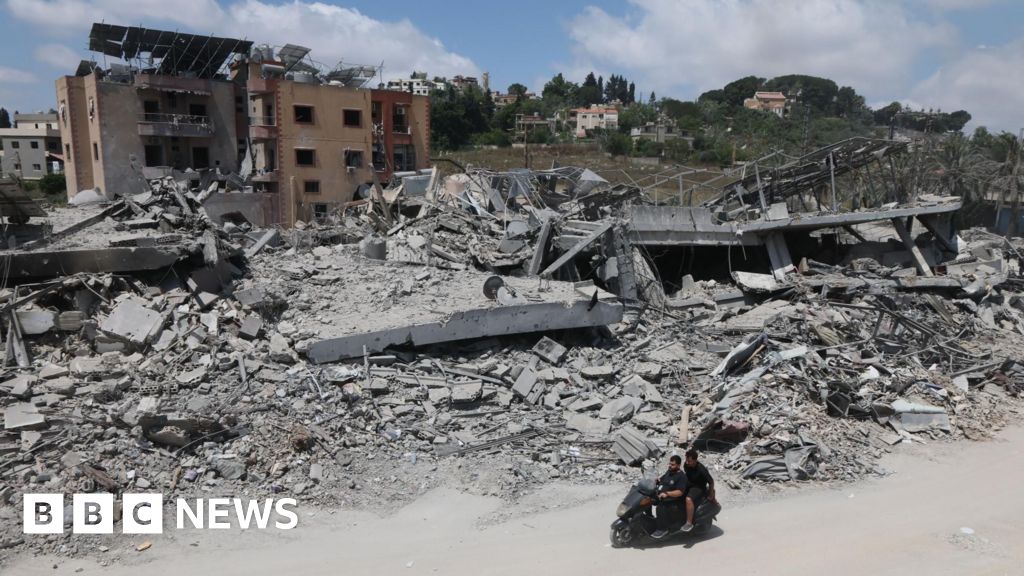
On 23 June in Washington, Israel and Lebanon opened a fifth round of talks, but public red lines from Beirut and Jerusalem and fresh tactical clashes in southern Lebanon point to a fragile truce. The IDF engaged Hezbollah operatives twice at the Ali Taher Ridge and the Israeli military said it would continue operations against threats despite the ceasefire. Hezbollah alleged Israeli fire killed two civilians near Nabatiya. UNIFIL judged the ceasefire largely holding, yet border incidents continue and Israeli leaders reject withdrawal beyond at most limited pullbacks under discussion. In Gaza, NASA recorded 78 thermal detections over 23-24 June, consistent with ongoing fires and strikes, as UN reporting highlights severe water scarcity, overcrowding and medical shortages. In Lebanon, extensive destruction of housing and mass displacement persist, with only incremental departures from collective shelters. Northern Israel’s emergency response squads are being stood down from continuous duty but kept on readiness, signalling a managed drawdown while retaining a rapid response posture.
Change from previous assessment
New since the prior brief: Washington’s fifth round of Israel, Lebanon talks opened on 23 June; the IDF reported two engagements with Hezbollah operatives at the Ali Taher Ridge and stated operations would continue against threats despite the ceasefire; Hezbollah alleged two civilian deaths near Nabatiya; UNIFIL assessed the ceasefire as largely holding; and NASA recorded 78 thermal detections in Gaza over 23-24 June, up from the previously cited 52. Lebanese authorities reported 19,000 people left collective shelters overnight. Northern Israel’s emergency squads were told continuous duty would end but readiness would be maintained.
Key judgments
- Cross‑border hostilities between the IDF and Hezbollah are very likely to persist under a fragile ceasefire despite Washington talks. (Confidence: medium · ASSESSED)
- I&W: Additional IDF‑reported engagements or Hezbollah casualty claims inside southern Lebanon, particularly around Ali Taher Ridge or Nabatiya. (0-14 days)
- I&W: Break: A publicly verifiable mutual stand‑down lasting at least 14 days with no IDF or Hezbollah claims of fire and UNIFIL reporting a full cessation. (0-1 month)
- Low‑level combat in Gaza is ongoing, very likely reflected in 78 NASA thermal detections over 23-24 June including six high‑confidence points. (Confidence: high · ASSESSED)
- I&W: Daily FIRMS two‑day windows for Gaza continue to register 50+ thermal detections. (0-14 days)
- I&W: Break: A sustained drop below 10 FIRMS detections per two‑day window for at least a week. (0-14 days)
- Humanitarian conditions in Gaza remain acute and life‑threatening, very likely including 600,000 lacking sufficient drinking water, extreme overcrowding and severe insulin shortages affecting 70,000-80,000 diabetes patients, including about 2,500 children with Type 1 diabetes. (Confidence: high · ASSESSED)
- I&W: UN or health‑sector reporting of resumed insulin imports or price declines from 75-100 shekels per pen. (1-3 months)
- I&W: Break: Verified restoration of potable water access to the 600,000 identified as lacking supply. (1-3 months)
- Direct talks in Washington are unlikely to deliver a rapid Israeli withdrawal or a durable cessation in Lebanon in the near term, given stated red lines and focus on limited pullbacks. (Confidence: medium · ASSESSED)
- I&W: Israeli statements or leaks specifying only sectoral or “modest” redeployments without timelines for full withdrawal. (0-2 months)
- I&W: Break: A joint communiqué setting a phased IDF pullback schedule with verification arrangements. (0-2 months)
- Civilian risk of sudden violence across Lebanon remains high and is likely to constrain diplomatic and NGO movement. (Confidence: high · ASSESSED)
- I&W: Continuation or tightening of U.S. Embassy Beirut movement restrictions or departure orders. (0-1 month)
- I&W: Break: Downgrade of official travel advisories and removal of internal movement restrictions. (1-3 months)
- Humanitarian stress around the Israel, Lebanon border is likely to remain acute while damage and displacement persist despite limited shelter departures. (Confidence: medium · ASSESSED)
- I&W: Verified large‑scale reconstruction starts in southern Lebanon or sustained monthly increases in returnees to damaged localities. (1-6 months)
- I&W: Break: Official reporting shows displacement totals falling sharply on both sides of the border with corresponding services restored. (1-6 months)
Outlook & scenarios
Managed confrontation under a fragile ceasefire (60%)
Low‑intensity exchanges, tactical IDF actions around positions such as the Ali Taher Ridge and episodic Hezbollah claims of violations continue, while UN and diplomatic actors characterise the ceasefire as largely holding. Washington talks grind on without a breakthrough, and public red lines in Beirut and Jerusalem remain unchanged. Gaza sees continued low‑level fighting consistent with recurring thermal detections and no material improvement in humanitarian access.
Limited sectoral pullbacks tied to deconfliction (35%)
Negotiators in Washington shape a pilot arrangement for modest Israeli redeployments from select sectors in southern Lebanon, paired with a deconfliction mechanism and third‑party facilitation. Doha’s contacts with Lebanese stakeholders complement the channel. The security environment stays tense but largely quiet, with patrol patterns adjusted and emergency squads in readiness.
Ceasefire collapse and sharp northern escalation (20%)
A lethal incident with civilians or an officer‑level convoy prompts a rapid cycle of retaliation. IDF expands operations inside southern Lebanon, Hezbollah increases fire across the border, and home‑front guidelines in northern Israel revert to stringent posture. Negotiations stall and UN assessments shift from ‘largely holding’ to breakdown.
Recommendations
- Maintain a daily GEOINT rhythm for Gaza using NASA FIRMS and archive the 23-24 June 78‑hit baseline to flag deviations; correlate with open‑source incident logs for attribution and timing.
- Task OSINT teams to geolocate and catalogue border incidents at Ali Taher Ridge and around Nabatiya; build a structured dataset of IDF statements and Hezbollah claims to track ceasefire friction points.
- Produce a Lebanon border humanitarian map book: overlay UNDP destruction figures with displacement reporting and road access to identify potential return corridors and reconstruction choke points.
- Establish a negotiation tracker for the Washington channel: log statements from Israel’s defence leadership and Lebanese principals alongside any reporting on ‘limited’ or ‘modest’ pullback proposals and verification concepts.
- Update internal travel and partner‑engagement protocols for Lebanon in line with embassy movement restrictions, kidnapping warnings and the nationwide risk of drone and missile strikes; require pre‑movement check‑ins and alternate routing.
- Set early‑warning tripwires: monitor Home Front Command guideline notices and Northern Command readiness posture changes to detect shifts from drawdown to re‑mobilisation.
Confidence & uncertainty
Overall confidence is medium because several judgments rest on multiple, reliable and mutually reinforcing sources, such as NASA’s satellite detections for Gaza activity and UN and official advisories for humanitarian and security conditions. However, assessments on the persistence of hostilities and the negotiation outlook face live contradictions in the record: UNIFIL’s view that the ceasefire is largely holding sits alongside fresh IDF engagements and Hezbollah allegations of civilian casualties, and Israeli messaging on ‘no withdrawal’ coexists with reporting on limited pullback debates. These tensions reduce confidence from high to medium.
Alternative analysis (red cell)
An alternative analytic reading is that recent June incidents represent localized, episodic violations against a broadly holding ceasefire (per UNIFIL) rather than a trajectory toward sustained cross‑border warfare; likewise, Washington talks could plausibly produce limited, phased withdrawals or conditional security arrangements that stabilize the border without delivering a rapid full withdrawal. Given the mixed quality and scope of the incident reporting versus high‑quality humanitarian and monitoring claims, analysts should present these as competing, plausible outcomes and prioritize collection to resolve which trajectory is occurring.
Intelligence gaps
- [EEI 1.1 · PARTIAL] Number, type and geolocated coordinates of projectiles (rockets, mortars, anti-tank guided missiles) fired from Lebanon into Israel in the last 24/72 hours, including time-stamped launch and impact locations. Recommended collection: signals/intel
- [EEI 1.2 · UNCOVERED] Satellite or aerial imagery showing movement, concentration, or forward displacement of Hezbollah-associated military assets (armored vehicles, artillery pieces, mobile rocket launchers, logistics convoys) to positions within 0–10 km of the Israel-Lebanon border. Recommended collection: satellite/imagery
- [EEI 1.3 · UNCOVERED] Intercepted or captured Hezbollah command-and-control communications or orders explicitly directing cross-border operations or coordinated strikes with Palestinian groups (time-stamped messages, unit identifiers, orders to fire/move). Recommended collection: signals/intel
- [EEI 1.4 · PARTIAL] Observable changes in Israeli northern-front posture within Israel (numbers and types of reinforcements deployed to northern brigades, activation of reserves, air defense redeployments, evacuation orders or shelter alerts in northern towns), including timestamps and unit IDs where available. Recommended collection: human/intel
- [EEI 2.1 · UNCOVERED] Official or corroborated reports of IDF reservist mobilization and unit-level deployment orders (number of reservists called, named brigades/units ordered to deploy, deployment timelines). Recommended collection: open-source/media
- [EEI 2.2 · UNCOVERED] Satellite or ground imagery showing concentrations of IDF heavy equipment (tanks, infantry fighting vehicles, engineering vehicles), staging areas, field hospitals or forward supply dumps within X km of the Gaza border and at known crossing points. Recommended collection: satellite/imagery
- [EEI 2.4 · UNCOVERED] Logistics indicators: verified convoys of fuel/ammunition entering staging areas, establishment of forward logistics or medical bases, or documented requisitioning orders for bulk combat supplies with timestamps and quantities. Recommended collection: human/intel
- [EEI 3.1 · PARTIAL] Number, participants and content of diplomatic contacts or negotiation sessions in the last 48 hours involving mediators (Egypt, Qatar, US, UN), including any proposed ceasefire text, prisoner/exchange lists, timelines or verification mechanisms. Recommended collection: diplomatic
- [EEI 3.2 · UNCOVERED] Public statements, press releases or verified communiqués from Hamas and other Gaza armed groups specifying acceptance, rejection, or conditions for a ceasefire (explicit conditions such as prisoner release lists, withdrawal terms, lifting of blockades), with timestamps and speaker attribution. Recommended collection: open-source/media
- [EEI 3.4 · PARTIAL] Operational evidence of a de facto pause: verified sustained reduction (e.g., ≥12 hours) in strikes or launches from either side in specific sectors, supported by strike/impact logs, radar tracks and incident reports. Recommended collection: open-source/media
Cited sources
[1] jpost.com · Israel, Lebanon discuss pilot project for Lebanese army to control zones after Hezbollah withdraws (B) · sha256:6a838a878f99 [2] jpost.com · IDF kills Hezbollah operatives in two small incidents, but ceasefire holds (A) · sha256:c9f149cec5ae [3] aljazeera.net · بعد اتفاق وقف إطلاق النار. عون يدعو إلى إنهاء الاعتداءات الإسرائيلية على لبنان (A) · sha256:2e42d4a5b49a [4] jpost.com · 'We are being abandoned': Northern Israel emergency response squads denounce reduced mobilization (B) · sha256:c499b46ff029 [5] dropsitenews.com · U.S. and Iran agree to “roadmap” for final deal; Starmer resigns; GOP funding to Dem super PACs (B) · sha256:76d605bf075e [6] United Nations · World News in Brief: UN launches Hormuz evacuation plan, UNICEF youth champion killed in Gaza, Lebanon ceasefire ‘largely holding’ (A) · sha256:41dca8a20228 [7] NASA FIRMS · NASA FIRMS thermal detections — Gaza (2d) (A) · sha256:638de33917de [8] Al Jazeera · Diabetes patients in Gaza face survival battle amid war shortages (A) · sha256:3b84c220efc0 [9] CNN · ‘What ceasefire?’ In northern Israel, locals doubt an agreement can end the war with Hezbollah | CNN (A) · sha256:cb7841bb67a1 [10] U.S. Department of State · Lebanon Travel Advisory | Travel.State.gov (A) · sha256:98e17f2ad3e2 [11] BBC · Israeli troops kill two in south Lebanon after lull in fighting, authorities say (A) · sha256:3fd245f880e7 [12] Wikipedia · Hezbollah–Israel conflict (2023–present) (B) · sha256:0d677ded6584
Source content hashes were computed at collection time; the cited text is preserved unmodified for the life of this product.
Red cell review: PARTIAL DISSENT
TLP:CLEAR