TLP:CLEAR · Disclosure is not limited.
Israel-Gaza Regional Escalation: Ceasefire Friction and Iran-US Spillover
Time window: Last 7 days · Audience: General analyst · Type: Situation report · DTG: 2026-08-31 13:13Z · Overall confidence: HIGH
BLUF
Very likely Israeli attacks will continue across Gaza, keeping the October 2025 Israel-Hamas ceasefire operationally unstable and humanitarian conditions severe. Likely Hezbollah-Israel exchanges will continue in southern Lebanon. Likely US-Iran military and maritime incidents will persist over the next 0-14 days following strikes near the Strait of Hormuz and an Iranian attack reported against US facilities in Jordan.
Executive summary
Reporting from 24 to 31 August shows simultaneous pressure across Gaza, southern Lebanon, Syria and the Strait of Hormuz. OCHA and other UN agencies continue to report Israeli attacks, civilian harm and severe humanitarian deprivation in Gaza despite aid deliveries. UNIFIL has observed increased military activity in southern Lebanon, including Hezbollah drone attacks and Israeli retaliation. The reported US strike on Iranian launchers on 30 August, followed by an Iranian missile-and-drone attack on US bases in Jordan on 31 August and the interception of eight missiles by Jordan, marks a sharper regional spillover. Syria is maintaining diplomatic contacts with Israel despite an Israeli strike near Idlib and continued Israeli military activity in southern Syria.
Change from previous assessment
Since the prior brief dated 30 August, the assessment of direct regional spillover has changed. The prior brief assessed a roughly even chance of direct Iran-linked confrontation with low confidence. New reporting now describes US strikes on Iranian launchers on 30 August, an IRGC missile-and-drone attack reported against US bases in Jordan on 31 August, and Jordanian interception of eight missiles, so the near-term risk is raised to likely with medium confidence. The Gaza and southern Lebanon judgments are retained, with the Lebanon assessment updated to incorporate the Ali al-Taher and Nabatiyeh location discrepancy. A Syria-Israel friction and diplomacy judgment has been added.
Key judgments
- Very likely Israeli military strikes and other hostilities will continue across Gaza over the next 1-3 months, keeping the October 2025 Israel-Hamas ceasefire operationally unstable. OCHA reported ongoing air strikes, civilian casualties and damage on 28 August. Reporting also attributed frequent strikes across Gaza to the Israeli military, while Israeli strikes on 26 August killed four people and wounded several others. OCHA and UNICEF separately reported that four children aged two to 16 were killed during the week ending 28 August, and that five children aged eight to 17 suffered life-changing injuries on 25 August. Confidence is medium because high-confidence multilateral and major-media reporting corroborates the current pattern, but the forward assessment remains inferential and responsibility for some individual incidents is not established. (Confidence: medium · ASSESSED)
- I&W: Confirm: OCHA or another UN agency records Israeli air strikes or other attacks causing civilian casualties in Gaza on at least three days during the next 0-14 days. (0-14 days)
- I&W: Break: UN reporting records 14 consecutive days without Israeli strikes or other attacks in Gaza and reports a sustained easing of movement restrictions. (0-14 days)
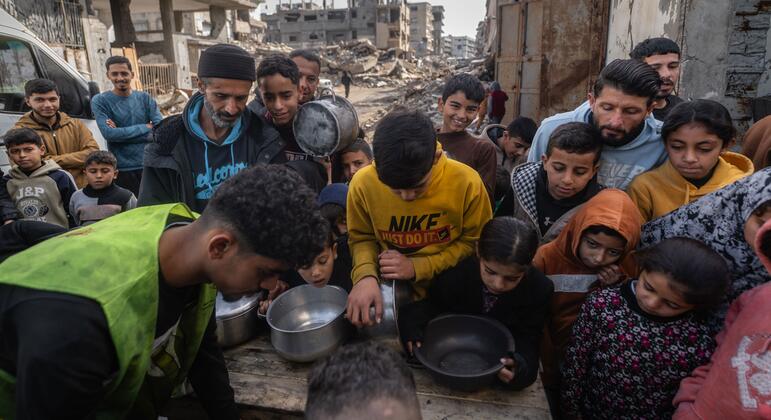
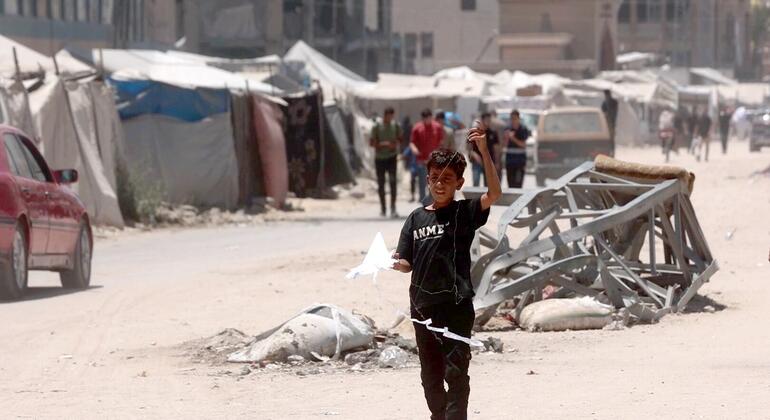
- Very likely severe humanitarian conditions will persist in Gaza over the next 1-3 months despite continuing aid deliveries. UN figures indicate that 50 per cent of families ran out of food at least once in the previous month, about one in five families ate only one meal a day, and three-quarters of households faced difficulty accessing markets in August 2026. Around 90 per cent of civilian infrastructure is heavily damaged or destroyed, more than two million people remain displaced, and thousands still await medical evacuation. UN partners collected hundreds of pallets at Kerem Shalom on 26 August, provided food parcels and wheat flour to more than 600,000 people during the August cycle, and WHO supported the evacuation of 106 patients and 132 companions during the previous week. Confidence is high because OCHA, UNICEF, WHO, WFP and other UN reporting corroborate the main food, infrastructure, displacement, aid and medical-access indicators. (Confidence: high · ASSESSED)
- I&W: Confirm: WFP or UN reporting continues to find at least half of Gaza families experiencing food shortages or at least three-quarters of households facing difficulty accessing markets in a new reporting cycle. (1-3 months)
- I&W: Break: UN agencies report that the share of families running out of food falls below one-third and that market access difficulties fall below half for a full reporting cycle, alongside regular medical evacuations. (1-3 months)
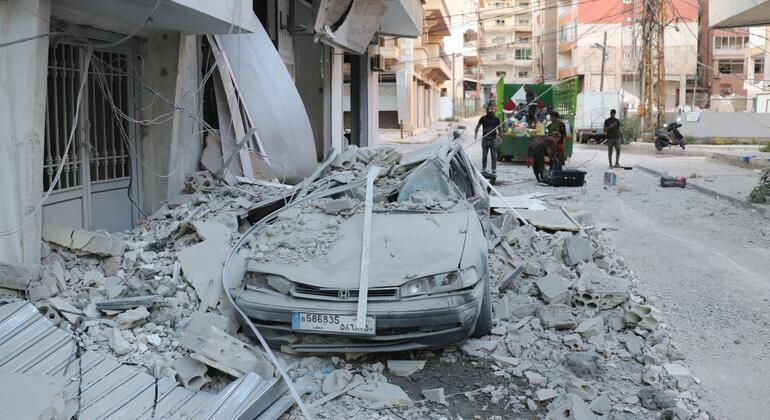
- Likely Israel-Hezbollah armed exchanges will continue in southern Lebanon over the next 1-3 months, with activity reported around Ali al-Taher and Nabatiyeh. UNIFIL observed increased logistical movements, demolitions and projectile launches in its area of operations on 27 August, while it also reported Hezbollah drone attacks and retaliatory Israeli strikes on 26 August. The Israeli military said Hezbollah launched two explosive drones near Nabatiyeh on 27 August, while another report placed the same reported incident at the Ali al-Taher heights. Israeli airstrikes in southern Lebanon reportedly killed one woman and wounded six people, including a child, on 27 August. Confidence is medium because UNIFIL corroborates the wider pattern, but the precise location of the drone incident is unresolved and some supporting reporting comes from lower-reliability sources. (Confidence: medium · ASSESSED)
- I&W: Confirm: UNIFIL records additional Hezbollah projectile or drone launches and Israeli retaliatory strikes in southern Lebanon, especially around Ali al-Taher or Nabatiyeh. (0-14 days)
- I&W: Break: UNIFIL records no new projectile launches, demolitions or military logistical movements in its area of operations for 30 consecutive days and reports renewed use of de-escalation mechanisms. (1-3 months)
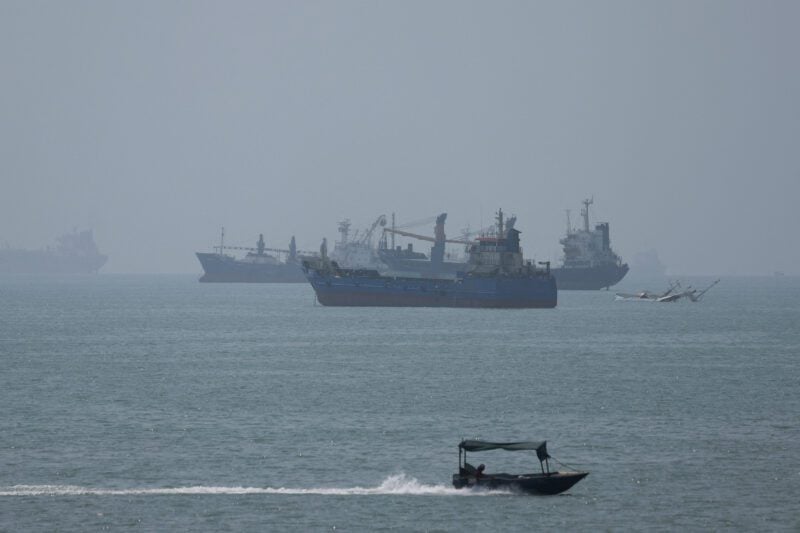
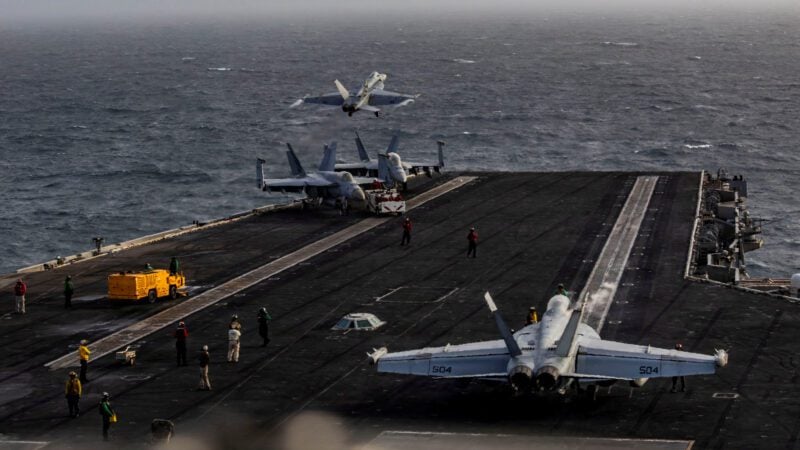
- Likely US-Iran military and maritime incidents will continue over the next 0-14 days, with the main immediate risks around the Strait of Hormuz and US facilities in Jordan. US forces struck two Iranian launchers on Larak Island on 30 August, described as the first known US strikes on Iran since late July. US Central Command said Iran was preparing rockets carrying mines into the Strait of Hormuz. Iranian state reporting described a missile-and-drone attack by the IRGC on US air bases in Jordan on 31 August, while Jordan's military reported intercepting eight missiles before they caused damage. UKMTO reported three attacks on vessels in the strait during the week, and visible commodity traffic fell to five vessels per day over the weekend, although AIS outages mean the actual total may be higher. Confidence is medium because the strike sequence is reported by multiple official and wire sources, but the Iranian attack account and the outcome framing rely partly on state or trade reporting. (Confidence: medium · ASSESSED)
- I&W: Confirm: UKMTO reports another vessel attack in the Strait of Hormuz, or official reporting identifies another Iranian missile or drone launch against US facilities in Jordan within the next 14 days. (0-14 days)
- I&W: Break: the Qatar-Iran-Oman safe-passage and mine-clearance proposal is implemented, UKMTO reports no further attacks for 14 days, and shipping data shows sustained recovery from the reported five-vessel daily level. (0-14 days)
- Likely Syria-Israel security friction will persist while diplomatic channels remain active over the next 1-3 months, rather than immediately becoming an open Syria-Israel war. Israel attacked a Syrian airbase near Idlib and continues to hold positions and operate checkpoints in southern Syria. Syria has nevertheless pursued diplomatic engagement, with Foreign Minister Asaad al-Shaibani meeting Mossad head Roman Gofman in US-mediated talks in Amman, and US Ambassador Tom Barrack proposing a Turkiye-Syria-Israel deconfliction mechanism. Syria's stated distrust of Israel and the stalled treaty over the Golan buffer zone limit the prospects for a rapid settlement. Confidence is medium because the military and diplomatic reporting comes from multiple major-media accounts, but the assessment of future restraint rests on stated positions and reported talks rather than verified changes in force posture. (Confidence: medium · ASSESSED)
- I&W: Confirm: Syria and Israel continue US-mediated talks or establish the proposed Turkiye-Syria-Israel deconfliction mechanism while Israel maintains military activity in or near Syrian territory. (1-3 months)
- I&W: Break: Syrian forces conduct a reported retaliatory attack on Israeli positions, or Syria-Israel talks stop while Israeli strikes on Syrian military infrastructure continue. (1-3 months)
Outlook & scenarios
Contained multi-front attrition (60%)
Israeli strikes continue across Gaza, Hezbollah and Israel exchange limited drone and air attacks in southern Lebanon, and US-Iran incidents remain episodic around the Strait of Hormuz and Jordan. UN aid continues to enter Gaza, but food access, infrastructure damage and medical evacuation backlogs remain severe.
Hormuz-centred US-Iran escalation (25%)
Further US strikes on Iranian launchers or Iranian attacks on US facilities and commercial shipping produce a sustained security crisis around the Strait of Hormuz. Vessel traffic remains below normal levels, additional tankers are hit, and Jordan continues intercepting missiles or drones.
Diplomatic pause (20%)
Qatar's engagement with Tehran produces implementation of the proposed Iran-Oman safe-passage arrangement, while Iran-US diplomacy resumes. Syria-Israel deconfliction contacts continue and southern Lebanon sees fewer launches and retaliatory strikes, although Gaza hostilities and humanitarian needs remain unresolved.
High-impact regional rupture (8%)
A further Iranian missile or drone salvo causes casualties or defeats defences at US facilities in Jordan, or a vessel attack causes a major fire and prolonged closure of the Strait of Hormuz. The United States, Israel and Iran then expand strikes against military and logistical targets, placing Hezbollah and southern Lebanon under stronger pressure.
Recommendations
- Maintain separate daily incident tracks for Gaza, southern Lebanon, Syria-Israel and the US-Iran confrontation. Do not combine incidents into a single escalation count.
- Prioritise 0-14 day collection on Larak Island, the Strait of Hormuz and Jordan. Reconcile CENTCOM, IRGC, Jordanian military and UKMTO accounts, including whether missiles struck US facilities and whether vessel attacks were attributable to Iran.
- Seek independent geolocation of the reported 27 August Hezbollah drone incident before treating the Ali al-Taher and Nabatiyeh accounts as separate events.
- Refresh Gaza humanitarian indicators every 48 hours, including food shortages, market access, medical evacuations, Kerem Shalom throughput, water infrastructure and explosive ordnance clearance authorisations.
- Track UNIFIL reporting on logistical movements, demolitions, projectile launches and checkpoint delays, and prepare a separate warning product on the security implications of the mandate's planned expiry at the end of 2026.
- Treat the Lebanon experimental-zones process as disputed. Report the US official account and the Israeli security-source account separately until the status of the programme is independently verified.
- Use the proposed Qatar-Iran-Oman shipping arrangement, renewed Iran-US diplomacy, Syria-Israel talks and the proposed Turkiye-Syria-Israel mechanism as collection priorities, but distinguish announced proposals from implemented measures.
Confidence & uncertainty
Overall confidence is high because the core Gaza and southern Lebanon picture is corroborated by OCHA, UNICEF, WHO, WFP, UNIFIL and other UN reporting, while major-media and wire-service accounts provide independent coverage of the US-Iran exchange, Jordanian interceptions and Strait of Hormuz disruption. The main uncertainties concern attribution of some individual Gaza and Lebanon incidents, the exact location of the reported Hezbollah drone launch, the outcome and sourcing of the reported IRGC attack on US bases in Jordan, and competing accounts of the southern Lebanon experimental-zones process. These uncertainties lower confidence in some forward judgments without altering the high-confidence assessment of concurrent regional pressure.
Intelligence gaps
- [EEI 1.1 · PARTIAL] Number, type and geolocated coordinates of projectiles (rockets, mortars, anti-tank guided missiles) fired from Lebanon into Israel in the last 24/72 hours, including time-stamped launch and impact locations. Recommended collection: signals/intel
- [EEI 1.2 · UNCOVERED] Satellite or aerial imagery showing movement, concentration, or forward displacement of Hezbollah-associated military assets (armored vehicles, artillery pieces, mobile rocket launchers, logistics convoys) to positions within 0-10 km of the Israel-Lebanon border. Recommended collection: satellite/imagery
- [EEI 1.3 · UNCOVERED] Intercepted or captured Hezbollah command-and-control communications or orders explicitly directing cross-border operations or coordinated strikes with Palestinian groups (time-stamped messages, unit identifiers, orders to fire/move). Recommended collection: signals/intel
- [EEI 1.4 · UNCOVERED] Observable changes in Israeli northern-front posture within Israel (numbers and types of reinforcements deployed to northern brigades, activation of reserves, air defense redeployments, evacuation orders or shelter alerts in northern towns), including timestamps and unit IDs where available. Recommended collection: human/intel
- [EEI 2.1 · UNCOVERED] Official or corroborated reports of IDF reservist mobilization and unit-level deployment orders (number of reservists called, named brigades/units ordered to deploy, deployment timelines). Recommended collection: open-source/media
- [EEI 2.2 · UNCOVERED] Satellite or ground imagery showing concentrations of IDF heavy equipment (tanks, infantry fighting vehicles, engineering vehicles), staging areas, field hospitals or forward supply dumps within X km of the Gaza border and at known crossing points. Recommended collection: satellite/imagery
- [EEI 2.3 · PARTIAL] Change in strike patterns consistent with pre-ground-attack shaping: sustained high-frequency airstrikes on tunnel networks, command nodes, coastal launch sites, and known insurgent concentrations (strike counts, munition types, locations, times). Recommended collection: open-source/media
- [EEI 2.4 · UNCOVERED] Logistics indicators: verified convoys of fuel/ammunition entering staging areas, establishment of forward logistics or medical bases, or documented requisitioning orders for bulk combat supplies with timestamps and quantities. Recommended collection: human/intel
- [EEI 3.1 · UNCOVERED] Number, participants and content of diplomatic contacts or negotiation sessions in the last 48 hours involving mediators (Egypt, Qatar, US, UN), including any proposed ceasefire text, prisoner/exchange lists, timelines or verification mechanisms. Recommended collection: diplomatic
- [EEI 3.2 · UNCOVERED] Public statements, press releases or verified communiqués from Hamas and other Gaza armed groups specifying acceptance, rejection, or conditions for a ceasefire (explicit conditions such as prisoner release lists, withdrawal terms, lifting of blockades), with timestamps and speaker attribution. Recommended collection: open-source/media
- [EEI 3.3 · PARTIAL] Humanitarian indicators relevant to ceasefire: establishment and operation of agreed humanitarian corridors/checkpoints, number of aid deliveries admitted, civilian evacuations completed, and NGO/hospital reports of access denials or safe-passage violations. Recommended collection: humanitarian/NGO reports
- [EEI 3.4 · UNCOVERED] Operational evidence of a de facto pause: verified sustained reduction (e.g., ≥12 hours) in strikes or launches from either side in specific sectors, supported by strike/impact logs, radar tracks and incident reports. Recommended collection: open-source/media
Cited sources
[1] United Nations (UN News) · Aid reaches hundreds of thousands in Gaza amid severe food insecurity (A) · Thu Aug 27 2026 21:51:45 GMT+0000 (Coordinated Universal Time) · sha256:3c21ae1c3dab [2] United Nations (UN News) · Four children killed as separate attacks in Gaza destroy aid supplies (A) · Fri Aug 28 2026 20:52:29 GMT+0000 (Coordinated Universal Time) · sha256:1bd2e2b4aa14 [3] ABC News · Regional powers seek off-ramp from Iran war, and other Middle East developments (A) · Thu Aug 27 2026 08:37:48 GMT+0000 (Coordinated Universal Time) · sha256:e903631d99f7 [4] United Nations (UN News) · Lebanon: Civilian risks grow as military activity continues, UN says (A) · Thu Aug 27 2026 16:02:36 GMT+0000 (Coordinated Universal Time) · sha256:25b5e1e14bb7 [5] Sky News Arabia · سلسلة غارات إسرائيلية "عنيفة" على بيروت (A) · sha256:10b7a2c2baff [6] Al Jazeera Lebanon (AJA) · #عاجل| الجيش الإسرائيلي: هاجمنا بنى تحتية لحزب الله في منطقة النبطية جنوب لبنان ردا على إطلاق مسيرات نحو قواتنا - لن نسمح لحزب الله بالمساس بمواطني إسرائيل وقواتنا وسنواصل العمل لإزالة التهديدات | الجزيرة - لبنان (E) · sha256:13409103c660 [7] gCaptain (republishing Bloomberg reporting) · US and Iran Exchange Attacks for First Time in About a Month (B) · Mon Aug 31 2026 07:48:20 GMT+0000 (Coordinated Universal Time) · sha256:fea2cd8c43a6 [8] Reuters (republished by gCaptain) · Vessels Crossing Strait Of Hormuz Drop To 5 Per Day (A) · Sun Aug 30 2026 23:42:52 GMT+0000 (Coordinated Universal Time) · sha256:fc3284ee1442 [9] Al Jazeera · Syria is choosing diplomacy with Israel, but can its approach last? (A) · Mon Aug 31 2026 08:05:52 GMT+0000 (Coordinated Universal Time) · sha256:bcda5066c5f5 [10] The Jewish Star · Syria’s tough balancing act: Iran, Turkey, Israel (D) · Wed Aug 26 2026 04:00:00 GMT+0000 (Coordinated Universal Time) · sha256:e54c8141097d
Source content hashes were computed at collection time; the cited text is preserved unmodified for the life of this product.
Red cell review: CONCUR WITH COMMENT
TLP:CLEAR