TLP:CLEAR · Disclosure is not limited.
Israel-Gaza Regional Escalation: Ceasefire Strain and Coalition Uncertainty, 28 October 2026
Time window: Last 7 days · Audience: General analyst · Type: Situation report · DTG: 2026-10-28 13:11Z · Overall confidence: HIGH
BLUF
Israeli forces report continuing operations in Gaza during the ceasefire, while accounts differ on the rank and alleged role of Hamas members killed. Hezbollah is reported to be preparing for renewed hostilities, but the reporting does not establish a new Israel-Hezbollah exchange. Israel’s partial election count leaves coalition formation unresolved; a report of US preparations for a possible Iran operation remains unconfirmed.
Executive summary
Reporting through 28 October describes Israeli operations in Gaza during the ceasefire and a winter shelter shortfall affecting hundreds of thousands of families. The IDF’s account of Hamas members killed is not consistent across reports, and Hamas denies accusations that it is rebuilding military capabilities. In Lebanon, reporting describes Hezbollah preparations and Iranian funding for military capabilities, but does not establish that hostilities with Israel have resumed. Israel’s 27 October election has produced no majority in the partial count; the final count and coalition negotiations remain pending. A report that Washington told Gulf states to prepare for a possible post-election operation against Iran merits monitoring, but does not establish that an operation is authorised or imminent.
Change from previous assessment
Since the 27 October brief, Israel’s election has moved from projections to partial returns showing no bloc with a majority; the seat totals remain unsettled and coalition positions are clearer. New reporting adds an IDF announcement of Hamas deaths in Gaza, but accounts conflict on the men’s rank and alleged role, so confidence in the broader assessment of continuing Gaza activity remains medium. Reporting on Hezbollah now includes its acknowledgement that seized explosives belonged to it and were intended for explosive drones; this strengthens the readiness assessment but does not establish renewed fighting. A report of US preparations concerning Iran adds a warning indicator, but does not justify raising the low-confidence assessment of imminent action.
Key judgments
- Likely Israeli forces continued military activity in Gaza during the ceasefire through 28 October. The Israeli army says its Southern Command remains in ceasefire-designated areas and continues operations. Reports of Hamas members killed differ over whether they were commanders or members of an elite unit, and whether Israel’s stated rationale was preventing capability restoration or involvement in hostage-taking. Hamas denies trying to restore its military capabilities. (Confidence: medium · REPORTED)
- I&W: Confirm: the IDF publishes another operational update naming locations in Gaza where its forces operated inside ceasefire-designated areas. (0-14 days)
- I&W: Break: the IDF announces a suspension of operations or withdrawal from the designated areas, with no further operations reported by the IDF or Hamas over the following 14 days. (0-14 days)
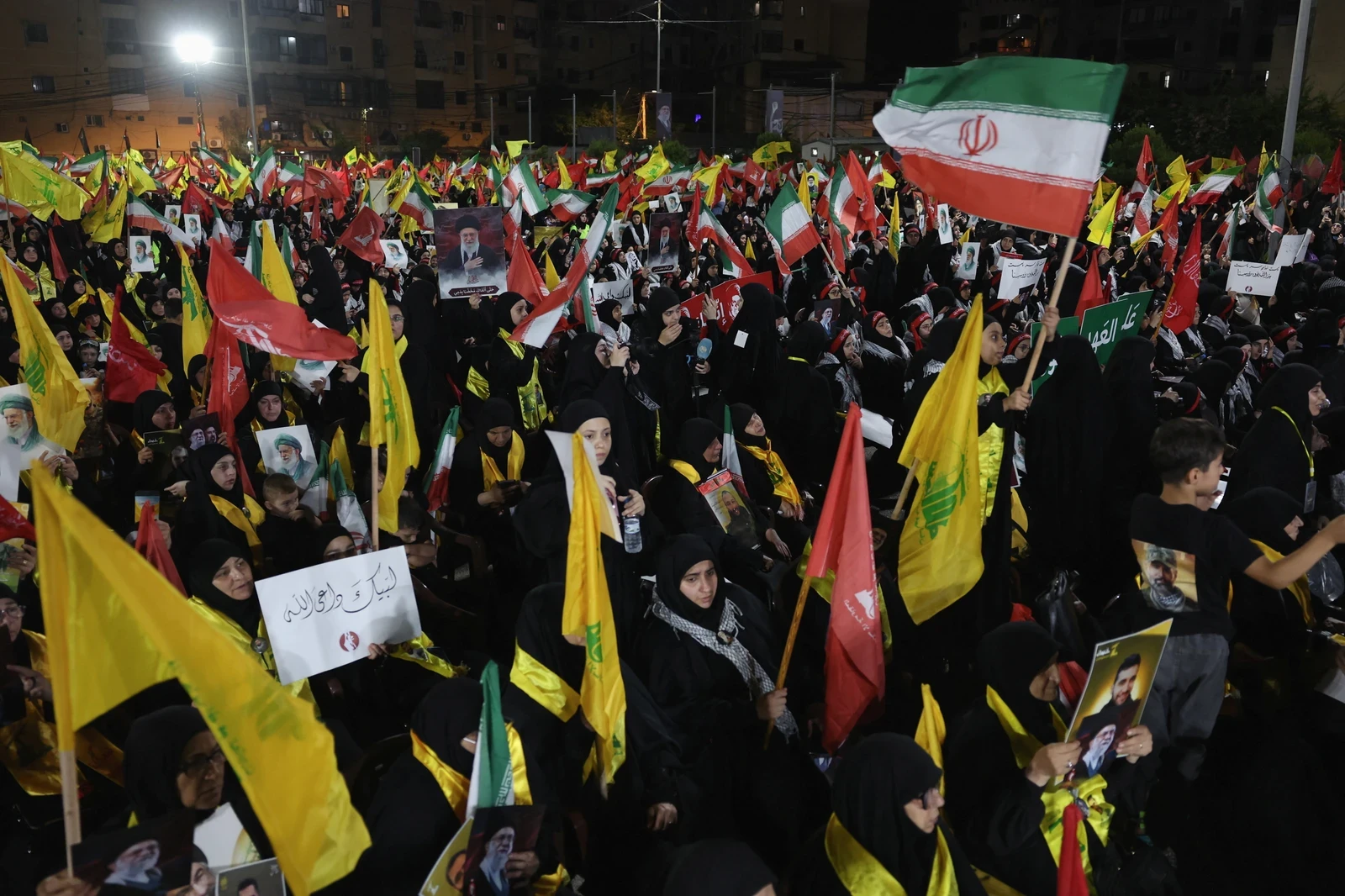
- Likely Hezbollah has spent recent months preparing for possible renewed hostilities with Israel, but the reporting does not establish that fighting has resumed. Lebanese security personnel are cited in reports of preparations and Iranian funding for military capabilities; Hezbollah has also acknowledged that explosives seized by Lebanese authorities belonged to it and were intended for explosive drones. These reports support a readiness assessment, not a conclusion that Hezbollah has decided to initiate an exchange. (Confidence: medium · ASSESSED)
- I&W: Confirm: Lebanese authorities announce a new seizure of explosives or explosive-drone components and attribute them to Hezbollah. (0-30 days)
- I&W: Break: Hezbollah publicly states it has halted preparations, and Lebanese authorities report no further Hezbollah-linked military-material seizures during the next 30 days. (0-30 days)
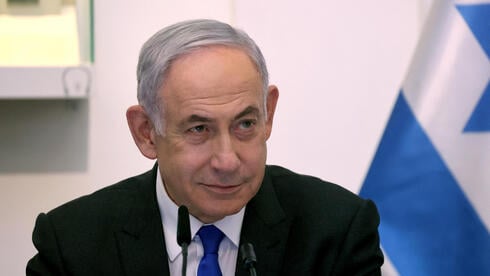
- Likely Israel will face coalition negotiations without a clear parliamentary majority after the 27 October election. A partial count put Benjamin Netanyahu’s outgoing coalition at 54 seats and Gadi Eisenkot’s bloc at 49, both below the 61 seats needed for a majority. Accounts differ on the Arab parties’ total, placing them at 17 or 19 seats. Naftali Bennett and Avigdor Lieberman have rejected coalition arrangements with Arab parties, while Eisenkot has set conditions for talks with the Joint List. The final count is due by 30 October, with official results due on 4 November. (Confidence: medium · ASSESSED)
- I&W: Confirm: the final count leaves every bloc below 61 seats and President Isaac Herzog begins consultations with party leaders. (0-14 days)
- I&W: Break: final results give a bloc 61 or more seats, or parties publicly announce a majority coalition before Herzog completes consultations. (0-14 days)
- Likely Gaza’s winter shelter deficit will remain severe over the coming weeks. OCHA reports that at least 294,250 families need winter shelter assistance, while current supplies provide partial assistance to only 52,000. A Shelter Cluster survey reports that more than 65 per cent of displaced households live in tents or makeshift shelters, and more than half of those shelters are in poor or very poor condition. The Norwegian Refugee Council reported on 5 October that at least 500 truckloads of shelter materials were awaiting entry or procurement. (Confidence: medium · ASSESSED)
- I&W: Confirm: an OCHA update reports that fewer than 52,000 families have access to partial winter shelter assistance. (0-30 days)
- I&W: Break: OCHA reports partial shelter assistance reaching at least 147,125 families, half of those currently identified as needing it. (0-30 days)
- Unlikely the available public reporting establishes that a US or Israeli strike on Iran is authorised or imminent. A Wall Street Journal report says Washington instructed Gulf states to prepare for a possible short, intense operation after the 3 November US midterm elections. The supplied reporting does not confirm an order to launch, and the report does not establish that Israel jointly issued the instruction. Netanyahu’s statement that the Iran issue is not over, and the legal authority of Israel’s caretaker government to go to war, do not by themselves demonstrate a decision to act. This judgment rests on a single underlying report and lacks public confirmation. (Confidence: low · ASSESSED)
- I&W: Confirm: US officials or a Gulf government publicly confirms preparations for a post-election operation against Iran and identifies operational timing or forces. (0-14 days)
- I&W: Break: the US Department of Defence or a named Gulf government publicly denies receiving the reported instruction, or states that the preparations have been cancelled. (0-14 days)
Outlook & scenarios
Ceasefire strain and prolonged coalition talks (55%)
Likely: Israeli forces continue operations in Gaza while the ceasefire remains in place but contested. Hezbollah maintains military readiness without a new Israel-Hezbollah exchange. Israel’s partial election result gives way to coalition bargaining, with Arab party participation a point of dispute.
Renewed Israel-Hezbollah exchange (25%)
Unlikely: an Israeli action in Lebanon or a breach of the ceasefire prompts Hezbollah to resume fire, followed by an Israeli response. The reported Hezbollah preparations would make this a credible escalation path, but they do not establish that an exchange is planned.
Early coalition agreement (10%)
Very unlikely: final results and negotiations produce a governing majority before the new Knesset is sworn in around 10 November. Such an outcome would require party leaders to resolve the current disagreements over coalition partners and terms.
Post-election operation against Iran (10%)
Very unlikely but high impact: the reported US preparations precede a post-election operation against Iran, widening the regional conflict. The available reporting does not confirm authorisation or a launch decision.
Recommendations
- For the next 14 days, maintain separate Gaza and Lebanon incident logs. Record the location, date and source of each reported operation, and distinguish IDF statements, Hamas statements, Lebanese authority reporting and independently corroborated accounts.
- Use the Israeli Central Elections Committee’s final results due on 4 November to update the seat totals. Track President Isaac Herzog’s consultations and record which party leaders accept or reject cooperation with the Joint List and Ra’am.
- Treat the reported US instruction to Gulf states as a single-source warning. Seek separate confirmation from US officials or named Gulf governments before assessing it as an operational decision.
- Prioritise updates to OCHA’s figures on shelter need and assistance in Gaza. Track whether the reported shelter materials awaiting entry move into Gaza and whether the number of families receiving assistance rises.
- In Lebanon reporting, distinguish Iranian funding described as military support from the separate reported humanitarian aid for displaced families. Track new explosive-drone component seizures and any reported cross-border fire.
Confidence & uncertainty
High confidence applies to the broad situation picture: multiple major-media reports describe the partial election result and Gaza’s shelter needs, while named institutional reporting supports key humanitarian figures. Confidence is lower for specific military attributions and for the reported US preparations concerning Iran. The Gaza accounts disagree over the rank and alleged role of those killed, Hezbollah preparations rely partly on security sources, and the Iran report lacks public confirmation.
Alternative analysis (red cell)
The available reporting more securely establishes that Israel claims to retain forces and conduct operations in ceasefire-designated areas than that continued military activity has been independently verified. Given the B6 grading of claim 964b95d7-e8c5-4642-af46-9271da123d5a, the contradictory accounts in claims 013114a8-ab65-4e15-b918-89bb375e27eb and 7fd1a41b-e3c0-4032-be61-081d816b9daa, and the contradiction_unaddressed lint finding, the evidence supports reporting Israeli activity as alleged rather than assessing its continuation as likely.
Intelligence gaps
- [EEI 1.1 · UNCOVERED] Number, type and geolocated coordinates of projectiles (rockets, mortars, anti-tank guided missiles) fired from Lebanon into Israel in the last 24/72 hours, including time-stamped launch and impact locations. Recommended collection: signals/intel
- [EEI 1.2 · UNCOVERED] Satellite or aerial imagery showing movement, concentration, or forward displacement of Hezbollah-associated military assets (armored vehicles, artillery pieces, mobile rocket launchers, logistics convoys) to positions within 0-10 km of the Israel-Lebanon border. Recommended collection: satellite/imagery
- [EEI 1.3 · UNCOVERED] Intercepted or captured Hezbollah command-and-control communications or orders explicitly directing cross-border operations or coordinated strikes with Palestinian groups (time-stamped messages, unit identifiers, orders to fire/move). Recommended collection: signals/intel
- [EEI 1.4 · UNCOVERED] Observable changes in Israeli northern-front posture within Israel (numbers and types of reinforcements deployed to northern brigades, activation of reserves, air defense redeployments, evacuation orders or shelter alerts in northern towns), including timestamps and unit IDs where available. Recommended collection: human/intel
- [EEI 2.1 · UNCOVERED] Official or corroborated reports of IDF reservist mobilization and unit-level deployment orders (number of reservists called, named brigades/units ordered to deploy, deployment timelines). Recommended collection: open-source/media
- [EEI 2.2 · UNCOVERED] Satellite or ground imagery showing concentrations of IDF heavy equipment (tanks, infantry fighting vehicles, engineering vehicles), staging areas, field hospitals or forward supply dumps within X km of the Gaza border and at known crossing points. Recommended collection: satellite/imagery
- [EEI 2.3 · PARTIAL] Change in strike patterns consistent with pre-ground-attack shaping: sustained high-frequency airstrikes on tunnel networks, command nodes, coastal launch sites, and known insurgent concentrations (strike counts, munition types, locations, times). Recommended collection: open-source/media
- [EEI 2.4 · UNCOVERED] Logistics indicators: verified convoys of fuel/ammunition entering staging areas, establishment of forward logistics or medical bases, or documented requisitioning orders for bulk combat supplies with timestamps and quantities. Recommended collection: human/intel
- [EEI 3.1 · UNCOVERED] Number, participants and content of diplomatic contacts or negotiation sessions in the last 48 hours involving mediators (Egypt, Qatar, US, UN), including any proposed ceasefire text, prisoner/exchange lists, timelines or verification mechanisms. Recommended collection: diplomatic
- [EEI 3.2 · PARTIAL] Public statements, press releases or verified communiqués from Hamas and other Gaza armed groups specifying acceptance, rejection, or conditions for a ceasefire (explicit conditions such as prisoner release lists, withdrawal terms, lifting of blockades), with timestamps and speaker attribution. Recommended collection: open-source/media
- [EEI 3.3 · PARTIAL] Humanitarian indicators relevant to ceasefire: establishment and operation of agreed humanitarian corridors/checkpoints, number of aid deliveries admitted, civilian evacuations completed, and NGO/hospital reports of access denials or safe-passage violations. Recommended collection: humanitarian/NGO reports
- [EEI 3.4 · UNCOVERED] Operational evidence of a de facto pause: verified sustained reduction (e.g., ≥12 hours) in strikes or launches from either side in specific sectors, supported by strike/impact logs, radar tracks and incident reports. Recommended collection: open-source/media
Red cell review: PARTIAL DISSENT
TLP:CLEAR