TLP:CLEAR · Disclosure is not limited.
Israel-Gaza Regional Escalation: Ceasefire Strain and Lebanon Risk
Time window: Last 7 days · Audience: General analyst · Type: Situation report · DTG: 2026-11-23 13:15Z · Overall confidence: HIGH
BLUF
The Gaza ceasefire remains under acute strain, while Israeli military activity and unresolved withdrawal and disarmament terms sustain tension in Lebanon. Sustained high-intensity Israel-Hezbollah fighting is unlikely over the next 30 days, but the humanitarian risks in Gaza are worsening and the evidence on Hezbollah’s intentions remains thin.
Executive summary
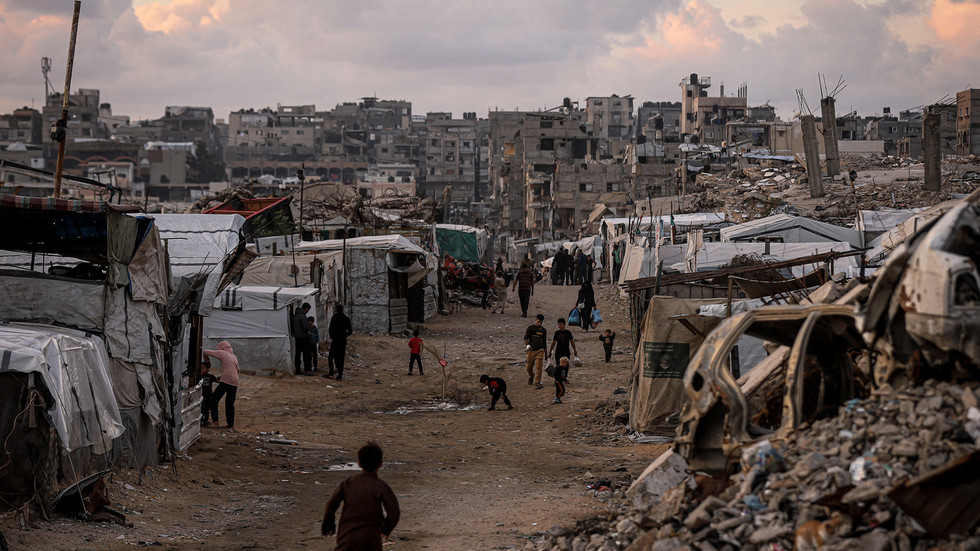
Reporting continues to describe casualties in Gaza since the October 2025 ceasefire and Hezbollah has accused Israel of violating the truce; the reported post-ceasefire death toll has not been independently reconciled here. On 23 November, Oxfam and the Conflict and Environment Observatory reported possible environmental contamination indicators across more than 99% of Gaza. The report’s estimate sits alongside reports that all six wastewater treatment plants are out of operation, fewer than one in five sewage pumping stations remains operational, and 19% of 79 groundwater wells tested in July showed signs of faecal contamination. Gaza’s Health Ministry reports more than 74,700 deaths and 176,000 injuries since 7 October 2023, while UN satellite analysis found 82% of Gaza’s structures damaged or destroyed by June. In Lebanon, Israel’s military reported an air strike on a site in Yanta in the Bekaa Valley on 19 November, which it said Hezbollah used for missile production and weapons storage. Israel continues to demand Hezbollah’s disarmament before withdrawing its troops, while Hezbollah rejects disarmament. UNIFIL’s mandate is due to expire on 31 December.
Change from previous assessment
Since the prior brief on 22 November, the main change is the 23 November reporting on possible environmental contamination across Gaza and a UK Government update that another group of critically ill and injured children arrived for specialist NHS treatment. This adds detail to the humanitarian assessment, but does not materially change the estimate of Israel-Hezbollah escalation risk. The available reporting still does not establish Hezbollah’s intent to broaden the fighting or a breakthrough on disarmament and withdrawal.
Key judgments
- The Gaza ceasefire is very likely to remain under acute strain through 7 December. A major-media report puts Palestinian deaths since the October 2025 ceasefire above 1,500, and Hezbollah has described Israeli attacks as ceasefire violations. The death toll is not reconciled here, and Hezbollah’s account is a party statement rather than independent confirmation of specific incidents. (Confidence: low · ASSESSED)
- I&W: A dated, independently corroborated record identifies an Israeli strike or forced evacuation order in Gaza, with casualty information from Gaza medical facilities or the Gaza Health Ministry. (0-14 days)
- I&W: No independently verified Israeli strike or forced evacuation order in Gaza is recorded for 14 consecutive days. (0-14 days)
- Gaza is very likely to continue facing severe water and sewage exposure through February 2027. Oxfam and the Conflict and Environment Observatory report possible contamination indicators across more than 99% of Gaza; other reported measures include all six wastewater treatment plants out of operation, roughly 40,000 cubic metres of raw sewage entering the Mediterranean each day, and faecal contamination signs in 19% of 79 groundwater wells tested in July. The 99% figure describes possible indicators, not confirmed toxic exposure, and destroyed laboratories and restrictions on specialist testing limit verification. (Confidence: medium · ASSESSED)
- I&W: Repeat independent sampling in Gaza City, Khan Younis, Rafah or Jabalia detects faecal contamination, heavy metals or explosive residues in water or soil. (1-3 months)
- I&W: Monitoring records show a sustained fall in untreated sewage discharge and repeat testing of groundwater wells finds no faecal contamination. (1-3 months)
- Israeli military activity in Lebanon is likely to continue through 23 December. Israel’s military reported striking a site in Yanta in the Bekaa Valley on 19 November and described it as a Hezbollah missile-production and weapons-storage site; reporting also says Israeli strikes and demolitions have continued despite the June ceasefire. The Yanta account and reports of further attacks are not independently corroborated in the available material. (Confidence: medium · ASSESSED)
- I&W: Israel’s military announces, or independent reporting verifies, another strike in Yanta, the Bekaa Valley or a named southern Lebanese location. (0-14 days)
- I&W: No strikes or demolitions are independently verified in Lebanon for 14 consecutive days, and Israel and Hezbollah both acknowledge a halt. (0-30 days)
- Sustained high-intensity Israel-Hezbollah fighting is unlikely over the next 30 days, but confidence in this judgment is low. Israel’s demand for Hezbollah’s disarmament before withdrawal and Hezbollah’s rejection of disarmament preserve a route to renewed confrontation. Maariv reported contingency options involving occupation of key towns in southern Lebanon and a naval blockade of Lebanese ports; that report does not establish an adopted Israeli plan, and the available reporting does not establish Hezbollah’s intent to broaden the fighting. (Confidence: low · ASSESSED)
- I&W: Hezbollah attacks cause Israeli fatalities, or Israel announces a ground operation into a key southern Lebanese town or a naval blockade of Lebanese ports. (0-30 days)
- I&W: Israel and Hezbollah publicly acknowledge a reciprocal halt, with no independently verified strikes for 14 consecutive days. (0-30 days)
- A verified agreement on Hezbollah’s disarmament and Israeli troop withdrawal is unlikely before UNIFIL’s mandate expires on 31 December. Israel links withdrawal to disarmament, Hezbollah rejects disarmament, and reporting says the mandate is due to expire without the conflict being resolved. (Confidence: medium · ASSESSED)
- I&W: Israel publishes a withdrawal timetable and Lebanon or UNIFIL reports verified Hezbollah weapons handover in agreed areas. (0-31 days)
- I&W: No jointly acknowledged, verified withdrawal and disarmament arrangement is in place by 31 December. (0-31 days)
Outlook & scenarios
Constrained confrontation continues (55%)
Israeli strikes in Lebanon continue intermittently, including in the Bekaa or southern Lebanon, while Gaza casualty reporting and allegations of ceasefire violations sustain pressure. Israel and Hezbollah avoid sustained high-intensity fighting, and no verified withdrawal and disarmament agreement is reached before UNIFIL’s mandate expires.
Further deterioration without full-scale war (20%)
A high-casualty incident in Lebanon prompts additional Israeli strikes and Hezbollah retaliation. Fighting expands beyond isolated incidents and displacement rises, but neither side begins a sustained high-intensity campaign.
Practical de-escalation (20%)
Israel and Lebanon establish a verified process for troop withdrawal and Hezbollah weapons handover. A mutual halt to strikes reduces immediate pressure before the 31 December UNIFIL mandate deadline, although unresolved Gaza ceasefire disputes continue to strain regional relations.
Regional escalation wildcard (5%)
A high-impact escalation follows an Israeli move to occupy key towns in southern Lebanon or impose a naval blockade, options previously reported by Maariv but not established as adopted policy. Hezbollah responds with sustained attacks, producing a wider Israel-Hezbollah campaign. This outcome is very unlikely, but its consequences would be severe.
Recommendations
- For Gaza incident tracking, require dated corroboration from more than one source before treating a reported strike or evacuation order as confirmed. Keep Gaza Health Ministry casualty figures distinct from independently verified incident counts.
- Obtain and review the original Oxfam and Conflict and Environment Observatory methodology. Track repeat water sampling, wastewater plant status and sewage discharge separately from the report’s estimate of possible contamination indicators.
- Monitor Israeli military statements and independent reporting for new strikes in Yanta, the Bekaa Valley and named southern Lebanese locations. Do not treat Maariv’s reported occupation and blockade options as approved plans without additional evidence.
- Track any public Israeli withdrawal timetable, verified Hezbollah weapons handover, or change to UNIFIL’s mandate before 31 December. Record statements from Israel and Hezbollah separately from actions verified by Lebanese authorities or UNIFIL.
Confidence & uncertainty
Overall confidence is high in the broad picture of severe humanitarian conditions in Gaza and continued military tension in Lebanon. The assessment draws on UN satellite analysis, reporting on the Oxfam and Conflict and Environment Observatory findings, UK Government reporting on medical evacuations, and Israeli military statements about the Yanta strike. Confidence is lower in the exact extent of environmental contamination, the unreconciled post-ceasefire death toll and Hezbollah’s intentions: some findings rely on a single underlying report, testing is constrained, and claims about intentions are not independently corroborated. The high headline confidence applies to the broad situation, not to each forecast.
Alternative analysis (red cell)
The available evidence more securely supports severe and ongoing water and sewage-system degradation than a very likely continuation of severe exposure through February 2027. The reported >99% contamination figure concerns possible indicators (6e6ed896-c2dc-4bb5-be4b-e01b264403b6), while limited testing capacity (ff6d6822-6eb2-4955-8a19-cebfa8b271fd) and attribution or dating discrepancies around the well data (0226e315-2ddc-41df-b032-94a2db9de731) leave the longer-term exposure forecast materially uncertain. A more defensible reading is that severe risk is likely to persist in the near term, but its severity and geographic extent through February 2027 are not established.
Intelligence gaps
- [EEI 1.1 · UNCOVERED] Number, type and geolocated coordinates of projectiles (rockets, mortars, anti-tank guided missiles) fired from Lebanon into Israel in the last 24/72 hours, including time-stamped launch and impact locations. Recommended collection: signals/intel
- [EEI 1.2 · UNCOVERED] Satellite or aerial imagery showing movement, concentration, or forward displacement of Hezbollah-associated military assets (armored vehicles, artillery pieces, mobile rocket launchers, logistics convoys) to positions within 0-10 km of the Israel-Lebanon border. Recommended collection: satellite/imagery
- [EEI 1.3 · UNCOVERED] Intercepted or captured Hezbollah command-and-control communications or orders explicitly directing cross-border operations or coordinated strikes with Palestinian groups (time-stamped messages, unit identifiers, orders to fire/move). Recommended collection: signals/intel
- [EEI 1.4 · UNCOVERED] Observable changes in Israeli northern-front posture within Israel (numbers and types of reinforcements deployed to northern brigades, activation of reserves, air defense redeployments, evacuation orders or shelter alerts in northern towns), including timestamps and unit IDs where available. Recommended collection: human/intel
- [EEI 2.1 · UNCOVERED] Official or corroborated reports of IDF reservist mobilization and unit-level deployment orders (number of reservists called, named brigades/units ordered to deploy, deployment timelines). Recommended collection: open-source/media
- [EEI 2.2 · UNCOVERED] Satellite or ground imagery showing concentrations of IDF heavy equipment (tanks, infantry fighting vehicles, engineering vehicles), staging areas, field hospitals or forward supply dumps within X km of the Gaza border and at known crossing points. Recommended collection: satellite/imagery
- [EEI 2.3 · PARTIAL] Change in strike patterns consistent with pre-ground-attack shaping: sustained high-frequency airstrikes on tunnel networks, command nodes, coastal launch sites, and known insurgent concentrations (strike counts, munition types, locations, times). Recommended collection: open-source/media
- [EEI 2.4 · UNCOVERED] Logistics indicators: verified convoys of fuel/ammunition entering staging areas, establishment of forward logistics or medical bases, or documented requisitioning orders for bulk combat supplies with timestamps and quantities. Recommended collection: human/intel
- [EEI 3.1 · UNCOVERED] Number, participants and content of diplomatic contacts or negotiation sessions in the last 48 hours involving mediators (Egypt, Qatar, US, UN), including any proposed ceasefire text, prisoner/exchange lists, timelines or verification mechanisms. Recommended collection: diplomatic
- [EEI 3.2 · PARTIAL] Public statements, press releases or verified communiqués from Hamas and other Gaza armed groups specifying acceptance, rejection, or conditions for a ceasefire (explicit conditions such as prisoner release lists, withdrawal terms, lifting of blockades), with timestamps and speaker attribution. Recommended collection: open-source/media
- [EEI 3.3 · UNCOVERED] Humanitarian indicators relevant to ceasefire: establishment and operation of agreed humanitarian corridors/checkpoints, number of aid deliveries admitted, civilian evacuations completed, and NGO/hospital reports of access denials or safe-passage violations. Recommended collection: humanitarian/NGO reports
- [EEI 3.4 · PARTIAL] Operational evidence of a de facto pause: verified sustained reduction (e.g., ≥12 hours) in strikes or launches from either side in specific sectors, supported by strike/impact logs, radar tracks and incident reports. Recommended collection: open-source/media
Red cell review: PARTIAL DISSENT
TLP:CLEAR