TLP:CLEAR · Disclosure is not limited.
Israel, Gaza regional escalation: ceasefires under strain, Gaza hostilities persist, maritime risks rise
Time window: Last 7 days · Audience: General analyst · Type: Situation report · DTG: 2026-07-06 09:27Z · Overall confidence: HIGH
BLUF
Despite multiple ceasefire announcements, Gaza hostilities and Israeli, Lebanese border incidents are continuing, while Iran‑linked tensions are driving fresh maritime and airspace warnings. Watch for Hamas’ expected governance announcement and further UKMTO alerts as near‑term tripwires.
Executive summary
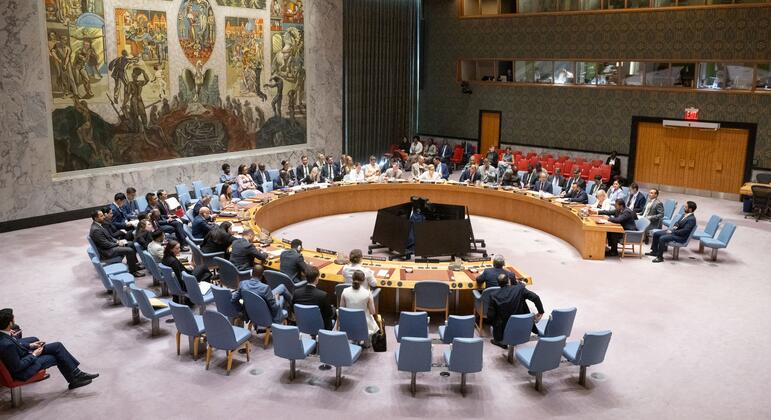
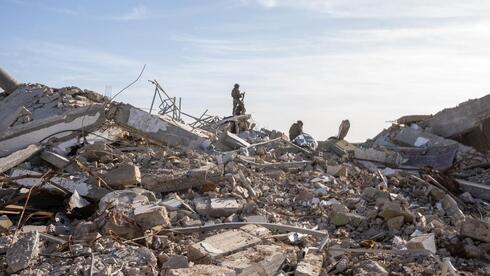
Gaza remains volatile under a nominal ceasefire, with recent Israeli actions, continued fatalities, fresh thermal detections and a severe humanitarian picture. Along the Israel, Lebanon front, truce claims sit uneasily alongside reported Israeli artillery and official signals of readiness to re‑engage. Regionally, the UN Security Council met as Iran was accused of striking Bahrain and Kuwait, Tehran and Washington were reported trading strikes over Hormuz, vessel traffic dipped on 4 July, and a Red Sea ship attack occurred on 5 July. Iran plans several days of airspace closure from 6 July. In Gaza politics, major media reporting points to Hamas preparing to dissolve its monitoring committee to enable a National Committee to assume administrative powers.
Change from previous assessment
New developments since the 5 July brief include reporting of Israeli artillery and missile strikes in southern Lebanon despite truce claims, reinforcing fragility on the northern front; an expected Hamas announcement to dissolve its Gaza monitoring committee, introducing a potential governance shift; fresh indicators of Gaza hostilities and lethal incidents alongside continued humanitarian strain; and tangible maritime‑aviation risk signals linked to Iran, including a 4 July vessel traffic dip through Hormuz, a 5 July Red Sea ship attack report, UN Security Council action on Iranian strikes in Bahrain and Kuwait, and plans to close Iranian airspace from 6 July. These updates increased the emphasis on maritime spillover risk and added a governance‑change scenario for Gaza while keeping confidence moderate on ceasefire implementation details.
Key judgments
- Gaza hostilities are very likely continuing under a nominal ceasefire, with ongoing Israeli strikes and lethal incidents amid acute humanitarian distress and extensive access restrictions. (Confidence: high · ASSESSED)
- I&W: IDF claims or independent reporting of additional strikes or targeted killings in Gaza. (0-14 days)
- I&W: Sustained absence of NASA FIRMS thermal detections over Gaza coupled with no reported strikes. (0-14 days)
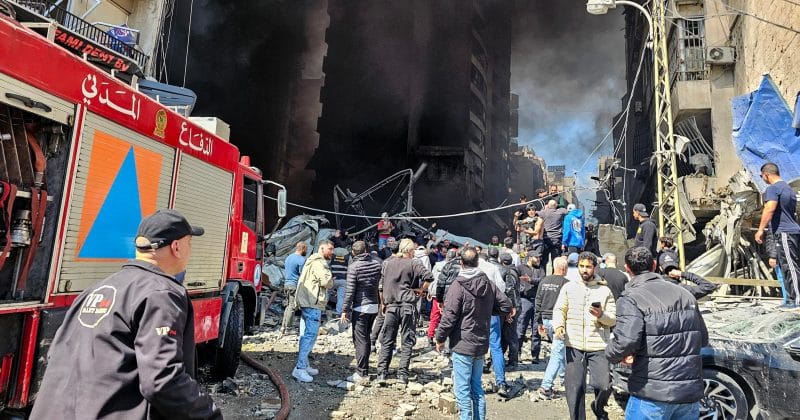
- The Israel, Lebanon front remains fragile, with a roughly even chance of renewed exchanges despite April and June truce announcements, given reported Israeli artillery in southern Lebanon and official statements of readiness to re‑engage. (Confidence: medium · ASSESSED)
- I&W: Verified Israeli artillery or Hezbollah rocket fire along the frontier reported by reputable outlets. (0-14 days)
- I&W: Public statements by both sides affirming full ceasefire implementation with no cross‑border fire for at least two weeks. (0-1 month)
- Regional spillover risks are high, with maritime and airspace hazards around Hormuz and the Red Sea likely to persist in the near term due to Iran‑linked tensions and Houthi threats. (Confidence: high · ASSESSED)
- I&W: Additional UKMTO incident advisories for Red Sea or Gulf of Oman traffic or further dips in AIS‑tracked transits through Hormuz. (0-14 days)
- I&W: Announcements from Tehran signalling re‑opening of airspace and absence of strike exchanges with Washington. (0-14 days)
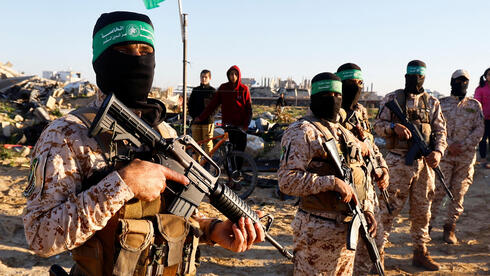
- Hamas is likely to announce the dissolution of its Gaza monitoring committee and enable a National Committee to assume administrative functions, though implementation details remain uncertain. (Confidence: medium · ASSESSED)
- I&W: A formal Hamas statement announcing the committee’s dissolution and publicised entry of the National Committee into Gaza. (0-14 days)
- I&W: Explicit denials by Hamas and continued visible activity by the Committee for Monitoring Government Work. (0-14 days)
- Large‑scale civilian return to northern Israel and southern Lebanon is unlikely in the near term given the scale of past displacement and persistent security restrictions and risks in Lebanon. (Confidence: medium · ASSESSED)
- I&W: Continuation of U.S. Embassy Beirut travel restrictions and limited consular capability notices. (0-1 month)
- I&W: Official Lebanese or Israeli programmes announcing broad civilian returns to border areas with security guarantees. (1-3 months)
- Hamas’ rocket capability remains constrained, although attempts to regenerate limited launch capacity are likely to continue. (Confidence: medium · ASSESSED)
- I&W: Reporting of additional IDF interdictions of clustered rocket launchers in Gaza without corresponding salvos on Israel. (0-1 month)
- I&W: A salvo exceeding ten rockets from Gaza into Israel. (0-14 days)
Outlook & scenarios
Contained friction: truce nominally holds but incidents persist (60%)
The 16 April Lebanon ceasefire and 19 June truce claim keep a lid on major operations, yet sporadic Israeli artillery in southern Lebanon and border incidents continue. In Gaza, limited Israeli strikes and enforcement actions persist, with recurring thermal detections and high displacement. Maritime risk remains elevated but manageable, with intermittent UKMTO advisories and modest recovery of Hormuz traffic after the 4 July dip.
Border rupture and maritime escalation (30%)
A cross‑border exchange between Israel and Hezbollah breaks the lull, prompting intensified Israeli fires and a sharper displacement uptick. Concurrently, Tehran, Washington friction around Hormuz triggers more strike exchanges, keeping Iran’s airspace curbs in place and prompting further shipping reversals and Red Sea incidents following the 5 July attack notice.
Fragile stabilisation via Gaza governance shift (25%)
Hamas announces dissolution of its monitoring committee and a National Committee assumes administrative roles, marginally improving aid access and municipal functions. Israeli military presence and control measures inside Gaza persist, but reported strikes ease somewhat. Along the northern front, truce arrangements hold with fewer reported incidents.
Wildcard: Houthi strike on Saudi oil infrastructure (15%)
Following explicit threats, the Houthis execute a successful attack on Saudi oil fields, sharply raising regional energy and maritime risk and prompting additional naval advisories and reroutings across the Red Sea and Gulf.
Recommendations
- Task daily monitoring of Hamas channels and Gaza‑based outlets for a formal announcement dissolving the monitoring committee and any visibility of a National Committee assuming functions; prepare a quick‑turn assessment of governance and security implications.
- Maintain a standing geospatial watch on NASA FIRMS for Gaza, paired with incident collation from IDF and local reporting, to flag strike patterns that would confirm or break the assessment of ongoing hostilities.
- Stand up a maritime risk tracker for Hormuz and the Red Sea that fuses UKMTO advisories, AIS‑based transit counts and incident coordinates to alert on renewed dips in vessel flows or attack clustering.
- Update the Lebanon border risk picture weekly by cross‑referencing reported artillery and rocket exchanges with displacement figures and official restrictions, to inform judgments on civilian return timelines.
- Collect and archive official notices on Iranian airspace restrictions and subsequent changes to provide early warning of wider regional flight disruptions tied to Tehran, Washington tensions.
- Prepare contingency notes on humanitarian access into Gaza that weigh reported Israeli control expansion and the ‘yellow line’ movements against any governance changes, to anticipate bottlenecks for aid delivery.
- Brief energy and economic desks on the downside risk from Houthi threats to Saudi oil assets and continued Red Sea incidents, highlighting plausible shipping detours and cost impacts.
Confidence & uncertainty
Multiple independent, reliable sources underpin the judgments: UN and major media on regional tensions and maritime incidents, official government advisories on Lebanon’s security environment, and satellite detections and major media reporting on Gaza’s violence and humanitarian conditions. Some elements are contested or single‑source, notably the sequencing and scope of the Israel, Lebanon truce arrangements and Hamas force estimates, which lowers confidence on timing and intent in those areas. Despite these uncertainties, cross‑source corroboration on continued Gaza hostilities and elevated maritime risk supports a high overall confidence call.
Alternative analysis (red cell)
Several operational judgments rely on limited or clustered sourcing and the run contains unresolved contradictions that the narrative does not address. For the Israel–Lebanon front and assessments of Hamas governance and rocket capability, available reporting supports multiple plausible outcomes (continued low-intensity incidents, aspirational political moves, or slower capability regeneration), so the brief's certainty overstates what the evidence supports.
Intelligence gaps
- [EEI 1.1 · PARTIAL] Number, type and geolocated coordinates of projectiles (rockets, mortars, anti-tank guided missiles) fired from Lebanon into Israel in the last 24/72 hours, including time-stamped launch and impact locations. Recommended collection: signals/intel
- [EEI 1.2 · UNCOVERED] Satellite or aerial imagery showing movement, concentration, or forward displacement of Hezbollah-associated military assets (armored vehicles, artillery pieces, mobile rocket launchers, logistics convoys) to positions within 0–10 km of the Israel-Lebanon border. Recommended collection: satellite/imagery
- [EEI 1.3 · UNCOVERED] Intercepted or captured Hezbollah command-and-control communications or orders explicitly directing cross-border operations or coordinated strikes with Palestinian groups (time-stamped messages, unit identifiers, orders to fire/move). Recommended collection: signals/intel
- [EEI 1.4 · PARTIAL] Observable changes in Israeli northern-front posture within Israel (numbers and types of reinforcements deployed to northern brigades, activation of reserves, air defense redeployments, evacuation orders or shelter alerts in northern towns), including timestamps and unit IDs where available. Recommended collection: human/intel
- [EEI 2.1 · UNCOVERED] Official or corroborated reports of IDF reservist mobilization and unit-level deployment orders (number of reservists called, named brigades/units ordered to deploy, deployment timelines). Recommended collection: open-source/media
- [EEI 2.2 · UNCOVERED] Satellite or ground imagery showing concentrations of IDF heavy equipment (tanks, infantry fighting vehicles, engineering vehicles), staging areas, field hospitals or forward supply dumps within X km of the Gaza border and at known crossing points. Recommended collection: satellite/imagery
- [EEI 2.3 · PARTIAL] Change in strike patterns consistent with pre-ground-attack shaping: sustained high-frequency airstrikes on tunnel networks, command nodes, coastal launch sites, and known insurgent concentrations (strike counts, munition types, locations, times). Recommended collection: open-source/media
- [EEI 2.4 · UNCOVERED] Logistics indicators: verified convoys of fuel/ammunition entering staging areas, establishment of forward logistics or medical bases, or documented requisitioning orders for bulk combat supplies with timestamps and quantities. Recommended collection: human/intel
- [EEI 3.1 · PARTIAL] Number, participants and content of diplomatic contacts or negotiation sessions in the last 48 hours involving mediators (Egypt, Qatar, US, UN), including any proposed ceasefire text, prisoner/exchange lists, timelines or verification mechanisms. Recommended collection: diplomatic
- [EEI 3.2 · UNCOVERED] Public statements, press releases or verified communiqués from Hamas and other Gaza armed groups specifying acceptance, rejection, or conditions for a ceasefire (explicit conditions such as prisoner release lists, withdrawal terms, lifting of blockades), with timestamps and speaker attribution. Recommended collection: open-source/media
- [EEI 3.3 · PARTIAL] Humanitarian indicators relevant to ceasefire: establishment and operation of agreed humanitarian corridors/checkpoints, number of aid deliveries admitted, civilian evacuations completed, and NGO/hospital reports of access denials or safe-passage violations. Recommended collection: humanitarian/NGO reports
- [EEI 3.4 · PARTIAL] Operational evidence of a de facto pause: verified sustained reduction (e.g., ≥12 hours) in strikes or launches from either side in specific sectors, supported by strike/impact logs, radar tracks and incident reports. Recommended collection: open-source/media
Cited sources
[1] alzaytouna.net · [PDF] التاريخ: ال سبت (D) · sha256:9e8c4f15404b [2] NASA · NASA FIRMS thermal detections — Gaza (2d) (A) · sha256:df9eceb6110f [3] CNN · Bodies lie unclaimed and rats run rampant as months on Gaza’s ceasefire remains unfulfilled | CNN (A) · sha256:051930de7fd0 [4] ynetnews.com · Netanyahu: no Gaza reconstruction until Hamas is disarmed (A) · sha256:0cba4ec80a06 [5] Wikipedia · 2026 Israel–Lebanon ceasefire (B) · sha256:c0cc91cecd1b [6] العربي الجديد · طهران ترفض السالم مع أميركا واالعتراف بإسرائيل - العربي الجديد (B) · sha256:81b9798cb40e [7] cryptobriefing.com · Israel ready for military action amid fragile ceasefire with Iran (B) · sha256:9bf649830561 [8] Wikipedia · Hezbollah–Israel conflict (2023–present) (B) · sha256:5065955b7593 [9] United Nations · Security Council LIVE: Emergency meeting on Iranian attack in Bahrain (A) · sha256:8a0d2c085c67 [10] gcaptain.com · Cargo Ship Reports Attack Off Yemen, Adding To Red Sea Risks (B) · sha256:4390cf49eb2f [11] deyaralnagab.com · ديار النقب (D) · sha256:2170eff73fa2 [12] alaraby.co.uk · فرحة عربية (B) · sha256:b315a3b63703 [13] Jerusalem Post · Hamas to dissolve Gaza Strip committee for monitoring government activity - report (B) · sha256:ae14c5c2adbb [14] ynetnews.com · Report: Hamas to announce dissolution of its Gaza government after nearly 20 years (B) · sha256:0a6e7a2b89dc [15] U.S. Department of State · Lebanon Travel Advisory | Travel.State.gov (A) · sha256:98e17f2ad3e2 [16] The Jerusalem Post · Are officials exaggerating Hamas threat to impact elections, push for new invasion? - analysis (B) · sha256:0cf2b9a5bd2b
Source content hashes were computed at collection time; the cited text is preserved unmodified for the life of this product.
Red cell review: PARTIAL DISSENT
TLP:CLEAR