TLP:CLEAR · Disclosure is not limited.
Israel-Gaza Regional Escalation: Central Gaza Operation and Southern Lebanon Activity, 19 November 2026
Time window: Last 7 days · Audience: General analyst · Type: Situation report · DTG: 2026-11-19 13:15Z · Overall confidence: HIGH
BLUF
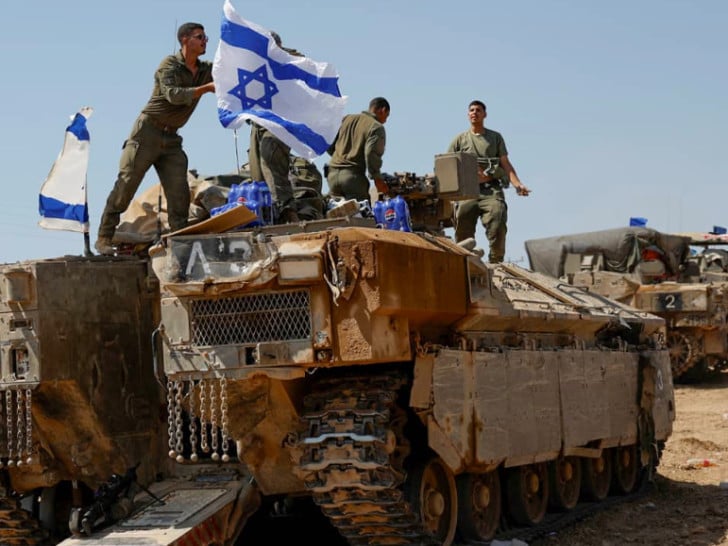
Israeli forces conducted a short tank operation across the Yellow Line near Nuseirat on 18 November and reported its completion the next day, with the Salah al-Din road reopened. The operation displaced thousands of people and sharpened disputes over ceasefire compliance; reporting on continued IDF activity in southern Lebanon is more limited and less independently corroborated.
Executive summary
The IDF and Shin Bet reported a targeted operation west of the Yellow Line in central Gaza, which Israeli authorities said aimed to dismantle a tunnel posing a threat to troops. Hamas called the operation a ceasefire violation; the IDF said its deployment complied with the agreement. UN and Palestinian reporting describes thousands displaced, while the operation's precise footprint and displacement total remain unsettled. Separately, one report describes IDF Northern Command activity in named southern Lebanese villages, but the supplied reporting does not independently corroborate those operational details.
Change from previous assessment
Since the 18 November brief, reporting adds a specific Israeli tank operation across the Yellow Line near Nuseirat on 18 November, its reported conclusion on 19 November, the reopening of the Salah al-Din road and new operation-related displacement estimates. The assessment now distinguishes the reported short operation from the broader forecast of continuing ceasefire strain. Southern Lebanon activity is described in more detail, but confidence in that assessment is lowered from the prior brief because the supplied operational claims rest on a single account without independent corroboration.
Key judgments
- It is very likely Israeli forces conducted a short ground operation across the Yellow Line near Nuseirat on 18 November and ended it on 19 November. Reporting describes tanks advancing near the Salah al-Din road; COGAT announced the road had reopened. The IDF said the operation targeted a tunnel west of the line and complied with the ceasefire, while Hamas called it a breach. Reports place activity variously around Nuseirat, Bureij and Deir al-Balah, leaving the exact footprint and legal status unresolved. Major-media accounts, Israeli statements and UN reporting corroborate the operation and its conclusion, but not every detail of its location or status under the ceasefire. (Confidence: medium · REPORTED)
- I&W: A UN field update or independently geolocated imagery places Israeli tanks west of the Yellow Line near Nuseirat on 18 November. (0-14 days)
- I&W: Operational records or geolocated imagery show Israeli tanks remained east of the Yellow Line throughout 18 November. (0-14 days)
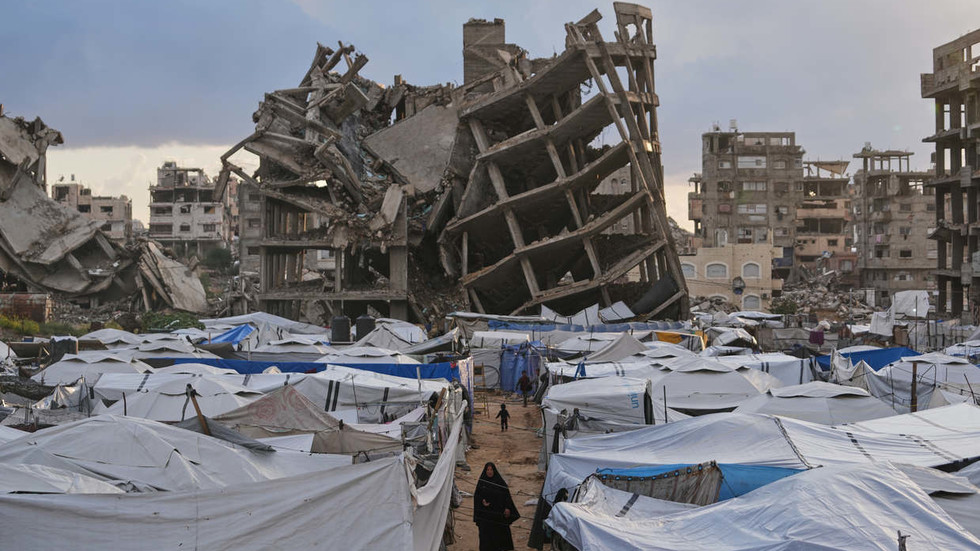
- It is very likely the 18-19 November operation displaced thousands of people around Nuseirat and central Gaza. The Palestinian Ministry of Social Development reported 5,260 people affected, while the Hamas-run government media office estimated that about 6,000 people fled; UN reporting described displacement in the thousands. These figures refer to different measures and are not reconciled. The UN assessment, ministry tally and accounts from displaced residents support the broad conclusion, but the exact number remains uncertain. (Confidence: medium · REPORTED)
- I&W: OCHA publishes a field update confirming thousands of people newly displaced from the Nuseirat or Deir al-Balah operation area. (0-14 days)
- I&W: OCHA publishes a final operation-related displacement count below 1,000 people. (0-30 days)
- It is likely the Gaza ceasefire will remain under acute strain through 19 December. The central Gaza operation, continued Israeli attacks reported since the October 2025 ceasefire, and opposing Israeli and Hamas accounts of compliance all point to recurring friction. Hezbollah also condemned the Gaza operation, but the supplied claims report no new Hezbollah military action in response. Accounts of the Board of Peace report conflict: one says it blamed both parties for failures, while others say it attributed implementation failures to Israeli political indecision. That unresolved reporting and the short assessment window limit confidence in assigning responsibility or forecasting the pace of further incidents. (Confidence: medium · ASSESSED)
- I&W: The IDF or COGAT issues another evacuation order or reports ground activity west of the Yellow Line near Nuseirat or Bureij. (0-14 days)
- I&W: The Board of Peace publishes an agreed implementation schedule and reports progress, with no new Israeli ground operation west of the Yellow Line. (1-3 months)
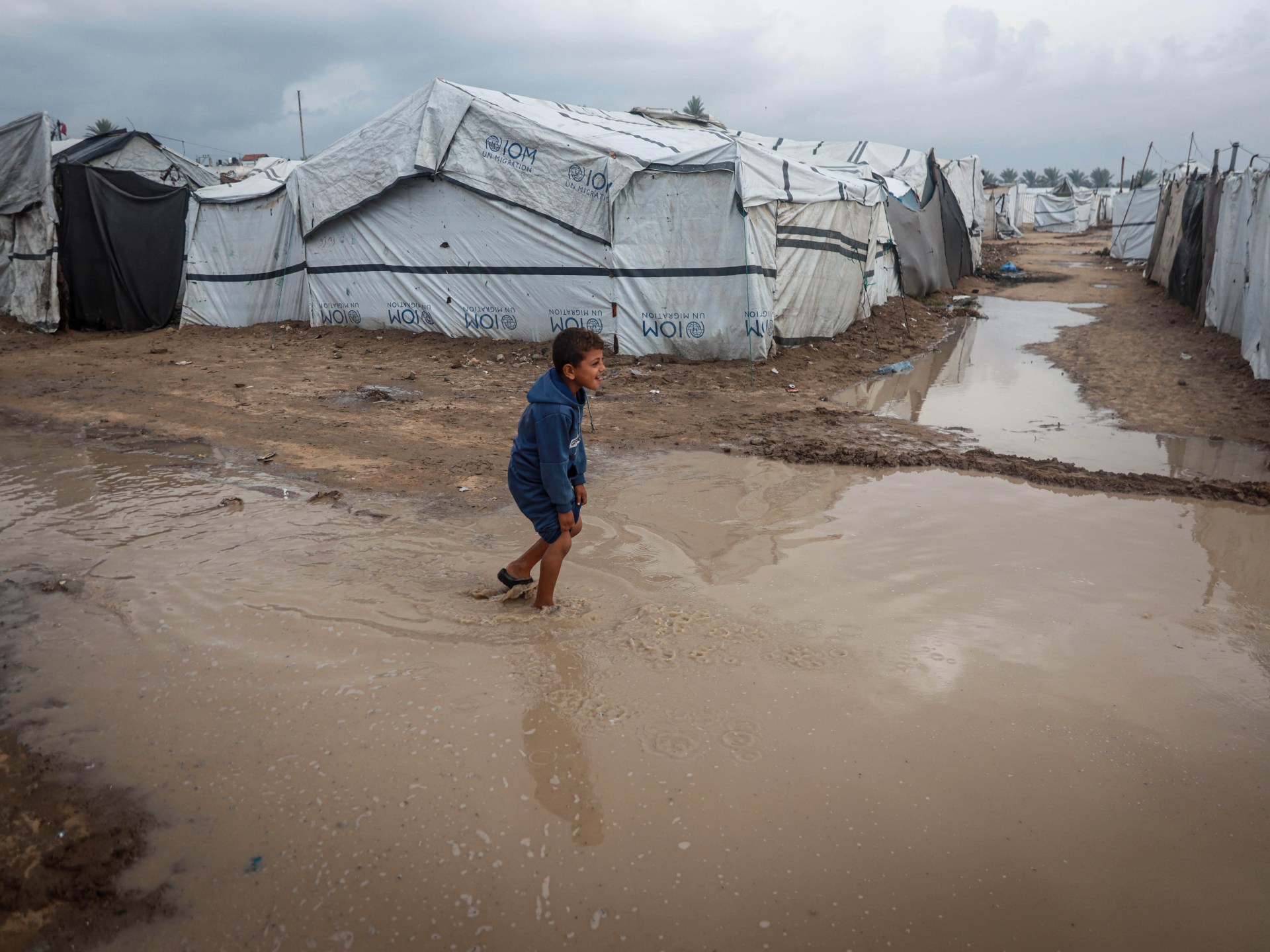
- It is very likely Gaza's humanitarian pressure will remain acute through 19 December, with shelter losses and restricted medical evacuation adding to the strain. Aid-agency reporting says a winter storm flooded more than 70,000 tents and caused six deaths, including an infant; Gaza's health ministry reported 2,027 patients had died awaiting evacuation and 21,000 remained on waiting lists. WHO separately reported supporting more than 3,800 medical evacuations since the ceasefire began and called for improved facilities at Rafah. These reported figures come from different organisations and are not independently reconciled, but the convergence of storm, shelter and medical reporting supports the assessment. (Confidence: medium · ASSESSED)
- I&W: OCHA or aid agencies report another storm-related loss of tents or deaths among displaced people in Gaza. (0-14 days)
- I&W: Gaza's health ministry reports a fall from the 21,000-patient evacuation waiting list and WHO reports improved evacuation conditions at Rafah. (1-3 months)
- It is likely IDF Northern Command will continue ground-clearing activity in southern Lebanon over the next month, including in villages beyond the immediate border area. One report describes demolitions in Baraashit, Kunin, Qantara and Haddatha, and operational activity extending towards Tibnin and Deir Siryan. The same account attributes claims about Hezbollah rebuilding to IDF intelligence. The supplied reporting on these operations rests on one account drawing on Israeli military sources, with no independent corroboration here, so confidence is low. (Confidence: low · ASSESSED)
- I&W: New reporting or imagery documents IDF engineering or clearance activity in Baraashit, Kunin, Qantara, Haddatha, Tibnin or Deir Siryan. (0-30 days)
- I&W: The IDF announces an end to operations and withdrawal from the named southern Lebanon locations. (0-30 days)
Outlook & scenarios
Contained, recurring operations (50%)
The 18-19 November operation remains limited in duration and geography. The Salah al-Din road stays open, while further localised Israeli operations and evacuation notices sustain tension without a return to large-scale fighting in Gaza.
Further ceasefire erosion and displacement (30%)
Israeli forces conduct additional operations west of the Yellow Line and issue more evacuation orders near Nuseirat or Bureij. Displacement grows, Hamas continues to describe Israeli actions as ceasefire violations, and Israeli authorities continue to cite threats from Hamas infrastructure.
Diplomatic containment (15%)
The Board of Peace and ceasefire guarantors establish a clearer implementation process. Israeli and Hamas commitments show measurable progress, the 18-19 November operation remains isolated, and humanitarian access and medical evacuation improve.
Wildcard: southern Lebanon incident triggers wider confrontation (5%)
An incident involving IDF forces operating in southern Lebanon and Hezbollah leads to a wider exchange. This low-probability, high-impact path would expand the current risk beyond Gaza, where the supplied claims show Hezbollah condemning Israeli actions but do not report a new Hezbollah military response.
Recommendations
- Maintain a dated incident map for central Gaza that distinguishes Nuseirat, Bureij and Deir al-Balah. Track IDF and COGAT evacuation notices, tank movements west of the Yellow Line, and changes to the Salah al-Din road's status.
- Keep separate counts for people affected, people displaced and people residing in shelters. Compare future OCHA updates with the Palestinian Ministry of Social Development's 5,260 figure and the Hamas-run government media office's estimate of about 6,000 people who fled.
- Obtain and review the Board of Peace report itself before using claims about which party bears responsibility for implementation failures.
- Track storm damage, shelter losses, patient evacuation waiting lists and conditions at Rafah in subsequent OCHA and WHO reporting.
- Seek independent reporting or imagery before treating the southern Lebanon operational account as evidence of a sustained IDF campaign. Track activity separately in Baraashit, Kunin, Qantara, Haddatha, Tibnin and Deir Siryan.
Confidence & uncertainty
Overall confidence is high for the core event picture: multiple major-media accounts, Israeli military and COGAT statements, and UN reporting support the occurrence and conclusion of the central Gaza operation. The exact operational footprint, ceasefire legality and displacement totals remain unsettled. The Board of Peace report is characterised inconsistently, and the southern Lebanon operational details rely on a single account citing Israeli military sources. The headline confidence applies to the broad situation, not every attribution or figure.
Alternative analysis (red cell)
The evidence more securely establishes that Israeli forces conducted and then announced the conclusion of some activity in central Gaza than that a clearly defined operation crossed the Yellow Line near Nuseirat. The geographic reporting is inconsistent between Nuseirat and Deir al-Balah (9d319998-7227-40d4-b526-f422a8822943; 499ce0c4-04fa-4e66-8dda-e8729bbe80c1), while the ceasefire status remains a contested interpretation rather than an independently resolved fact (58cb5843-dca6-471c-a8bb-d5356c28e15f; 5e637101-be0a-462b-ac97-066c4d924483).
Intelligence gaps
- [EEI 1.1 · UNCOVERED] Number, type and geolocated coordinates of projectiles (rockets, mortars, anti-tank guided missiles) fired from Lebanon into Israel in the last 24/72 hours, including time-stamped launch and impact locations. Recommended collection: signals/intel
- [EEI 1.2 · UNCOVERED] Satellite or aerial imagery showing movement, concentration, or forward displacement of Hezbollah-associated military assets (armored vehicles, artillery pieces, mobile rocket launchers, logistics convoys) to positions within 0-10 km of the Israel-Lebanon border. Recommended collection: satellite/imagery
- [EEI 1.3 · UNCOVERED] Intercepted or captured Hezbollah command-and-control communications or orders explicitly directing cross-border operations or coordinated strikes with Palestinian groups (time-stamped messages, unit identifiers, orders to fire/move). Recommended collection: signals/intel
- [EEI 1.4 · UNCOVERED] Observable changes in Israeli northern-front posture within Israel (numbers and types of reinforcements deployed to northern brigades, activation of reserves, air defense redeployments, evacuation orders or shelter alerts in northern towns), including timestamps and unit IDs where available. Recommended collection: human/intel
- [EEI 2.1 · UNCOVERED] Official or corroborated reports of IDF reservist mobilization and unit-level deployment orders (number of reservists called, named brigades/units ordered to deploy, deployment timelines). Recommended collection: open-source/media
- [EEI 2.2 · PARTIAL] Satellite or ground imagery showing concentrations of IDF heavy equipment (tanks, infantry fighting vehicles, engineering vehicles), staging areas, field hospitals or forward supply dumps within X km of the Gaza border and at known crossing points. Recommended collection: satellite/imagery
- [EEI 2.3 · PARTIAL] Change in strike patterns consistent with pre-ground-attack shaping: sustained high-frequency airstrikes on tunnel networks, command nodes, coastal launch sites, and known insurgent concentrations (strike counts, munition types, locations, times). Recommended collection: open-source/media
- [EEI 2.4 · UNCOVERED] Logistics indicators: verified convoys of fuel/ammunition entering staging areas, establishment of forward logistics or medical bases, or documented requisitioning orders for bulk combat supplies with timestamps and quantities. Recommended collection: human/intel
- [EEI 3.1 · UNCOVERED] Number, participants and content of diplomatic contacts or negotiation sessions in the last 48 hours involving mediators (Egypt, Qatar, US, UN), including any proposed ceasefire text, prisoner/exchange lists, timelines or verification mechanisms. Recommended collection: diplomatic
- [EEI 3.2 · PARTIAL] Public statements, press releases or verified communiqués from Hamas and other Gaza armed groups specifying acceptance, rejection, or conditions for a ceasefire (explicit conditions such as prisoner release lists, withdrawal terms, lifting of blockades), with timestamps and speaker attribution. Recommended collection: open-source/media
- [EEI 3.3 · PARTIAL] Humanitarian indicators relevant to ceasefire: establishment and operation of agreed humanitarian corridors/checkpoints, number of aid deliveries admitted, civilian evacuations completed, and NGO/hospital reports of access denials or safe-passage violations. Recommended collection: humanitarian/NGO reports
- [EEI 3.4 · UNCOVERED] Operational evidence of a de facto pause: verified sustained reduction (e.g., ≥12 hours) in strikes or launches from either side in specific sectors, supported by strike/impact logs, radar tracks and incident reports. Recommended collection: open-source/media
Red cell review: PARTIAL DISSENT
TLP:CLEAR