TLP:CLEAR · Disclosure is not limited.
Israel, Gaza regional escalation: cross‑border fire persists as US, Iran strikes raise spillover risk
Time window: Last 7 days · Audience: General analyst · Type: Situation report · DTG: 2026-07-08 13:13Z · Overall confidence: MEDIUM
BLUF
Cross‑border hostilities between Israel and Hezbollah continue despite ceasefire frameworks while combat persists in Gaza. US, Iran strikes this week heighten the risk that planned Rome talks on 16-17 July stall or fail, keeping the theatre in a volatile holding pattern.
Executive summary
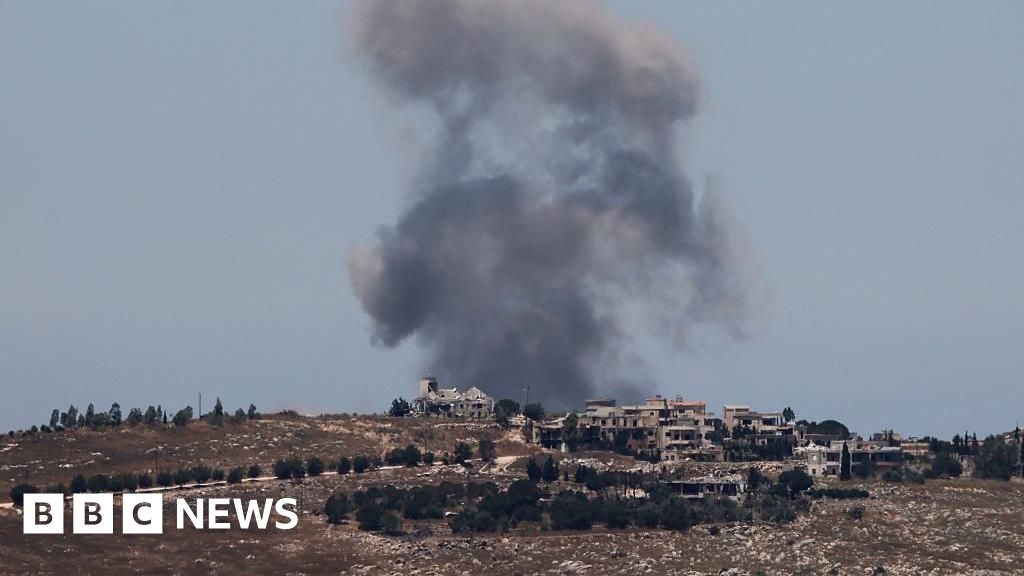
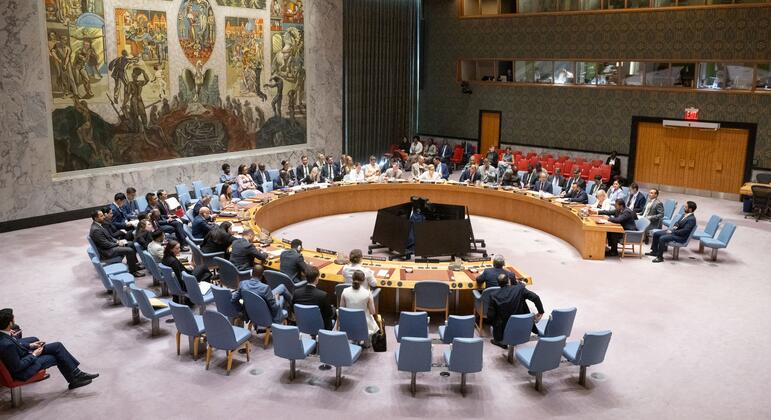
In southern Lebanon, an Israeli drone strike near Nabatieh al‑Fawqa killed four people and the IDF says it continues targeted operations despite prior truce announcements and frameworks. Israel reports 36 soldiers and four civilians killed on both sides of the border. In Gaza, Israeli fire killed eight and wounded 17 in the past 24 hours, an Israeli strike in Gaza City killed four, and a truck driver was shot dead in an IDF‑controlled area. NASA recorded 33 thermal anomalies across Gaza from 7 to 8 July. Humanitarian strain endures: more than 1.2 million people are displaced in Lebanon with over 12,000 injured, around 96,000 remain displaced from northern Israel, and over 640,000 people have returned home in Lebanon since 22 June. Diplomatically, Lebanon agreed to US‑mediated talks with Israel in Rome on 16-17 July, while Iranian officials tied progress in US talks to continuation of a ceasefire on the Lebanese front. Concurrently, CENTCOM struck over 80 targets in Iran and the IRGC said it targeted US assets in Bahrain and Kuwait, prompting a UN Security Council emergency meeting.
Change from previous assessment
New since the prior brief: US, Iran strikes resumed with CENTCOM reporting over 80 targets hit in Iran and the IRGC stating it targeted US assets in Bahrain and Kuwait, and the UN Security Council convened an emergency meeting. In southern Lebanon, an Israeli drone strike killed four people near Nabatieh al‑Fawqa and the IDF says targeted operations continue. Lebanon agreed to attend US‑mediated talks with Israel in Rome on 16-17 July. In Gaza, casualties continued and a truck driver was shot in an IDF‑controlled area, with NASA recording fresh thermal detections. Displacement figures were updated with over 1.2 million displaced in Lebanon, about 96,000 displaced from northern Israel, and over 640,000 returns in Lebanon since 22 June. These developments increase the assessed fragility of the diplomatic track while reinforcing prior judgments on persistent hostilities.
Key judgments
- Cross‑border hostilities between the IDF and Hezbollah are ongoing despite successive ceasefire arrangements, with Israel very likely continuing strikes in southern Lebanon and reporting fatalities on both sides. (Confidence: high · REPORTED)
- I&W: Verified additional Israeli drone or artillery strikes in Nabatieh, Bint Jbeil, or Marjayoun reported by major outlets or official communiqués. (0-14 days)
- I&W: Observable Hezbollah redeployment north of the Litani River with a sustained 14‑day halt in reported Israeli strikes along the border. (1-3 months)
- Active combat in Gaza is ongoing, with multiple lethal incidents and recent satellite thermal detections consistent with fires from strikes or other heat sources. (Confidence: high · REPORTED)
- I&W: Further same‑day casualty reports and FIRMS detections in Gaza exceeding 20 heat signatures over 48 hours. (0-14 days)
- I&W: Near‑zero FIRMS thermal detections over Gaza for seven consecutive days alongside an absence of credible new strike casualty reports. (0-14 days)
- Humanitarian pressure remains high on both sides of the Israel, Lebanon border: more than 1.2 million people are displaced and over 12,000 injured in Lebanon, about 96,000 remain displaced from northern Israel, and returns in Lebanon since 22 June indicate only partial relief. (Confidence: high · REPORTED)
- I&W: Official updates show displacement totals in Lebanon remaining near or above one million and limited net returns. (1-3 months)
- I&W: Verified acceleration of returns in Lebanon by several hundred thousand with sustained reopening of affected localities. (1-3 months)
- There is a roughly even chance that US‑mediated Rome talks on 16-17 July yield limited de‑escalation steps, but outcomes are fragile given Iranian linkage of US talks to the Lebanese front and concurrent US, Iran strikes. (Confidence: medium · ASSESSED)
- I&W: Talks proceed in Rome with Israeli and Lebanese delegations and a joint or parallel readout referencing steps tied to the Litani arrangement. (0-14 days)
- I&W: Postponement or collapse of the Rome talks following another round of US, Iran strikes or public statements severing the talks, ceasefire linkage. (0-14 days)
- The resumed exchange of US and Iranian strikes is likely to raise the risk of broader regional escalation that intersects the Israel, Lebanon theatre. (Confidence: medium · ASSESSED)
- I&W: Additional long‑range US or IRGC strikes, or attacks on facilities in Bahrain or Kuwait, beyond the initial salvoes. (0-14 days)
- I&W: A verifiable 14‑day pause in US, Iran strikes accompanied by public statements signalling restraint. (0-14 days)
- Civil risks across Lebanon, including Beirut, remain high due to potential drone and missile strikes, ongoing terrorist plotting, kidnapping risk, and US mission movement restrictions. (Confidence: high · REPORTED)
- I&W: A new drone or missile incident reported in Beirut or expanded movement restrictions for US mission personnel. (0-14 days)
- I&W: Public relaxation of US travel and movement restrictions for Lebanon. (1-3 months)
Outlook & scenarios
Holding pattern: continued tit‑for‑tat fire with stalled diplomacy (50%)
IDF, Hezbollah exchanges persist at low to moderate tempo along the border while Gaza sees regular Israeli strikes and ground activities. Displacement in Lebanon and northern Israel changes little month‑to‑month. Rome talks produce no binding steps and are overtaken by the US, Iran strike narrative, leaving field commanders to manage friction.
Managed de‑escalation after Rome (35%)
Talks in Rome generate limited but workable measures, including coordination on the Litani framework and a reduction in strike tempo. Hezbollah quietly pulls select units north of the Litani and the IDF scales back routine fires. Returns accelerate in parts of southern Lebanon and cross‑border communities in northern Israel begin phased re‑opening.
Spillover escalation driven by US, Iran confrontation (25%)
Further US and IRGC strikes trigger retaliatory signalling by Iran‑aligned actors. Hezbollah increases indirect fire rates and Israel expands target sets in southern Lebanon, including interdiction in depth. Gaza operations continue, and the Rome track collapses under pressure. Civilian risk in Beirut and northern Israel rises.
Recommendations
- Stand up an indicators and warnings tracker keyed to: cross‑border strike frequency and geography in southern Lebanon; FIRMS thermal detections over Gaza; diplomatic milestones for the 16-17 July Rome talks; and US, Iran strike tempo.
- Task geospatial and imagery review to validate the reported Israeli drone strike near Nabatieh al‑Fawqa and to assess claimed battle damage from US and IRGC strikes affecting Bahrain and Kuwait facilities.
- Maintain a reconciled humanitarian baseline using Lebanese Health Ministry figures for injuries, displacement totals and reported returns, alongside Israeli data on northern displacement, and update weekly.
- Prioritise collection on any Hezbollah redeployment north of the Litani River and any Lebanese Armed Forces posture changes tied to ceasefire implementation.
- Prepare decision support for potential Rome‑talks failure, including contingency outlooks for a 30‑day continuation of current firing patterns and for a rapid escalation case tied to US, Iran dynamics.
- Align risk messaging for personnel and partners in Lebanon with current US mission restrictions and threat environment, including Beirut‑wide exposure to drone and missile incidents and kidnapping risk.
Confidence & uncertainty
Overall confidence is medium. Many core developments are corroborated by multiple high‑reliability sources: ongoing Israeli strikes in southern Lebanon and reported casualties, Gaza fatalities and FIRMS detections, displacement and injury figures in Lebanon, and both US and IRGC strike announcements with a UN Security Council session. Some elements have single‑source or medium‑confidence reporting, and there are discrepancies in humanitarian tallies across timeframes. Judgments about the impact of US, Iran strikes on the Rome talks and on broader escalation are analytic inferences, which lowers confidence.
Alternative analysis (red cell)
Contradictory operational attributions and divergent humanitarian counts in the record weaken confidence in several judgments. Reported thermal signatures and isolated fatalities indicate ongoing incidents, but they do not alone establish sustained, widespread cross‑border warfare or stable humanitarian baselines; attribution and net displacement remain uncertain pending corroborating imagery, medical records, and direct diplomatic readouts.
Intelligence gaps
- [EEI 1.1 · PARTIAL] Number, type and geolocated coordinates of projectiles (rockets, mortars, anti-tank guided missiles) fired from Lebanon into Israel in the last 24/72 hours, including time-stamped launch and impact locations. Recommended collection: signals/intel
- [EEI 1.2 · UNCOVERED] Satellite or aerial imagery showing movement, concentration, or forward displacement of Hezbollah-associated military assets (armored vehicles, artillery pieces, mobile rocket launchers, logistics convoys) to positions within 0–10 km of the Israel-Lebanon border. Recommended collection: satellite/imagery
- [EEI 1.3 · UNCOVERED] Intercepted or captured Hezbollah command-and-control communications or orders explicitly directing cross-border operations or coordinated strikes with Palestinian groups (time-stamped messages, unit identifiers, orders to fire/move). Recommended collection: signals/intel
- [EEI 1.4 · UNCOVERED] Observable changes in Israeli northern-front posture within Israel (numbers and types of reinforcements deployed to northern brigades, activation of reserves, air defense redeployments, evacuation orders or shelter alerts in northern towns), including timestamps and unit IDs where available. Recommended collection: human/intel
- [EEI 2.1 · UNCOVERED] Official or corroborated reports of IDF reservist mobilization and unit-level deployment orders (number of reservists called, named brigades/units ordered to deploy, deployment timelines). Recommended collection: open-source/media
- [EEI 2.2 · UNCOVERED] Satellite or ground imagery showing concentrations of IDF heavy equipment (tanks, infantry fighting vehicles, engineering vehicles), staging areas, field hospitals or forward supply dumps within X km of the Gaza border and at known crossing points. Recommended collection: satellite/imagery
- [EEI 2.3 · PARTIAL] Change in strike patterns consistent with pre-ground-attack shaping: sustained high-frequency airstrikes on tunnel networks, command nodes, coastal launch sites, and known insurgent concentrations (strike counts, munition types, locations, times). Recommended collection: open-source/media
- [EEI 2.4 · UNCOVERED] Logistics indicators: verified convoys of fuel/ammunition entering staging areas, establishment of forward logistics or medical bases, or documented requisitioning orders for bulk combat supplies with timestamps and quantities. Recommended collection: human/intel
- [EEI 3.1 · PARTIAL] Number, participants and content of diplomatic contacts or negotiation sessions in the last 48 hours involving mediators (Egypt, Qatar, US, UN), including any proposed ceasefire text, prisoner/exchange lists, timelines or verification mechanisms. Recommended collection: diplomatic
- [EEI 3.2 · UNCOVERED] Public statements, press releases or verified communiqués from Hamas and other Gaza armed groups specifying acceptance, rejection, or conditions for a ceasefire (explicit conditions such as prisoner release lists, withdrawal terms, lifting of blockades), with timestamps and speaker attribution. Recommended collection: open-source/media
- [EEI 3.3 · PARTIAL] Humanitarian indicators relevant to ceasefire: establishment and operation of agreed humanitarian corridors/checkpoints, number of aid deliveries admitted, civilian evacuations completed, and NGO/hospital reports of access denials or safe-passage violations. Recommended collection: humanitarian/NGO reports
- [EEI 3.4 · PARTIAL] Operational evidence of a de facto pause: verified sustained reduction (e.g., ≥12 hours) in strikes or launches from either side in specific sectors, supported by strike/impact logs, radar tracks and incident reports. Recommended collection: open-source/media
Cited sources
[1] Al Jazeera · Israeli attack on vehicle in Lebanon kills at least four (A) · sha256:ee13bc6a5b22 [2] Wikipedia · Hezbollah–Israel conflict (2023–present) (B) · sha256:6037b97ccd3a [3] haaretz.com · As its deal with Israel stalls, Lebanon fears being stuck in same limbo as Gaza (A) · sha256:1cf21477a9f4 [4] Al Hadath Lebanon · عمليات نسف وتدمير طالت العديد من القرى. إسرائيل توسع خروقاتها لوقف النار جنوب لبنان | Al Hadath Lebanon الحدث اللبناني (B) · sha256:90db24b1d8c6 [5] BBC · Three women killed in deadliest Israeli attack on Lebanon since ceasefire (A) · sha256:67ecf17b1171 [6] haaretz.com · Eight killed, 17 wounded by Israeli fire in Gaza over past 24 hours, medics say (A) · sha256:eeaba7f0265d [7] NASA · NASA FIRMS thermal detections — Gaza (2d) (A) · sha256:715854ec0fdb [8] ynetnews.com · Khamenei’s funeral draws masses, but Iran’s real crisis begins now (B) · sha256:0d47c2823e41 [9] Al Jazeera · Why have US-Iran strikes resumed and what does it mean for peace? (A) · sha256:33fed5272a61 [10] United Nations · Security Council LIVE: Emergency meeting on Iranian attack in Bahrain (A) · sha256:8a0d2c085c67 [11] U.S. Department of State · Lebanon Travel Advisory | Travel.State.gov (A) · sha256:98e17f2ad3e2
Source content hashes were computed at collection time; the cited text is preserved unmodified for the life of this product.
Red cell review: PARTIAL DISSENT
TLP:CLEAR