TLP:CLEAR · Disclosure is not limited.
Israel-Gaza Regional Escalation: Front Lines and Political Uncertainty
Time window: Last 7 days · Audience: General analyst · Type: Situation report · DTG: 2026-11-05 13:14Z · Overall confidence: HIGH
BLUF
Israeli military activity and displacement remain the clearest immediate risks: reporting describes continued Israeli presence and shelling in southern Lebanon, while Gaza strike reports conflict on casualty totals and the ceasefire’s status. Israel’s coalition formation and Trump’s announced halt to roughly $4 billion in annual US aid remain unresolved; the US midterm result adds a new political factor, but its policy effects are not yet clear.
Executive summary
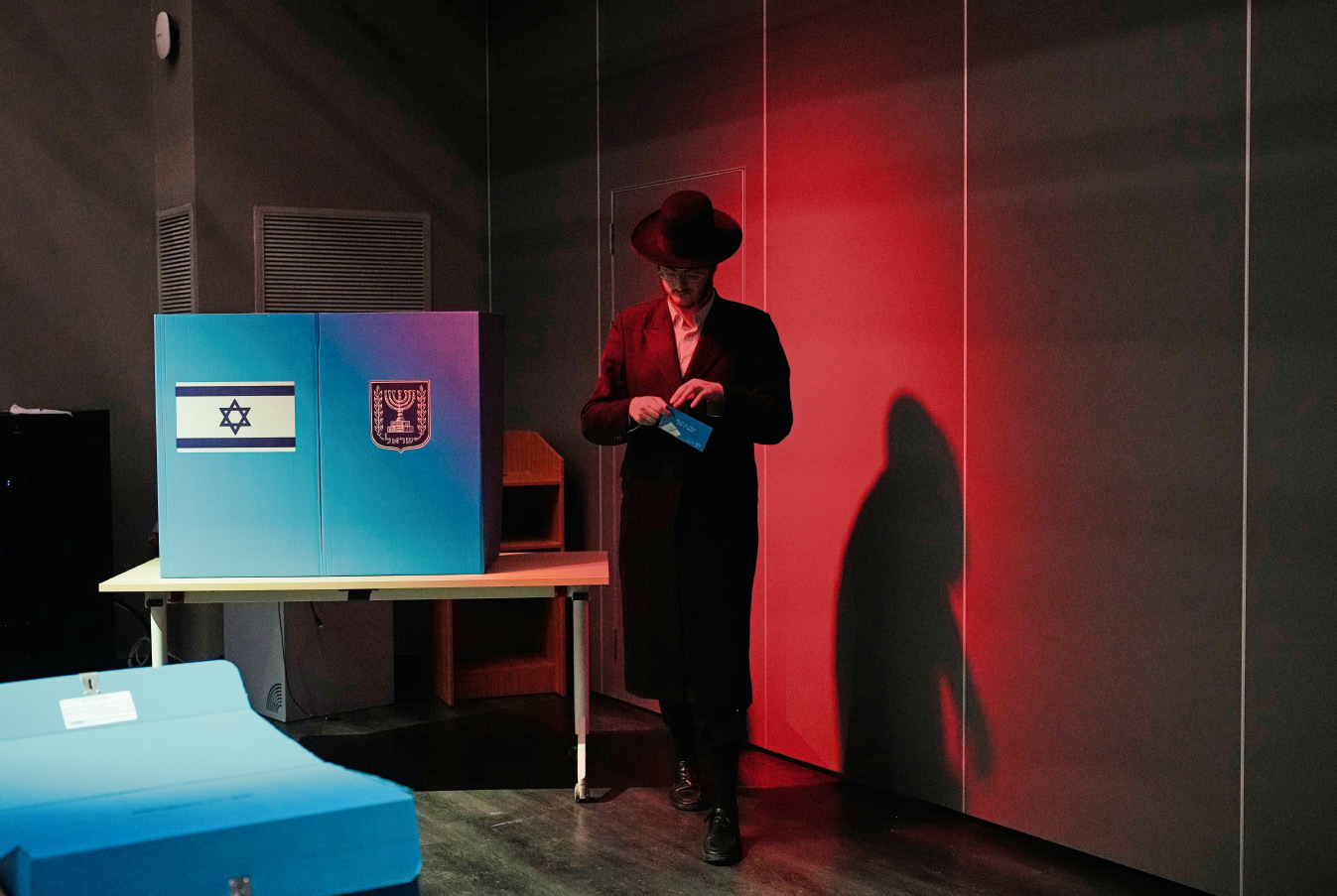
Reporting describes Israeli forces maintaining positions across large areas of southern Lebanon, with shelling, damaged health facilities and more than 334,000 people still displaced. In Gaza, local reporting describes Israeli strikes and deaths, but casualty figures conflict and the claims do not establish whether the ceasefire remains formally in force. Gaza’s winter risks are acute: the Winter Emergency Committee identifies about 7,800 tents in hazardous locations, while tent and fuel supplies remain restricted. In Israel, President Isaac Herzog has begun consultations after an election that left no bloc with a 61-seat majority. Gadi Eisenkot and Benjamin Netanyahu both have reported supporters, but the parties’ positions and estimates of their backing conflict. Trump’s announced aid halt also remains disputed on timing and whether Netanyahu agreed to it. Democrats won both chambers of the US Congress in the 3 November midterms; the claims reviewed do not establish what that result will change in US policy.
Change from previous assessment
Since the 4 November brief, reporting has added a Gaza hospital account of a strike on a displacement tent and conflicting casualty totals, while the ceasefire’s formal status remains unresolved. New Lebanon reporting quantifies Israeli presence at about 700 square kilometres and describes further damage to health facilities and more than 334,000 displaced people; the assessment that Israeli activity will recur is maintained at medium confidence. Israel’s election results and Herzog’s consultations are new developments, but reports conflict over which candidate can assemble a majority. Democrats’ win of both US congressional chambers is also new. Trump’s aid-cutoff announcement remains unresolved on timing and agreement. The low-confidence assessment of wider Israel-Hezbollah escalation is unchanged; the claims still do not establish a Hezbollah decision to widen the conflict.
Key judgments
- Israeli military activity and displacement in southern Lebanon are likely to persist over the next 30 days. Reports describe Israeli forces occupying large areas, with withdrawal limited to one pilot area, and artillery periodically shelling Zoutar al-Gharbiyeh; Israel’s defence minister has stated that forces will remain in an area of about 700 square kilometres until Hezbollah is disarmed throughout Lebanon. Action Against Hunger reporting describes three destroyed hospitals and 21 damaged health centres, while UN and aid-agency reporting puts displacement above 334,000. This is an assessment based on specific but largely media-reported incidents and attributed humanitarian figures. (Confidence: medium · ASSESSED)
- I&W: Reports document further Israeli artillery fire in Zoutar al-Gharbiyeh or continued Israeli deployments beyond the single pilot withdrawal area. (0-30 days)
- I&W: The Lebanese army deploys to additional areas and Israeli forces withdraw from positions beyond the pilot area. (0-30 days)
- Israeli strikes in Gaza are likely to continue over the next 14 days, but the claims reviewed do not establish whether the ceasefire remains formally in force. A hospital account reports one Palestinian killed and another injured in a strike on a displacement tent in central Gaza; another local report says five Palestinians were killed, while a social-media account reports four killed and about 15 injured. The conflicting death tolls and the single-source nature of several reports warrant low confidence. (Confidence: low · ASSESSED)
- I&W: Al-Shuhada Al-Aqsa Hospital or another named Gaza hospital reports additional casualties from Israeli strikes, with the location and date specified. (0-14 days)
- I&W: A named mediator or official publishes a ceasefire notice, alongside no independently corroborated strike reports across Gaza for 14 consecutive days. (0-14 days)
- Gaza’s winter shelter and medical risks are likely to remain acute through the next month. The Winter Emergency Committee reports about 7,800 tents in hazardous locations and continued restrictions on tents, caravans, construction materials and fuel entering Gaza; the Gaza Health Ministry has warned of generator failure risks at medical facilities. Reporting also describes about 200,000 dilapidated tents sheltering displaced people. The evidence is detailed but relies substantially on attributed reporting from the committee, local health authorities and media accounts. (Confidence: medium · ASSESSED)
- I&W: A Winter Emergency Committee update continues to identify thousands of tents in flood-prone areas, on beaches or near rainwater collection ponds. (0-30 days)
- I&W: A Gaza Health Ministry update reports generator failures or hospital service interruptions linked to fuel or maintenance shortages. (0-30 days)
- A wider Israel-Hezbollah exchange remains a roughly even chance over the next 30 days. Israel’s stated security doctrine links continued deployment in southern Lebanon to Hezbollah’s disarmament, and Israel’s defence minister has threatened a wider response if Hezbollah joins a confrontation with Iran. The claims reviewed do not establish a Hezbollah decision to widen the conflict or a corroborated new Hezbollah attack. Confidence is low because evidence of Hezbollah intent is absent and some relevant reporting rests on a limited media stream. (Confidence: low · ASSESSED)
- I&W: Hezbollah claims, or Israeli authorities report, a new Hezbollah attack across the Israel-Lebanon border with a named location and date. (0-30 days)
- I&W: Israeli forces withdraw from areas beyond the pilot zone and the Lebanese army reports deployments in those areas, without a new Hezbollah attack. (0-30 days)
- Israel’s government-formation outcome is likely to remain unsettled in the near term. Final results give Netanyahu’s coalition 53 seats, the opposition bloc 48 and Arab parties 19, leaving no bloc with the 61 seats needed for a majority. Herzog has begun consultations; reports describe Arab-party support for an Eisenkot-led government, while Shas and Otzma Yehudit recommend Netanyahu. Estimates of recommendations for Eisenkot and Netanyahu conflict, so neither candidate’s path to a governing majority is established. (Confidence: medium · ASSESSED)
- I&W: Herzog formally tasks Eisenkot or Netanyahu with forming a government and the candidate presents documented support from at least 61 Knesset members. (0-14 days)
- I&W: Herzog concludes consultations without a candidate demonstrating 61 supporters, or a party changes its reported recommendation. (0-14 days)
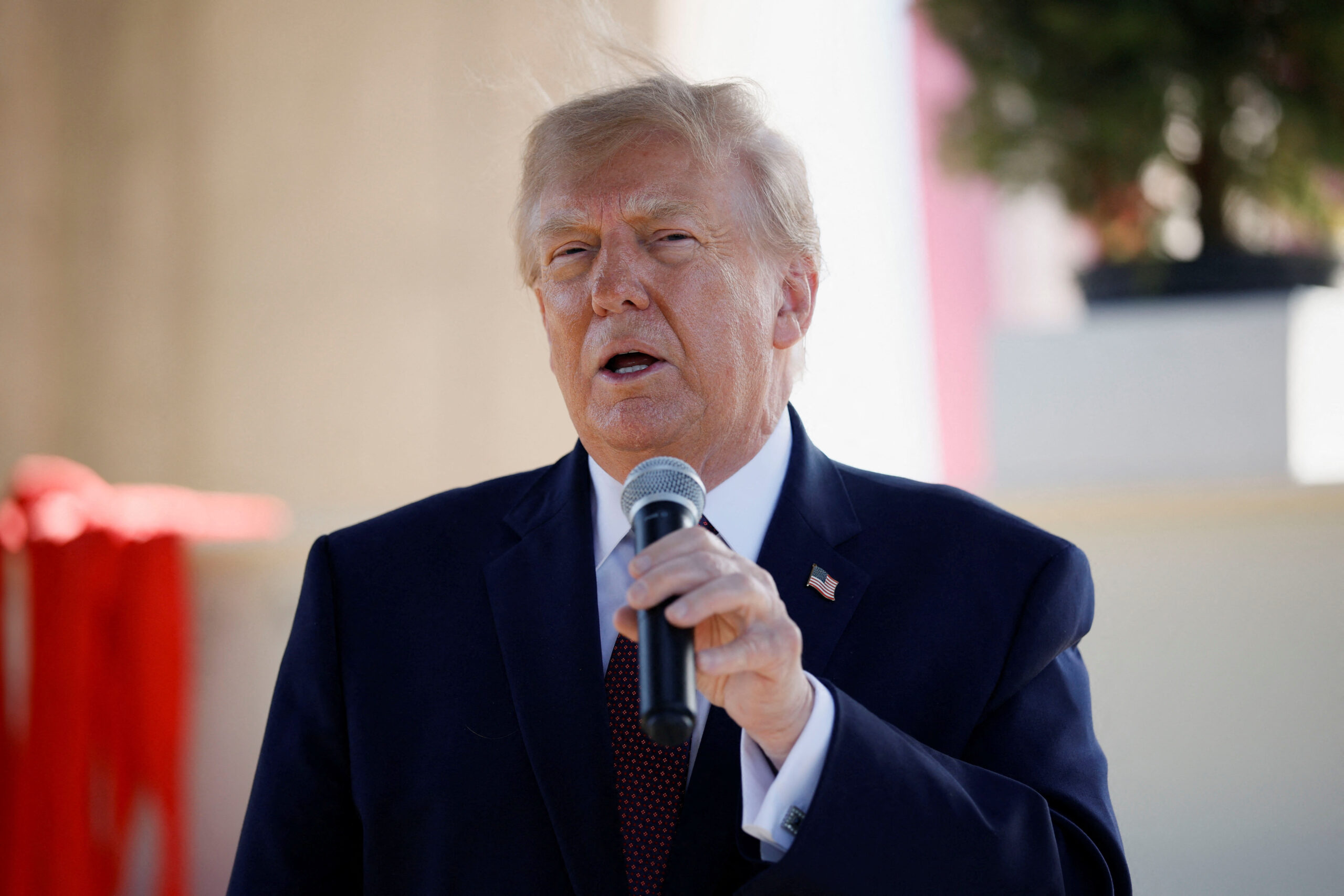
- Trump’s announced halt to roughly $4 billion in annual US aid to Israel is not established as an agreed or implemented cutoff. Reports give different timelines, from the end of 2026 to within two months, and a Netanyahu spokesperson said Israel was unaware of an agreement. The conflicting accounts and the limited corroboration for implementation warrant low confidence. (Confidence: low · REPORTED)
- I&W: The US government publishes a directive identifying the amount, effective date and mechanism for suspending aid payments to Israel. (0-30 days)
- I&W: The US and Israeli governments issue a joint clarification that aid payments will continue under the existing arrangement, or confirm that no bilateral agreement to end them exists. (0-30 days)
Outlook & scenarios
Continued bounded conflict (55%)
Israeli operations and reported ceasefire violations in Gaza continue, while Israeli forces retain positions in southern Lebanon and Hezbollah does not enter a wider exchange. This is the most likely near-term course given the reported Israeli deployments and the absence of evidence that Hezbollah has decided to widen the conflict.
Wider Israel-Hezbollah exchange (20%)
A new Hezbollah attack prompts Israeli strikes beyond the current pattern of activity in southern Lebanon. This scenario is unlikely, but Israel’s stated conditions for withdrawal and its public threats make it a material risk.
De-escalation through withdrawals and political steps (20%)
The Lebanese army deploys beyond the reported pilot area, Israeli forces withdraw from additional positions and Gaza receives more shelter and fuel supplies. This outcome is unlikely on the claims available, which describe restricted supplies in Gaza and limited Israeli withdrawal in Lebanon.
Iran conflict restart triggers regional escalation (5%)
Renewed major US-Iran combat prompts Hezbollah to join the confrontation, followed by Israeli action against areas named in Israel’s public threats. This is a low-probability, high-impact scenario; claims about US operational preparations and the conditions for Israeli action remain contested or indirectly sourced.
Recommendations
- Maintain separate incident logs for Gaza and southern Lebanon. Record date, named location, reported actor, casualty count and source, and flag conflicting figures rather than combining them.
- Seek confirmation of Gaza ceasefire status from named mediators or official statements before treating individual strike reports as proof of formal collapse or continued implementation.
- Track Israeli positions and Lebanese army deployments by named location, especially the reported pilot area and Zoutar al-Gharbiyeh. Use changes in deployment, not general statements, to assess withdrawal progress.
- Monitor Herzog’s consultations, party recommendations and any documented commitment from 61 Knesset members. Treat media estimates of support as provisional until a candidate receives a mandate or demonstrates a majority.
- Do not treat Trump’s aid announcement as an implemented funding change in planning products. Verify any claimed suspension against a dated US government directive and an Israeli government response.
- Track Winter Emergency Committee updates on the 7,800 tents identified as hazardous, entry of tents and fuel, and Gaza Health Ministry reports on hospital generator failures.
Confidence & uncertainty
Overall confidence is high for the broad situation picture because multiple major-media accounts report the Israeli election outcome and government consultations, while UN- and aid-agency-attributed reporting describes displacement and damage in Lebanon. Confidence is lower for exact Gaza casualty totals, the current formal status of the Gaza ceasefire, Hezbollah’s intent, the competing Israeli coalition projections and implementation of the US aid announcement. Some Lebanon details and political estimates rely on a limited number of reporting streams.
Alternative analysis (red cell)
A wider Israel-Hezbollah exchange may be less likely than an even chance over the next 30 days. The available claims show Israeli threats and continued deployment, but, and 628e847d-cc92-4fe8-91d2-e6501048fa47 do not establish Hezbollah intent or preparations for escalation. The evidence therefore supports uncertainty and continued tension, but not a defensible near-50-percent probability.
Intelligence gaps
- [EEI 1.1 · PARTIAL] Number, type and geolocated coordinates of projectiles (rockets, mortars, anti-tank guided missiles) fired from Lebanon into Israel in the last 24/72 hours, including time-stamped launch and impact locations. Recommended collection: signals/intel
- [EEI 1.2 · UNCOVERED] Satellite or aerial imagery showing movement, concentration, or forward displacement of Hezbollah-associated military assets (armored vehicles, artillery pieces, mobile rocket launchers, logistics convoys) to positions within 0-10 km of the Israel-Lebanon border. Recommended collection: satellite/imagery
- [EEI 1.3 · UNCOVERED] Intercepted or captured Hezbollah command-and-control communications or orders explicitly directing cross-border operations or coordinated strikes with Palestinian groups (time-stamped messages, unit identifiers, orders to fire/move). Recommended collection: signals/intel
- [EEI 1.4 · UNCOVERED] Observable changes in Israeli northern-front posture within Israel (numbers and types of reinforcements deployed to northern brigades, activation of reserves, air defense redeployments, evacuation orders or shelter alerts in northern towns), including timestamps and unit IDs where available. Recommended collection: human/intel
- [EEI 2.1 · UNCOVERED] Official or corroborated reports of IDF reservist mobilization and unit-level deployment orders (number of reservists called, named brigades/units ordered to deploy, deployment timelines). Recommended collection: open-source/media
- [EEI 2.2 · UNCOVERED] Satellite or ground imagery showing concentrations of IDF heavy equipment (tanks, infantry fighting vehicles, engineering vehicles), staging areas, field hospitals or forward supply dumps within X km of the Gaza border and at known crossing points. Recommended collection: satellite/imagery
- [EEI 2.3 · PARTIAL] Change in strike patterns consistent with pre-ground-attack shaping: sustained high-frequency airstrikes on tunnel networks, command nodes, coastal launch sites, and known insurgent concentrations (strike counts, munition types, locations, times). Recommended collection: open-source/media
- [EEI 2.4 · UNCOVERED] Logistics indicators: verified convoys of fuel/ammunition entering staging areas, establishment of forward logistics or medical bases, or documented requisitioning orders for bulk combat supplies with timestamps and quantities. Recommended collection: human/intel
- [EEI 3.1 · UNCOVERED] Number, participants and content of diplomatic contacts or negotiation sessions in the last 48 hours involving mediators (Egypt, Qatar, US, UN), including any proposed ceasefire text, prisoner/exchange lists, timelines or verification mechanisms. Recommended collection: diplomatic
- [EEI 3.2 · UNCOVERED] Public statements, press releases or verified communiqués from Hamas and other Gaza armed groups specifying acceptance, rejection, or conditions for a ceasefire (explicit conditions such as prisoner release lists, withdrawal terms, lifting of blockades), with timestamps and speaker attribution. Recommended collection: open-source/media
- [EEI 3.3 · PARTIAL] Humanitarian indicators relevant to ceasefire: establishment and operation of agreed humanitarian corridors/checkpoints, number of aid deliveries admitted, civilian evacuations completed, and NGO/hospital reports of access denials or safe-passage violations. Recommended collection: humanitarian/NGO reports
- [EEI 3.4 · UNCOVERED] Operational evidence of a de facto pause: verified sustained reduction (e.g., ≥12 hours) in strikes or launches from either side in specific sectors, supported by strike/impact logs, radar tracks and incident reports. Recommended collection: open-source/media
Red cell review: PARTIAL DISSENT
TLP:CLEAR