TLP:CLEAR · Disclosure is not limited.
Israel-Gaza Regional Escalation: Gaza and Hebron Violence, Lebanon Uncertainty
Time window: Last 7 days · Audience: General analyst · Type: Situation report · DTG: 2026-10-26 13:11Z · Overall confidence: HIGH
BLUF
Israeli military activity in Gaza and Hebron remains the clearest immediate escalation: reports on 26 October describe civilian deaths in Gaza, while movement restrictions and displacement continue in Hebron. A reported Israeli bombing in Kfar Tebnit on 25 October is not independently corroborated and does not establish a renewed Israel-Hezbollah exchange. West Bank crossing and worker restrictions are announced for Israel’s 27 October election day.
Executive summary
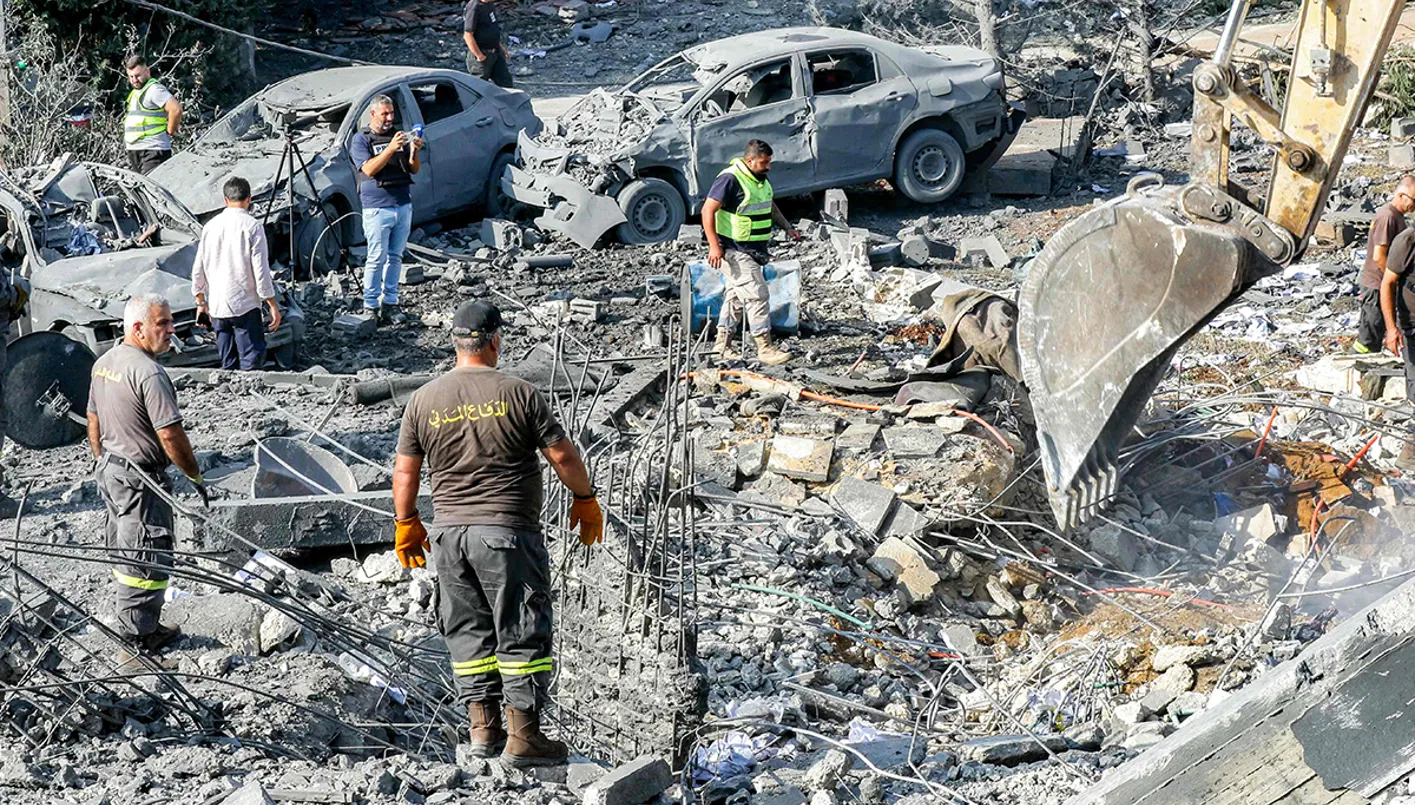
Reporting on 26 October described Israeli fire and air strikes in Gaza, including attacks in Khan Younis and Remal, and the displacement of more than 800 people after a fire at a camp in Shujayea. Casualty figures differ by source and reporting window. In Hebron, Israeli forces have restricted movement and displaced residents after the 23 October checkpoint attack; estimates range from about 2,000 to 2,500. One report describes an Israeli bombing in Kfar Tebnit, Lebanon, but does not establish Hezbollah involvement or retaliation. Hezbollah has publicly praised the Hebron attack. Reports about strikes on Gaza’s Islamic University and possible future strikes on Iran remain weak or contested.
Change from previous assessment
Since the 25 October brief, reporting has added Gaza incidents on 26 October, including the Khan Younis and Remal attacks and the reported displacement of more than 800 people from the Shujayea camp. The Hebron assessment remains at medium confidence, with local reporting now giving a displacement estimate of about 2,500 against Israel Katz’s figure of about 2,000, and sources differing on when the cordon began. Lebanon now has a report of an Israeli bombing in Kfar Tebnit on 25 October, but the single account does not establish a new Israel-Hezbollah exchange. The Islamic University report has shifted from social-media-only claims to a local-media account, but remains low confidence and undated. The Iran assessment remains unlikely for the next 14 days, with low confidence because the claims conflict and are weakly sourced.
Key judgments
- Very likely, Israeli military activity causing civilian casualties continued in Gaza through 26 October. Al Jazeera reported that Palestinian Civil Defence spokesman Mahmoud Basal gave a 24-hour toll of 11 killed and 50 wounded; the same report separately described at least five people killed, including four in Khan Younis and one in Remal. Nasser Hospital identified three of the reported Khan Younis victims. The figures cover potentially different scopes and remain unreconciled. The report also said Israeli forces set fire to a displacement camp at the Shujayea junction on 25 October, displacing more than 200 families, or over 800 people. (Confidence: medium · REPORTED)
- I&W: Confirm: a further Civil Defence or hospital update names casualties from Israeli fire or strikes in Khan Younis, Remal or Shujayea. (0-14 days)
- I&W: Break: a hospital or Civil Defence correction states that the reported incidents or casualty figures were wrongly attributed or counted. (0-14 days)
- Very likely, the Israeli operation launched after the 23 October checkpoint attack has expanded into broad movement restrictions and displacement in Hebron. The Israeli military reportedly restricted movement for the city’s approximately 200,000 residents and demolished homes and businesses. Defence Minister Israel Katz gave a displacement estimate of about 2,000; local media reported about 2,500 people displaced from Deir Bahha and al-Jalda, as well as more than 200 families displaced overall. The scale and start date of the cordon remain disputed. (Confidence: medium · REPORTED)
- I&W: Confirm: a subsequent report documents continued closures, demolitions or displacement in Deir Bahha or al-Jalda and provides a dated count. (0-14 days)
- I&W: Break: an Israeli military statement or independent report documents that the Hebron cordon and related movement restrictions have ended. (0-14 days)
- Roughly even chance that an Israeli bombing occurred in Kfar Tebnit on 25 October. The sole provided report does not name a target, casualties or any Hezbollah action. It therefore does not establish a new Israel-Hezbollah exchange. This judgment rests on a single report from a source with limited reliability. (Confidence: low · ASSESSED)
- I&W: Confirm: a second independent report identifies an Israeli strike in Kfar Tebnit on 25 October and provides matching location details. (0-14 days)
- I&W: Break: the original report is corrected, or independent imagery analysis places the reported bombing outside Kfar Tebnit. (0-14 days)
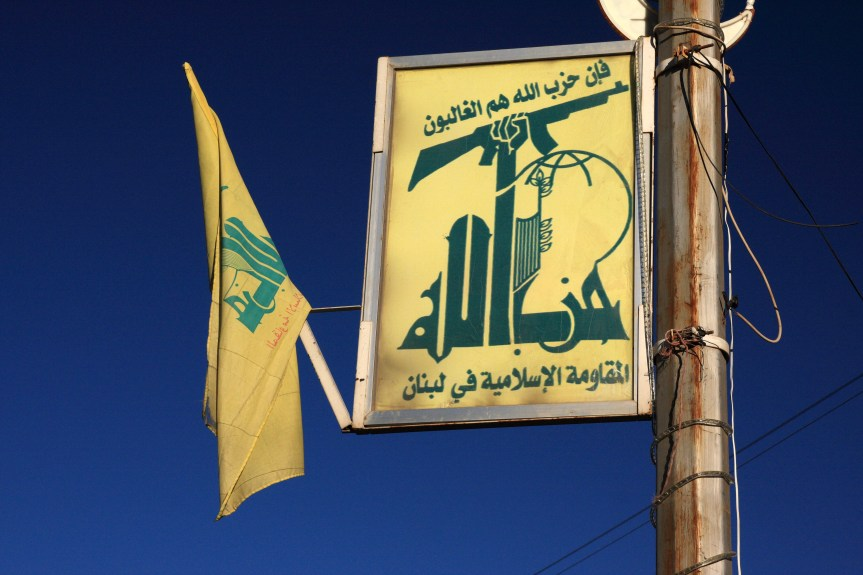
- Likely, Hezbollah’s public praise of the 23 October attack at the Farsh al-Hawa checkpoint increases rhetorical linkage between the West Bank violence and Lebanon. Hezbollah called the operation by Hamouda and Firas al-Ja'bara a legitimate response. This statement demonstrates public support, not operational involvement in the attack or a decision to open a new front. (Confidence: medium · ASSESSED)
- I&W: Confirm: Hezbollah issues a statement claiming operational coordination with a named attack or calling for a specific further action linked to the West Bank. (0-14 days)
- I&W: Break: Hezbollah states that its support for the Hebron attack was political and denies operational involvement. (0-14 days)
- Likely, Israel will close West Bank land crossings and bar Palestinian workers from entry and exit on 27 October, as the Israel Defence Forces announced for election day. A separate announcement says most Palestinian workers will be barred from Israeli settlements from 25 October, with exceptions for industrial zones and limited other areas. The precise scope of the restrictions should be checked against their implementation. (Confidence: medium · REPORTED)
- I&W: Confirm: on 27 October, a second report documents closure of West Bank land crossings and the worker movement ban, including any stated exceptions. (0-14 days)
- I&W: Break: the Israel Defence Forces withdraws or narrows the announced crossing and worker restrictions before 27 October. (0-14 days)
- Likely, Lebanon’s internal dispute over Hezbollah’s weapons and negotiations will continue to constrain consensus on the reported framework for weapons withdrawal, monitoring and indirect talks. The Lebanese Forces and MP Fadi Karam call for dismantling armed groups; Hezbollah rejects direct negotiations and argues that Israeli attacks must stop before withdrawal. These are rival political positions, not proof that implementation has ceased. (Confidence: medium · ASSESSED)
- I&W: Confirm: reporting documents continued disagreement among Hezbollah, the Lebanese Forces and Shia ministers over weapons withdrawal or indirect talks. (1-3 months)
- I&W: Break: a reported government implementation step on weapons withdrawal or monitoring is accepted by Hezbollah and the opposing parties. (1-3 months)
- Roughly even chance that Israeli strikes hit Gaza’s Islamic University campus on a Sunday, killing three Palestinians and wounding others. The account comes from one local-media report, repeats Hamas’s allegation and supplies no date for the incident. It remains thin and uncorroborated reporting. (Confidence: low · REPORTED)
- I&W: Confirm: a second independent report identifies the date of the strikes and corroborates damage or casualties at the Islamic University campus. (0-14 days)
- I&W: Break: a correction or independent account establishes that the reported strikes or casualty details were inaccurate. (0-14 days)
- Unlikely, Israel will launch additional strikes on Iran in the next 14 days, but confidence is low. One low-confidence social-media claim says Israel suspended immediate plans; another says Israel is preparing possible joint action with the US after the midterm elections. Donald Trump’s 23 October remark about further action is rhetoric, not evidence of authorisation. The reports conflict and do not establish an operational decision. (Confidence: low · ASSESSED)
- I&W: Confirm: Israel or the US publicly announces additional strikes on Iran or a joint military action within the next 14 days. (0-14 days)
- I&W: Break: a named Israeli or US official confirms that plans for immediate additional strikes remain suspended through the next 14 days. (0-14 days)
Outlook & scenarios
Continued Gaza and West Bank violence, no confirmed Lebanon exchange (60%)
Likely, Israeli strikes and ground fire in Gaza and the Hebron operation remain episodic over the next 14 days. Civilian casualties and movement restrictions continue to feature in reporting, while the Kfar Tebnit account remains uncorroborated and no Israel-Hezbollah exchange is established.
Kfar Tebnit incident remains isolated (25%)
Likely, further reporting either fails to corroborate the 25 October Kfar Tebnit bombing or confirms it without identifying a Hezbollah action or Israeli response. The Lebanon incident remains separate from the Gaza and Hebron developments.
Lebanon exchange follows a verified strike (15%)
Unlikely, independent reporting confirms the Kfar Tebnit bombing and a named Hezbollah action is followed by an Israeli response. This would mark a shift from one weakly sourced bombing report to a regional exchange.
Iran strike wildcard (5%)
Very unlikely, Israel and the US resume strikes on Iran within the next 14 days, widening the confrontation beyond Gaza, Israel and Lebanon. This is a low-probability, high-impact scenario; the available claims on strike planning conflict and include low-confidence reporting.
Recommendations
- Maintain a dated incident log for Khan Younis, Remal, Shujayea, Hebron and Kfar Tebnit. Record event time separately from publication time, and keep attributed casualty totals separate rather than combining the Gaza counts.
- On 27 October, check whether West Bank land crossings close and Palestinian worker restrictions take effect. Record which industrial-zone and other exceptions are actually applied.
- Treat the Islamic University strike and Kfar Tebnit bombing as unconfirmed until a second independent report provides matching dates, locations and event details.
- Track Hezbollah’s statements separately from evidence of operational activity. Public praise for the Hebron attack does not establish Hezbollah’s involvement in it or a new Israel-Hezbollah exchange.
- Keep Iran strike planning as a low-confidence warning line. Do not treat political rhetoric or conflicting social-media claims as evidence of an authorisation decision.
Confidence & uncertainty
Overall confidence is high for the broad situation picture because the Gaza reporting includes named Palestinian Civil Defence and Nasser Hospital attributions, and Hebron restrictions and displacement are described in major and local media. The announced crossing restrictions are attributed to an Israel Defence Forces announcement. Confidence is lower for the Kfar Tebnit bombing, Islamic University strikes and Iran strike planning, which rest on limited or contested reporting; Gaza casualty and Hebron displacement figures also differ. The headline confidence applies to the core developments, not every individual allegation or assessment.
Alternative analysis (red cell)
The available reporting does not establish that additional Israeli strikes on Iran are unlikely within the next 14 days. The CNN-sourced claim of an immediate suspension in 9479df40-2f57-4290-83b8-101366343bec conflicts with the reported preparation for possible joint action in ff32c71e-4987-4fc6-8798-0de3c32c8642, while Trump's statement in 48a5b41b-7bdb-47f4-8eb2-bfb19b417327 is ambiguous but directionally consistent with continued options. The better-supported assessment is an indeterminate, roughly even chance pending higher-quality operational evidence.
Intelligence gaps
- [EEI 1.1 · UNCOVERED] Number, type and geolocated coordinates of projectiles (rockets, mortars, anti-tank guided missiles) fired from Lebanon into Israel in the last 24/72 hours, including time-stamped launch and impact locations. Recommended collection: signals/intel
- [EEI 1.2 · UNCOVERED] Satellite or aerial imagery showing movement, concentration, or forward displacement of Hezbollah-associated military assets (armored vehicles, artillery pieces, mobile rocket launchers, logistics convoys) to positions within 0-10 km of the Israel-Lebanon border. Recommended collection: satellite/imagery
- [EEI 1.3 · UNCOVERED] Intercepted or captured Hezbollah command-and-control communications or orders explicitly directing cross-border operations or coordinated strikes with Palestinian groups (time-stamped messages, unit identifiers, orders to fire/move). Recommended collection: signals/intel
- [EEI 1.4 · UNCOVERED] Observable changes in Israeli northern-front posture within Israel (numbers and types of reinforcements deployed to northern brigades, activation of reserves, air defense redeployments, evacuation orders or shelter alerts in northern towns), including timestamps and unit IDs where available. Recommended collection: human/intel
- [EEI 2.1 · UNCOVERED] Official or corroborated reports of IDF reservist mobilization and unit-level deployment orders (number of reservists called, named brigades/units ordered to deploy, deployment timelines). Recommended collection: open-source/media
- [EEI 2.2 · UNCOVERED] Satellite or ground imagery showing concentrations of IDF heavy equipment (tanks, infantry fighting vehicles, engineering vehicles), staging areas, field hospitals or forward supply dumps within X km of the Gaza border and at known crossing points. Recommended collection: satellite/imagery
- [EEI 2.3 · PARTIAL] Change in strike patterns consistent with pre-ground-attack shaping: sustained high-frequency airstrikes on tunnel networks, command nodes, coastal launch sites, and known insurgent concentrations (strike counts, munition types, locations, times). Recommended collection: open-source/media
- [EEI 2.4 · UNCOVERED] Logistics indicators: verified convoys of fuel/ammunition entering staging areas, establishment of forward logistics or medical bases, or documented requisitioning orders for bulk combat supplies with timestamps and quantities. Recommended collection: human/intel
- [EEI 3.1 · UNCOVERED] Number, participants and content of diplomatic contacts or negotiation sessions in the last 48 hours involving mediators (Egypt, Qatar, US, UN), including any proposed ceasefire text, prisoner/exchange lists, timelines or verification mechanisms. Recommended collection: diplomatic
- [EEI 3.2 · PARTIAL] Public statements, press releases or verified communiqués from Hamas and other Gaza armed groups specifying acceptance, rejection, or conditions for a ceasefire (explicit conditions such as prisoner release lists, withdrawal terms, lifting of blockades), with timestamps and speaker attribution. Recommended collection: open-source/media
- [EEI 3.3 · PARTIAL] Humanitarian indicators relevant to ceasefire: establishment and operation of agreed humanitarian corridors/checkpoints, number of aid deliveries admitted, civilian evacuations completed, and NGO/hospital reports of access denials or safe-passage violations. Recommended collection: humanitarian/NGO reports
- [EEI 3.4 · UNCOVERED] Operational evidence of a de facto pause: verified sustained reduction (e.g., ≥12 hours) in strikes or launches from either side in specific sectors, supported by strike/impact logs, radar tracks and incident reports. Recommended collection: open-source/media
Red cell review: PARTIAL DISSENT
TLP:CLEAR