TLP:CLEAR · Disclosure is not limited.
Israel-Gaza regional escalation: Gaza ceasefire breaches, Lebanon stand-off and election deadlock, 30 October 2026
Time window: Last 7 days · Audience: General analyst · Type: Situation report · DTG: 2026-10-30 13:13Z · Overall confidence: HIGH
BLUF
Local reporting indicates Israeli strikes in Gaza continued on 30 October, while Hezbollah readiness reporting and Israeli deployments in southern Lebanon sustain the risk of renewed exchanges. Israel's final election results leave both main blocs short of 61 seats. Reports of US military planning on Iran are counterbalanced by Qatar-mediated diplomacy and do not establish strike authorisation.
Executive summary
Local media reported Israeli drone and artillery strikes in Gaza on 30 October, including incidents in Al-Mawasi in Rafah, near Al-Maghazi camp and in Al-Tuffah, Gaza City. The reported overall casualty toll and the incident-level figures are not reconciled. In southern Lebanon, reporting describes Israeli forces occupying territory and entering Kfarshouba; separate reporting says Hezbollah has prepared for renewed hostilities and acknowledged explosives intended for explosive drones. The US reportedly reviewed strike options against Iran while Qatar pursued talks in Tehran. The reporting does not establish an authorised strike. Final Israeli election results give Benjamin Netanyahu's bloc 53 seats, Gadi Eisenkot's bloc 48 and Arab lists 19, leaving coalition negotiations unresolved. In Hebron, Israeli forces were reported to have continued their offensive for an eighth day, amid reported arrests and displacement.
Change from previous assessment
This brief adds 30 October Gaza strike reporting, but the casualty totals remain unreconciled and do not establish that the ceasefire has collapsed. The Hebron operation is now reported on its eighth consecutive day, with new displacement and arrest figures, compared with the seventh-day reporting in the prior brief. Israel's election count is now reported as final at 53 seats for Netanyahu's bloc, 48 for Eisenkot's bloc and 19 for Arab lists. Reporting on Iran now includes a CENTCOM briefing on strike options and Qatar-mediated contacts; this raises attention to the military contingency but still does not establish authorisation. The assessment of Hezbollah readiness is unchanged, with the main preparation account still resting on limited sourcing.
Key judgments
- Likely Israeli forces will continue ceasefire-violating strikes in Gaza over the next 14 days. Local reporting on 30 October described drone strikes at a government point near the Muawiya mosque in Al-Mawasi, Rafah, with 3 Palestinians killed and 15 injured; a drone strike near Al-Maghazi camp with 2 killed; and artillery fire on a house in Al-Tuffah, Gaza City, with 11 injured. The same outlet gave a wider toll of 7 killed and 40 injured. The location-level accounts are not reconciled, so the figures should not be added. This forecast rests on local reporting that is not independently corroborated in the supplied material. (Confidence: low · ASSESSED)
- I&W: A new Israeli drone or artillery incident in Al-Mawasi, Al-Maghazi or Al-Tuffah, corroborated by Gaza Civil Defense or the Palestinian Red Crescent Society, would confirm continued breaches. (0-14 days)
- I&W: A public announcement by the parties or mediators of a Gaza pause, followed by 14 consecutive days without reported strikes in those three locations, would break the forecast of continuing breaches. (0-14 days)
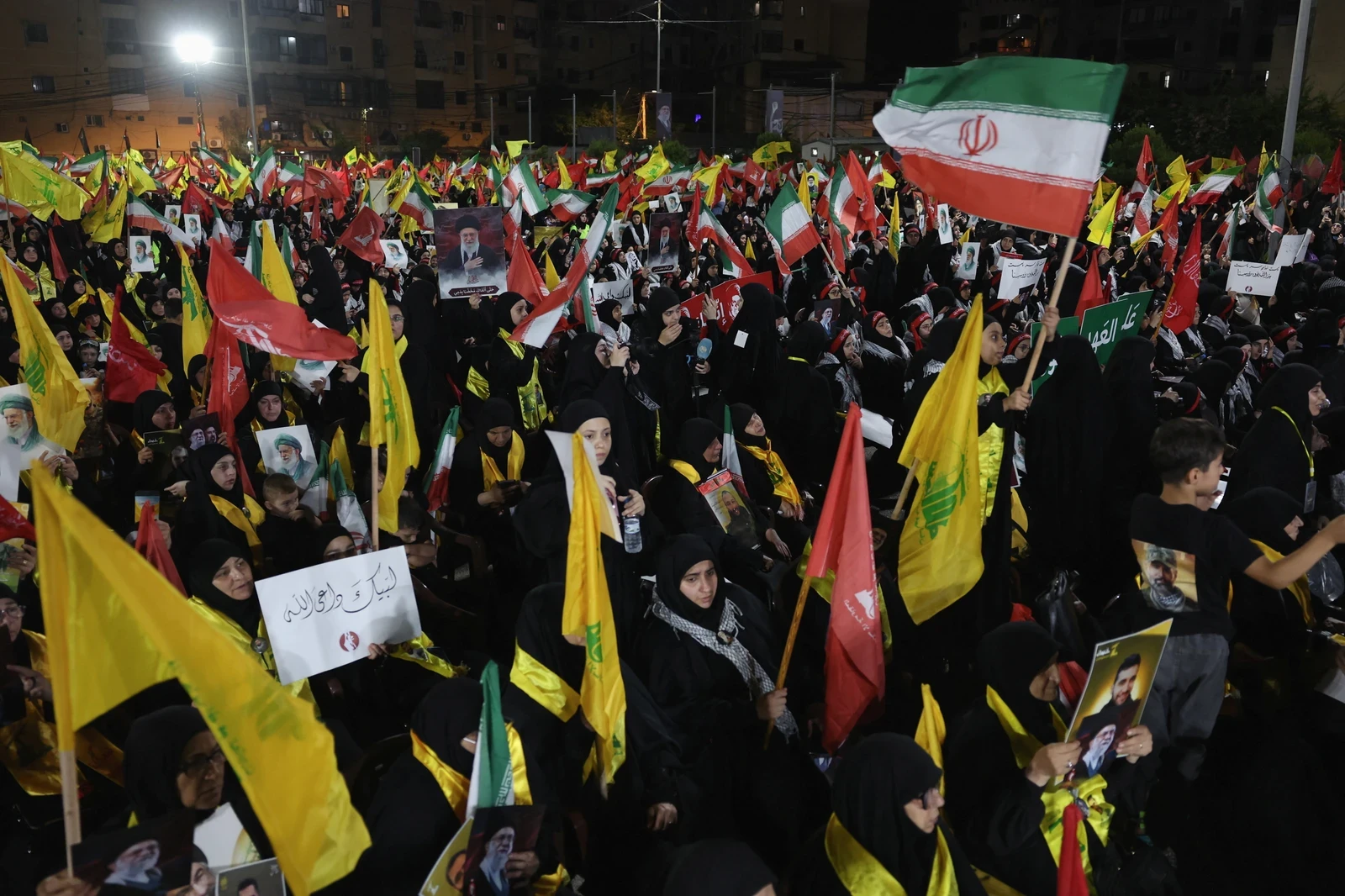
- Likely Hezbollah's preparations and Israel's military presence in southern Lebanon will keep the Israel-Hezbollah front at risk of renewed exchanges, but the supplied reporting does not establish a Hezbollah decision to resume fire. A report citing Lebanese security personnel says Hezbollah has spent three months preparing and received Iranian funds; Hezbollah separately acknowledged that explosives seized by Lebanese authorities were intended for explosive drones against Israel. Reporting also placed about 200 Israeli soldiers and at least three Merkava tanks in Kfarshouba, and put the Israeli-occupied area of southern Lebanon at about 630 square kilometres. The account of Hezbollah's three-month preparations rests on a single report, which limits confidence. (Confidence: medium · ASSESSED)
- I&W: A Lebanese Army announcement of another Hezbollah explosive-drone cache, or a Hezbollah drone or rocket attack on Israel, would confirm that preparations are translating into action. (0-30 days)
- I&W: A verified Israeli withdrawal from Kfarshouba and the occupied area of southern Lebanon would weaken the assessment that the current stand-off is sustaining the risk of renewed exchanges. (1-3 months)
- Likely Washington will continue combining military contingency planning with a mediated diplomatic channel on Iran, but the supplied reporting does not establish strike authorisation or timing. The Wall Street Journal reported that CENTCOM commander Admiral Brad Cooper briefed President Donald Trump on options for renewed attacks on 29 October. Kan reported that 10 US military cargo planes landed at Ovda and Nevatim on the same date. Qatar's delegation arrived in Tehran, and reports describe a letter from Vice President JD Vance and a proposed meeting with Iranian official Mohsen Rezaei. Accounts differ on the letter's scope. A report of joint US-Israeli plans for action after 3 November is less corroborated than the reporting on the briefing and diplomatic contacts. (Confidence: medium · ASSESSED)
- I&W: A White House or CENTCOM announcement that President Trump has authorised strikes against Iran would confirm that contingency planning has advanced to an operational decision. (0-14 days)
- I&W: A confirmed Qatar-mediated meeting followed by a public US announcement suspending strike planning under an agreed pause would break the assessment that Washington is pursuing both tracks. (0-14 days)
- Very likely the final results of Israel's 27 October election leave Netanyahu's bloc with 53 seats, Eisenkot's bloc with 48 and Arab lists with 19, with no bloc able to reach the 61-seat majority alone. Coalition bargaining is likely to remain difficult: Netanyahu has rejected forming a government with Arab parties, while an opposition route to 67 seats depends on Arab support and faces opposition from Naftali Bennett and Avigdor Lieberman. Repeat elections are a credible outcome, but not a settled one. (Confidence: medium · ASSESSED)
- I&W: A public agreement among named parties that commits at least 61 Knesset members to a government would break the assessment of a continuing coalition deadlock. (0-14 days)
- I&W: A Knesset dissolution vote or an announced date for a repeat election would confirm that coalition talks failed. (1-3 months)
- Very likely Israeli forces maintained their offensive in Hebron governorate through 30 October, its eighth consecutive day. Reporting says the offensive began on 23 October after an attack in Farsh al-Hawa killed two Israeli soldiers and wounded three. The Palestinian Prisoner's Club reported 110 arrests, while the Hebron municipality reported 4,969 displaced Palestinians from 780 families. These figures are attributed to Palestinian organisations and local authorities. (Confidence: medium · REPORTED)
- I&W: Continued closures, raids in Jelda or Ein Deir Beha, or further forced evacuations reported by local authorities would confirm that the operation remains active. (0-14 days)
- I&W: Removal of closures and a Hebron municipality report that displaced families have returned and access has been restored would break the assessment of continuing restrictions. (0-30 days)
Outlook & scenarios
Managed but brittle containment (50%)
This is the most likely regional outlook over the next one to three months. Israeli strikes in Gaza continue intermittently without a formal announcement ending the ceasefire. Israel maintains its presence in southern Lebanon, Hezbollah retains its stated resistance position, and neither side initiates a confirmed new exchange. Qatar-mediated contacts with Iran continue without an announced settlement.
Expanded regional military escalation (15%)
This is a low-probability, high-impact wildcard. The reported US-Israeli planning for action after 3 November proceeds to renewed strikes on Iran, despite the Qatar-mediated channel. The regional conflict widens and the risk of Hezbollah-Israel exchanges rises. Current reporting describes options and plans, not an order to strike.
Diplomatic pause (20%)
Qatar's contacts in Tehran and the reported Vance-Rezaei channel produce an agreed pause in military preparations. A sustained reduction in strikes would ease immediate pressure on the Iran file, though the supplied reporting does not establish agreement on terms or a broader settlement.
Israeli coalition deadlock and repeat election (40%)
Netanyahu's 53-seat bloc and Eisenkot's 48-seat bloc fail to assemble 61 seats. Opposition to relying on Arab-party support and Netanyahu's stated rejection of a government with Arab parties constrain the main coalition routes. Repeat elections become the likely political outcome if no majority agreement emerges.
Recommendations
- Maintain a Gaza incident log that separates Al-Mawasi, Al-Maghazi and Al-Tuffah reports. Seek confirmation from Gaza Civil Defense or the Palestinian Red Crescent Society before combining casualty totals.
- Track Israeli deployments around Kfarshouba and other occupied areas in southern Lebanon separately from Hezbollah readiness reporting. Record any publicly announced Lebanese Army seizure of explosive-drone materials and any confirmed Hezbollah launch.
- For the Iran file, distinguish reported contingency planning from an authorised operation. Track official US statements, the Qatar-mediated contacts and any public confirmation of a Vance-Rezaei meeting. Preserve the competing accounts of the letter's contents rather than merging them.
- Update the Israeli coalition tracker against the 61-seat threshold. Record whether named parties commit to a government, whether the Central Elections Committee submits results to President Isaac Herzog on 4 November, and whether parties file legal challenges by 18 November.
- Track Hebron closures, raids in Jelda and Ein Deir Beha, arrests and reported returns of displaced families. Keep municipality and Palestinian Prisoner's Club figures attributed to their sources.
Confidence & uncertainty
The headline confidence is high for the broad situation picture. Several major-media reports converge on the final Israeli election arithmetic, while reporting from separate outlets and named organisations describes Gaza incidents, Israeli activity in southern Lebanon and US-Qatar-Iran contacts. Confidence is lower on Gaza's aggregate casualty figures, Hezbollah's internal preparations and the timing or content of any Iran strike plan; these points rely on local or anonymous-source reporting, and the accounts of Vance's letter differ.
Alternative analysis (red cell)
The supplied material confirms reports of several Gaza incidents on 30 October, but it does not establish a verified pattern sufficient to forecast likely continuation for the next 14 days. The daily-violation claim (d551bfae-f23e-457e-bc2c-b3ae1ec3755c) and the location-level reports (96485e9f-2f99-4575-8af1-04adea0135b6; 4403db47-6a89-486b-b91a-bb85741a3774; ffdb94c3-a2e2-4000-9166-be9a9f0432ee) appear to rely on uncorroborated local reporting. The more defensible assessment is that further violations remain possible, but their continuation is not established as likely.
Intelligence gaps
- [EEI 1.1 · UNCOVERED] Number, type and geolocated coordinates of projectiles (rockets, mortars, anti-tank guided missiles) fired from Lebanon into Israel in the last 24/72 hours, including time-stamped launch and impact locations. Recommended collection: signals/intel
- [EEI 1.2 · UNCOVERED] Satellite or aerial imagery showing movement, concentration, or forward displacement of Hezbollah-associated military assets (armored vehicles, artillery pieces, mobile rocket launchers, logistics convoys) to positions within 0-10 km of the Israel-Lebanon border. Recommended collection: satellite/imagery
- [EEI 1.3 · UNCOVERED] Intercepted or captured Hezbollah command-and-control communications or orders explicitly directing cross-border operations or coordinated strikes with Palestinian groups (time-stamped messages, unit identifiers, orders to fire/move). Recommended collection: signals/intel
- [EEI 1.4 · UNCOVERED] Observable changes in Israeli northern-front posture within Israel (numbers and types of reinforcements deployed to northern brigades, activation of reserves, air defense redeployments, evacuation orders or shelter alerts in northern towns), including timestamps and unit IDs where available. Recommended collection: human/intel
- [EEI 2.1 · UNCOVERED] Official or corroborated reports of IDF reservist mobilization and unit-level deployment orders (number of reservists called, named brigades/units ordered to deploy, deployment timelines). Recommended collection: open-source/media
- [EEI 2.2 · UNCOVERED] Satellite or ground imagery showing concentrations of IDF heavy equipment (tanks, infantry fighting vehicles, engineering vehicles), staging areas, field hospitals or forward supply dumps within X km of the Gaza border and at known crossing points. Recommended collection: satellite/imagery
- [EEI 2.3 · PARTIAL] Change in strike patterns consistent with pre-ground-attack shaping: sustained high-frequency airstrikes on tunnel networks, command nodes, coastal launch sites, and known insurgent concentrations (strike counts, munition types, locations, times). Recommended collection: open-source/media
- [EEI 2.4 · UNCOVERED] Logistics indicators: verified convoys of fuel/ammunition entering staging areas, establishment of forward logistics or medical bases, or documented requisitioning orders for bulk combat supplies with timestamps and quantities. Recommended collection: human/intel
- [EEI 3.1 · UNCOVERED] Number, participants and content of diplomatic contacts or negotiation sessions in the last 48 hours involving mediators (Egypt, Qatar, US, UN), including any proposed ceasefire text, prisoner/exchange lists, timelines or verification mechanisms. Recommended collection: diplomatic
- [EEI 3.2 · UNCOVERED] Public statements, press releases or verified communiqués from Hamas and other Gaza armed groups specifying acceptance, rejection, or conditions for a ceasefire (explicit conditions such as prisoner release lists, withdrawal terms, lifting of blockades), with timestamps and speaker attribution. Recommended collection: open-source/media
- [EEI 3.3 · UNCOVERED] Humanitarian indicators relevant to ceasefire: establishment and operation of agreed humanitarian corridors/checkpoints, number of aid deliveries admitted, civilian evacuations completed, and NGO/hospital reports of access denials or safe-passage violations. Recommended collection: humanitarian/NGO reports
- [EEI 3.4 · PARTIAL] Operational evidence of a de facto pause: verified sustained reduction (e.g., ≥12 hours) in strikes or launches from either side in specific sectors, supported by strike/impact logs, radar tracks and incident reports. Recommended collection: open-source/media
Red cell review: PARTIAL DISSENT
TLP:CLEAR