TLP:CLEAR · Disclosure is not limited.
Israel-Gaza regional escalation: Gaza ceasefire strain and Ali al-Taher flashpoint
Time window: Last 7 days · Audience: General analyst · Type: Situation report · DTG: 2026-09-05 15:27Z · Overall confidence: HIGH
BLUF
Very likely Israeli attacks will continue in Gaza over the next 0-14 days, while humanitarian conditions in Gaza and the West Bank deteriorate. Southern Lebanon remains the principal escalation fault line: Israeli forces are consolidating positions around Ali al-Taher, Hezbollah has warned of missile retaliation, and direct US-Iran exchanges add a wider escalation pathway.
Executive summary
The October 2025 Gaza ceasefire remains operationally unstable, with continued Israeli attacks, civilian harm and damage to humanitarian infrastructure. WFP and WHO reporting indicates worsening food insecurity and public-health conditions in Gaza and the West Bank. In southern Lebanon, UNIFIL has recorded sustained Israeli fire and military presence, while activity around the Ali al-Taher ridge has intensified. Hezbollah's warnings, Iran's threat of a forceful response and recent direct US-Iran attacks increase the risk that a localised confrontation expands, although Hezbollah projectile launches and Iranian military involvement at the ridge remain unconfirmed or absent in the latest reporting.
Change from previous assessment
The core assessment is unchanged: Gaza remains operationally unstable, humanitarian conditions are worsening and southern Lebanon is the main escalation fault line. This update raises the salience of Ali al-Taher's reported operational-control announcement and incorporates the 5 September direct US-Iran exchange involving Iranian missiles, US warships and Iranian oil tankers. The Ali al-Taher judgment remains at roughly even chance with medium confidence because reporting on the announcement date, US pressure and IRGC presence is contradictory. A separate judgment on further direct US-Iran exchanges has been added.
Key judgments
- Very likely the October 2025 Gaza ceasefire will remain operationally unstable and Israeli attacks will continue over the next 0-14 days. OCHA reported ongoing air strikes and other attacks despite the ceasefire, WHO reported a nearby strike that killed several people in Gaza City on 31 August, and OCHA reported four children killed and humanitarian supplies destroyed. NASA FIRMS recorded 50 thermal detections over Gaza from 4 to 5 September, including four high-confidence detections. FIRMS records heat rather than cause or attribution, so it is corroborative rather than dispositive. Multiple multilateral sources support the direction of this assessment. (Confidence: high · ASSESSED)
- I&W: Confirming indicator: OCHA or WHO reports another Israeli air strike, civilian casualty incident or damage to humanitarian infrastructure in Gaza, or NASA FIRMS records a new cluster of high-confidence thermal detections. (0-14 days)
- I&W: Breaking indicator: OCHA reports a sustained cessation of attacks and civilian casualties across Gaza throughout the period. (0-14 days)
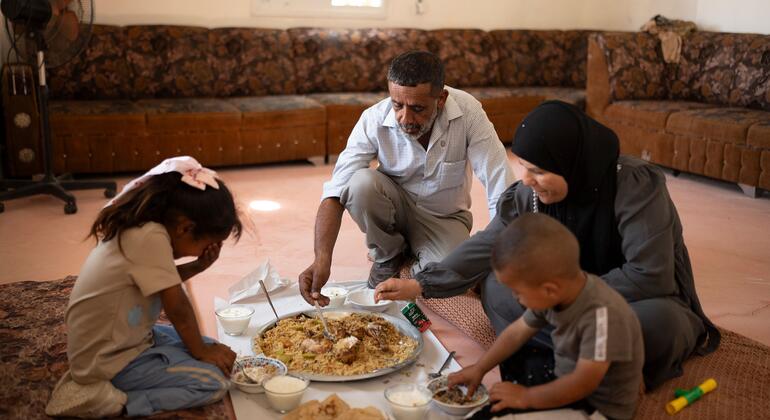
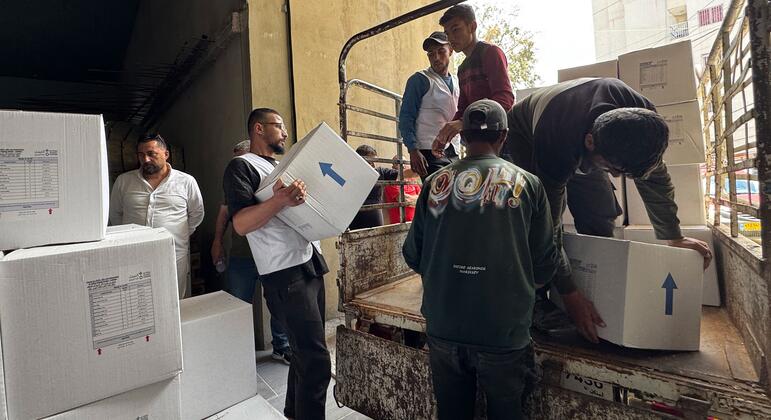
- Very likely humanitarian conditions in Gaza and the West Bank will worsen over the next 1-3 months. WHO reported acute watery diarrhoea cases rising from about 30,000 in March to more than 58,000 in August. WFP reported that two thirds of Gaza's population faces critical or emergency hunger, that up to 90 per cent could face high acute food insecurity by the end of 2026 without continued food aid, and that nearly one million people in the West Bank are food insecure. Funding shortages have already removed critical assistance from about 200,000 West Bank residents, while WFP requires $386 million to avoid further reductions. WHO, WFP and UN reporting provide strong corroboration, but the pace of deterioration depends on aid access and funding. (Confidence: high · ASSESSED)
- I&W: Confirming indicator: WFP reports that cash assistance to the 200,000 affected West Bank residents remains suspended or that further reductions are required in Gaza and the West Bank. (0-14 days)
- I&W: Breaking indicator: WFP confirms restored assistance and secured funding for the $386 million six-month requirement, while WHO reports no further rise in acute watery diarrhoea cases. (1-3 months)
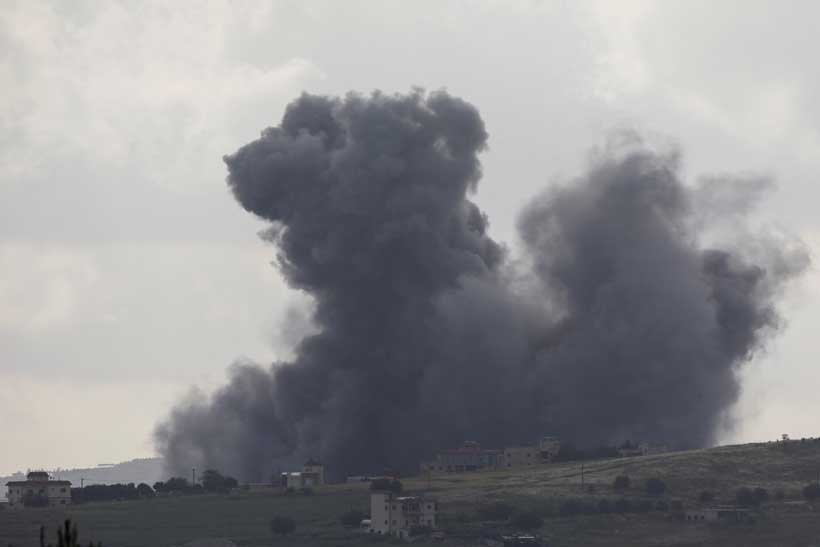
- Very likely Israeli fire and military presence in southern Lebanon will continue over the next 0-14 days, while Hezbollah projectile launches remain unlikely in that period. UNIFIL recorded 56 Israeli projectiles on 1 September and 84 on 2 September, and the UN reported an extensive Israeli presence north of the Blue Line. UNIFIL has also reported nine Israeli positions in invaded areas. Dujarric said no Hezbollah projectile launches had been detected since 21 June, although Israeli reporting attributes two recent explosive-drone attacks near Ali al-Taher to Hezbollah. The recent Israeli activity is well documented by UN and major-media reporting, but the immediate trajectory remains uncertain. (Confidence: medium · ASSESSED)
- I&W: Confirming indicator: UNIFIL records another day of Israeli projectiles, airstrikes or ground activity, or the Israeli military confirms additional positions north of the Blue Line. (0-14 days)
- I&W: Breaking indicator: UNIFIL records no further Israeli projectiles for 14 days and the UN confirms an Israeli withdrawal from positions north of the Blue Line. (0-14 days)
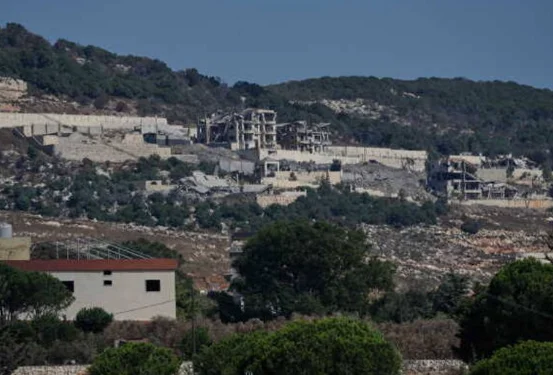
- Roughly even chance Israeli operations around the Ali al-Taher ridge trigger a major Israel-Hezbollah exchange over the next 1-3 months. The Israeli military said it had established operational control over the ridge and its tunnel network, while Defence Minister Israel Katz said the tunnels had been cleared. The date of those announcements is disputed, with reporting placing them on either 3 or 5 September. Hezbollah has rejected a US-backed proposal to hand the ridge to the Lebanese army and warned that a large-scale Israeli attack would end the ceasefire and bring missile attacks against northern Israeli communities. Iran has warned the United States of a forceful response to a major Israeli offensive. Claims that more than a dozen IRGC personnel are at the ridge conflict directly with an Israeli military assessment that none are present, and neither account has independent confirmation. This lowers confidence in the extent of Iranian involvement while leaving the ridge itself a credible escalation trigger. (Confidence: medium · ASSESSED)
- I&W: Confirming indicator: Israeli forces expand operations beyond the current Ali al-Taher positions or Hezbollah launches missiles at northern Israeli communities. (0-14 days)
- I&W: Breaking indicator: the Lebanese army takes control of Ali al-Taher with Hezbollah's agreement, or verified Israeli withdrawal from the ridge begins. (1-3 months)
- Likely Israeli security operations and Jewish settler attacks will continue across the West Bank, while food insecurity and displacement worsen over the next 1-3 months. The United Nations reported more than 80 Palestinians killed by Israeli forces or settlers since the start of 2026. WFP attributed rising food insecurity to settler violence, Israeli military operations, movement restrictions, demolitions and displacement. BBC reporting described near-daily settler attacks in al-Mughayyir, while the deaths of Omar al-Naasan and Khalil Abu Alia remain contested because Palestinian accounts attribute the shootings to settlers and soldiers and the Israeli military says it fired on riot instigators. The direction of the trend is supported by UN, WFP and major-media reporting, but responsibility for individual incidents remains disputed. (Confidence: medium · ASSESSED)
- I&W: Confirming indicator: UN or major-media reporting records further near-daily attacks in al-Mughayyir, Turmus Aiya or Nablus, alongside additional Israeli raids or settlement expansion. (0-14 days)
- I&W: Breaking indicator: Israeli authorities establish a sustained reduction in settler attacks and Israeli military operations across the West Bank, accompanied by a fall in reported Palestinian casualties. (1-3 months)
- Roughly even chance further direct US-Iran military exchanges occur over the next 0-14 days, increasing the risk that the southern Lebanon confrontation acquires a wider regional dimension. The US military said it struck three Iranian oil tankers after the IRGC fired ballistic missiles at two US warships, and CENTCOM reported that a US aircraft carrier and guided-missile destroyer evaded multiple Iranian attacks. One assessment says Iranian leadership is considering escalation, while another says Tehran intends proportionate responses to avoid a larger conflict. The reported attacks are supported by major-media coverage, but the conflicting assessments of Iranian intent and the limited time series reduce confidence in the forecast. (Confidence: medium · ASSESSED)
- I&W: Confirming indicator: CENTCOM reports another Iranian attack on US ships or another US strike on Iranian vessels or military infrastructure. (0-14 days)
- I&W: Breaking indicator: the United States and Iran publicly confirm a halt to direct attacks and no further strikes are reported during the period. (0-14 days)
Outlook & scenarios
Contained but persistent instability (55%)
The most likely path is continued Israeli attacks in Gaza, worsening humanitarian conditions and sustained Israeli fire and presence in southern Lebanon without a full return to Israel-Hezbollah war. Hezbollah avoids projectile launches while maintaining activity around Ali al-Taher, and the ridge remains under Israeli pressure.
Ali al-Taher escalation (30%)
Israeli forces expand operations around Ali al-Taher, Hezbollah responds with missile attacks against northern Israeli communities, and Iran issues or implements a forceful response. The June Lebanon framework becomes effectively non-operational as Israeli forces retain territory and Hezbollah rejects Lebanese army control of the ridge.
Gaza ceasefire breakdown (25%)
Israeli attacks in Gaza intensify enough to end the existing ceasefire in practice. Aid access deteriorates, WFP reduces assistance further and public-health conditions worsen. West Bank settler violence and Israeli security operations add pressure on regional mediators.
Wildcard: wider US-Iran and Israel-Hezbollah confrontation (10%)
Further Iranian attacks on US forces or additional US strikes on Iranian vessels produce a wider exchange. An Israeli operation at Ali al-Taher then brings Hezbollah and Iran into the same escalation cycle, while Gaza remains an active secondary front. This is a low-probability, high-impact outcome.
Recommendations
- Prioritise daily collection on Ali al-Taher. Record changes in Israeli positions, tunnel-clearance activity, strikes near access points, Hezbollah drone or projectile launches, and any Lebanese army movement towards the ridge.
- Maintain separate confirmed and unconfirmed reporting lines for IRGC presence at Ali al-Taher and for the timing of the Israeli operational-control announcement. Do not treat either account as resolved until independent imagery, official documentation or additional reporting corroborates it.
- Use OCHA, WHO and WFP reporting as the primary baseline for Gaza and West Bank humanitarian conditions. Track aid volumes through Kerem Shalom, entry of ambulances and medical equipment, WFP cash assistance, diarrhoea cases and food-insecurity updates. Treat NASA FIRMS detections as corroboration of heat signatures, not attribution of strikes.
- Keep the Gaza ceasefire and southern Lebanon ceasefire as separate analytic lines. A reduction in attacks in one theatre should not be treated as evidence of de-escalation in the other.
- Add direct US-Iran attacks on warships, tankers and military infrastructure to the regional escalation watchlist. Assess each incident against the competing possibilities of proportionate Iranian retaliation and deliberate escalation.
- Track named West Bank locations, including al-Mughayyir, Turmus Aiya and Nablus, for repeat settler attacks, Israeli military responses, Palestinian casualties and any credible enforcement action by Israeli authorities.
Confidence & uncertainty
Overall confidence is high because the central judgments are supported by multiple UN, WHO, WFP and UNIFIL reports, alongside corroborating major-media coverage. The strongest evidence concerns continuing Gaza attacks, humanitarian deterioration and Israeli activity in southern Lebanon. The main uncertainties concern the timing of the Ali al-Taher operational-control announcement, the presence of IRGC personnel at the ridge, the structure of the June Lebanon agreements, responsibility for specific West Bank shootings and the future direction of Iranian retaliation.
Intelligence gaps
- [EEI 1.1 · PARTIAL] Number, type and geolocated coordinates of projectiles (rockets, mortars, anti-tank guided missiles) fired from Lebanon into Israel in the last 24/72 hours, including time-stamped launch and impact locations. Recommended collection: signals/intel
- [EEI 1.2 · PARTIAL] Satellite or aerial imagery showing movement, concentration, or forward displacement of Hezbollah-associated military assets (armored vehicles, artillery pieces, mobile rocket launchers, logistics convoys) to positions within 0-10 km of the Israel-Lebanon border. Recommended collection: satellite/imagery
- [EEI 1.3 · UNCOVERED] Intercepted or captured Hezbollah command-and-control communications or orders explicitly directing cross-border operations or coordinated strikes with Palestinian groups (time-stamped messages, unit identifiers, orders to fire/move). Recommended collection: signals/intel
- [EEI 1.4 · PARTIAL] Observable changes in Israeli northern-front posture within Israel (numbers and types of reinforcements deployed to northern brigades, activation of reserves, air defense redeployments, evacuation orders or shelter alerts in northern towns), including timestamps and unit IDs where available. Recommended collection: human/intel
- [EEI 2.1 · UNCOVERED] Official or corroborated reports of IDF reservist mobilization and unit-level deployment orders (number of reservists called, named brigades/units ordered to deploy, deployment timelines). Recommended collection: open-source/media
- [EEI 2.2 · UNCOVERED] Satellite or ground imagery showing concentrations of IDF heavy equipment (tanks, infantry fighting vehicles, engineering vehicles), staging areas, field hospitals or forward supply dumps within X km of the Gaza border and at known crossing points. Recommended collection: satellite/imagery
- [EEI 2.3 · PARTIAL] Change in strike patterns consistent with pre-ground-attack shaping: sustained high-frequency airstrikes on tunnel networks, command nodes, coastal launch sites, and known insurgent concentrations (strike counts, munition types, locations, times). Recommended collection: open-source/media
- [EEI 2.4 · UNCOVERED] Logistics indicators: verified convoys of fuel/ammunition entering staging areas, establishment of forward logistics or medical bases, or documented requisitioning orders for bulk combat supplies with timestamps and quantities. Recommended collection: human/intel
- [EEI 3.1 · UNCOVERED] Number, participants and content of diplomatic contacts or negotiation sessions in the last 48 hours involving mediators (Egypt, Qatar, US, UN), including any proposed ceasefire text, prisoner/exchange lists, timelines or verification mechanisms. Recommended collection: diplomatic
- [EEI 3.2 · PARTIAL] Public statements, press releases or verified communiqués from Hamas and other Gaza armed groups specifying acceptance, rejection, or conditions for a ceasefire (explicit conditions such as prisoner release lists, withdrawal terms, lifting of blockades), with timestamps and speaker attribution. Recommended collection: open-source/media
- [EEI 3.3 · PARTIAL] Humanitarian indicators relevant to ceasefire: establishment and operation of agreed humanitarian corridors/checkpoints, number of aid deliveries admitted, civilian evacuations completed, and NGO/hospital reports of access denials or safe-passage violations. Recommended collection: humanitarian/NGO reports
- [EEI 3.4 · PARTIAL] Operational evidence of a de facto pause: verified sustained reduction (e.g., ≥12 hours) in strikes or launches from either side in specific sectors, supported by strike/impact logs, radar tracks and incident reports. Recommended collection: open-source/media
TLP:CLEAR