TLP:CLEAR · Disclosure is not limited.
Israel-Gaza Regional Escalation: Gaza Control, Lebanon Risk and US Aid Uncertainty
Time window: Last 7 days · Audience: General analyst · Type: Situation report · DTG: 2026-11-04 13:19Z · Overall confidence: HIGH
BLUF
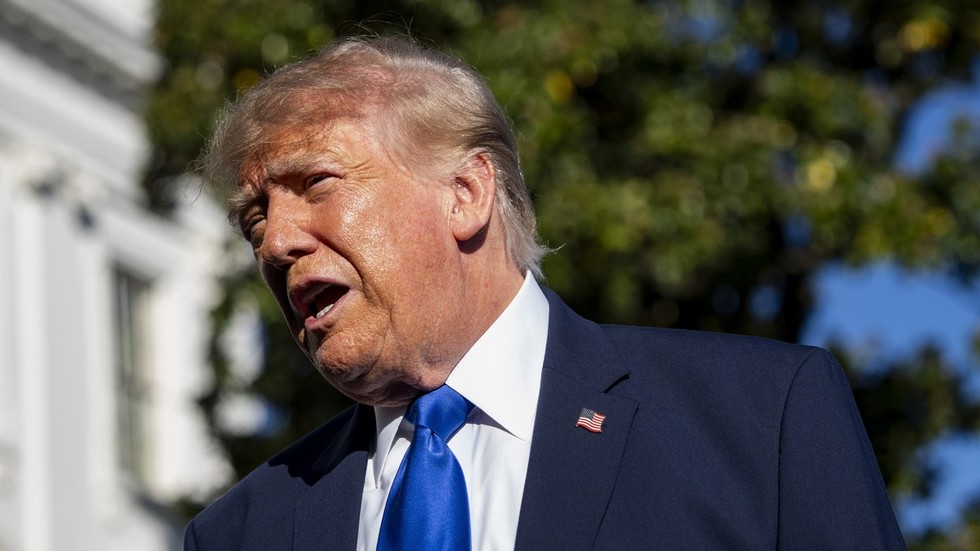
The main escalation risk remains southern Lebanon: reports describe Israeli fire and demolitions, alongside contingency planning for Hezbollah involvement, but do not establish a Hezbollah decision to widen the conflict. Separately, reports conflict over when Donald Trump’s announced end to $4 billion in annual US military aid to Israel would take effect.
Executive summary
In Gaza, the strongest reporting concerns a continuing degraded ceasefire framework: an international Commission of Inquiry reported that the area under Israeli military control grew from 53 per cent to at least 60 per cent by 2 September, and another account says Israeli forces remain behind the yellow line. The ceasefire’s status is contested in the claims reviewed. A social-media report of eight people killed in strikes, including a four-year-old, remains uncorroborated. In southern Lebanon, reports describe Israeli artillery fire at Kounine, an explosion in Beit Yahoun, tank fire at Ibl al-Saqi, and broader shelling and demolitions. One media account describes Israeli preparations for a Hezbollah-involvement scenario; it does not establish that Hezbollah has decided to enter a wider fight. Lebanese Prime Minister Nawaf Salam warned against drawing Lebanon into another war. Trump’s aid announcement adds uncertainty: reports differ between a cutoff starting in 2027 and one taking effect by the end of 2026, and the implementation mechanism is not reported.
Change from previous assessment
Since the 3 November brief, new reporting adds Trump’s announcement of an end to $4 billion in annual US military aid to Israel, with conflicting accounts placing the cutoff at the end of 2026 or in 2027. Reporting on southern Lebanon now names activity at Kounine, Beit Yahoun and Ibl al-Saqi and describes Israeli contingency planning for Hezbollah involvement. The wider-exchange estimate remains roughly even, but confidence remains low because the claims reviewed do not establish a Hezbollah decision or corroborated new attack. Gaza reporting adds the Commission of Inquiry’s account of Israeli control reaching at least 60 per cent by 2 September; the current strike casualty report remains uncorroborated.
Key judgments
- Israeli military control over Gaza is likely to remain at or above the most recently reported level through 4 December. The Commission of Inquiry reported an increase from 53 per cent under ceasefire arrangements to at least 60 per cent by 2 September, and reporting says Israeli forces remain deployed behind the yellow line. I assess the ceasefire framework as degraded, rather than clearly collapsed; a social-media report of eight deaths in strikes, including a four-year-old, is not independently corroborated in the claims reviewed. Confidence is medium because the control-area assessment is institutionally attributed but the current strike report is thin and the ceasefire’s status is contested. (Confidence: medium · ASSESSED)
- I&W: A new Commission of Inquiry update records Israeli control at 60 per cent or more and reports forces still deployed behind the yellow line, confirming the assessment. (1-3 months)
- I&W: A new Commission of Inquiry update records control at or below 53 per cent and documents an Israeli withdrawal from the yellow line, breaking the assessment. (1-3 months)
- Israeli military activity is likely to recur in southern Lebanon over the next 30 days. Reports describe artillery fire at Kounine, an explosion in Beit Yahoun, tank fire at Ibl al-Saqi, and wider shelling and demolitions. Confidence is medium: the reports provide specific locations and actions, but much of the reporting is concentrated in a limited number of media accounts. (Confidence: medium · ASSESSED)
- I&W: The Lebanese National News Agency reports new Israeli fire, explosions or demolitions at Kounine, Beit Yahoun or Ibl al-Saqi, confirming recurrence. (0-30 days)
- I&W: Thirty days pass without further reports of Israeli fire, demolitions or incursions in southern Lebanon, breaking the assessment. (0-30 days)
- A wider Israel-Hezbollah exchange over the next 30 days remains a roughly even chance. Reporting describes Israeli preparations for reserve mobilisation and strikes on Hezbollah targets across Lebanon, and a contingency plan involving Tyre, Sidon and Nabatieh if Hezbollah moves against Israel. Israeli military estimates also describe Hezbollah involvement in a confrontation with Iran as a risk. The claims reviewed do not establish a Hezbollah decision to enter a wider fight or a corroborated new Hezbollah attack. Confidence is low because the contingency reporting rests largely on one media stream and the evidence for Hezbollah’s intent is uncorroborated. (Confidence: low · ASSESSED)
- I&W: A verified Hezbollah rocket or drone attack targets northern Israel or Israeli forces in Lebanon, confirming the assessment. (0-30 days)
- I&W: No Hezbollah attack, Israeli reserve mobilisation or strikes beyond the currently reported sites occurs during the next 30 days, breaking the assessment. (0-30 days)
- Trump’s announced end to $4 billion in annual US military aid to Israel is likely to leave near-term defence planning uncertain. One report says the cutoff starts in 2027, while others say it takes effect by the end of 2026; the implementation mechanism remains unclear. Trump said Israel would still be permitted to purchase US military equipment. Confidence is medium because multiple reports describe the announcement, but they rely on the same interview and conflict on timing and attribution. (Confidence: medium · ASSESSED)
- I&W: A further US statement repeats the aid cutoff without specifying an effective date or implementation mechanism, confirming continued uncertainty. (0-14 days)
- I&W: A written US-Israel notice specifies the aid cutoff’s effective date and purchasing terms, breaking the assessment of near-term uncertainty. (0-14 days)
Outlook & scenarios
Degraded ceasefire and contained Lebanon activity (55%)
Israeli forces retain their reported position behind the yellow line, while the Gaza ceasefire framework remains in place but degraded. Israeli activity in southern Lebanon recurs without a verified Hezbollah attack. The US aid announcement remains unresolved in timing and implementation.
Israel-Hezbollah exchange widens (30%)
A Hezbollah attack on northern Israel or Israeli forces in Lebanon triggers wider Israeli action. Israeli contingency planning shifts to reserve mobilisation and strikes on Hezbollah targets across Lebanon. Lebanese leaders continue to call for state control over decisions on war and peace, but their warnings do not prevent the exchange.
Cross-theatre escalation wildcard (15%)
A renewed Israel-Iran confrontation activates the Israeli military’s reported Hezbollah contingency. Hezbollah attacks Israeli sites or forces, and Israel expands operations in Lebanon. The Gaza ceasefire framework weakens further as the US aid dispute adds friction to US-Israel relations.
Recommendations
- Obtain the full 3 November Fox & Friends transcript and seek written US and Israeli clarification on the aid cutoff date, implementation mechanism and continued access to US military equipment.
- Track reports from the Lebanese National News Agency for new Israeli activity at Kounine, Beit Yahoun and Ibl al-Saqi. Verify any Hezbollah attack claim and any Israeli reserve mobilisation independently before treating contingency reporting as evidence of escalation.
- Request an updated Commission of Inquiry assessment of the area under Israeli control in Gaza and a dated account of forces relative to the yellow line. Do not treat the social-media casualty report as established without corroboration.
- Maintain a separate watch on Israeli preparations involving reserve forces, strikes across Lebanon, and the reported contingency for Tyre, Sidon and Nabatieh. Distinguish reported planning from an operational decision.
Confidence & uncertainty
Overall confidence is high in the occurrence of the principal reported developments, supported by major-media reporting and attributed statements from the Commission of Inquiry, Lebanese officials and Donald Trump. This headline confidence does not extend to the forecasts: the aid cutoff date is disputed, Gaza ceasefire status is contested, and Hezbollah contingency reporting is thin and concentrated in one media stream. Confidence in individual judgments is therefore medium or low where the evidence warrants it.
Alternative analysis (red cell)
The evidence does not support treating a wider Israel-Hezbollah exchange as roughly even odds. It shows Israeli preparation and contingency planning, but Hezbollah intent remains unestablished in the reviewed claims, while Lebanese officials explicitly caution against being drawn into a new conflict. On this record, the more defensible reading is that escalation remains possible but is not demonstrably as likely as non-escalation.
Intelligence gaps
- [EEI 1.1 · PARTIAL] Number, type and geolocated coordinates of projectiles (rockets, mortars, anti-tank guided missiles) fired from Lebanon into Israel in the last 24/72 hours, including time-stamped launch and impact locations. Recommended collection: signals/intel
- [EEI 1.2 · UNCOVERED] Satellite or aerial imagery showing movement, concentration, or forward displacement of Hezbollah-associated military assets (armored vehicles, artillery pieces, mobile rocket launchers, logistics convoys) to positions within 0-10 km of the Israel-Lebanon border. Recommended collection: satellite/imagery
- [EEI 1.3 · UNCOVERED] Intercepted or captured Hezbollah command-and-control communications or orders explicitly directing cross-border operations or coordinated strikes with Palestinian groups (time-stamped messages, unit identifiers, orders to fire/move). Recommended collection: signals/intel
- [EEI 1.4 · PARTIAL] Observable changes in Israeli northern-front posture within Israel (numbers and types of reinforcements deployed to northern brigades, activation of reserves, air defense redeployments, evacuation orders or shelter alerts in northern towns), including timestamps and unit IDs where available. Recommended collection: human/intel
- [EEI 2.1 · PARTIAL] Official or corroborated reports of IDF reservist mobilization and unit-level deployment orders (number of reservists called, named brigades/units ordered to deploy, deployment timelines). Recommended collection: open-source/media
- [EEI 2.2 · UNCOVERED] Satellite or ground imagery showing concentrations of IDF heavy equipment (tanks, infantry fighting vehicles, engineering vehicles), staging areas, field hospitals or forward supply dumps within X km of the Gaza border and at known crossing points. Recommended collection: satellite/imagery
- [EEI 2.3 · PARTIAL] Change in strike patterns consistent with pre-ground-attack shaping: sustained high-frequency airstrikes on tunnel networks, command nodes, coastal launch sites, and known insurgent concentrations (strike counts, munition types, locations, times). Recommended collection: open-source/media
- [EEI 2.4 · UNCOVERED] Logistics indicators: verified convoys of fuel/ammunition entering staging areas, establishment of forward logistics or medical bases, or documented requisitioning orders for bulk combat supplies with timestamps and quantities. Recommended collection: human/intel
- [EEI 3.1 · UNCOVERED] Number, participants and content of diplomatic contacts or negotiation sessions in the last 48 hours involving mediators (Egypt, Qatar, US, UN), including any proposed ceasefire text, prisoner/exchange lists, timelines or verification mechanisms. Recommended collection: diplomatic
- [EEI 3.2 · UNCOVERED] Public statements, press releases or verified communiqués from Hamas and other Gaza armed groups specifying acceptance, rejection, or conditions for a ceasefire (explicit conditions such as prisoner release lists, withdrawal terms, lifting of blockades), with timestamps and speaker attribution. Recommended collection: open-source/media
- [EEI 3.3 · PARTIAL] Humanitarian indicators relevant to ceasefire: establishment and operation of agreed humanitarian corridors/checkpoints, number of aid deliveries admitted, civilian evacuations completed, and NGO/hospital reports of access denials or safe-passage violations. Recommended collection: humanitarian/NGO reports
- [EEI 3.4 · PARTIAL] Operational evidence of a de facto pause: verified sustained reduction (e.g., ≥12 hours) in strikes or launches from either side in specific sectors, supported by strike/impact logs, radar tracks and incident reports. Recommended collection: open-source/media
Red cell review: PARTIAL DISSENT
TLP:CLEAR