TLP:CLEAR · Disclosure is not limited.
Israel-Gaza Regional Escalation: Gaza, Lebanon and Red Sea Spillover
Time window: Last 7 days · Audience: General analyst · Type: Situation report · DTG: 2026-09-15 13:09Z · Overall confidence: HIGH
BLUF
Very likely Israeli military operations in Gaza and southern Lebanon will continue over the next 0-14 days, leaving the October 2025 Israel-Hamas and June 2026 Israel-Hezbollah ceasefires operationally ineffective. Houthi attacks on Saudi Arabia, reported seizures of Red Sea islands and Saudi threats of a firm response raise the likelihood of wider regional spillover, while shipping and energy markets remain exposed.
Executive summary
Between 8 and 15 September 2026, reporting showed continued Israeli operations across Gaza and southern Lebanon alongside worsening humanitarian conditions. UN safety partners reported airstrikes, shelling, gunfire and naval fire across Gaza, while UNIFIL recorded at least 32 airstrikes, repeated Lebanese airspace violations and explosive devices dropped near Al Mansuri. The Houthis claimed attacks on Khamis Mushait and other Saudi cities, while Saudi authorities reported 13 civilian injuries and promised a firm response. Houthi territorial gains around Perim and the Hanish islands, Iranian restrictions on shipping through the Strait of Hormuz and high tanker rates indicate a wider regional risk. Key uncertainties concern casualty totals, the attribution of strikes, the timing of Houthi and Saudi attacks, and whether planned Suez sailings proceed.
Change from previous assessment
Since the 14 September prior brief, the assessment adds a higher-risk Red Sea and Saudi dimension. The Houthis have now claimed attacks on Khamis Mushait, Abha and Taif and reported seizures of Perim and the Greater and Lesser Hanish islands, while the Saudi-led coalition has reported 13 civilian injuries and promised a firm response. New UNIFIL reporting records at least 32 airstrikes, explosive devices dropped near Al Mansuri and a two-hour detention of a UNIFIL patrol. The Gaza and southern Lebanon judgments remain high confidence, while the Houthi-Saudi and commercial shipping judgments remain medium confidence because of conflicting dates, party claims and conditional shipping plans. The prior low-confidence direct Israel-Iran assessment is retained as a very unlikely, high-impact wildcard rather than elevated to a principal forecast.
Key judgments
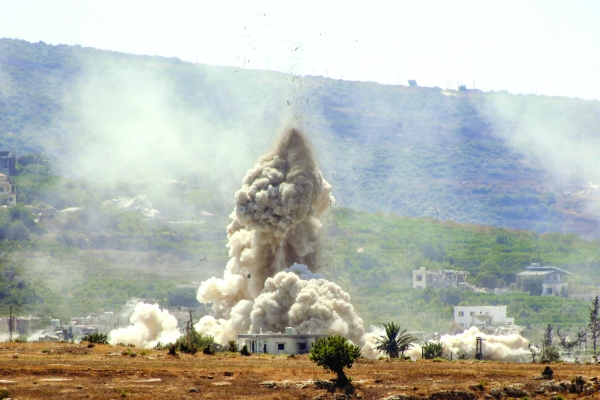
- Very likely Israeli military operations in Gaza and southern Lebanon will continue over the next 0-14 days, leaving both ceasefires operationally ineffective. UN safety and security partners reported airstrikes, shelling, gunfire and naval fire across Gaza over the weekend, and Palestinian sources reported at least 21 people injured in Israeli airstrikes on 14 September. UNIFIL recorded at least 32 airstrikes and numerous Lebanese airspace violations between Thursday and Sunday, observed Israeli drones dropping explosive-filled jerrycans near Al Mansuri, and reported that Israeli personnel held a UNIFIL patrol for two hours near Kafer Chouba. The Israeli military said Hezbollah launched two explosive drones towards Israeli troops near the Ali al-Taher ridge. The immediate trigger and civilian impact remain contested: Israel said it struck people transferring weapons near Kfar Rumman, while Lebanon's Ministry of Public Health reported 12 people killed there, including six children. (Confidence: high · ASSESSED)
- I&W: UNIFIL records another Israeli airstrike, airspace violation, explosive drone drop or patrol obstruction in southern Lebanon, while UN safety partners report continued Israeli airstrikes, shelling, gunfire or naval fire in Gaza. (0-14 days)
- I&W: UNIFIL records no Israeli airstrikes, explosive drone drops or patrol obstruction, and UN reporting records no Israeli military operations in Gaza for 14 consecutive days. (0-14 days)
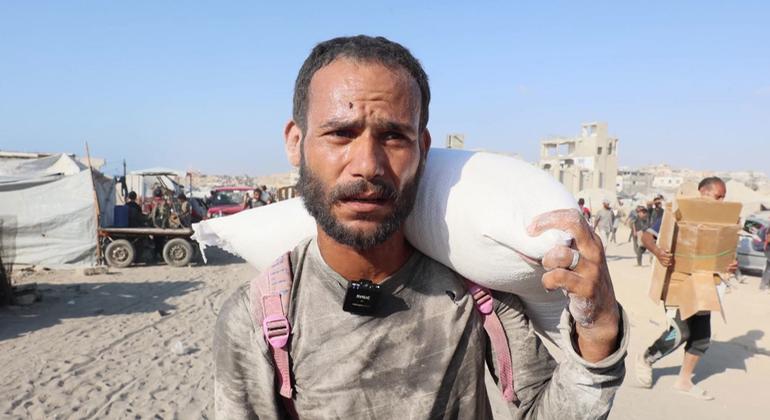
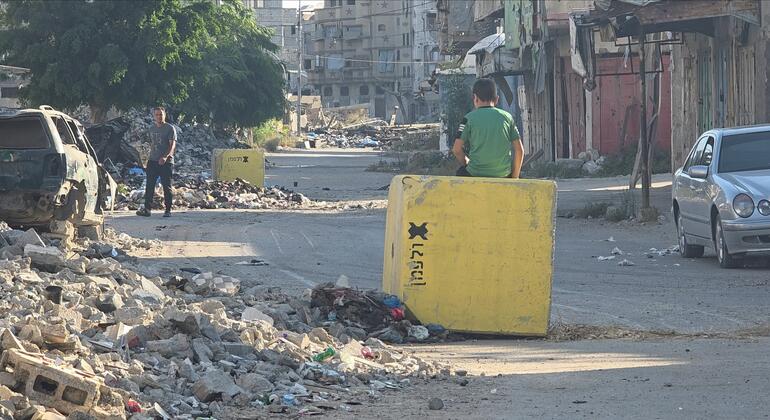
- Very likely humanitarian pressure in Gaza will worsen over the next 1-3 months. OCHA reports 1.98 million people, or 94 per cent of Gaza's population, need shelter and non-food assistance, while UN reporting places internal displacement at about nine in 10 people and describes 2.1 million people living within the yellow line, with Palestinians confined to less than 40 per cent of the Strip's land area. Al-Ahli Arab Hospital reported that generator failure suspended its imaging department, including northern Gaza's only functioning CT scanner. The direction of travel is strongly corroborated by UN reporting, although the exact casualty total remains unsettled: OCHA cites 1,334 deaths and 4,429 injuries since the 10 October 2025 ceasefire, while Gaza-based health authorities report 1,372 deaths since that ceasefire. (Confidence: high · ASSESSED)
- I&W: OCHA reports that the number needing shelter and non-food assistance has risen above 1.98 million, or that additional Gaza hospitals lose imaging capacity or critical power. (1-3 months)
- I&W: UN reporting shows a sustained fall in the internally displaced population from current levels, and Al-Ahli Arab Hospital restores its CT scanner and imaging department. (1-3 months)
- Likely Houthi-Saudi confrontation will intensify over the next 0-14 days and increase pressure on Red Sea shipping. The Houthis said they fired dozens of missiles and drones at King Khalid airbase in Khamis Mushait and attacked Khamis Mushait, Abha and Taif, while the Saudi-led coalition reported 13 civilian injuries and promised a firm response. Houthi and Yemeni government officials also said the Houthis seized Perim Island and the Greater and Lesser Hanish islands. The Houthis reported 54 Saudi air raids in 24 hours and 300 over five days, but those figures are not independently corroborated. Confidence is medium because the reporting relies partly on competing party statements and contains conflicting dates for the Saudi attacks. (Confidence: medium · ASSESSED)
- I&W: The Houthis conduct another missile or drone strike against Khamis Mushait, Abha, Taif or another Saudi military or civilian site, or the Saudi-led coalition acknowledges new air raids with casualties in Yemen. (0-14 days)
- I&W: No Houthi attacks or Saudi coalition air raids are reported for 14 consecutive days and the postponed Oman-hosted meeting between Iran and Gulf states reconvenes. (0-14 days)
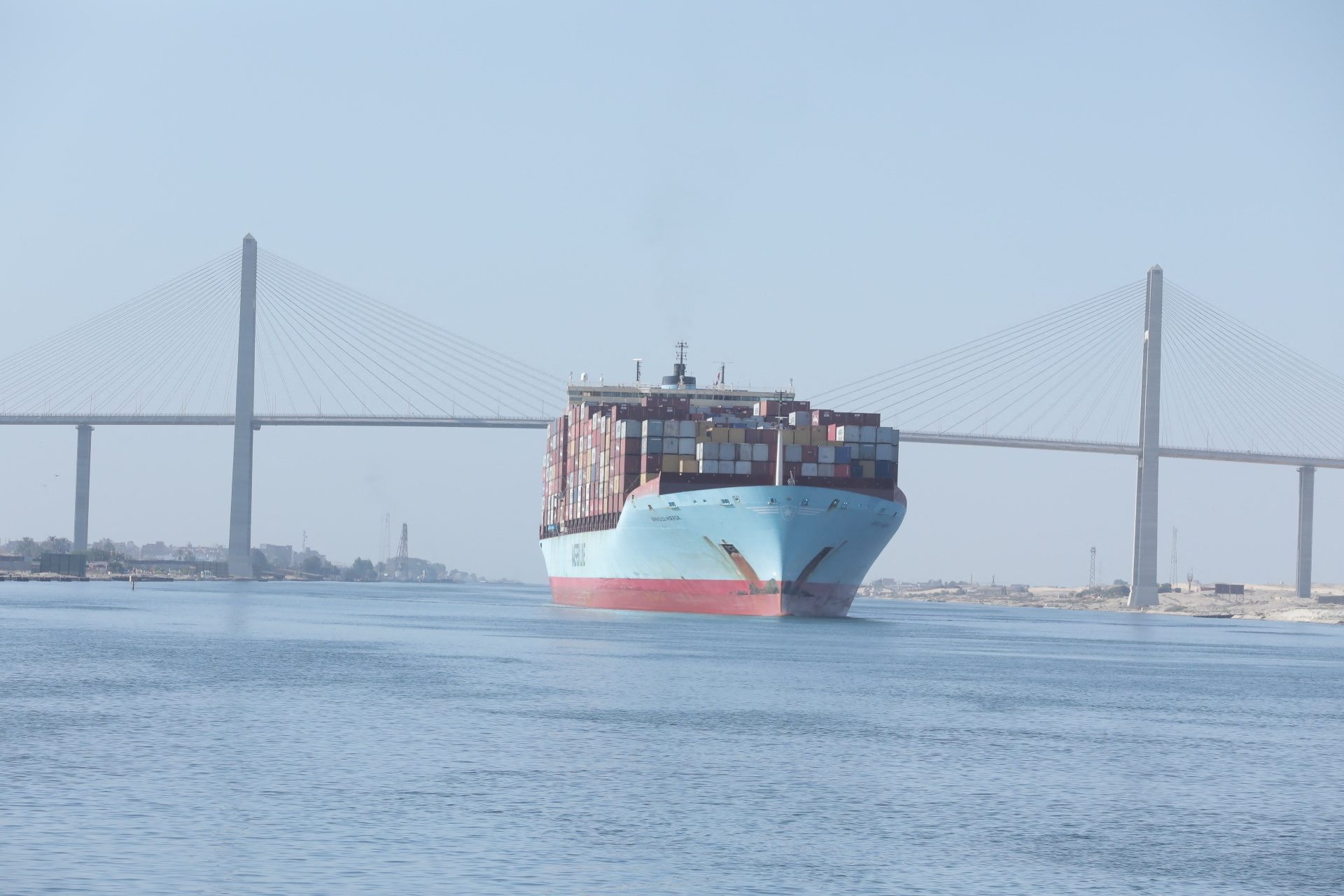
- Likely commercial shipping and energy disruption will persist over the next 1-3 months despite planned returns to the Suez Canal. Maersk and Hapag-Lloyd plan to move four Gemini Cooperation services to Suez, with Antonia Maersk scheduled for 19 September, Marchen Maersk for 21 September and Cornelia Maersk for 24 September. Their return remains conditional on Red Sea stability, while other reporting says Houthi attacks have kept most major container carriers on routes around the Cape of Good Hope. Iran continues to restrict Strait of Hormuz shipping, tanker hire on the Persian Gulf-China route reached $1.035 million per day, Brent crude exceeded $109 a barrel and US average retail diesel exceeded $6.23 per gallon. Confidence is medium because scheduled sailings are forward-looking and the commercial response remains conditional. (Confidence: medium · ASSESSED)
- I&W: Maersk or Hapag-Lloyd cancel the planned 19, 21 or 24 September Suez sailings, or tanker hire remains above $1 million per day while Iran continues restricting Hormuz shipping. (0-14 days)
- I&W: Antonia Maersk, Marchen Maersk and Cornelia Maersk complete their scheduled Suez sailings, additional services follow, and tanker hire remains below $1 million per day for two consecutive weeks. (0-14 days)
- Likely Israel will retain at least part of its declared security zone in southern Lebanon over the next 1-3 months rather than fully withdraw. Israel Katz said the IDF would not withdraw until Hezbollah is disarmed, while Benjamin Netanyahu and Israel Katz described the zone as extending from the coast to Beaufort and Mount Hermon. Israel has seized and then destroyed large parts of the Ali al-Taher heights, where the Israeli military said an eight-route Hezbollah tunnel network extended for more than 5,400 metres. A competing Israeli military proposal envisaged withdrawal from the roughly 10-kilometre yellow line to a 4-5-kilometre gray line, and a Lebanese source rejected reports that the next round of direct negotiations had a confirmed date. The competing withdrawal proposal and uncertainty over negotiations lower confidence. (Confidence: medium · ASSESSED)
- I&W: The IDF announces continued control or permanent observation posts across the Ali al-Taher-Beaufort-Mount Hermon zone, or rejects implementation of the proposed 4-5-kilometre gray line. (1-3 months)
- I&W: Lebanon-Israel talks receive an official date and Israel begins a verifiable withdrawal from the yellow line towards the proposed 4-5-kilometre gray line. (1-3 months)
Outlook & scenarios
Persistent multi-front attrition (65%)
Most likely, Israeli operations continue across Gaza and southern Lebanon while the October 2025 and June 2026 ceasefires remain nominal. Houthi attacks and Saudi retaliation continue at a level that sustains pressure on the Bab al-Mandab and keeps humanitarian and shipping risks elevated.
Partial containment without a full settlement (25%)
Unlikely but plausible, Israel implements a limited move from the yellow line towards the proposed 4-5-kilometre gray line, Lebanon-Israel talks receive an official date, and Saudi-Houthi attacks pause long enough for Oman-hosted regional diplomacy to resume. Planned Suez sailings proceed, but Gaza operations and humanitarian needs remain unresolved.
Regional widening through the Red Sea and energy routes (35%)
Likely if the Houthi attacks on Saudi Arabia and Saudi air raids continue, the conflict expands its maritime dimension. Houthi control around Perim and the Hanish islands, Iranian restrictions on Hormuz shipping and tanker rates above $1 million per day combine to prolong diversions, raise fuel costs and delay the commercial return to Suez.
Direct Iran-Israel confrontation, high-impact wildcard (8%)
Very unlikely but high impact, a broader direct confrontation involving Israel and Iran follows further escalation around Ali al-Taher and Iranian maritime restrictions. Current reporting confirms Iranian pressure on shipping and Israeli claims that the southern Lebanon site was Iranian-linked, but it does not establish an imminent direct Israel-Iran exchange.
Recommendations
- Maintain a daily cross-theatre indicator board covering UNIFIL airstrikes and airspace violations, Israeli operations reported by UN safety partners in Gaza, Houthi attacks on Saudi locations and Saudi coalition air raids in Yemen.
- Separate Israeli, Hezbollah, Lebanese Ministry of Public Health, Houthi and Saudi coalition reporting in analytic products. Do not average conflicting casualty, displacement or strike figures. Preserve the source attribution and reporting date for each figure.
- Track the scheduled Suez movements of Antonia Maersk on 19 September, Marchen Maersk on 21 September and Cornelia Maersk on 24 September. Treat cancellations, route reversals or continued tanker rates above $1 million per day as early warning of persistent maritime disruption.
- Prioritise collection on Israeli force posture around Ali al-Taher, Beaufort and Mount Hermon, including evidence of observation posts, withdrawal activity or implementation of the proposed 4-5-kilometre gray line.
- Prepare separate 0-14-day and 1-3-month updates for Gaza humanitarian access and medical capacity. Include OCHA shelter figures, internal displacement, hospital power and imaging failures, UN staff casualties and the differing Gaza casualty totals.
- Retain a low-probability warning line for direct Iran-Israel escalation. Elevate it only if reporting shows direct Israeli-Iranian strikes, expanded Iranian action against shipping or a confirmed operational link between activity around Ali al-Taher and Iranian forces.
Confidence & uncertainty
Overall confidence is high because the core judgments on continued operations and humanitarian deterioration are supported by multiple high-reliability UN, OCHA, UNIFIL and OHCHR reports, with additional corroboration from Reuters-linked reporting, major media and official military statements. Confidence is lower for the precise scale and attribution of Houthi-Saudi attacks, the timing of Suez sailings, Lebanese civilian casualty classifications and the eventual boundary of Israel's southern Lebanon security zone. Those uncertainties do not materially alter the assessment that ceasefires remain operationally ineffective and that regional spillover risks are increasing.
Intelligence gaps
- [EEI 1.1 · PARTIAL] Number, type and geolocated coordinates of projectiles (rockets, mortars, anti-tank guided missiles) fired from Lebanon into Israel in the last 24/72 hours, including time-stamped launch and impact locations. Recommended collection: signals/intel
- [EEI 1.2 · UNCOVERED] Satellite or aerial imagery showing movement, concentration, or forward displacement of Hezbollah-associated military assets (armored vehicles, artillery pieces, mobile rocket launchers, logistics convoys) to positions within 0-10 km of the Israel-Lebanon border. Recommended collection: satellite/imagery
- [EEI 1.3 · UNCOVERED] Intercepted or captured Hezbollah command-and-control communications or orders explicitly directing cross-border operations or coordinated strikes with Palestinian groups (time-stamped messages, unit identifiers, orders to fire/move). Recommended collection: signals/intel
- [EEI 1.4 · PARTIAL] Observable changes in Israeli northern-front posture within Israel (numbers and types of reinforcements deployed to northern brigades, activation of reserves, air defense redeployments, evacuation orders or shelter alerts in northern towns), including timestamps and unit IDs where available. Recommended collection: human/intel
- [EEI 2.1 · UNCOVERED] Official or corroborated reports of IDF reservist mobilization and unit-level deployment orders (number of reservists called, named brigades/units ordered to deploy, deployment timelines). Recommended collection: open-source/media
- [EEI 2.2 · UNCOVERED] Satellite or ground imagery showing concentrations of IDF heavy equipment (tanks, infantry fighting vehicles, engineering vehicles), staging areas, field hospitals or forward supply dumps within X km of the Gaza border and at known crossing points. Recommended collection: satellite/imagery
- [EEI 2.3 · PARTIAL] Change in strike patterns consistent with pre-ground-attack shaping: sustained high-frequency airstrikes on tunnel networks, command nodes, coastal launch sites, and known insurgent concentrations (strike counts, munition types, locations, times). Recommended collection: open-source/media
- [EEI 2.4 · UNCOVERED] Logistics indicators: verified convoys of fuel/ammunition entering staging areas, establishment of forward logistics or medical bases, or documented requisitioning orders for bulk combat supplies with timestamps and quantities. Recommended collection: human/intel
- [EEI 3.1 · PARTIAL] Number, participants and content of diplomatic contacts or negotiation sessions in the last 48 hours involving mediators (Egypt, Qatar, US, UN), including any proposed ceasefire text, prisoner/exchange lists, timelines or verification mechanisms. Recommended collection: diplomatic
- [EEI 3.2 · UNCOVERED] Public statements, press releases or verified communiqués from Hamas and other Gaza armed groups specifying acceptance, rejection, or conditions for a ceasefire (explicit conditions such as prisoner release lists, withdrawal terms, lifting of blockades), with timestamps and speaker attribution. Recommended collection: open-source/media
- [EEI 3.3 · PARTIAL] Humanitarian indicators relevant to ceasefire: establishment and operation of agreed humanitarian corridors/checkpoints, number of aid deliveries admitted, civilian evacuations completed, and NGO/hospital reports of access denials or safe-passage violations. Recommended collection: humanitarian/NGO reports
- [EEI 3.4 · PARTIAL] Operational evidence of a de facto pause: verified sustained reduction (e.g., ≥12 hours) in strikes or launches from either side in specific sectors, supported by strike/impact logs, radar tracks and incident reports. Recommended collection: open-source/media
Cited sources
[1] United Nations News · Six UN staff killed in Gaza school strike; Lebanon violations mount (A) · Mon Sep 14 2026 21:11:44 GMT+0000 (Coordinated Universal Time) · sha256:ff143902c07f [2] CGTN · 21 Palestinians injured as Israeli strikes continue in Gaza despite ceasefire (B) · Tue Sep 15 2026 02:23:01 GMT+0000 (Coordinated Universal Time) · sha256:1edf54594e54 [3] Oman Observer (Reuters wire content) · Israeli strikes on southern Lebanese town kill 13 (A) · Mon Sep 14 2026 13:09:35 GMT+0000 (Coordinated Universal Time) · sha256:3edb4fb4258f [4] United Nations (UN News) · ‘Where do we go?’: How Israel’s ‘yellow line’ is closing in on Palestinians (A) · Sat Sep 12 2026 16:00:00 GMT+0000 (Coordinated Universal Time) · sha256:a87b540da688 [5] Al Jazeera · Palestine weekly: Settlement sanctions spark diplomatic crisis (A) · Tue Sep 15 2026 06:53:50 GMT+0000 (Coordinated Universal Time) · sha256:6253962d41d6 [6] Reuters (republished by gCaptain) · Gulf States Postpone Iran Talks as Houthis Strike Saudi Arabia (A) · Mon Sep 14 2026 16:25:34 GMT+0000 (Coordinated Universal Time) · sha256:c0a1648cf433 [7] Al Jazeera · Saudi Arabia promises to respond to Houthi attacks ‘firmly’ (A) · Tue Sep 15 2026 08:11:09 GMT+0000 (Coordinated Universal Time) · sha256:3e0f5bd518e0 [8] CGTN Arabic (China Global Television Network) · الأسيرات والأسرى الفلسطينيون في السجون الإسرائيلية أمراض وقمع وتجويع يفتك بأجسادهم وتحركات قانونية لإنهاء هذا الوضع (B) · sha256:4d95870701ab [9] gCaptain · Maersk, Hapag-Lloyd Accelerate Return to Suez Despite Red Sea Risks (C) · Mon Sep 14 2026 15:53:32 GMT+0000 (Coordinated Universal Time) · sha256:4b007aa71efa [10] gCaptain (republishing Bloomberg content) · Oil Tanker Rates Top $1 Million a Day as Hormuz War Squeezes Fleet (B) · Mon Sep 14 2026 18:24:16 GMT+0000 (Coordinated Universal Time) · sha256:6886bf9bc6d2 [11] NewsGram (republishing Common Dreams) · ‘There Is No Ceasefire’: Israel Kills 12 More in Lebanon, Including Children (B) · Tue Sep 08 2026 19:30:00 GMT+0000 (Coordinated Universal Time) · sha256:8d0345d9b22e [12] Arab News · After Ali Al-Taher blasts, is Israel recasting southern Lebanon? (A) · Sat Sep 12 2026 03:16:28 GMT+0000 (Coordinated Universal Time) · sha256:d51cbe70710f
Source content hashes were computed at collection time; the cited text is preserved unmodified for the life of this product.
TLP:CLEAR