TLP:CLEAR · Disclosure is not limited.
Israel-Gaza Regional Escalation: Gaza Strikes and Lebanon Ceasefire Strain
Time window: Last 7 days · Audience: General analyst · Type: Situation report · DTG: 2026-08-21 13:08Z · Overall confidence: HIGH
BLUF
Very likely Israeli forces and Hezbollah will sustain military friction in southern Lebanon, while Israeli military activity in Gaza remains active. Likely diplomatic efforts will contain neither front fully over the next 1-3 months, leaving humanitarian pressure acute in Gaza and southern Lebanon.
Executive summary
Between 14 and 21 August, reporting indicated continued Israeli strikes and Hezbollah-Israel exchanges in southern Lebanon, including activity around Mansouri and the Ali al-Tahir heights. In Gaza, UN partners reported air strikes, shelling, gunfire and naval fire, while NASA recorded 49 thermal anomalies between 20 and 21 August, only one of them high confidence. Qatar continued efforts to revive negotiations and advance the Gaza ceasefire plan, but Benjamin Netanyahu has rejected the latest proposal. Gaza's food production capacity and southern Lebanon's displacement and aid situation remain severely constrained.
Change from previous assessment
Since the 20 August brief, the core assessment of renewed Israel-Hezbollah friction and continuing Israeli military activity in Gaza is unchanged. The Gaza activity picture now includes 49 NASA thermal anomalies recorded between 20 and 21 August, although only one was high confidence and the data do not establish cause. Confidence in exact Gaza casualty totals is lower because current reports give differing figures. The Lebanon assessment is more firmly tied to Washington's stated view that Hezbollah disarmament is central to security arrangements and to US support for Lebanese Armed Forces clearance operations. Qatar's continuing mediation and UK engagement with the National Committee for the Administration of Gaza provide additional diplomatic activity, but Netanyahu's rejection of the proposal still constrains implementation. The E1 settlement tender is a new political pressure point in this brief.
Key judgments
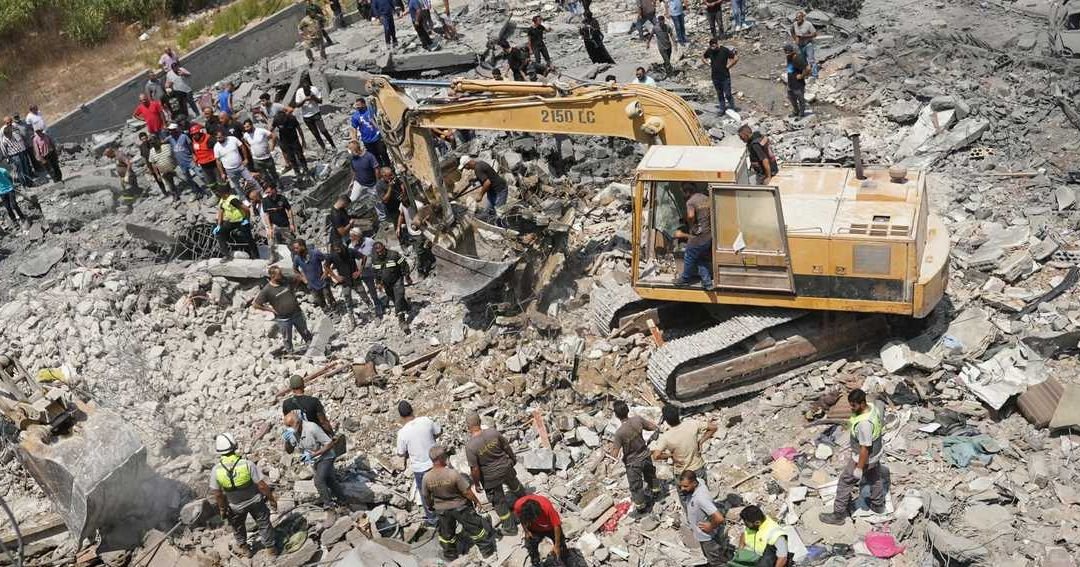
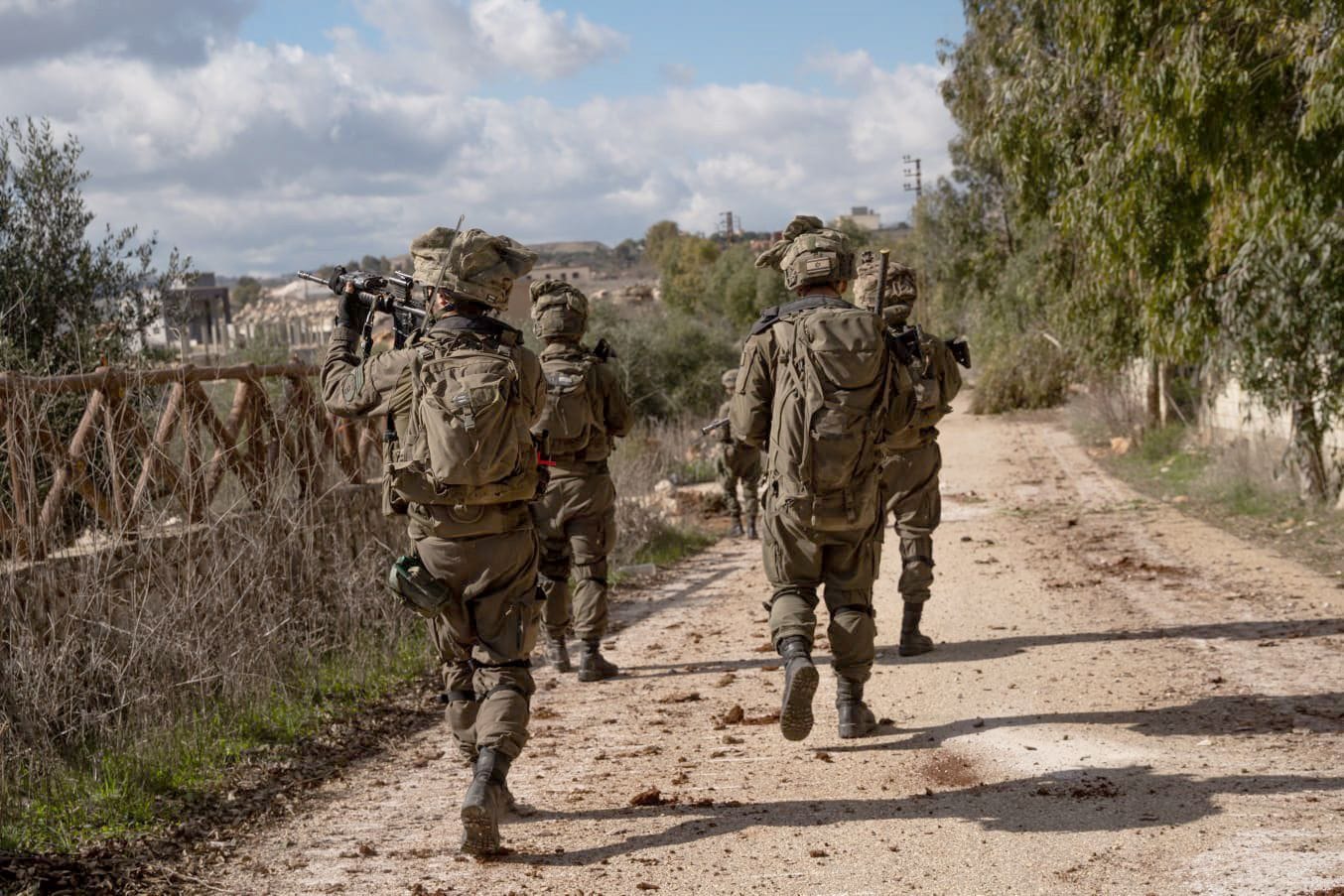
- Very likely Israeli forces and Hezbollah are sustaining low-level military friction in southern Lebanon despite reported ceasefire requirements. Reporting describes ongoing clashes, localised skirmishes and long-range exchanges, Israeli strikes on Mansouri and the Ali al-Tahir heights, three critically injured Israeli military personnel, and Israeli efforts to track Hezbollah movement and disrupt underground infrastructure. The precise sequence of incidents and the status of the different ceasefire arrangements remain unresolved. (Confidence: medium · REPORTED)
- I&W: CONFIRM: Within 0-14 days, independent reporting records another Israeli strike at Mansouri or the Ali al-Tahir heights and a Hezbollah attack that injures Israeli military personnel. (0-14 days)
- I&W: BREAK: Within 0-14 days, a verified halt to exchanges is accompanied by Lebanese Armed Forces completion of clearance operations in the first pilot zones. (0-14 days)
- Likely Israel and Hezbollah will exchange further fire in southern Lebanon over the next 1-3 months rather than establish a durable cessation. Washington links Israeli military operations to Hezbollah activity, identifies Hezbollah's military capabilities and disarmament as central to a lasting security arrangement, and supports Lebanese Armed Forces clearance operations. Israel continues to link withdrawal to security conditions, while Hezbollah has rejected arrangements requiring its withdrawal or disarmament. This is an assessed forecast based on stated positions and reported military activity, not a direct observation of future intent. (Confidence: medium · ASSESSED)
- I&W: CONFIRM: Within 1-3 months, Washington reiterates that Hezbollah disarmament is central, Israel maintains its withdrawal condition, and Hezbollah rejects the security arrangement. (1-3 months)
- I&W: BREAK: Within 1-3 months, Hezbollah fighters are publicly documented moving north of the Litani River and Israeli forces begin a verified withdrawal from southern Lebanon. (1-3 months)
- Very likely Israeli forces continued military activity in Gaza during the reporting window. UN partners reported air strikes, shelling, gunfire and naval fire, primarily west of the Yellow Line. Reports attributed nine deaths to Israeli airstrikes in Gaza City, while a separate WAFA account reported at least 10 Palestinians killed and 15 critically injured. NASA recorded 49 thermal anomalies in Gaza between 20 and 21 August, but only one detection was high confidence and the system records heat rather than cause. Confidence is higher for continued military activity than for the exact casualty total or the cause of each thermal anomaly. (Confidence: medium · REPORTED)
- I&W: CONFIRM: Within 0-14 days, UN partners report new Israeli air strikes, shelling, gunfire or naval fire in Gaza and follow-up satellite data records additional thermal anomalies. (0-14 days)
- I&W: BREAK: Within 0-14 days, UN partners report no further incidents and Israel and Hamas announce a formal halt covering Gaza military activity. (0-14 days)
- Unlikely the Gaza ceasefire plan will enter stable implementation in the next 1-3 months. Benjamin Netanyahu has rejected the latest Gaza proposal, which calls for an immediate ceasefire and demilitarisation of the Gaza Strip. Qatar is working to resume negotiations and advance the plan, while Stephen Doughty MP has emphasised the National Committee for the Administration of Gaza's interim recovery role. These are conflicting political signals. This is a low-confidence assessment because Qatar's diplomatic activity and UK engagement provide evidence of continued negotiation, but no supported claim establishes Israeli and Hamas agreement to implement the plan. (Confidence: low · ASSESSED)
- I&W: CONFIRM: Within 1-3 months, Benjamin Netanyahu maintains his rejection, Israeli strikes continue, and no formal Israel-Hamas implementation mechanism is announced. (1-3 months)
- I&W: BREAK: Within 1-3 months, Israel and Hamas formally announce a ceasefire with initial demilitarisation steps and the National Committee for the Administration of Gaza begins its interim coordination role. (1-3 months)
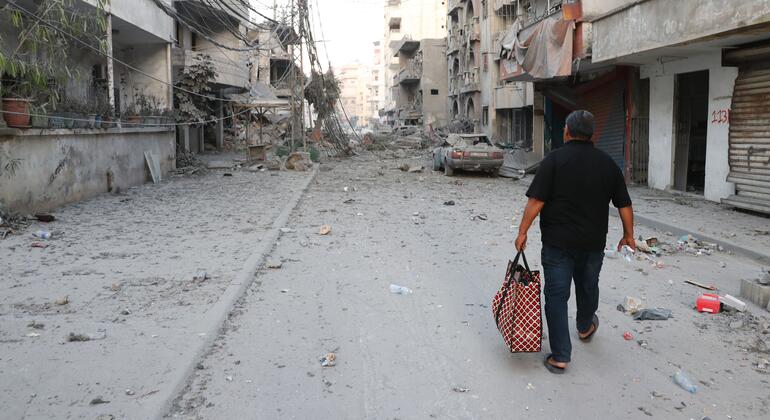
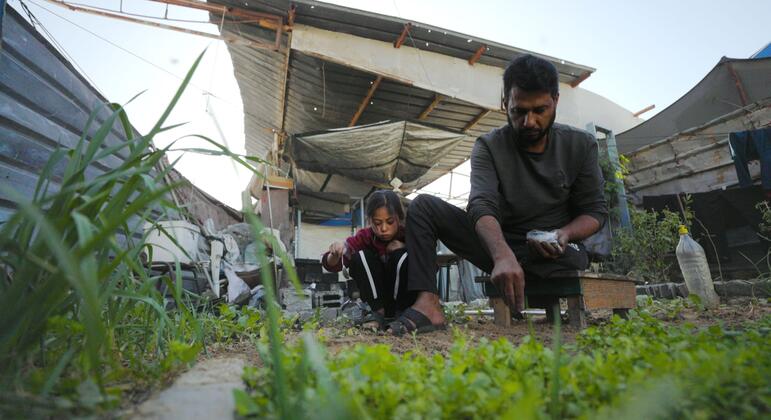
- Very likely humanitarian pressure will remain acute in Gaza and southern Lebanon over the next 1-3 months. FAO reported that only 3 per cent, or 448 hectares, of Gaza cropland remained usable on 18 August, while 97.2 per cent of cropland in Rafah was inaccessible. In southern Lebanon, 360,000 people remain displaced, despite the UN reporting that around 860,000 displaced people have returned home. UNHCR's Lebanon operation is only 24 per cent funded against requirements of $472.3 million for 2026. The return and displacement figures are not directly comparable, so their relationship remains unresolved. (Confidence: high · ASSESSED)
- I&W: CONFIRM: Within 1-3 months, FAO continues to report usable Gaza cropland at or below 3 per cent and UN agencies continue to report at least 360,000 displaced people in southern Lebanon. (1-3 months)
- I&W: BREAK: Within 1-3 months, FAO reports usable Gaza cropland above 3 per cent and the UN reports a sustained fall in southern Lebanon's displaced population below 360,000. (1-3 months)
- Likely Israel's E1 settlement tender and broader settlement expansion will increase diplomatic friction and further narrow the political space for a viable Palestinian state. The E1 project is assessed to risk separating the West Bank from East Jerusalem, while the Israeli government is reported to have approved more than 100 new settlements across the West Bank since late 2022. The UK has condemned the E1 tender, summoned the Israeli Chargé d'Affaires and demanded its reversal. This is an assessed inference, with medium confidence because the E1 reporting is well sourced but the longer-term political effect is not directly observed. (Confidence: medium · ASSESSED)
- I&W: CONFIRM: Within 1-3 months, Israel advances the E1 tender or approves additional settlement activity, followed by further UK or UN condemnation. (1-3 months)
- I&W: BREAK: Within 1-3 months, the Israeli government retracts the E1 tender and announces a halt to further settlement approvals in the West Bank. (1-3 months)
Outlook & scenarios
Persistent but contained military friction (55%)
Over the next 1-3 months, Israeli forces and Hezbollah continue localised exchanges around southern Lebanon while Israeli forces maintain military activity in Gaza. US, Qatari and Lebanese engagement limits the geographic spread, but does not produce a durable settlement.
Managed diplomatic pause (30%)
Qatar's mediation and regional diplomatic pressure produce a limited Gaza pause and renewed discussions over the ceasefire plan. The National Committee for the Administration of Gaza gains a narrow recovery role, while the unresolved questions of demilitarisation and Hezbollah's status keep the Lebanon track fragile.
Cross-front escalation (15%)
A Hezbollah attack causing Israeli military casualties prompts expanded Israeli strikes in southern Lebanon, while Gaza military activity continues. The resulting pressure further weakens the Gaza diplomatic track and increases displacement in southern Lebanon.
Wildcard: collapse of restraint around Beirut (8%)
In a low-probability, high-impact outcome, Israel expands operations from southern Lebanon towards Hezbollah infrastructure in Beirut and Hezbollah abandons localised exchanges. The cessation framework collapses, US de-escalation efforts lose leverage and humanitarian access deteriorates across both fronts.
Recommendations
- Maintain a daily fused watch on Mansouri, the Ali al-Tahir heights, Nabatieh and the area north of the Litani River. Separate confirmed Israeli strikes, Hezbollah attacks and claims of underground activity, and record the source and time of each report.
- Track three Lebanon ceasefire indicators separately: Hezbollah movement north of the Litani River, Lebanese Armed Forces clearance in the first pilot zones, and any Israeli statement linking withdrawal to Hezbollah disarmament.
- Report Gaza casualty figures by location, date and alleged strike rather than aggregating the Gaza City report of nine deaths with the separate WAFA report of 10 deaths and 15 critically injured. Treat NASA thermal detections as corroboration of heat only, not proof of an Israeli strike.
- Monitor for a formal Israel-Hamas implementation announcement covering an immediate ceasefire, demilitarisation and the National Committee for the Administration of Gaza's interim role. Treat Qatar's statements and UK engagement as diplomatic activity, not evidence of implementation.
- Use FAO's 448-hectare estimate, Rafah's 97.2 per cent inaccessible cropland figure, the 360,000 displaced people in southern Lebanon and UNHCR's 24 per cent funding level as baseline indicators for humanitarian deterioration.
- Track Israeli action on the E1 tender and additional West Bank settlement approvals alongside UK and UN responses. Flag any move from tendering or approval to construction as a political escalation affecting the wider Gaza diplomatic environment.
Confidence & uncertainty
Overall confidence is high because the core military and humanitarian findings are supported by multiple high-reliability UN, NASA, UK government and other official or major-media sources. The main uncertainties concern the exact sequence of incidents in southern Lebanon, the relationship between conflicting Gaza casualty reports, the cause of NASA thermal anomalies and the timeline of the different ceasefire arrangements. Confidence is lower for forecasts about diplomatic implementation and longer-term political effects.
Intelligence gaps
- [EEI 1.1 · PARTIAL] Number, type and geolocated coordinates of projectiles (rockets, mortars, anti-tank guided missiles) fired from Lebanon into Israel in the last 24/72 hours, including time-stamped launch and impact locations. Recommended collection: signals/intel
- [EEI 1.2 · UNCOVERED] Satellite or aerial imagery showing movement, concentration, or forward displacement of Hezbollah-associated military assets (armored vehicles, artillery pieces, mobile rocket launchers, logistics convoys) to positions within 0-10 km of the Israel-Lebanon border. Recommended collection: satellite/imagery
- [EEI 1.3 · UNCOVERED] Intercepted or captured Hezbollah command-and-control communications or orders explicitly directing cross-border operations or coordinated strikes with Palestinian groups (time-stamped messages, unit identifiers, orders to fire/move). Recommended collection: signals/intel
- [EEI 1.4 · PARTIAL] Observable changes in Israeli northern-front posture within Israel (numbers and types of reinforcements deployed to northern brigades, activation of reserves, air defense redeployments, evacuation orders or shelter alerts in northern towns), including timestamps and unit IDs where available. Recommended collection: human/intel
- [EEI 2.1 · UNCOVERED] Official or corroborated reports of IDF reservist mobilization and unit-level deployment orders (number of reservists called, named brigades/units ordered to deploy, deployment timelines). Recommended collection: open-source/media
- [EEI 2.2 · UNCOVERED] Satellite or ground imagery showing concentrations of IDF heavy equipment (tanks, infantry fighting vehicles, engineering vehicles), staging areas, field hospitals or forward supply dumps within X km of the Gaza border and at known crossing points. Recommended collection: satellite/imagery
- [EEI 2.3 · PARTIAL] Change in strike patterns consistent with pre-ground-attack shaping: sustained high-frequency airstrikes on tunnel networks, command nodes, coastal launch sites, and known insurgent concentrations (strike counts, munition types, locations, times). Recommended collection: open-source/media
- [EEI 2.4 · UNCOVERED] Logistics indicators: verified convoys of fuel/ammunition entering staging areas, establishment of forward logistics or medical bases, or documented requisitioning orders for bulk combat supplies with timestamps and quantities. Recommended collection: human/intel
- [EEI 3.1 · PARTIAL] Number, participants and content of diplomatic contacts or negotiation sessions in the last 48 hours involving mediators (Egypt, Qatar, US, UN), including any proposed ceasefire text, prisoner/exchange lists, timelines or verification mechanisms. Recommended collection: diplomatic
- [EEI 3.2 · PARTIAL] Public statements, press releases or verified communiqués from Hamas and other Gaza armed groups specifying acceptance, rejection, or conditions for a ceasefire (explicit conditions such as prisoner release lists, withdrawal terms, lifting of blockades), with timestamps and speaker attribution. Recommended collection: open-source/media
- [EEI 3.3 · UNCOVERED] Humanitarian indicators relevant to ceasefire: establishment and operation of agreed humanitarian corridors/checkpoints, number of aid deliveries admitted, civilian evacuations completed, and NGO/hospital reports of access denials or safe-passage violations. Recommended collection: humanitarian/NGO reports
- [EEI 3.4 · PARTIAL] Operational evidence of a de facto pause: verified sustained reduction (e.g., ≥12 hours) in strikes or launches from either side in specific sectors, supported by strike/impact logs, radar tracks and incident reports. Recommended collection: open-source/media
Cited sources
[1] United Nations · Lebanon: 860,000 displaced people have returned home, but humanitarian crisis remains ‘immense’ (A) · sha256:b4baf947a1c0 [2] english.globalarabnetwork.com · US Officials Link Lebanon Escalation to Hezbollah Activity (A) · sha256:3bc74117e8ac [3] english.globalarabnetwork.com · Israeli Soldiers Critically Injured in Southern Lebanon Clashes (A) · sha256:afd19fb0a7fe [4] Al Jazeera Channel · قصف إسرائيلي يطال المنصوري ومرتفعات علي الطاهر جنوب لبنان، وقائد الجيش اللبناني يبحث مع جنرال أمريكي الترتيبات الأمنية المتعلقة باتفاق الإطار #الأخبار | Al Jazeera Channel - قناة الجزيرة (B) · sha256:188388f71e79 [5] voiceofemirates.com · Channel 12: Israeli Military Foils Resupply Attempts to Trapped Hezbollah Fighters in Ali al-Tahir (B) · sha256:8dc0671cdde0 [6] Wikipedia · Hezbollah–Israel conflict (2023–present) (B) · sha256:7e66d69eeedf [7] The Jerusalem Post · Hezbollah disarmament 'integral' to Lebanon-Israel security process, US official tells 'Post' (A) · sha256:50bc582225bf [8] Wikipedia · 2026 Lebanon war (B) · sha256:70245e43b967 [9] Wikipedia · 2024 Israel–Lebanon ceasefire agreement (B) · sha256:a41d9274f3d6 [10] United Nations · Gaza: Only three per cent of cropland available to grow food (A) · sha256:69e0735f768a [11] egypttoday.com · Egypt, Türkiye, Qatar condemn Israeli attacks killing civilians in Gaza (A) · sha256:bb315af14827 [12] NASA · NASA FIRMS thermal detections — Gaza (2d) (A) · sha256:f0e83629a2b9 [13] Wikipedia · Gaza peace plan (A) · sha256:f5bef81b3b9f [14] aljazeera.net · الخارجية القطرية: نعمل لوقف التصعيد وفتح هرمز واستئناف المفاوضات (A) · sha256:453d46012854 [15] UK Government · Minister renews calls for Israel to allow more aid into Gaza on first visit to the region (A) · sha256:ba76e538e65a [16] UK Government · Foreign Secretary statement on Government of Israel launch of a tender for the E1 settlement project (A) · sha256:1e4c0fa15c66 [17] BBC · Israel re-establishes closed West Bank settlement, defying growing international protests (A) · sha256:76dcda7b1e1d
Source content hashes were computed at collection time; the cited text is preserved unmodified for the life of this product.
TLP:CLEAR