TLP:CLEAR · Disclosure is not limited.
Israel-Gaza Regional Escalation: Gaza Strikes, Flood Damage and Hormuz Risk
Time window: Last 7 days · Audience: General analyst · Type: Situation report · DTG: 2026-11-11 13:16Z · Overall confidence: HIGH
BLUF
Israeli strikes in Gaza and storm damage to shelters remain the immediate humanitarian concerns. Regional risk has widened: JMIC rates the Strait of Hormuz threat as SEVERE, while reporting on further US-Israeli action against Iran is mixed; the supplied reporting does not establish a new Israel-Hezbollah exchange.
Executive summary
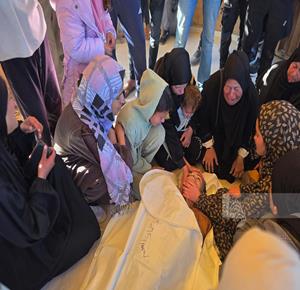
On 11 November, medical sources reported Israeli airstrikes in Gaza City, while Al-Shifa Hospital sources reported a fatal Israeli drone attack in western Gaza City. Gaza's Government Media Office said heavy rain damaged or submerged 70,000 tents, affecting about 350,000 people; Civil Defence reportedly answered 218 of more than 2,000 distress calls. In Lebanon, the US-brokered framework remains disputed: Israeli officials accuse the Lebanese Army of failing to meet its obligations, which the army denies. JMIC rates the Strait of Hormuz threat as SEVERE after a series of maritime incidents. Reporting on a further US-Israeli strike on Iran sits alongside Trump's statement that he saw no reason to escalate and an account of indirect talks mediated by Qatar and Pakistan. Israeli courts reportedly rejected petitions concerning 14 detained Gaza doctors, including a request for an independent medical examination of Dr Hussam Abu Safiya; Israel's Prison Service rejected the related allegations.
Change from previous assessment
Since the 10 November brief, Gaza reporting has added specific 11 November strike accounts and quantified storm damage: 70,000 tents affected and Civil Defence answering 218 of more than 2,000 distress calls. The regional assessment now includes JMIC's SEVERE Strait of Hormuz rating, reports of maritime incidents on 7 and 10 November, and mixed signals on further US-Israeli action against Iran. No new direct Israel-Hezbollah exchange is established, so the prior assessment of no new operational evidence on that front remains unchanged. The prior assessment of uncertainty over Eisenkot's coalition path is also unchanged; current reporting repeats the 67 recommendations but contains inconsistent election-year dates.
Key judgments
- Israeli strikes in Gaza are very likely to continue over the next 14 days despite the ceasefire. Medical sources reported three Palestinians killed in Israeli airstrikes across Gaza City on 11 November; Al-Shifa Hospital sources reported one Palestinian killed in a drone attack in western Gaza City, and a separate report described two Palestinians killed in Sheikh Radwan. The supplied accounts do not establish whether these reports overlap, so the figures should not be added. We assess that the reported pattern of Israeli fire is more likely to persist than to stop in the near term. Confidence is medium: major-media and local medical reporting support the pattern, but incident counts and reporting windows are not reconciled. (Confidence: medium · ASSESSED)
- I&W: Confirmation: Gaza medical sources or WAFA report another Israeli strike causing deaths or injuries in Gaza City or Khan Younis. (0-14 days)
- I&W: Break: the Israeli military announces a halt to strikes and Gaza hospitals report no strike-related casualties for 14 consecutive days. (0-14 days)
- Gaza's shelter and flood emergency is very likely to remain severe over the next 30 days. Gaza's Government Media Office reported 70,000 tents flooded or damaged, affecting about 350,000 people. Gaza City municipality said 2,800 of its 4,800 stormwater drains had been lost and that drainage capacity was about 20 percent at best after six of eight sewage pumps were destroyed and no more than two restarted. Civil Defence reportedly answered 218 of more than 2,000 distress calls, citing fuel shortages and equipment breakdowns; mobile homes intended for Gaza remained held up at the border. The exact figures rely largely on Gaza authorities and municipal officials reported in one major-media account, so the scale of damage is better supported than each total. (Confidence: medium · ASSESSED)
- I&W: Confirmation: Gaza Civil Defence reports another storm response in which distress calls outnumber calls answered because of fuel or equipment constraints. (0-14 days)
- I&W: Break: Gaza City municipality reports more than two of its eight sewage pumps operating and drainage capacity above the reported 20 percent level. (0-30 days)
- Further attacks on commercial shipping near the Strait of Hormuz are likely over the next 14 days, but the supplied reporting does not identify the perpetrators. JMIC maintained a SEVERE threat level and assessed further deliberate attacks as highly likely. It reported five attacks off Oman's Musandam coast between 1 and 5 November, followed by incidents on 7 November; separate reporting described a projectile strike on a tanker and a tanker fire near Khasab. UKMTO reported another tanker struck by an unidentified projectile near Lima, Oman, on 10 November. Accounts differ over whether a 10 November vessel incident occurred in UAE waters or near Lima, Oman. JMIC also reported daily transits in the single digits to low double digits, against a 2025 average of about 138 vessels. Confidence is medium: JMIC and maritime reporting support heightened risk, while attribution and the location of the 10 November incident remain unresolved. (Confidence: medium · ASSESSED)
- I&W: Confirmation: JMIC or UKMTO reports another attack or projectile strike on commercial shipping near the Strait of Hormuz. (0-14 days)
- I&W: Break: JMIC lowers the threat level below SEVERE and its tracking shows daily transits returning to about 138 vessels for seven consecutive days. (0-30 days)
- A further US-Israeli strike on Iran is unlikely over the next 14 days, although the reporting leaves a high-impact escalation risk. Trump said on 8 November that he saw no reason to escalate; another account said he had recently considered a further round of attacks. A separate report attributes indirect US-Iran talks to Vice President JD Vance, mediated by Qatar's Prime Minister Sheikh Mohammed bin Abdulrahman Al Thani and Pakistani army chief Asim Munir. These are mixed signals rather than confirmation of a strike decision. Confidence is low because the reported consideration and the account of indirect talks are not independently confirmed in the supplied reporting. (Confidence: low · ASSESSED)
- I&W: Confirmation: US, Iranian, Qatari or Pakistani officials publicly confirm resumed ceasefire or nuclear talks, with no US announcement of a strike order. (0-14 days)
- I&W: Break: the White House or Pentagon confirms an order for further strikes on Iran, or a new US-Israeli strike is reported. (0-14 days)
- The June 2026 US-brokered Israel-Lebanon framework is likely to remain contested over the next 30 days, while renewed Israel-Hezbollah fighting is unlikely over the next 14 days on the supplied reporting. Israeli officials accuse the Lebanese Army of failing to meet its part of the framework, which the army denies; the framework envisages pilot zones, an Israeli withdrawal and Lebanese Army action to disarm Hezbollah. Reporting also says Israeli forces occupy up to 10 kilometres of southern Lebanon, while Qatar says it will continue contacts with the parties. This is a low-confidence assessment: the Lebanon-specific reporting is limited and does not provide fresh operational reporting on Hezbollah activity or Israeli operations. (Confidence: low · ASSESSED)
- I&W: Confirmation: Israeli officials repeat the accusation of Lebanese Army non-compliance and the Lebanese Army again denies it. (0-30 days)
- I&W: Break: a new Israeli strike in Lebanon or a Hezbollah-claimed attack on Israel is reported by a major-media or official source. (0-14 days)
Outlook & scenarios
Continued Gaza pressure and contained regional risk (60%)
Israeli strikes continue in Gaza while damaged shelters, restricted supplies and weak drainage capacity prolong the humanitarian emergency. The Israel-Lebanon framework remains disputed, and maritime threat warnings persist without a confirmed new Israel-Hezbollah exchange or further US-Israeli strike on Iran.
Diplomatic restraint (25%)
Indirect US-Iran talks advance through the reported Qatar and Pakistan channels, and Washington refrains from further strikes. Qatar's contacts with parties to the Israel-Lebanon framework continue; JMIC lowers its Hormuz threat rating as maritime incidents subside and transit levels recover.
Regional escalation wildcard (10%)
The US and Israel launch a further strike on Iran. Iran follows through on its warning to retaliate against regional targets, maritime attacks increase near the Strait of Hormuz, and pressure on the contested Israel-Lebanon framework intensifies. This scenario has a low assessed probability and high potential impact.
Recommendations
- Maintain a Gaza incident log by location, date, source and reporting window. Do not add Gaza City strike reports to ceasefire-period death totals until possible overlap is checked.
- Track shelter and flood indicators separately: entry of mobile homes and tents, Civil Defence calls answered, pump operation and reported drainage capacity. Label Government Media Office and municipal figures as attributed estimates until independently corroborated.
- For the Strait of Hormuz, compare UKMTO coordinates with JMIC advisories before treating vessel reports as separate incidents. Do not attribute attacks to Iran or another actor without supporting evidence.
- Track US statements, the reported indirect talks and reporting about further strikes as separate lines of evidence. Treat an official strike order or a confirmed new strike as an escalation trigger.
- For Lebanon, seek separate confirmation from Israeli officials and the Lebanese Army on pilot-zone commitments, deployments and withdrawals. Distinguish disputes over the framework from verified Israel-Hezbollah hostilities.
- Follow court decisions and medical updates concerning Dr Hussam Abu Safiya and the 14 detained Gaza doctors. Distinguish Physicians for Human Rights Israel's allegations from the Israel Prison Service response, and check whether an independent medical examination is authorised.
Confidence & uncertainty
High overall confidence reflects corroboration of the broad pattern of continuing harm in Gaza, severe storm damage and heightened maritime risk across major-media reporting, local medical accounts and JMIC or UKMTO maritime reporting. Confidence is lower on exact Gaza casualty totals, the location and attribution of the 10 November vessel incident, and whether the US will authorise further strikes on Iran. The headline assessment applies to the overall situation, not equally to every detail.
Alternative analysis (red cell)
A further US-Israeli strike on Iran cannot be characterized confidently as unlikely on this record. Trump's reported consideration of another round of attacks (d57f1e5b-749b-4f45-92d5-aea65f69c32d) and Iran's warning of retaliation (603524c5-44ba-4f70-95c3-590e4bacce52) leave a meaningful escalation pathway, while the reported talks and Trump's non-escalatory statement are insufficient to establish that it is improbable.
Intelligence gaps
- [EEI 1.1 · UNCOVERED] Number, type and geolocated coordinates of projectiles (rockets, mortars, anti-tank guided missiles) fired from Lebanon into Israel in the last 24/72 hours, including time-stamped launch and impact locations. Recommended collection: signals/intel
- [EEI 1.2 · UNCOVERED] Satellite or aerial imagery showing movement, concentration, or forward displacement of Hezbollah-associated military assets (armored vehicles, artillery pieces, mobile rocket launchers, logistics convoys) to positions within 0-10 km of the Israel-Lebanon border. Recommended collection: satellite/imagery
- [EEI 1.3 · UNCOVERED] Intercepted or captured Hezbollah command-and-control communications or orders explicitly directing cross-border operations or coordinated strikes with Palestinian groups (time-stamped messages, unit identifiers, orders to fire/move). Recommended collection: signals/intel
- [EEI 1.4 · UNCOVERED] Observable changes in Israeli northern-front posture within Israel (numbers and types of reinforcements deployed to northern brigades, activation of reserves, air defense redeployments, evacuation orders or shelter alerts in northern towns), including timestamps and unit IDs where available. Recommended collection: human/intel
- [EEI 2.1 · UNCOVERED] Official or corroborated reports of IDF reservist mobilization and unit-level deployment orders (number of reservists called, named brigades/units ordered to deploy, deployment timelines). Recommended collection: open-source/media
- [EEI 2.2 · UNCOVERED] Satellite or ground imagery showing concentrations of IDF heavy equipment (tanks, infantry fighting vehicles, engineering vehicles), staging areas, field hospitals or forward supply dumps within X km of the Gaza border and at known crossing points. Recommended collection: satellite/imagery
- [EEI 2.3 · PARTIAL] Change in strike patterns consistent with pre-ground-attack shaping: sustained high-frequency airstrikes on tunnel networks, command nodes, coastal launch sites, and known insurgent concentrations (strike counts, munition types, locations, times). Recommended collection: open-source/media
- [EEI 2.4 · UNCOVERED] Logistics indicators: verified convoys of fuel/ammunition entering staging areas, establishment of forward logistics or medical bases, or documented requisitioning orders for bulk combat supplies with timestamps and quantities. Recommended collection: human/intel
- [EEI 3.1 · UNCOVERED] Number, participants and content of diplomatic contacts or negotiation sessions in the last 48 hours involving mediators (Egypt, Qatar, US, UN), including any proposed ceasefire text, prisoner/exchange lists, timelines or verification mechanisms. Recommended collection: diplomatic
- [EEI 3.2 · UNCOVERED] Public statements, press releases or verified communiqués from Hamas and other Gaza armed groups specifying acceptance, rejection, or conditions for a ceasefire (explicit conditions such as prisoner release lists, withdrawal terms, lifting of blockades), with timestamps and speaker attribution. Recommended collection: open-source/media
- [EEI 3.3 · PARTIAL] Humanitarian indicators relevant to ceasefire: establishment and operation of agreed humanitarian corridors/checkpoints, number of aid deliveries admitted, civilian evacuations completed, and NGO/hospital reports of access denials or safe-passage violations. Recommended collection: humanitarian/NGO reports
- [EEI 3.4 · PARTIAL] Operational evidence of a de facto pause: verified sustained reduction (e.g., ≥12 hours) in strikes or launches from either side in specific sectors, supported by strike/impact logs, radar tracks and incident reports. Recommended collection: open-source/media
Red cell review: PARTIAL DISSENT
TLP:CLEAR