TLP:CLEAR · Disclosure is not limited.
Israel-Gaza Regional Escalation: Gaza Strikes, Iran Planning and Lebanon Tensions
Time window: Last 7 days · Audience: General analyst · Type: Situation report · DTG: 2026-10-21 13:10Z · Overall confidence: HIGH
BLUF
The Gaza ceasefire is not preventing continued Israeli strikes: reporting for 21 October describes two Palestinians killed, including a child, and students wounded in Jabalia. Regional escalation risk has increased with new reports of Israeli planning for strikes on Iran and explicit Israeli threats to expand operations in Lebanon, although the reported Iran plans do not establish that an attack has been ordered.
Executive summary
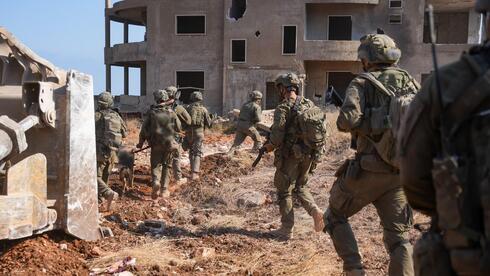
Israeli strikes and gunfire in Gaza continued to generate reported casualties on 21 October. Gaza's Ministry of Education also reported student deaths over the preceding two days; these figures should not be added to other casualty counts without checking for overlap. In Lebanon, Israel, Lebanon and the United States began military talks in Tampa on 20 October, but the discussions are not political negotiations and centre on unresolved disputes over Hezbollah's weapons and Israeli military presence. Israel has reportedly prepared plans for a renewed Iran campaign, while other reporting describes US opposition to an operation before the midterm elections. In the West Bank, Yesh Din recorded 269 olive-harvest-related incidents over 20 days, alongside reports of attacks in Taybeh and Abu Falah and Israeli police arrests. The key uncertainties are whether Iran or Hezbollah intends to initiate an attack and whether reported Israeli strike preparations will lead to action.
Change from previous assessment
Since the 20 October brief, reporting has added a Financial Times account that Netanyahu instructed the Israeli military to prepare a major Iran attack and that a planned 10 October operation was stopped after Trump objected. This raises confidence that strike planning has continued, but does not establish an order to attack. New reporting also details the 20 October start of military-only Israel-Lebanon talks in Tampa and Katz's stated threats concerning Dahiyeh, Nabatieh and the Litani area. Gaza casualty reporting for 21 October adds fresh incidents; West Bank reporting adds the specific Taybeh and Abu Falah attacks and Yesh Din's count of 269 incidents. The prior brief's Konarak claim and WFP assistance assessment are not carried forward because the supplied current-window claims provide no corroborating update on either.
Key judgments
- Very likely, Israeli strikes and gunfire in Gaza will continue over the next 30 days despite the ceasefire. Reporting on 21 October describes two Palestinians killed in Israeli airstrikes, including a child, and two female students shot at a school in Jabalia; Gaza's Ministry of Education separately reported six student deaths over the preceding two days. These reports support continued violence but do not establish a single, non-overlapping casualty total. (Confidence: medium · ASSESSED)
- I&W: A further report from a Gaza medical facility or Al Jazeera describes an Israeli strike or gunfire incident with casualties in Gaza. (0-14 days)
- I&W: A publicly announced, independently monitored halt to Israeli strikes is followed by 14 consecutive days without reported strike or gunfire casualties in Gaza. (0-30 days)
- Very likely, Israel has retained plans for renewed wide-scale strikes on Iran, but an Israeli operation before the 3 November US midterms is unlikely. Financial Times reporting says Benjamin Netanyahu instructed the Israeli military to prepare a major attack and that a multi-day operation planned for 10 October was stopped after Donald Trump opposed it. This is reporting about plans and political intervention, not evidence of a current order to strike; the planning accounts rely on attributed sources, while an Israeli Iran specialist cited by Ynet said there was no immediate military justification for another war. (Confidence: medium · ASSESSED)
- I&W: The Israeli government or military publicly confirms approval of a new Iran operation, or major-media reporting cites a new operational order. (0-14 days)
- I&W: Trump and Netanyahu publicly confirm that strike plans remain deferred beyond 3 November, with no new report of an approved operation. (0-14 days)
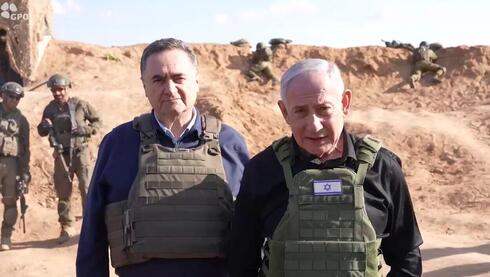
- Likely, Israeli military presence and friction with Lebanon will persist over the next month, and the Tampa talks are unlikely to produce a rapid political settlement. The meetings that began on 20 October are military in nature, not a new round of direct political negotiations. Israel accuses the Lebanese Armed Forces of failing to dismantle Hezbollah infrastructure, while Israel Katz has said the IDF will not leave its security zone until Hezbollah is disarmed and threatened movement into areas around Nabatieh and the Litani if Hezbollah joins an Iranian attack. (Confidence: medium · ASSESSED)
- I&W: The Tampa talks conclude without a joint political agreement or a publicly stated timetable for Israeli withdrawal. (0-14 days)
- I&W: Israel announces a withdrawal from its Lebanon security zone, or the Lebanese Armed Forces publicly confirm completed action to remove Hezbollah weapons or infrastructure from the two pilot zones. (0-3 months)
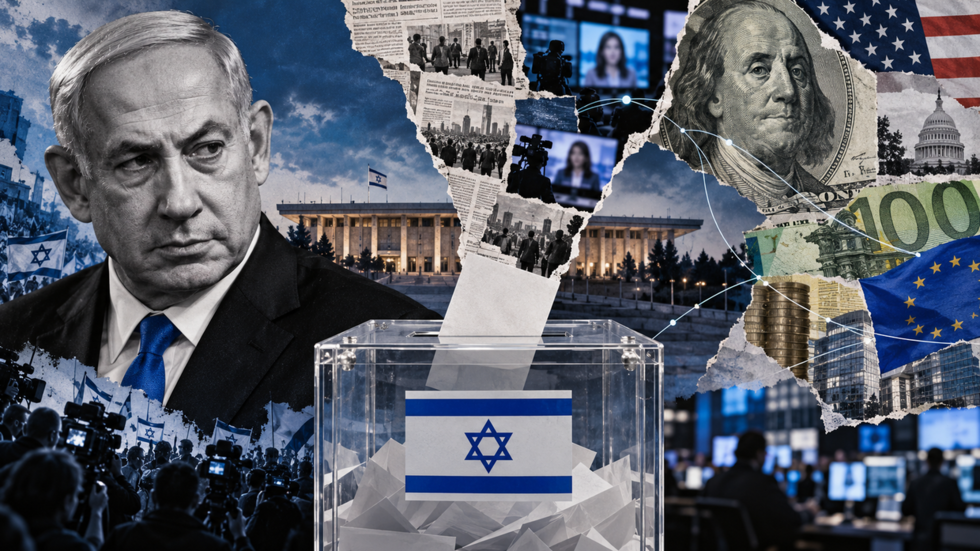
- An Iranian or Hezbollah attack on Israel before Israel's 27 October election or the 3 November US midterms is unlikely, but confidence is low. A Ynet analysis reports no concrete intelligence that either actor intends to attack; separate reporting says Iran's leadership is debating pre-emptive action and that Tehran has demanded Hezbollah join a future high-intensity confrontation. The latter reports are not independently corroborated in the supplied material and conflict with the assessment of no concrete attack intent. (Confidence: low · ASSESSED)
- I&W: Iran or Hezbollah publicly declares an intention to attack Israel, or a verified attack is attributed to either actor. (0-14 days)
- I&W: No Iranian or Hezbollah attack or verified mobilisation is reported by 3 November. (0-14 days)
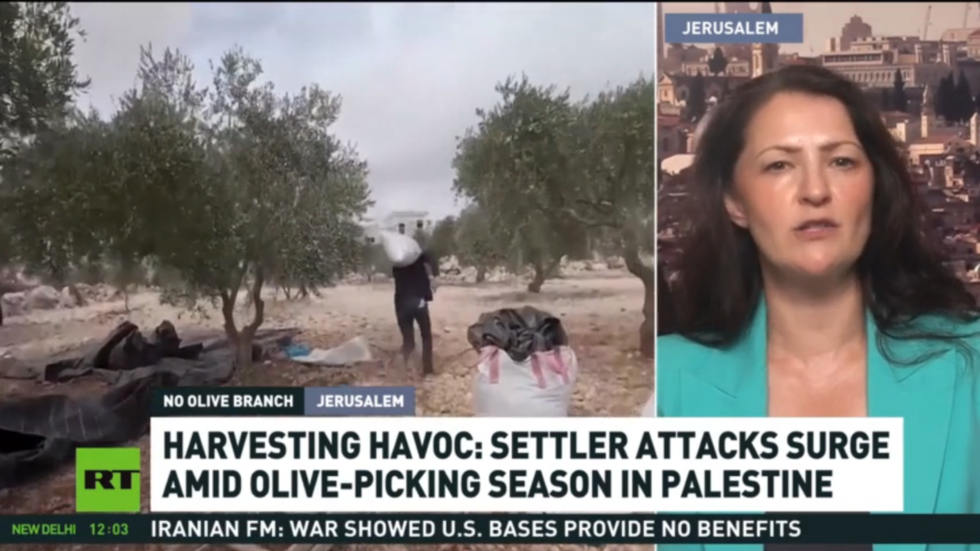
- Likely, settler violence will continue during the West Bank olive harvest over the next two weeks, despite Israeli police arrests. Yesh Din said it recorded 269 harvest-related incidents over 20 days. Major-media reporting describes the 16 October beating of Washington Post journalist Heidi Levine in Abu Falah and the 17 October attack in Taybeh, where villagers, diplomats and church representatives were injured. Israeli Prime Minister Benjamin Netanyahu rejected allegations of settler violence, while police announced arrests of 10 suspects; the denial and arrests are competing official signals, not evidence that the reported incidents did not occur. (Confidence: medium · ASSESSED)
- I&W: Yesh Din records further olive-harvest-related assaults, or a major-media report documents another attack on harvesters, diplomats or journalists. (0-14 days)
- I&W: Yesh Din's next 14-day update records no new harvest-related violent incidents and Israeli police report enforcement in named harvest areas. (0-14 days)
Outlook & scenarios
Continued contained violence (55%)
The most likely path is continued Israeli strikes and casualties in Gaza without a formal end to the ceasefire. Israel's military presence and disputes with Lebanon persist, while the Tampa talks do not produce a rapid political settlement. Israeli planning for Iran remains an option rather than an executed operation.
Limited de-escalation through military talks (25%)
The Tampa talks produce practical arrangements for the two southern Lebanon pilot zones and clearer communication between the Lebanese Armed Forces, Israel and the United States. This reduces immediate Israel-Lebanon friction, but does not resolve Hezbollah's weapons status or stop intermittent violence in Gaza.
Israel-Hezbollah escalation (15%)
An Iranian or Hezbollah action against Israel prompts the IDF to carry out the response Israel Katz has threatened, including strikes on Dahiyeh or movement towards areas around Nabatieh and the Litani. The reported Iranian pressure on Hezbollah makes this a credible, though less likely, escalation path.
Wildcard: renewed Israeli strike on Iran (5%)
Israel launches a renewed multi-day campaign against Iranian power, nuclear or government targets. Tehran responds directly or through Hezbollah, turning the current Gaza and Lebanon crises into a wider regional conflict. This scenario has low probability and high impact; the reported plans do not establish that an operation has been ordered.
Recommendations
- Keep casualty figures from Gaza's Ministry of Education, medical facilities and local media separate until locations, dates and individuals are reconciled. Do not combine the reports of four, six or seven deaths into one total without verification.
- For Iran reporting, distinguish planning, political approval and execution. Seek confirmation from independent major-media reporting and official statements before assessing that a strike has been ordered.
- After the Tampa talks conclude, record whether the participants issue a joint statement, set a withdrawal timetable or describe measurable action by the Lebanese Armed Forces in the two pilot zones.
- Track Israeli statements and military activity against the specific locations named by Israel Katz, including Dahiyeh, Nabatieh and the Litani area. Treat any reported Iranian or Hezbollah attack intent as unconfirmed unless corroborated.
- Follow Yesh Din's incident count and Israeli police case updates during the olive harvest. Record whether the 10 arrested suspects are charged and whether reported assaults continue in Taybeh, Abu Falah or other named harvest areas.
Confidence & uncertainty
Overall confidence is high for the core event picture because the supplied reporting combines major-media accounts with named institutional statements on Gaza casualties, Israeli police arrests and the Tampa military talks. Confidence is lower for forward-looking assessments and for claims about Iranian or Hezbollah intent: the Iran planning reports rely on attributed sources, and reporting about pre-emptive action conflicts with an assessment that there is no concrete intelligence of attack intent. The high headline rating applies to the reported events, not to the likelihood of a wider conflict.
Intelligence gaps
- [EEI 1.1 · UNCOVERED] Number, type and geolocated coordinates of projectiles (rockets, mortars, anti-tank guided missiles) fired from Lebanon into Israel in the last 24/72 hours, including time-stamped launch and impact locations. Recommended collection: signals/intel
- [EEI 1.2 · UNCOVERED] Satellite or aerial imagery showing movement, concentration, or forward displacement of Hezbollah-associated military assets (armored vehicles, artillery pieces, mobile rocket launchers, logistics convoys) to positions within 0-10 km of the Israel-Lebanon border. Recommended collection: satellite/imagery
- [EEI 1.3 · UNCOVERED] Intercepted or captured Hezbollah command-and-control communications or orders explicitly directing cross-border operations or coordinated strikes with Palestinian groups (time-stamped messages, unit identifiers, orders to fire/move). Recommended collection: signals/intel
- [EEI 1.4 · UNCOVERED] Observable changes in Israeli northern-front posture within Israel (numbers and types of reinforcements deployed to northern brigades, activation of reserves, air defense redeployments, evacuation orders or shelter alerts in northern towns), including timestamps and unit IDs where available. Recommended collection: human/intel
- [EEI 2.1 · UNCOVERED] Official or corroborated reports of IDF reservist mobilization and unit-level deployment orders (number of reservists called, named brigades/units ordered to deploy, deployment timelines). Recommended collection: open-source/media
- [EEI 2.2 · UNCOVERED] Satellite or ground imagery showing concentrations of IDF heavy equipment (tanks, infantry fighting vehicles, engineering vehicles), staging areas, field hospitals or forward supply dumps within X km of the Gaza border and at known crossing points. Recommended collection: satellite/imagery
- [EEI 2.3 · PARTIAL] Change in strike patterns consistent with pre-ground-attack shaping: sustained high-frequency airstrikes on tunnel networks, command nodes, coastal launch sites, and known insurgent concentrations (strike counts, munition types, locations, times). Recommended collection: open-source/media
- [EEI 2.4 · UNCOVERED] Logistics indicators: verified convoys of fuel/ammunition entering staging areas, establishment of forward logistics or medical bases, or documented requisitioning orders for bulk combat supplies with timestamps and quantities. Recommended collection: human/intel
- [EEI 3.1 · UNCOVERED] Number, participants and content of diplomatic contacts or negotiation sessions in the last 48 hours involving mediators (Egypt, Qatar, US, UN), including any proposed ceasefire text, prisoner/exchange lists, timelines or verification mechanisms. Recommended collection: diplomatic
- [EEI 3.3 · PARTIAL] Humanitarian indicators relevant to ceasefire: establishment and operation of agreed humanitarian corridors/checkpoints, number of aid deliveries admitted, civilian evacuations completed, and NGO/hospital reports of access denials or safe-passage violations. Recommended collection: humanitarian/NGO reports
- [EEI 3.4 · PARTIAL] Operational evidence of a de facto pause: verified sustained reduction (e.g., ≥12 hours) in strikes or launches from either side in specific sectors, supported by strike/impact logs, radar tracks and incident reports. Recommended collection: open-source/media
Red cell review: CONCUR WITH COMMENT
TLP:CLEAR