TLP:CLEAR · Disclosure is not limited.
Israel-Gaza Regional Escalation: Gaza Strikes, Lebanon Pressure and Hormuz Spillover
Time window: Last 7 days · Audience: General analyst · Type: Situation report · DTG: 2026-11-03 03:29Z · Overall confidence: HIGH
BLUF
Israeli strikes in Gaza and Israeli Air Force activity in southern Lebanon are likely to continue. The chance of a wider Israel-Hezbollah exchange over the next 30 days is roughly even; reports do not establish that Hezbollah has decided to enter the fighting. Recent US strikes against Iranian targets in the Strait of Hormuz area add a further regional escalation concern, although their precise location remains unresolved.
Executive summary
Hospitals reported at least eight people killed in Israeli strikes in Gaza on 1 November: three people, including a four-year-old boy, near Cairo School in Gaza City's al-Rimal neighbourhood, and five police officers in al-Mawasi, Khan Younis. The Israeli military acknowledged two attacks but provided no evidence about its stated targets. On 2 November, Gaza's Ministry of Health reported 15 fatalities in the preceding 24 hours and a cumulative toll of 74,609 since 8 October 2023; that daily figure is not attributed here entirely to strikes. In southern Lebanon, one local-media reporting stream describes intensified Israeli Air Force strikes on Hezbollah infrastructure, Israeli demands for Lebanese Army deployments and checkpoints, and Israeli warnings to Beirut about renewed fighting if Hezbollah enters hostilities. Separately, US strikes against Iranian targets were reported in the Strait of Hormuz area on 2 November, with reports differing on whether the operation struck Qeshm Island. US and Iranian officials have also signalled talks, but Iran's stated conditions include lifting the US naval blockade and a regional ceasefire, especially in Lebanon. Israeli election reporting gives Netanyahu's bloc 53 seats, the opposition led by Gadi Eisenkot 48, and Arab parties 19, with neither side at the 61 seats required for a majority; Isaac Herzog's consultations with parties are scheduled for 4 and 5 November.
Change from previous assessment
Since the 2 November brief, the main change is the reporting of limited US strikes against Iranian targets in the Strait of Hormuz area, with separate reports placing explosions on Qeshm Island. This raises the assessed regional escalation concern, but the operation's precise location and trigger remain unresolved. For Lebanon, new reporting describes intensified Israeli Air Force strikes over the preceding three weeks, Israeli demands for Lebanese Army redeployment and warnings to Beirut; this strengthens the basis for expecting continued Israeli activity but does not establish Hezbollah's intent to enter a wider exchange. The Israeli election results are now reported without a 61-seat majority for either bloc, with Isaac Herzog's consultations due on 4 and 5 November. Gaza strikes remain consistent with the prior assessment that ceasefire arrangements are under strain.
Key judgments
- Israeli strikes in Gaza are likely to continue over the next 14 days, further straining the October 2025 ceasefire arrangements. Hospitals reported at least eight deaths on 1 November, including three people near Cairo School in al-Rimal and five police officers in al-Mawasi; the Israeli military acknowledged two attacks but provided no evidence about its stated targets. The Commission of Inquiry recorded 1,431 Palestinian deaths between 10 October 2025 and 30 September 2026 and reported that Israeli control had expanded to at least 60 per cent of Gaza by 2 September. These reports indicate sustained lethal activity, but do not by themselves establish that the ceasefire has formally ended. (Confidence: medium · ASSESSED)
- I&W: Israeli military statements acknowledge further Gaza attacks, or hospitals in Gaza City or Khan Younis report additional deaths attributed to Israeli strikes. (0-14 days)
- I&W: No further Israeli strike is acknowledged by the Israeli military and no hospital or UN reporting records strike-related casualties in Gaza during the full 14-day period. (0-14 days)
- Israeli Air Force strikes on Hezbollah infrastructure in southern Lebanon are likely to persist over the next 30 days. Recent reporting describes intensified strikes over three weeks, mainly in areas where the Lebanese Army has not deployed, alongside an Israeli demand for army redeployment and checkpoints in areas where Hezbollah operates. Reports that residents of southern Lebanon are preparing to move north indicate that the threat is already affecting civilian behaviour. Confidence is low because these current details rely mainly on one local-media reporting stream, and independent confirmation of the scale and tempo of Israeli activity is limited. (Confidence: low · ASSESSED)
- I&W: New Israeli Air Force strikes on Hezbollah infrastructure are reported in southern Lebanon, Nabatieh, the Beqaa Valley or Beirut's southern suburbs. (0-30 days)
- I&W: The Lebanese Army announces deployments or checkpoints in the areas named in Israel's reported demand, while Israeli strikes in those areas stop. (0-30 days)
- A wider Israel-Hezbollah exchange over the next 30 days is roughly even chance. Israeli warnings to Beirut and Israeli concern that Hezbollah will open a front if hostilities against Iran resume point to a credible escalation pathway; ongoing Israeli strikes provide a potential trigger. The reporting describes Israeli concerns and demands, not a Hezbollah decision or operational preparations. Confidence is low because the relevant current reporting comes mainly from one local-media stream and there is no corroborated report here of a new Hezbollah attack. (Confidence: low · ASSESSED)
- I&W: Hezbollah claims a rocket or drone attack on an Israeli military site, or Israeli authorities report a confirmed attack launched from Lebanon. (0-30 days)
- I&W: Hezbollah explicitly states it will not enter Iran-related hostilities and no verified rocket or drone attack from Lebanon is reported during the period. (0-30 days)
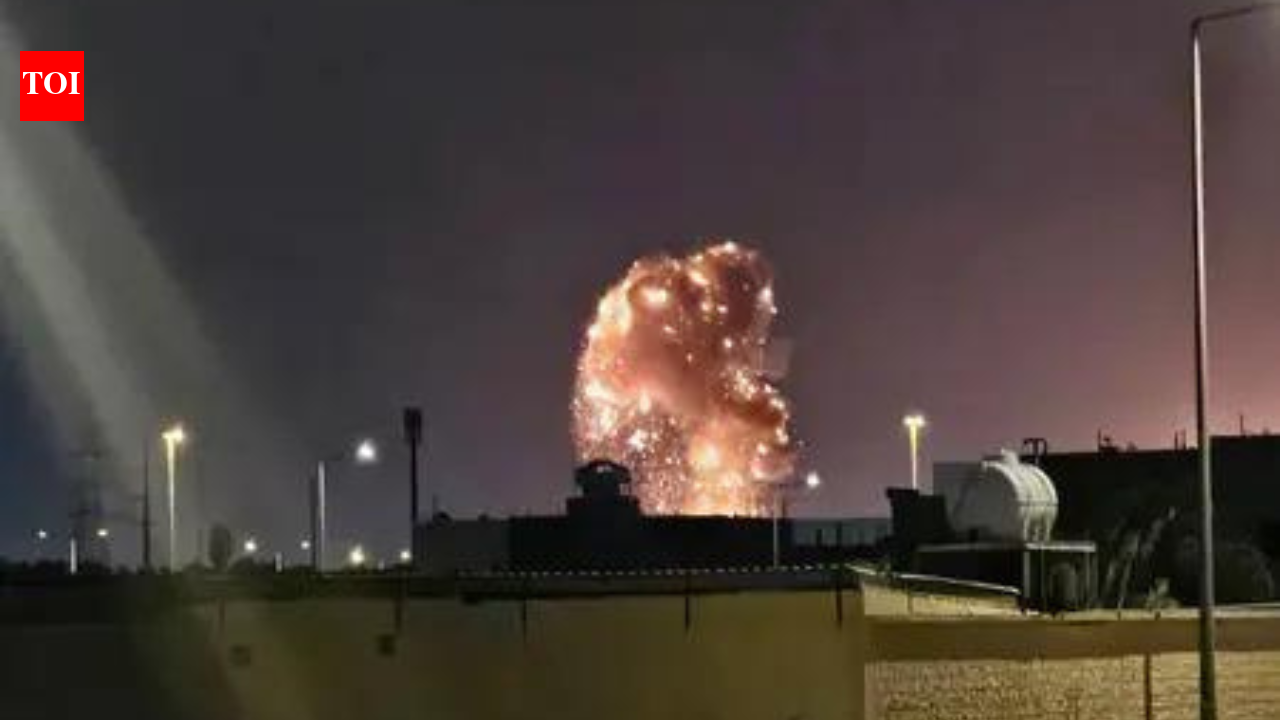
- US forces very likely carried out limited strikes against Iranian targets in the Strait of Hormuz area on 2 November. The Associated Press and The Wall Street Journal reported strikes based on US official sourcing, while Iranian state media reported explosions on Qeshm Island. Available accounts do not resolve whether the Qeshm explosions were part of the same operation or identify the exact strike locations; initial reporting also said there was no immediate comment from US or Iranian authorities. Confidence is medium because multiple outlets report the operation, but the location and trigger remain unsettled. (Confidence: medium · REPORTED)
- I&W: The US Department of Defense or an identified US official names the strike locations and targets, confirming whether Qeshm Island was struck. (0-7 days)
- I&W: US or Iranian authorities provide an account showing the Qeshm explosions were unrelated to US action, or reporting on US strikes is formally withdrawn. (0-7 days)
Outlook & scenarios
Continued pressure without Hezbollah entry (35%)
Israeli strikes in Gaza and on Hezbollah infrastructure in southern Lebanon continue, while Hezbollah avoids claiming attacks on Israel. US-Iran military contact remains limited and indirect talks continue. This is the most plausible non-widening path, but it does not remove the risk of miscalculation.
Israel-Hezbollah exchange (45%)
Hezbollah launches a claimed rocket or drone attack on an Israeli military site, prompting Israeli strikes in Lebanon and a sustained exchange. Israeli warnings to Beirut and reported Israeli concerns about Hezbollah entering hostilities against Iran provide indicators for this pathway, but the current reporting does not establish a Hezbollah decision to act.
Temporary regional de-escalation (15%)
US-Iran talks produce an arrangement that reduces military contact in the Strait of Hormuz and includes a regional ceasefire, especially in Lebanon. Israeli strikes in Gaza and Lebanon decline, and Hezbollah refrains from opening a front. Iran's stated conditions, including lifting the US naval blockade, remain a major obstacle to this outcome.
High-impact regional spillover (5%)
Israeli strikes expand from open areas in southern Lebanon to Beirut's southern suburbs or the Beqaa Valley, while Hezbollah launches sustained attacks and US-Iran military contact continues. This is an unlikely but high-impact pathway, with potential for simultaneous escalation across Lebanon and the Strait of Hormuz.
Recommendations
- Maintain separate daily incident logs for Gaza and Lebanon. Record strike locations, reported casualties, hospital or UN accounts, Israeli military statements and any differences in timing or attribution.
- Treat the current Lebanese strike tempo and Hezbollah intent as low-confidence assessments. Seek independent confirmation of reported strikes and Lebanese Army deployments before revising the forecast.
- Do not treat the Qeshm Island explosions and reported US strikes in the Strait of Hormuz as separate operations until US and Iranian accounts or other checkable reporting resolve the locations.
- Track Isaac Herzog's party consultations scheduled for 4 and 5 November. Record any coalition commitments on Gaza withdrawal, the October 2025 ceasefire arrangements or Israeli military activity in Lebanon.
- Keep the status of the Gaza ceasefire distinct from the status of the wider peace plan. Reconcile reporting that the agreement was reached and hostages returned with later reporting that the plan stalled before describing the agreement as ended.
Confidence & uncertainty
Overall confidence is high for the broad event picture because hospital reporting and Israeli military statements support the 1 November Gaza strikes, and multiple major-media reports citing US officials describe limited US strikes in the Strait of Hormuz area. Confidence is lower on the tempo of Israeli activity in Lebanon, Hezbollah's intent and the exact location and trigger of the US strikes. Current Lebanese reporting relies mainly on one local-media stream, and accounts of the US operation differ on whether Qeshm Island was struck.
Alternative analysis (red cell)
Available reporting supports continued Israeli activity and a credible risk of escalation, but it does not indicate that Hezbollah has decided to widen the conflict or is preparing to do so. In the absence of evidence beyond Israeli concern and warnings, a wider Israel-Hezbollah exchange may be less likely than not over the next 30 days, even though the risk is material.
Intelligence gaps
- [EEI 1.1 · PARTIAL] Number, type and geolocated coordinates of projectiles (rockets, mortars, anti-tank guided missiles) fired from Lebanon into Israel in the last 24/72 hours, including time-stamped launch and impact locations. Recommended collection: signals/intel
- [EEI 1.2 · UNCOVERED] Satellite or aerial imagery showing movement, concentration, or forward displacement of Hezbollah-associated military assets (armored vehicles, artillery pieces, mobile rocket launchers, logistics convoys) to positions within 0-10 km of the Israel-Lebanon border. Recommended collection: satellite/imagery
- [EEI 1.3 · UNCOVERED] Intercepted or captured Hezbollah command-and-control communications or orders explicitly directing cross-border operations or coordinated strikes with Palestinian groups (time-stamped messages, unit identifiers, orders to fire/move). Recommended collection: signals/intel
- [EEI 1.4 · UNCOVERED] Observable changes in Israeli northern-front posture within Israel (numbers and types of reinforcements deployed to northern brigades, activation of reserves, air defense redeployments, evacuation orders or shelter alerts in northern towns), including timestamps and unit IDs where available. Recommended collection: human/intel
- [EEI 2.1 · UNCOVERED] Official or corroborated reports of IDF reservist mobilization and unit-level deployment orders (number of reservists called, named brigades/units ordered to deploy, deployment timelines). Recommended collection: open-source/media
- [EEI 2.2 · UNCOVERED] Satellite or ground imagery showing concentrations of IDF heavy equipment (tanks, infantry fighting vehicles, engineering vehicles), staging areas, field hospitals or forward supply dumps within X km of the Gaza border and at known crossing points. Recommended collection: satellite/imagery
- [EEI 2.3 · PARTIAL] Change in strike patterns consistent with pre-ground-attack shaping: sustained high-frequency airstrikes on tunnel networks, command nodes, coastal launch sites, and known insurgent concentrations (strike counts, munition types, locations, times). Recommended collection: open-source/media
- [EEI 2.4 · UNCOVERED] Logistics indicators: verified convoys of fuel/ammunition entering staging areas, establishment of forward logistics or medical bases, or documented requisitioning orders for bulk combat supplies with timestamps and quantities. Recommended collection: human/intel
- [EEI 3.1 · PARTIAL] Number, participants and content of diplomatic contacts or negotiation sessions in the last 48 hours involving mediators (Egypt, Qatar, US, UN), including any proposed ceasefire text, prisoner/exchange lists, timelines or verification mechanisms. Recommended collection: diplomatic
- [EEI 3.2 · UNCOVERED] Public statements, press releases or verified communiqués from Hamas and other Gaza armed groups specifying acceptance, rejection, or conditions for a ceasefire (explicit conditions such as prisoner release lists, withdrawal terms, lifting of blockades), with timestamps and speaker attribution. Recommended collection: open-source/media
- [EEI 3.3 · PARTIAL] Humanitarian indicators relevant to ceasefire: establishment and operation of agreed humanitarian corridors/checkpoints, number of aid deliveries admitted, civilian evacuations completed, and NGO/hospital reports of access denials or safe-passage violations. Recommended collection: humanitarian/NGO reports
- [EEI 3.4 · UNCOVERED] Operational evidence of a de facto pause: verified sustained reduction (e.g., ≥12 hours) in strikes or launches from either side in specific sectors, supported by strike/impact logs, radar tracks and incident reports. Recommended collection: open-source/media
Red cell review: PARTIAL DISSENT
TLP:CLEAR