TLP:CLEAR · Disclosure is not limited.
Israel-Gaza Regional Escalation: Hebron Attack Drives West Bank Crackdown
Time window: Last 7 days · Audience: General analyst · Type: Situation report · DTG: 2026-10-23 13:09Z · Overall confidence: HIGH
BLUF
The 23 October attack near Hebron, which reporting says killed two Israeli soldiers, has prompted Benjamin Netanyahu to order West Bank-wide closure preparations and announce a large-scale operation. The immediate escalation risk is in the West Bank ahead of Israel's 27 October election; casualty details remain inconsistent, while claims of Hezbollah rebuilding in Lebanon are less firmly corroborated.
Executive summary
Reporting on 23 October says two Israeli soldiers were killed in a shooting near Hebron and two Palestinian attackers were killed by Israeli forces. Accounts differ on the number and condition of the wounded, and on some details of the attack. Netanyahu ordered preparations for a full West Bank closure, while announcing house searches, evacuations and a large-scale operation centred on Hebron and Halhul. Separately, reports describe continued Israeli military activity and Palestinian deaths in Gaza despite the ceasefire. Reports of Hezbollah rebuilding capabilities in Lebanon remain less well corroborated. A new account of US-Israeli attacks on Iran conflicts with the previous brief's description of future strike planning, and does not establish a new strike decision in the current period.
Change from previous assessment
The main change is the 23 October attack near Hebron, the reported deaths of two Israeli soldiers, and Netanyahu's subsequent orders to prepare a West Bank-wide closure and a large-scale operation. This adds an immediate West Bank escalation judgment ahead of the 27 October election. The Gaza evidence now includes 25 NASA thermal detections from 22-23 October, none high-confidence, so it does not independently confirm strikes. A new account describes US-Israeli attacks on Iran as having begun in February 2026 and reports Ali Khamenei's death, conflicting with the prior brief's account of future strike planning; confidence in the Iran picture is therefore low. Initial reports of Hezbollah rebuilding remain weakly corroborated.
Key judgments
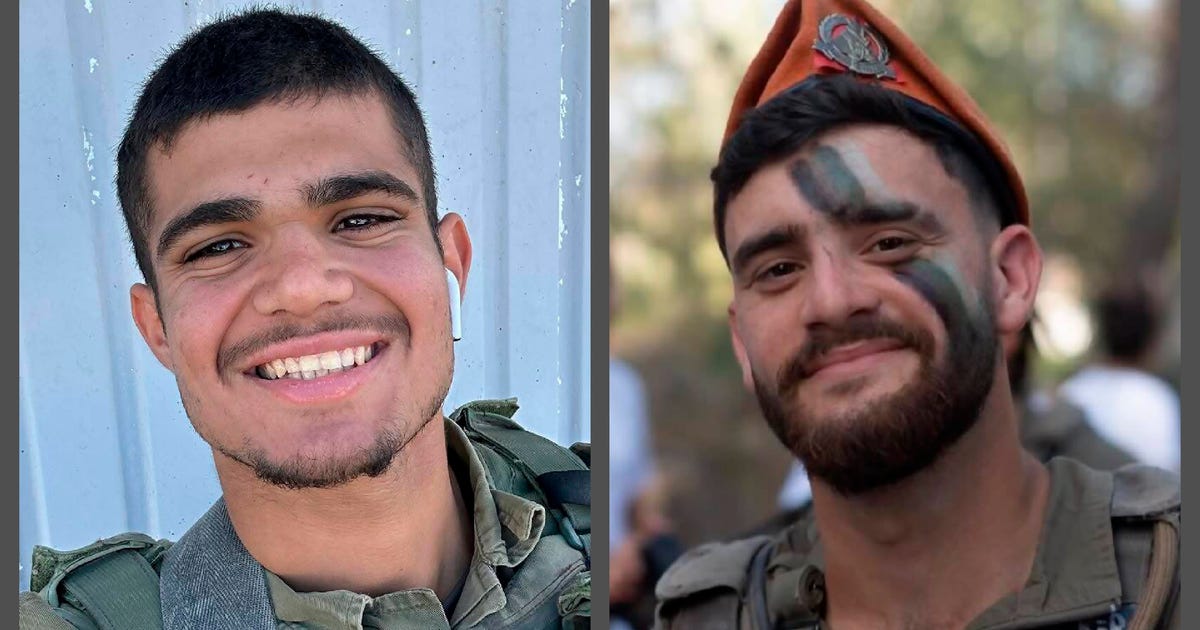
- Very likely, the 23 October shooting near Hebron killed two Israeli soldiers, Staff Sergeant Ron Yonatan Raitman and Sergeant Yuval Shai Soulim. Multiple reports identify the fatalities, but casualty reporting conflicts: some accounts report three wounded, others at least five injured, and one report mentions five wounded without reporting fatalities. (Confidence: medium · REPORTED)
- I&W: An Israeli military casualty notice or official family announcement confirms the deaths of Raitman and Soulim, confirming the reported fatality count. (0-14 days)
- I&W: A hospital or emergency-services update reconciles the reports of three wounded versus at least five injured, including their severity. (0-14 days)
- Very likely, Israeli forces will maintain restrictive access controls around Hebron and Halhul and begin at least part of the announced operation within 14 days. Netanyahu ordered preparations for a full West Bank closure and described a large-scale operation; reporting also says forces have already blocked routes and searched in the Hebron area. The execution and geographic scope of the announced operation are not yet established. (Confidence: medium · ASSESSED)
- I&W: IDF or Israeli government notices confirm continued closures at Hebron and Halhul entrances, or extend restrictions to additional West Bank cities. (0-14 days)
- I&W: The IDF announces the operation's start and reports house searches, evacuations or demolitions in named Hebron neighbourhoods; reopening routes without those actions would weaken this judgment. (0-14 days)
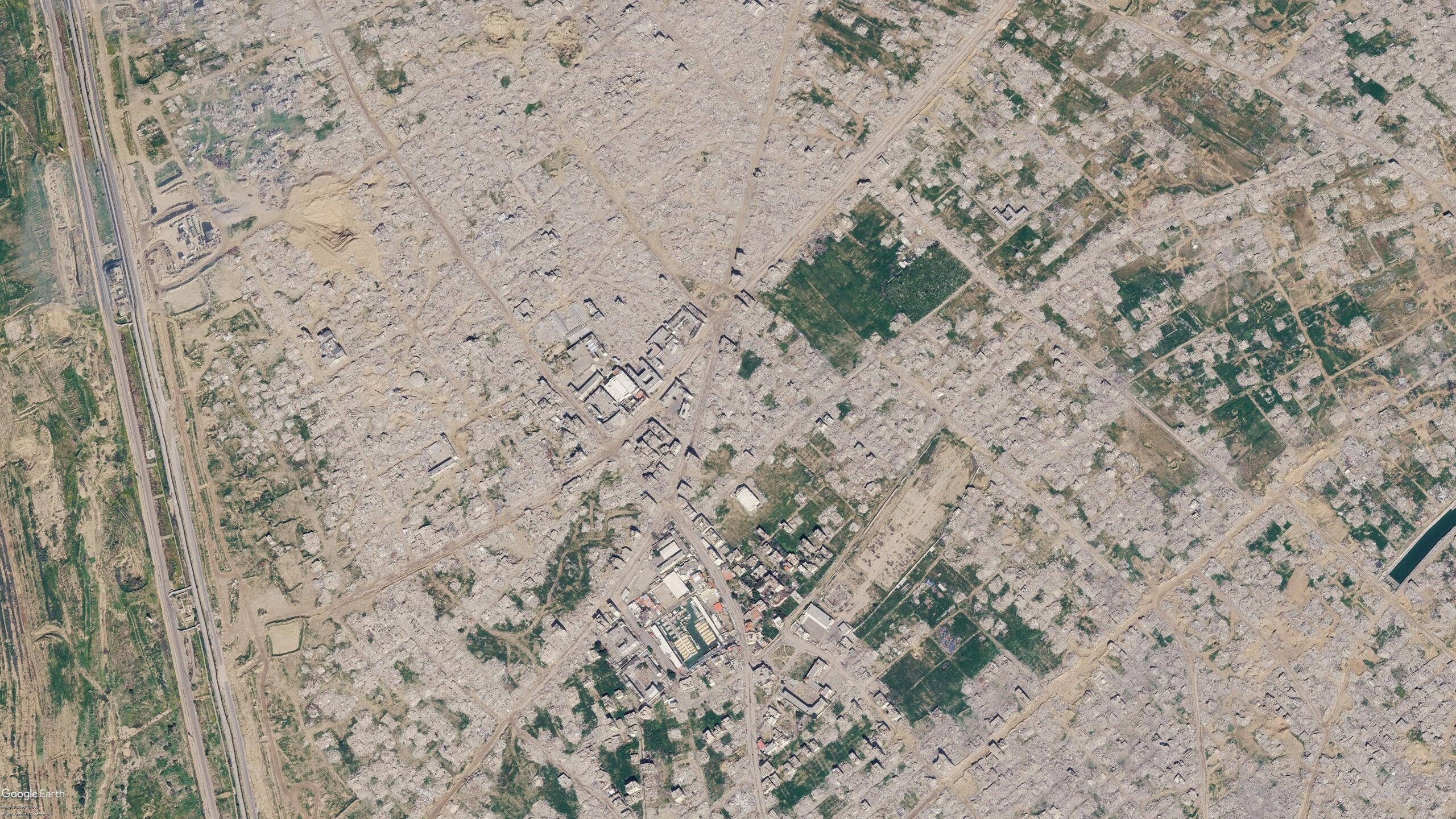
- Likely, Israeli military activity and Palestinian deaths will continue in Gaza despite the ceasefire, but the supplied evidence does not independently confirm a strike during 16-23 October. Reporting puts Palestinian deaths since the October 2025 ceasefire above 1,400, and UNICEF reporting gives a post-ceasefire toll of 351 children killed. September satellite imagery documents destruction and IDF positions, while NASA FIRMS recorded 25 thermal detections on 22-23 October, none high-confidence; those detections record heat, not its cause. (Confidence: medium · ASSESSED)
- I&W: A dated UNICEF or UN update reports additional Palestinian deaths in Gaza after the ceasefire, confirming continued lethal violence. (0-14 days)
- I&W: UN or UNICEF reports no additional post-ceasefire deaths, alongside no independently reported strikes for 14 consecutive days, which would weaken this judgment. (0-14 days)
- Likely, Israeli troop presence in the roughly 10-kilometre southern Lebanon security zone will keep implementation of the Israel-Lebanon ceasefire framework contested over the next month. Claims that Hezbollah is rebuilding military capabilities in Beirut, Tyre and southern Lebanon include reporting attributed to Lebanese security officials and the Alma Research and Education Center; the supplied material does not independently establish the scale of that activity. Renewed Israel-Hezbollah fighting is not established by the current reporting. (Confidence: low · ASSESSED)
- I&W: The Lebanese Armed Forces publicly confirms finding a Hezbollah-linked tunnel or military site in a named location such as Ruwaisat al-Jadida, Beirut. (0-30 days)
- I&W: Israel announces withdrawal from the southern Lebanon security zone and the Lebanese Armed Forces confirms deployment to positions vacated by Israeli troops. (0-30 days)
- Unlikely, the supplied reporting establishes a new US or Israeli decision to strike Iran during the current period. A 23 October account describes US-Israeli attacks beginning on 28 February 2026 and reports the deaths of Ali Khamenei and Ali Larijani, followed by Mojtaba Khamenei's succession; that account conflicts with the previous brief's description of future strike planning. The chronology and current operational status are unresolved, so this reporting is not evidence of a new strike order. (Confidence: low · ASSESSED)
- I&W: A US or Israeli government statement announces a new strike order against Iran, or multiple independent outlets report the start of new strikes, breaking this judgment. (0-14 days)
- I&W: Independent reporting reconciles the February 2026 account as a past campaign and reports no new order or strikes during the period. (0-14 days)
Outlook & scenarios
Hebron-centred operation with continued closures (58%)
Israeli forces sustain checkpoints, searches and access restrictions around Hebron and Halhul, while the announced operation remains centred on the Hebron area. The 27 October election keeps the immediate political context acute, but the supplied reporting does not establish that the operation will expand across the West Bank.
Broader West Bank restrictions and operation (30%)
Israeli authorities extend closures beyond Hebron and Halhul and carry out the announced house searches, evacuations or demolitions in additional locations. Further attacks or casualties during the operation would increase pressure for continued restrictions.
Regional spillover, low-probability high-impact wildcard (12%)
A new Israel-Hezbollah exchange develops while Israeli forces remain in southern Lebanon and allegations of Hezbollah rearmament persist. The current claims do not establish that either side has decided to resume fighting; this scenario remains a lower-probability, high-impact risk.
Recommendations
- Reconcile the Hebron casualty reporting against Israeli military notices, hospital figures and emergency-services updates. Keep fatalities, wounded totals and injury severity separate until confirmed.
- Track the difference between Israeli orders and actions on the ground. Record dated checkpoint closures around Hebron and Halhul, any extension to other West Bank cities, and the locations of searches, evacuations or demolitions.
- For Gaza, do not treat NASA FIRMS thermal detections as proof of strikes. Pair dated incident reporting with UN or UNICEF casualty updates, and label September satellite imagery as historical rather than current-period evidence.
- Seek Lebanese Armed Forces confirmation before treating claims of Hezbollah tunnels or military rebuilding as established. Track any verifiable Israeli withdrawal from the reported southern Lebanon security zone.
- Flag the Iran chronology conflict for source reconciliation. Do not treat the account of earlier US-Israeli attacks as evidence of a new strike decision without independent reporting or an official announcement.
Confidence & uncertainty
The headline confidence is high for the broad situation picture because reporting from BBC, CBC and Haaretz corroborates the core Hebron attack, while multiple reports describe the Israeli closure orders and announced operation. UN, UNICEF and NASA material provides additional sourced context, although the NASA detections do not identify the cause of the heat recorded. Confidence is lower on specific casualty totals, the scale of Hezbollah rebuilding and the Iran chronology, which contains an unresolved conflict with the previous brief.
Alternative analysis (red cell)
The Lebanon evidence may indicate incomplete ceasefire implementation rather than a clearly contested framework: 0fce77e2-792d-4224-870e-167f2d48185f and fcec60ec-61e2-4d98-bd47-57e6a7918703 establish a mismatch, but not its political trajectory. Likewise, and 510ec3a9-03a9-4a1f-91a4-1b34fdcc8f3b leave the chronology unresolved rather than supporting an unlikely judgment. The stronger alternative assessment is that both issues remain indeterminate on the supplied evidence.
Intelligence gaps
- [EEI 1.1 · UNCOVERED] Number, type and geolocated coordinates of projectiles (rockets, mortars, anti-tank guided missiles) fired from Lebanon into Israel in the last 24/72 hours, including time-stamped launch and impact locations. Recommended collection: signals/intel
- [EEI 1.2 · PARTIAL] Satellite or aerial imagery showing movement, concentration, or forward displacement of Hezbollah-associated military assets (armored vehicles, artillery pieces, mobile rocket launchers, logistics convoys) to positions within 0-10 km of the Israel-Lebanon border. Recommended collection: satellite/imagery
- [EEI 1.3 · UNCOVERED] Intercepted or captured Hezbollah command-and-control communications or orders explicitly directing cross-border operations or coordinated strikes with Palestinian groups (time-stamped messages, unit identifiers, orders to fire/move). Recommended collection: signals/intel
- [EEI 1.4 · UNCOVERED] Observable changes in Israeli northern-front posture within Israel (numbers and types of reinforcements deployed to northern brigades, activation of reserves, air defense redeployments, evacuation orders or shelter alerts in northern towns), including timestamps and unit IDs where available. Recommended collection: human/intel
- [EEI 2.1 · UNCOVERED] Official or corroborated reports of IDF reservist mobilization and unit-level deployment orders (number of reservists called, named brigades/units ordered to deploy, deployment timelines). Recommended collection: open-source/media
- [EEI 2.2 · PARTIAL] Satellite or ground imagery showing concentrations of IDF heavy equipment (tanks, infantry fighting vehicles, engineering vehicles), staging areas, field hospitals or forward supply dumps within X km of the Gaza border and at known crossing points. Recommended collection: satellite/imagery
- [EEI 2.3 · UNCOVERED] Change in strike patterns consistent with pre-ground-attack shaping: sustained high-frequency airstrikes on tunnel networks, command nodes, coastal launch sites, and known insurgent concentrations (strike counts, munition types, locations, times). Recommended collection: open-source/media
- [EEI 2.4 · UNCOVERED] Logistics indicators: verified convoys of fuel/ammunition entering staging areas, establishment of forward logistics or medical bases, or documented requisitioning orders for bulk combat supplies with timestamps and quantities. Recommended collection: human/intel
- [EEI 3.1 · UNCOVERED] Number, participants and content of diplomatic contacts or negotiation sessions in the last 48 hours involving mediators (Egypt, Qatar, US, UN), including any proposed ceasefire text, prisoner/exchange lists, timelines or verification mechanisms. Recommended collection: diplomatic
- [EEI 3.2 · UNCOVERED] Public statements, press releases or verified communiqués from Hamas and other Gaza armed groups specifying acceptance, rejection, or conditions for a ceasefire (explicit conditions such as prisoner release lists, withdrawal terms, lifting of blockades), with timestamps and speaker attribution. Recommended collection: open-source/media
- [EEI 3.3 · UNCOVERED] Humanitarian indicators relevant to ceasefire: establishment and operation of agreed humanitarian corridors/checkpoints, number of aid deliveries admitted, civilian evacuations completed, and NGO/hospital reports of access denials or safe-passage violations. Recommended collection: humanitarian/NGO reports
- [EEI 3.4 · PARTIAL] Operational evidence of a de facto pause: verified sustained reduction (e.g., ≥12 hours) in strikes or launches from either side in specific sectors, supported by strike/impact logs, radar tracks and incident reports. Recommended collection: open-source/media
Red cell review: PARTIAL DISSENT
TLP:CLEAR