TLP:CLEAR · Disclosure is not limited.
Israel-Gaza Regional Escalation: Hebron Response and Lebanon Ceasefire Strain
Time window: Last 7 days · Audience: General analyst · Type: Situation report · DTG: 2026-10-23 15:26Z · Overall confidence: HIGH
BLUF
The immediate escalation centre has shifted to the West Bank after the 23 October attack near Hebron. Israeli forces have imposed a cordon and begun raids and demolitions, but a West Bank-wide lockdown and a larger operation are not confirmed as fully under way. Gaza's humanitarian burden remains severe, while reports of Hezbollah rebuilding in Lebanon do not establish renewed Israel-Hezbollah fighting.
Executive summary
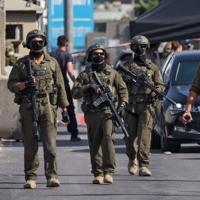
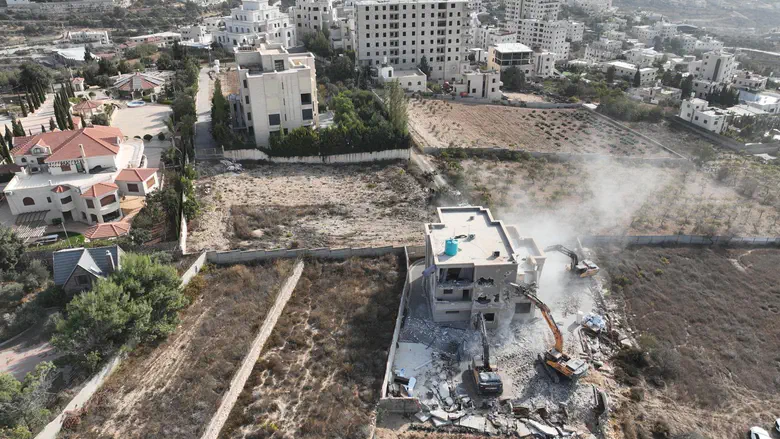
The 23 October shooting near Hebron killed two Israeli soldiers. Multiple reports give three wounded, but other accounts report five or six; reporting identifies the attackers as Hamouda Ja'ba and Firas Ja'ba. Israeli forces imposed a cordon around Hebron and nearby villages, raided homes, and began demolitions near the attack site. Netanyahu has ordered preparations for a wider West Bank lockdown and announced plans for a large operation, but reporting differs on whether the broader measures are already in effect. Israeli elections are scheduled for 27 October. In Gaza, reported post-ceasefire death tolls differ, UNICEF says more than 350 children have been killed, and the World Food Program cut its assistance caseload from 1.6 million to 1.1 million. In Lebanon, Israeli forces reportedly remain in a roughly 10-kilometre security zone; claims of Hezbollah rebuilding are not independently established in the supplied reporting.
Change from previous assessment
Since the earlier 23 October brief, the main change is that the Israeli response is no longer only prospective in Hebron: reports now say home raids and Civil Administration demolitions have begun. Confidence has increased that local operations are under way, but not that a full West Bank lockdown or the announced large-scale operation has been executed. Gaza reporting adds the World Food Program's reduction in assistance from 1.6 million to 1.1 million people, while the post-ceasefire death toll remains disputed. The assessment of Hezbollah rebuilding remains low confidence. Newer reports of US and Israeli preparations concerning Iran add warning indicators, but the earlier judgement that an authorised new strike is not established remains in place.
Key judgments
- Almost certainly, the 23 October attack near Hebron killed two Israeli soldiers; three wounded is the best-supported count, although other reports give five or six. Multiple major-media and wire reports corroborate the two deaths and generally report three wounded. Reporting identifies the dead as Staff Sergeant Ron Jonathan Reitman and Sergeant Yuval Shai Svilam, and the attackers as Hamouda Ja'ba and Firas Ja'ba. The casualty discrepancy lowers confidence in the full casualty assessment. (Confidence: medium · ASSESSED)
- I&W: An IDF or hospital casualty update confirms two deaths and three wounded; an official revised count of five or six wounded would break the three-wounded assessment. (0-14 days)
- Likely, Israel's immediate response will remain centred on Hebron over the next 14 days, while a full West Bank lockdown and the announced large-scale operation remain plans rather than confirmed completed actions. Reports describe a cordon around Hebron and nearby villages, home raids, and demolitions begun by Civil Administration enforcement units. Reports differ on whether the West Bank-wide closure is already in effect and on the status and scope of the larger operation. (Confidence: medium · ASSESSED)
- I&W: IDF or COGAT notices show closures at West Bank crossings and checkpoints beyond Hebron, confirming implementation of a wider lockdown; continued Hebron-only restrictions through election day would break that assessment. (0-14 days)
- I&W: IDF announcements or on-the-ground reporting document evacuations and house-to-house operations outside Hebron, confirming expansion beyond the current response. (0-14 days)
- Very likely, Gaza's humanitarian conditions remain severe. UNICEF reports more than 350 children killed since the October 2025 agreement, while the World Food Program reduced its assistance caseload from 1.6 million to 1.1 million because of a funding shortfall. Reported post-ceasefire Palestinian death tolls differ, with one account citing more than 1,400 and Gaza's health ministry reporting more than 1,500. A social-media claim of an Israeli strike in central Gaza during this reporting week is not independently corroborated; NASA recorded 29 thermal anomalies on 22-23 October, none classified as high-confidence. (Confidence: medium · ASSESSED)
- I&W: The World Food Program publishes a new Gaza caseload and funding update; a continued caseload at or below 1.1 million confirms ongoing access pressure, while restoration to 1.6 million would weaken this assessment. (0-30 days)
- I&W: UNICEF or Gaza's health ministry publishes an updated post-ceasefire death toll, allowing comparison with the current differing totals. (0-30 days)
- Likely, Israel's reported troop presence in a security zone extending roughly 10 kilometres into southern Lebanon will keep implementation of the Israel-Lebanon ceasefire framework contested. Lebanese authorities have called for Israeli withdrawal, while reports that Hezbollah is rebuilding capabilities in southern Lebanon, Beirut, and Tyre rely on Lebanese security officials and the Alma Research and Education Center and are not independently established here. These reports do not establish imminent renewed fighting. (Confidence: low · ASSESSED)
- I&W: Verified IDF withdrawal from the southern Lebanon security zone and Lebanese Armed Forces deployment in its place would weaken the assessment that the framework remains contested. (1-3 months)
- I&W: Independently verified Israel-Hezbollah exchanges of fire or confirmed Hezbollah weapons deployments in Beirut, Tyre, or southern Lebanon would indicate a sharper deterioration. (0-3 months)
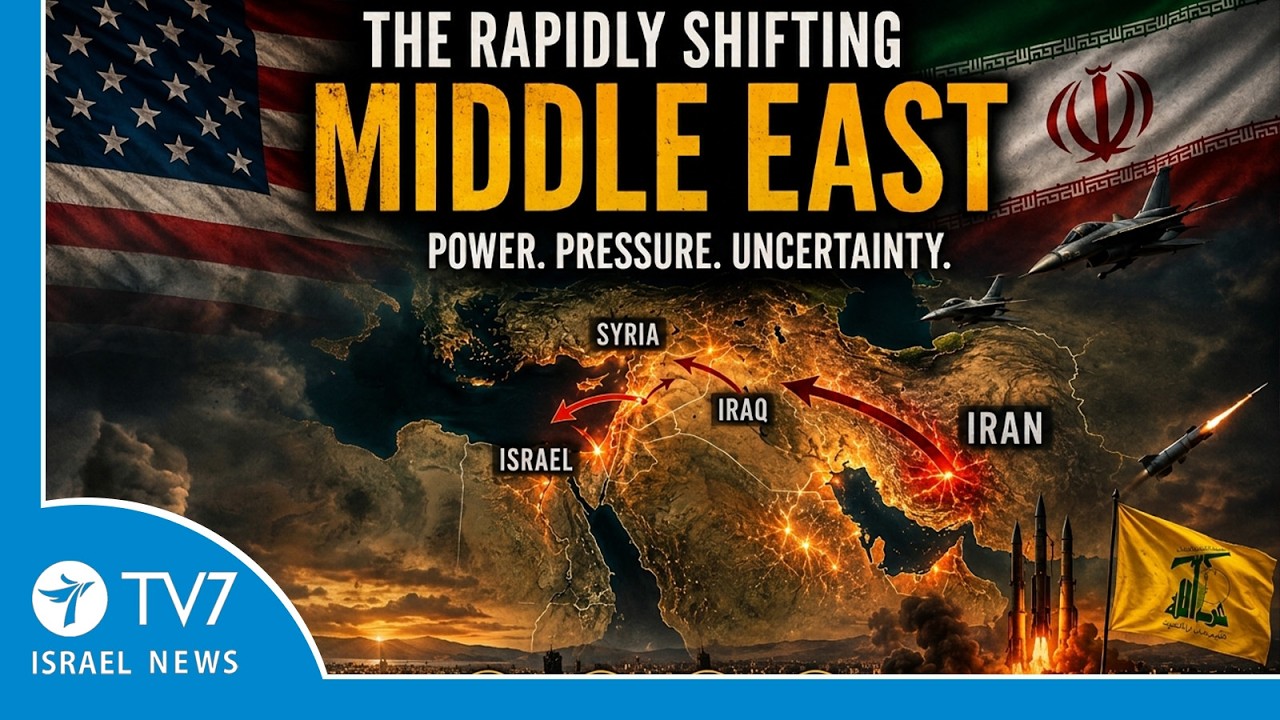
- Unlikely, the available reporting establishes a settled US-Israeli decision to strike Iran within the next 14 days. Reports describe Pentagon planning, a possible short and intense operation, three US aircraft carriers and thousands of Marines expected to arrive by early November, and Israeli fighter flights near Iran. Separate reporting says President Trump paused a strike, and a former US defence official said Trump controls the timing decision. The accounts are not fully consistent and do not confirm authorisation; the operational claims rest largely on single-source reporting. (Confidence: low · ASSESSED)
- I&W: The White House or Pentagon confirms strike authorisation, or a strike is carried out, breaking the assessment that no settled decision is established. (0-14 days)
- I&W: President Trump publicly confirms that the pause remains in effect through 6 November, supporting the assessment that reported preparations have not become an authorised strike. (0-14 days)
Outlook & scenarios
Contained Hebron response (55%)
Israeli forces maintain the Hebron cordon, continue searches and demolitions near the attack site, and apply election-period restrictions without launching the announced large-scale operation across the West Bank. The Gaza ceasefire remains fragile amid severe humanitarian pressure. The reported tensions in southern Lebanon do not develop into renewed Israel-Hezbollah fighting.
Expanded West Bank operation (35%)
Israeli forces extend raids, evacuations, and demolitions beyond Hebron after Netanyahu's announcement of a large operation. Wider restrictions and further Palestinian and Israeli casualties increase pressure around the 27 October election. Hamas has praised the Hebron attack and called for similar attacks, while Israeli ministers have advocated broader action against the Palestinian Authority.
Regional strike and Hezbollah spillover (10%)
Low-probability, high-impact wildcard: the reported US military build-up and planning precede a US or Israeli strike on Iran. The IRGC has warned of a wider response to renewed US attacks. Hezbollah's reported military preparations and Israel's continued presence in southern Lebanon raise the risk of a wider confrontation, although the supplied reporting does not establish that this sequence is under way.
Recommendations
- Track IDF and COGAT closure notices, checkpoint access, and movement restrictions through the 27 October election. Distinguish a Hebron cordon from a West Bank-wide lockdown.
- Keep the Hebron casualty count provisional. Use two deaths and three wounded as the best-supported count, and record the five- and six-wounded reports separately until an official or hospital update resolves the discrepancy.
- Report Gaza's post-ceasefire death tolls with their source attribution: more than 1,400 in one major-media account and more than 1,500 according to Gaza's health ministry. Do not treat thermal detections or the unverified social-media strike claim as confirmation of a specific attack.
- Seek independent confirmation of Hezbollah rebuilding claims in Beirut, Tyre, and southern Lebanon. Separate reported Israeli troop presence and Lebanese demands for withdrawal from claims of renewed fighting.
- Treat reported Iran strike planning and deployments as indicators of preparation, not proof of authorisation. Monitor official US statements, confirmed force movements, and any reported IRGC response.
Confidence & uncertainty
Overall confidence is high for the core reported events because multiple major-media and wire reports corroborate the Hebron attack, the two soldier deaths, and Israeli orders and actions around Hebron. Official NASA data and reporting from UNICEF and the World Food Program provide additional grounding for Gaza-related claims. Confidence is lower on the wounded count, the status of a West Bank-wide closure, Hezbollah rebuilding, and Iran strike intentions because accounts conflict or rely on thin and single-source reporting.
Alternative analysis (red cell)
The evidence supports a more uncertain reading of Israel's West Bank response than the judgment allows. Claims 820c5b50-4a32-4ac0-92b7-e11b351cc3c2 and 86d6927a-8c01-4879-87da-25009f8faa0d report an ordered closure and large-scale operation, while claims 27cb8f36-d2ea-4736-b3db-949709ac1e0a and 2a92097c-43a2-41d5-82d4-6c092b7ae459 indicate implementation activity already underway. The available reporting cannot establish whether the measures were fully operational, but it does not support treating them principally as unexecuted plans.
Intelligence gaps
- [EEI 1.1 · UNCOVERED] Number, type and geolocated coordinates of projectiles (rockets, mortars, anti-tank guided missiles) fired from Lebanon into Israel in the last 24/72 hours, including time-stamped launch and impact locations. Recommended collection: signals/intel
- [EEI 1.2 · UNCOVERED] Satellite or aerial imagery showing movement, concentration, or forward displacement of Hezbollah-associated military assets (armored vehicles, artillery pieces, mobile rocket launchers, logistics convoys) to positions within 0-10 km of the Israel-Lebanon border. Recommended collection: satellite/imagery
- [EEI 1.3 · UNCOVERED] Intercepted or captured Hezbollah command-and-control communications or orders explicitly directing cross-border operations or coordinated strikes with Palestinian groups (time-stamped messages, unit identifiers, orders to fire/move). Recommended collection: signals/intel
- [EEI 1.4 · UNCOVERED] Observable changes in Israeli northern-front posture within Israel (numbers and types of reinforcements deployed to northern brigades, activation of reserves, air defense redeployments, evacuation orders or shelter alerts in northern towns), including timestamps and unit IDs where available. Recommended collection: human/intel
- [EEI 2.1 · UNCOVERED] Official or corroborated reports of IDF reservist mobilization and unit-level deployment orders (number of reservists called, named brigades/units ordered to deploy, deployment timelines). Recommended collection: open-source/media
- [EEI 2.2 · UNCOVERED] Satellite or ground imagery showing concentrations of IDF heavy equipment (tanks, infantry fighting vehicles, engineering vehicles), staging areas, field hospitals or forward supply dumps within X km of the Gaza border and at known crossing points. Recommended collection: satellite/imagery
- [EEI 2.3 · PARTIAL] Change in strike patterns consistent with pre-ground-attack shaping: sustained high-frequency airstrikes on tunnel networks, command nodes, coastal launch sites, and known insurgent concentrations (strike counts, munition types, locations, times). Recommended collection: open-source/media
- [EEI 2.4 · UNCOVERED] Logistics indicators: verified convoys of fuel/ammunition entering staging areas, establishment of forward logistics or medical bases, or documented requisitioning orders for bulk combat supplies with timestamps and quantities. Recommended collection: human/intel
- [EEI 3.1 · PARTIAL] Number, participants and content of diplomatic contacts or negotiation sessions in the last 48 hours involving mediators (Egypt, Qatar, US, UN), including any proposed ceasefire text, prisoner/exchange lists, timelines or verification mechanisms. Recommended collection: diplomatic
- [EEI 3.2 · UNCOVERED] Public statements, press releases or verified communiqués from Hamas and other Gaza armed groups specifying acceptance, rejection, or conditions for a ceasefire (explicit conditions such as prisoner release lists, withdrawal terms, lifting of blockades), with timestamps and speaker attribution. Recommended collection: open-source/media
- [EEI 3.3 · PARTIAL] Humanitarian indicators relevant to ceasefire: establishment and operation of agreed humanitarian corridors/checkpoints, number of aid deliveries admitted, civilian evacuations completed, and NGO/hospital reports of access denials or safe-passage violations. Recommended collection: humanitarian/NGO reports
- [EEI 3.4 · PARTIAL] Operational evidence of a de facto pause: verified sustained reduction (e.g., ≥12 hours) in strikes or launches from either side in specific sectors, supported by strike/impact logs, radar tracks and incident reports. Recommended collection: open-source/media
Red cell review: PARTIAL DISSENT
TLP:CLEAR