TLP:CLEAR · Disclosure is not limited.
Israel-Gaza Regional Escalation: IDF Entrenchment in Southern Lebanon
Time window: Last 7 days · Audience: General analyst · Type: Situation report · DTG: 2026-10-11 16:21Z · Overall confidence: MEDIUM
BLUF
The IDF is likely to maintain a forward posture in southern Lebanon into winter, while Hezbollah’s stated resistance posture and Benjamin Netanyahu’s pledge to continue strikes leave near-term de-escalation unlikely. In Gaza, recent imagery and reporting indicate divided control and continuing physical damage, but NASA thermal detections do not establish a renewed strike pattern.
Executive summary
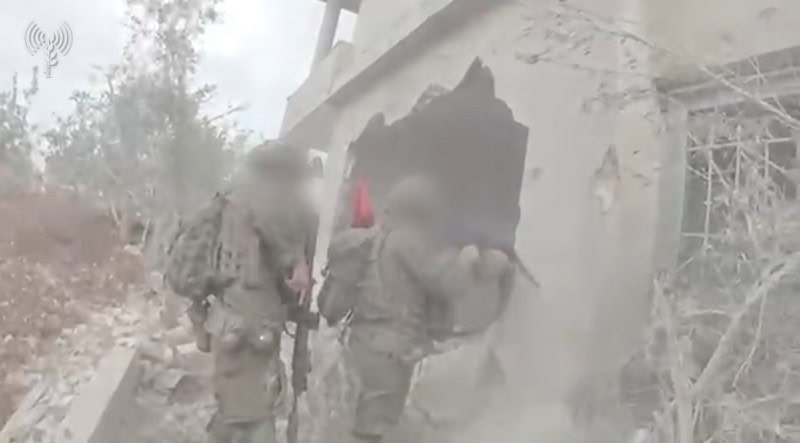
Reporting from 4 to 11 October points to continued Israeli military activity in southern Lebanon. The IDF’s 55th Reserve Paratroopers Brigade completed a 100-day mobilisation that included 80 days of operations, while reports describe reinforced positions, a defensive line roughly 12 kilometres from the Israeli border, and preparations for winter. Netanyahu said Israel would continue striking Hezbollah; Hezbollah Secretary-General Naim Qassem said the group would remain in resistance while Israeli forces remained. In Gaza, a 6 October estimate put Hamas in control of approximately 35 percent of the territory, while September satellite imagery showed demolitions and IDF outposts at named locations. NASA FIRMS recorded 32 thermal detections across its Gaza-area bounding box on 10 and 11 October, none high-confidence; the data record heat, not its cause. Separately, two tanker incidents were reported in Gulf waters. Neither has a confirmed attacker in the supplied reporting, and no link to Gaza or Hezbollah is established.
Change from previous assessment
The assessment of Israeli deployment in southern Lebanon has strengthened from low to medium confidence. New reporting describes the 55th Reserve Paratroopers Brigade’s 100-day mobilisation, including 80 days of operations, a reported defensive line roughly 12 kilometres from the Israeli border, reinforced positions and winter preparations. Netanyahu’s 5 October statement and Naim Qassem’s 6 October remarks also sharpen the near-term outlook for Israel-Hezbollah relations. The Gaza control and destruction picture is broadly unchanged; the new NASA FIRMS readings do not establish a renewed strike pattern. Gulf shipping risk remains a parallel concern, with no supplied evidence linking the reported tanker incidents to Gaza or Hezbollah.
Key judgments
- The IDF is likely to maintain a forward military posture in southern Lebanon into winter. Reporting describes the 55th Reserve Paratroopers Brigade completing a 100-day mobilisation, including 80 days of operations, Israeli forces reinforcing positions and building barriers, and preparations for winter positions. The reported defensive line in the brigade’s sector reached roughly 12 kilometres from the Israeli border. This is an assessment based on several reports collated in think-tank coverage, rather than independently verified force-location data. (Confidence: medium · ASSESSED)
- I&W: IDF statements or new reporting confirm winter positions or continued barrier and road construction in southern Lebanon. (0-30 days)
- I&W: The IDF announces a withdrawal from the reported security-zone positions, or reporting documents their dismantling. (0-30 days)
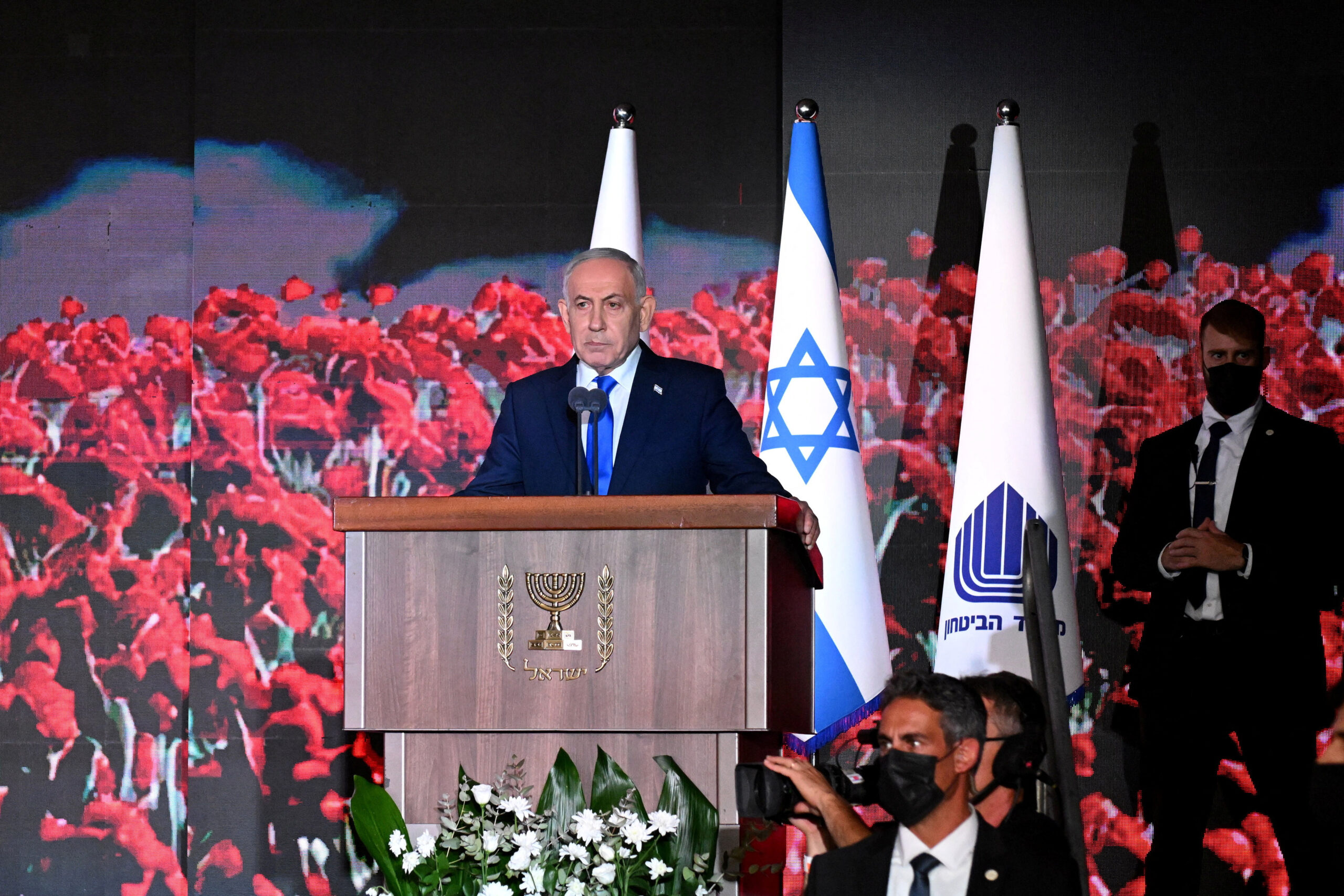
- A near-term return to sustained calm between Israel and Hezbollah is unlikely. Netanyahu said on 5 October that Israel would continue striking Hezbollah, while Naim Qassem said on 6 October that Hezbollah would remain in resistance as long as Israeli aggression continued and framed a solution around Israeli withdrawal. These are public positions, not evidence that either side has decided on a specific next operation; confidence is therefore medium. (Confidence: medium · ASSESSED)
- I&W: Credible reporting records new Israeli strikes in Lebanon or Hezbollah attacks across the border. (0-14 days)
- I&W: Israel and Lebanon announce and implement a specific arrangement that halts strikes and begins an Israeli withdrawal from southern Lebanon. (0-30 days)
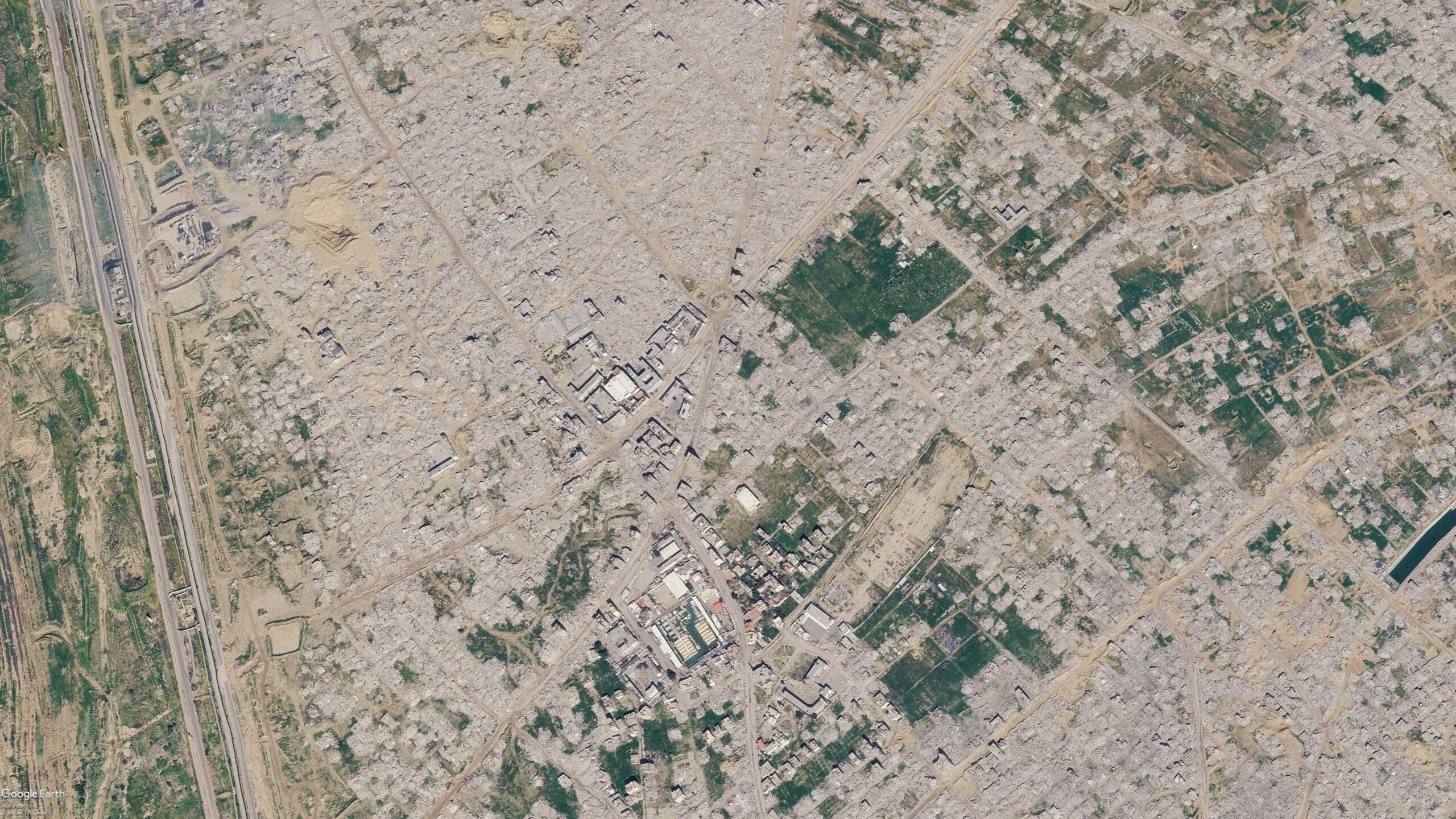
- Hamas and the IDF are likely to retain divided control in Gaza in the near term, but confidence is low because the estimate of Hamas control is a single reported assessment and the satellite imagery dates from September. The 6 October reporting put Hamas control at approximately 35 percent of Gaza. September imagery showed IDF outposts, an earthen barrier and demolitions in Bani Suheila, as well as continued razing and outpost construction in Shujaiya and Jabaliya. This evidence does not establish the precise current boundary of control. (Confidence: low · ASSESSED)
- I&W: New, dated satellite imagery shows IDF outposts or barriers still present in Bani Suheila, Shujaiya or Jabaliya. (0-30 days)
- I&W: New geolocated reporting documents an IDF withdrawal from those positions or a change in the reported Hamas-controlled share of Gaza. (0-30 days)
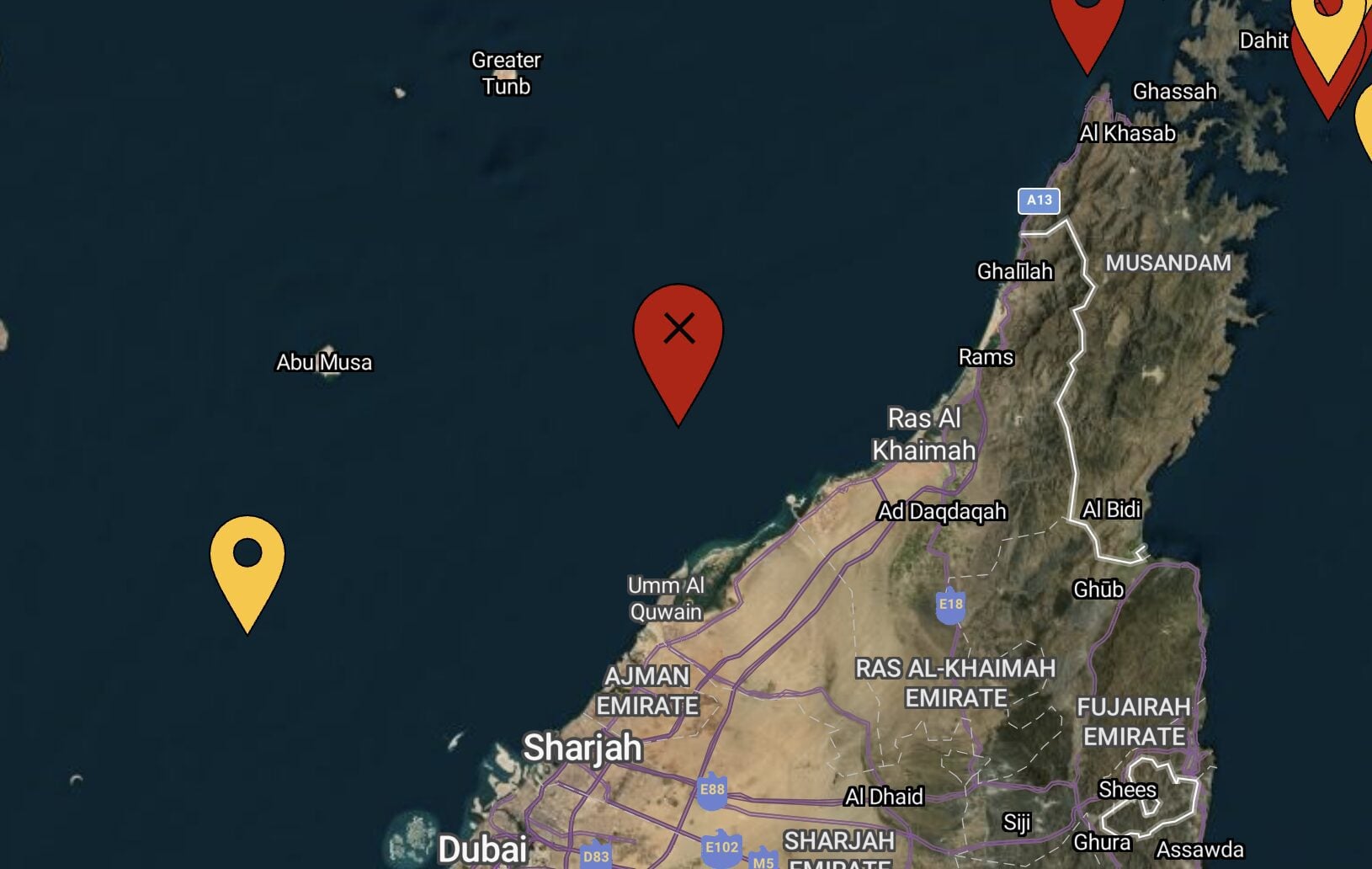
- Commercial shipping in Gulf waters is likely to face elevated attack or intimidation risk over the next 0-14 days. UKMTO and maritime reporting described the 9 October strike on GEM NO.2, a fully laden Panama-flagged crude supertanker, about 13 nautical miles west of Al Jazeera in the UAE; a tanker was also reported struck off Qatar earlier that week. The attackers remain unidentified in the supplied reporting, and there is no established link to Israel, Gaza or Hezbollah. (Confidence: medium · ASSESSED)
- I&W: UKMTO or the Joint Maritime Information Center reports another attack or attempted attack on a commercial vessel in Gulf waters. (0-14 days)
- I&W: Authorities publish an investigation finding that identifies the attacker or rules out a hostile strike in either reported tanker incident. (0-30 days)
- NASA FIRMS data do not establish a renewed strike pattern in Gaza. The system recorded 32 thermal detections in its Gaza-area bounding box on 10 and 11 October, with none classified as high-confidence; NASA notes that thermal signatures record heat, not cause. The detections are a reported observation, not confirmation of strikes or shelling. (Confidence: medium · REPORTED)
- I&W: NASA FIRMS records new high-confidence thermal detections in Gaza that are corroborated by dated imagery or independently reported strike damage. (0-14 days)
- I&W: Follow-up NASA FIRMS data show no high-confidence detections and no independently reported, geolocated strike damage at the relevant locations. (0-14 days)
Outlook & scenarios
Entrenched posture and contained exchanges (55%)
The IDF maintains forward positions in southern Lebanon through winter preparations. Israel continues limited strikes, and Hezbollah sustains its resistance posture without a sustained expansion of cross-border fighting. Hamas and the IDF retain divided control in Gaza, with no clear change in the reported control pattern.
Renewed Israel-Hezbollah exchanges (25%)
Israeli strikes and Hezbollah attacks continue or increase, putting pressure on the existing deployment and raising the risk of a wider confrontation in southern Lebanon. The public positions of Netanyahu and Qassem remain a source of tension, but do not alone establish that either side will initiate a broader campaign.
Localised de-escalation in Lebanon (15%)
Israel and Lebanon reach an arrangement that reduces strikes and begins an Israeli withdrawal from southern Lebanon. This would break the current assessment of sustained forward deployment; the supplied reporting contains no evidence that such an arrangement is now in place.
Maritime incident drives wider regional disruption (5%)
A further attack on a commercial vessel, or an investigation that assigns responsibility for the GEM NO.2 or Qatar incident, prompts stronger security measures for Gulf shipping. This is a low-probability, high-impact wildcard; the supplied reporting does not connect either tanker incident to the Israel-Gaza conflict or Hezbollah.
Recommendations
- Track southern Lebanon deployment reporting separately from strike reporting. Seek dated, geolocated confirmation of IDF positions, barriers and road works before treating the reported 12-kilometre line as a current deployment boundary.
- Maintain an incident log for Israeli strikes and Hezbollah attacks, recording date, location, weapon or platform when reported, and source. Distinguish public statements from confirmed operational activity.
- Use dated satellite imagery and independently geolocated reporting to update the Gaza control picture. Do not treat NASA FIRMS thermal detections as confirmed strikes without corroboration.
- Keep Gulf shipping incidents on a separate regional-risk track. Seek UKMTO, Joint Maritime Information Center or investigating-authority updates on the GEM NO.2 and Qatar incidents before assigning responsibility or linking them to the Israel-Gaza conflict.
Confidence & uncertainty
Overall confidence is medium. The southern Lebanon assessment draws on several specific reports, including statements attributed to the IDF, Israeli officials, Netanyahu and Hezbollah Secretary-General Naim Qassem, but much of the deployment detail is collated in think-tank coverage and lacks independently verified force locations. The Gaza control estimate is single-source, and the satellite imagery is dated September. Official NASA data provide reliable thermal readings but cannot identify their cause. Maritime reporting corroborates the UAE incident and reports a separate strike off Qatar, while attribution remains unresolved.
Intelligence gaps
- [EEI 1.1 · PARTIAL] Number, type and geolocated coordinates of projectiles (rockets, mortars, anti-tank guided missiles) fired from Lebanon into Israel in the last 24/72 hours, including time-stamped launch and impact locations. Recommended collection: signals/intel
- [EEI 1.2 · UNCOVERED] Satellite or aerial imagery showing movement, concentration, or forward displacement of Hezbollah-associated military assets (armored vehicles, artillery pieces, mobile rocket launchers, logistics convoys) to positions within 0-10 km of the Israel-Lebanon border. Recommended collection: satellite/imagery
- [EEI 1.3 · UNCOVERED] Intercepted or captured Hezbollah command-and-control communications or orders explicitly directing cross-border operations or coordinated strikes with Palestinian groups (time-stamped messages, unit identifiers, orders to fire/move). Recommended collection: signals/intel
- [EEI 1.4 · UNCOVERED] Observable changes in Israeli northern-front posture within Israel (numbers and types of reinforcements deployed to northern brigades, activation of reserves, air defense redeployments, evacuation orders or shelter alerts in northern towns), including timestamps and unit IDs where available. Recommended collection: human/intel
- [EEI 2.1 · PARTIAL] Official or corroborated reports of IDF reservist mobilization and unit-level deployment orders (number of reservists called, named brigades/units ordered to deploy, deployment timelines). Recommended collection: open-source/media
- [EEI 2.2 · UNCOVERED] Satellite or ground imagery showing concentrations of IDF heavy equipment (tanks, infantry fighting vehicles, engineering vehicles), staging areas, field hospitals or forward supply dumps within X km of the Gaza border and at known crossing points. Recommended collection: satellite/imagery
- [EEI 2.3 · PARTIAL] Change in strike patterns consistent with pre-ground-attack shaping: sustained high-frequency airstrikes on tunnel networks, command nodes, coastal launch sites, and known insurgent concentrations (strike counts, munition types, locations, times). Recommended collection: open-source/media
- [EEI 2.4 · UNCOVERED] Logistics indicators: verified convoys of fuel/ammunition entering staging areas, establishment of forward logistics or medical bases, or documented requisitioning orders for bulk combat supplies with timestamps and quantities. Recommended collection: human/intel
- [EEI 3.1 · UNCOVERED] Number, participants and content of diplomatic contacts or negotiation sessions in the last 48 hours involving mediators (Egypt, Qatar, US, UN), including any proposed ceasefire text, prisoner/exchange lists, timelines or verification mechanisms. Recommended collection: diplomatic
- [EEI 3.2 · UNCOVERED] Public statements, press releases or verified communiqués from Hamas and other Gaza armed groups specifying acceptance, rejection, or conditions for a ceasefire (explicit conditions such as prisoner release lists, withdrawal terms, lifting of blockades), with timestamps and speaker attribution. Recommended collection: open-source/media
- [EEI 3.3 · UNCOVERED] Humanitarian indicators relevant to ceasefire: establishment and operation of agreed humanitarian corridors/checkpoints, number of aid deliveries admitted, civilian evacuations completed, and NGO/hospital reports of access denials or safe-passage violations. Recommended collection: humanitarian/NGO reports
- [EEI 3.4 · UNCOVERED] Operational evidence of a de facto pause: verified sustained reduction (e.g., ≥12 hours) in strikes or launches from either side in specific sectors, supported by strike/impact logs, radar tracks and incident reports. Recommended collection: open-source/media
Cited sources
[1] Foundation for Defense of Democracies (Long War Journal) · IDF shifts southern Lebanon forces toward ‘forward-defense’ posture as troops prepare for winter (C) · 7 October 2026 · sha256:54b7c886de45 [2] Atlantic Council · Three years after October 7, Israel is facing inward (B) · 6 October 2026 · sha256:72b3b9b593e7 [3] Bellingcat · Viral Google Maps Images Shared Widely This Week Show Gaza Ruins. We Obtained More Recent Satellite Imagery - bellingcat (B) · 1 October 2026 · sha256:2d0e4dc853e8 [4] Reuters (republished by gCaptain) · Vessel Struck by Unknown Projectile Off UAE Coast Amid Surge in Attacks, UKMTO Says (A) · 9 October 2026 · sha256:ab2b01667e5f [5] NASA FIRMS (NASA LANCE / Fire Information for Resource Management System) · NASA FIRMS thermal detections — Gaza (2d) (A) · sha256:c4aaa3b5eef6
Source content hashes were computed at collection time; the cited text is preserved unmodified for the life of this product.
Red cell review: CONCUR WITH COMMENT
TLP:CLEAR