TLP:CLEAR · Disclosure is not limited.
Israel-Gaza Regional Escalation: Lebanon and Hormuz Pressure
Time window: Last 7 days · Audience: General analyst · Type: Situation report · DTG: 2026-09-07 13:11Z · Overall confidence: HIGH
BLUF
Very likely Israeli military activity will continue in Gaza and southern Lebanon over the next 0-14 days, keeping both ceasefire arrangements operationally unstable. Control of the Ali al Taher Ridge remains contested, while the reported US-Iran maritime confrontation and Iran's planned restricted zone sustain a roughly even chance of wider regional escalation over the next 1-3 months.
Executive summary
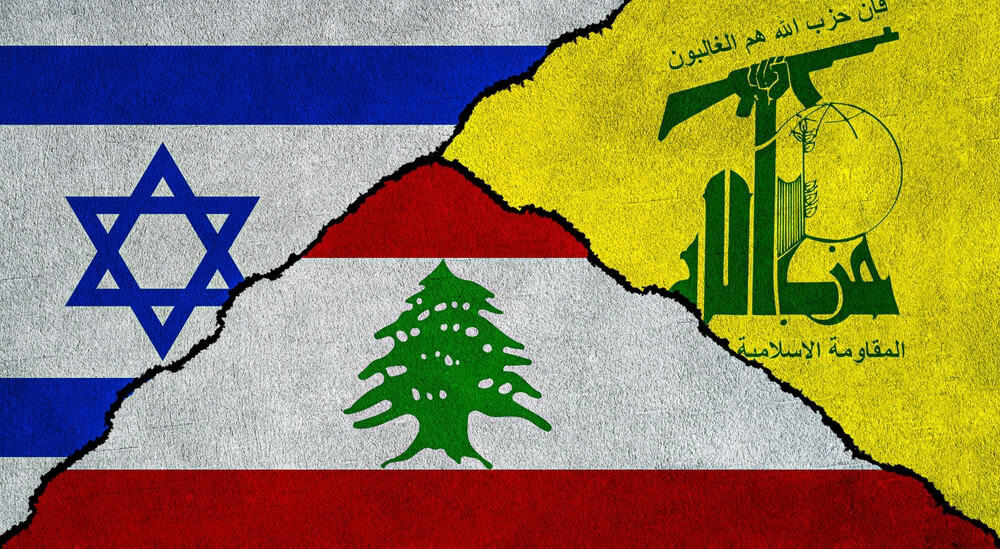
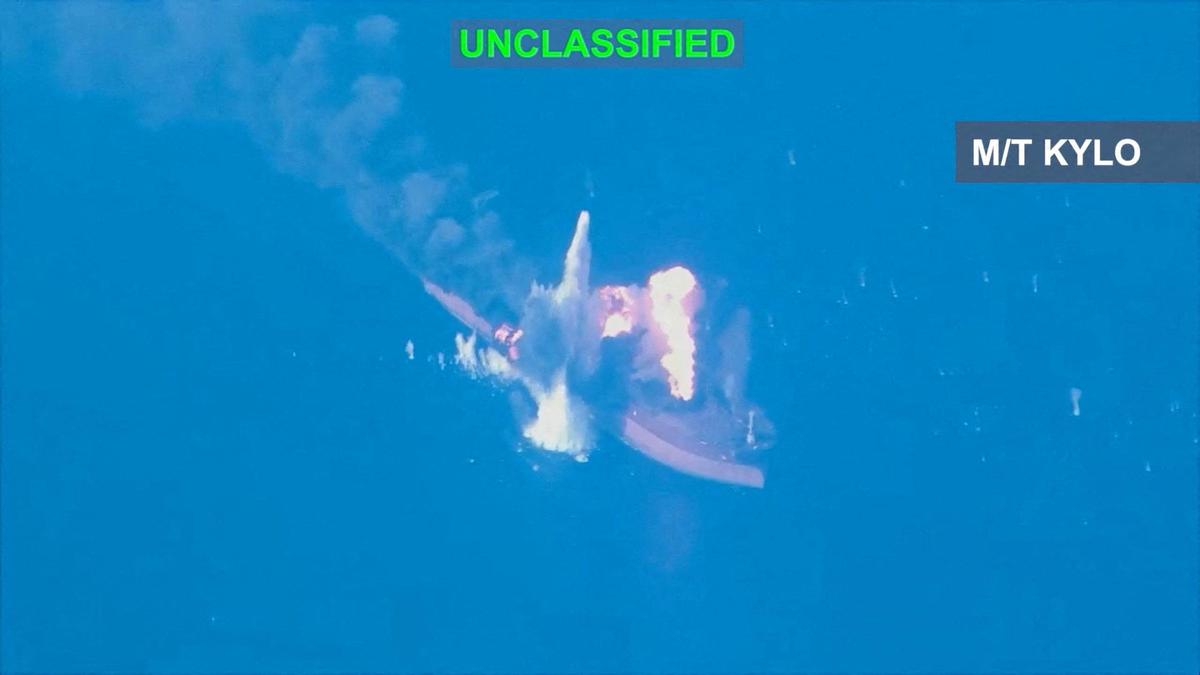
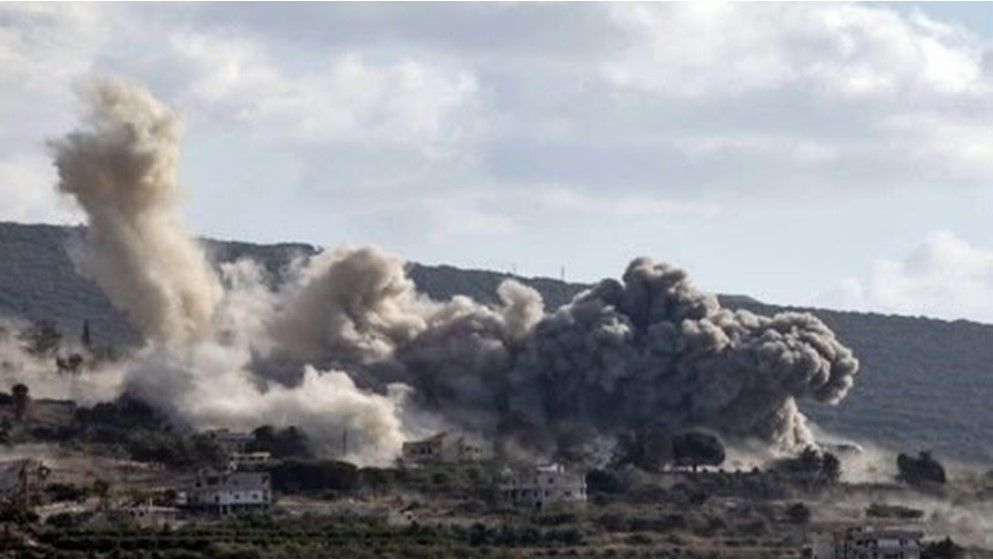
Israeli strikes were reported in Gaza City and southern Lebanon on 6 and 7 September, including attacks in Kfar Reman, Arab Salim and Deir al-Zahrani. Israel says its Lebanon operations respond to Hezbollah drone activity, but the UN reports no detected Hezbollah projectile launches since 21 June, leaving the immediate trigger disputed. Israel and Hezbollah also offer conflicting accounts of control at the Ali al Taher Ridge. In the West Bank, a stabbing at a settlement prompted Israeli lockdowns and threats of a full-scale war against the Palestinian Authority. US strikes on Iranian oil tankers, disputed reports of IRGC attacks on US warships and Iran's planned exclusion zone add a separate pathway to regional escalation. Humanitarian conditions remain under pressure in Gaza, southern Lebanon and the West Bank.
Change from previous assessment
Since the 6 September brief, confidence in continued Israeli operations in Gaza and southern Lebanon remains high, while new strikes in Kfar Reman, Arab Salim and Deir al-Zahrani provide additional evidence of sustained activity. The Ali al Taher judgment remains roughly even chance, but the competing Israeli, Hezbollah and LAF accounts now require continued explicit treatment as unverified. The assessment adds two developments: Israel Katz's threat against the Palestinian Authority after the Usarin stabbing, and the US-Iran maritime confrontation involving tanker strikes and Iran's planned restricted zone. The humanitarian judgment is unchanged in direction, with additional casualty and access reporting reinforcing the forecast of deterioration.
Key judgments
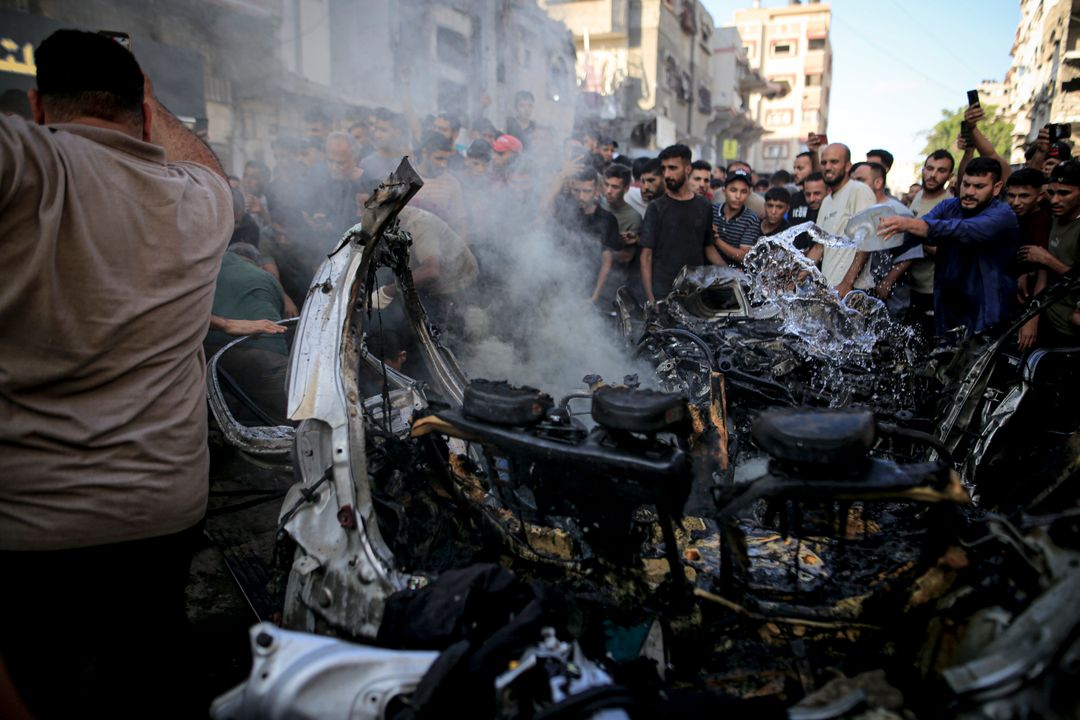
- Very likely Israeli strikes in Gaza will continue over the next 0-14 days, leaving the Gaza ceasefire operationally unstable. This is an assessed forecast based on reported Israeli strikes that killed Palestinians in Gaza City on 6 and 7 September, Gaza Health Ministry reporting of 1,344 deaths and 4,464 injuries since the ceasefire, and 41 NASA FIRMS thermal detections over Gaza on 6-7 September. FIRMS data corroborate heat but do not establish the cause or attribution of individual detections. Confidence is high because the pattern is supported by major-media, multilateral and official satellite reporting, although casualty attribution and the interpretation of thermal data remain separate uncertainties. (Confidence: high · ASSESSED)
- I&W: Confirm: Gaza health officials or major-media reporting record another Israeli air strike causing deaths or injuries in Gaza City or elsewhere in Gaza. (0-14 days)
- I&W: Break: no further Israeli strike reports or new ceasefire-period casualty updates are recorded for 14 consecutive days. (0-14 days)
- Very likely Israeli air strikes, evacuations and ground activity will continue in southern Lebanon over the next 0-14 days. This is an assessed forecast based on reported Israeli attacks in Kfar Reman, Arab Salim and Deir al-Zahrani, continued operations inside Israel's self-declared security zone, and UNIFIL records of daily Israeli airspace violations, air strikes, ground activity and naval operations. The reported Hezbollah drone trigger remains contested because the Israeli military describes two drones, while the UN reports no detected Hezbollah projectile launches since 21 June. Confidence is high for continued Israeli activity, but lower for the attribution of the immediate trigger. (Confidence: high · ASSESSED)
- I&W: Confirm: the Israeli military issues new evacuation warnings or conducts further strikes in Arab Salim, Kfar Reman, Deir al-Zahrani or nearby southern Lebanese villages. (0-14 days)
- I&W: Break: Israel begins a verified withdrawal from positions north of the Blue Line and UNIFIL records a sustained halt in Israeli air, ground and naval activity. (0-14 days)
- Roughly even chance a major Israel-Hezbollah exchange will follow operations around the Ali al Taher Ridge over the next 1-3 months. This is an assessed judgment resting on conflicting claims: the IDF says its 36th Division cleared Hezbollah from two underground routes and achieved control above and below ground, while Hezbollah says its fighters remain deployed and the ridge is free of Israeli troops. An LAF official described Israeli control of the tunnel entrances but said the depth of the penetration and presence of Hezbollah personnel remained unclear. Tehran's reported warning that a full Israeli offensive would trigger a large-scale Iranian attack raises the potential impact. Confidence is medium because the control claims come from opposing belligerents, the Iranian warning relies on a limited reporting chain, and independent confirmation is absent. (Confidence: medium · ASSESSED)
- I&W: Confirm: the LAF or UNIFIL verifies Israeli forces advancing beyond the tunnel entrances, followed by a Hezbollah attack on Israeli positions around Ali al Taher. (0-14 days)
- I&W: Break: Israel and Lebanon resume verified implementation of withdrawals from Froun, Srifa or Zawtar al-Gharbiyeh without a corresponding Hezbollah attack. (1-3 months)
- Likely Israeli security operations, movement restrictions and displacement pressure in the West Bank will continue over the next 1-3 months. This is an assessed forecast based on the reported lockdown of Palestinian villages after the stabbing near Usarin, Israel Katz's threat of a full-scale war against the Palestinian Authority, continuing exclusion of residents from Jenin, Nur Shams and Tulkarem refugee camps, and OHCHR reporting of more than 33,000 displaced Palestinians. Confidence is medium because the underlying reporting is strong, but the scale and duration of any further Israeli operation against the Palestinian Authority are not established. (Confidence: medium · ASSESSED)
- I&W: Confirm: Israeli authorities extend lockdowns, conduct new raids or announce further military preparations involving the Palestinian Authority or the Jenin, Nur Shams and Tulkarem camps. (0-14 days)
- I&W: Break: displaced residents are permitted to return to the three camps and Israeli officials withdraw the threat of military action against the Palestinian Authority. (1-3 months)
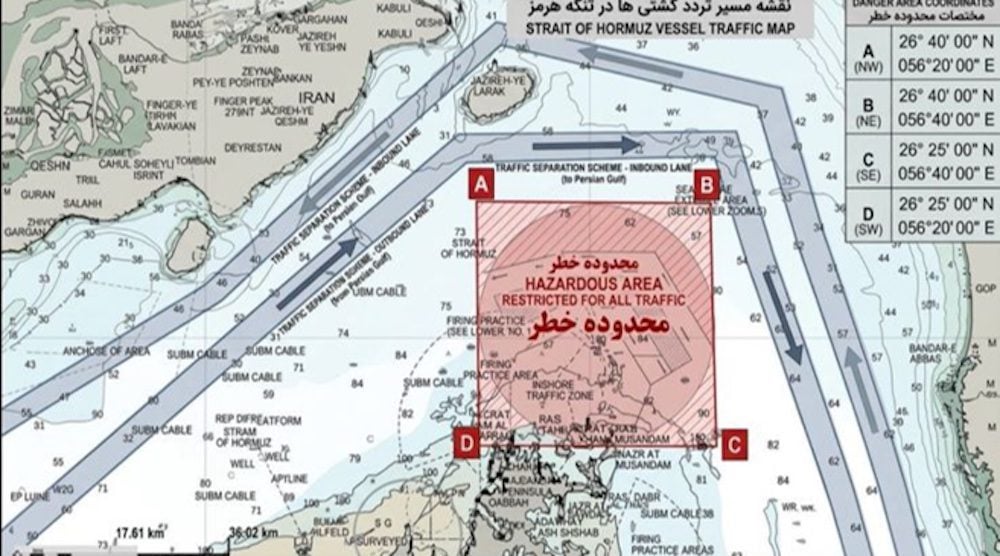
- Roughly even chance of another direct US-Iran military exchange in or around the Strait of Hormuz over the next 0-14 days. This is an assessed judgment based on reported US strikes against three Iranian oil tankers, reported IRGC missile activity against US warships, Iran's planned exclusion zone and shipping corridor, and the recent decline to an average of 10 commodity ships transiting the Strait each day. The US military denies that Iran struck an uncrewed US vessel, while Iranian state media says the vessel entered a restricted area. Confidence is medium because the initiation sequence is disputed and the tanker strike date differs across reports. (Confidence: medium · ASSESSED)
- I&W: Confirm: Iran announces the restricted zone and records an interception, boarding or attack involving a US-linked vessel, or the US conducts another strike against an Iranian vessel. (0-14 days)
- I&W: Break: Iran signs and implements the proposed shipping corridor without a new maritime incident, while commodity-ship transits through the Strait rise above the recent 10-per-day average. (0-14 days)
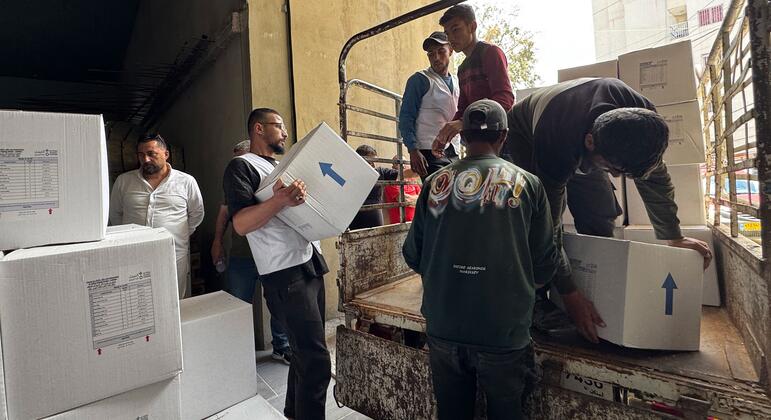
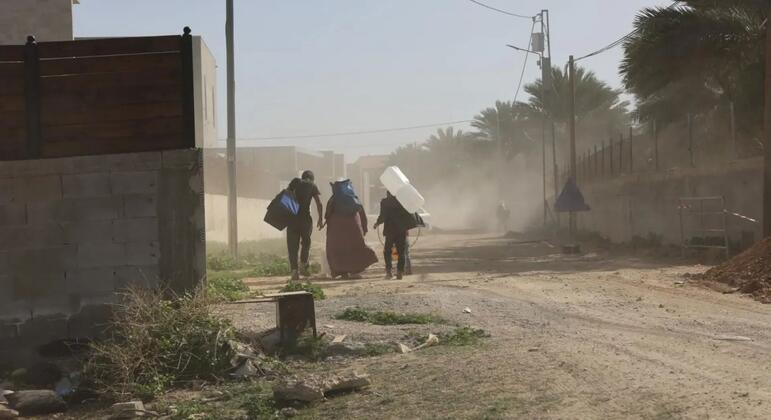
- Very likely humanitarian conditions in Gaza and southern Lebanon will worsen over the next 1-3 months. This is an assessed forecast based on continued restrictions on ambulances and medical equipment entering Gaza, more than 73,650 reported Palestinian deaths in Gaza, more than 4,350 reported deaths in Lebanon since March, attacks on Lebanese ambulance crews, and continuing loss of water, electricity and housing in southern Lebanese communities. Confidence is high because WHO, OHCHR, UN, Lebanon's Health Ministry and major-media reporting provide broad corroboration, although several casualty figures come from conflict-party authorities and cover different time periods. (Confidence: high · ASSESSED)
- I&W: Confirm: ambulances, medical equipment or specialised patient referrals remain restricted in Gaza, while new casualty reports continue from Gaza City or southern Lebanon. (0-14 days)
- I&W: Break: WHO reports reopened referral routes into West Bank and East Jerusalem hospitals, and southern Lebanese municipalities report restored water and electricity services. (1-3 months)
Outlook & scenarios
Persistent, geographically contained attrition (45%)
Israel continues strikes and ground activity in Gaza and southern Lebanon, while Hezbollah limits or denies direct attacks and the Gaza and Lebanon ceasefires remain nominal. The Ali al Taher dispute remains unresolved, humanitarian conditions deteriorate and diplomatic discussions continue without producing Israeli withdrawals.
Major Israel-Hezbollah exchange (27%)
Israeli forces consolidate or expand their position around the Ali al Taher Ridge, Hezbollah conducts a larger attack on Israeli positions and Israel responds with wider strikes across Nabatieh and southern Lebanon. Lebanon's direct discussions with Israel stall further, while displacement and damage to civilian infrastructure increase.
US-Iran maritime widening (20%)
Iran implements the proposed restricted zone around the Strait of Hormuz, US and Iranian forces conduct further maritime actions, and commercial traffic falls below recent levels. A low-probability, high-impact variant is a direct Iranian attack linked to the Ali al Taher confrontation that draws the US into simultaneous military exchanges in Lebanon and the Gulf.
Limited de-escalation (8%)
Israel and Lebanon resume implementation of the pilot-zone framework, Israeli forces halt further expansion in southern Lebanon and Hezbollah avoids new attacks. The Gaza ceasefire produces a short period without reported Israeli strikes, while Iran announces the shipping corridor without a new US-Iran maritime incident.
Recommendations
- Maintain a daily 0-14 day escalation watch covering Israeli strikes and evacuation orders in Gaza City, Arab Salim, Kfar Reman and Deir al-Zahrani; Hezbollah activity near Israeli positions; and UNIFIL records of projectiles, airspace violations and ground operations.
- Treat the Ali al Taher control claim and the reported Hezbollah drone incident as separate, disputed questions. Do not present either belligerent's account as independently verified. Prioritise LAF, UNIFIL and geolocated imagery for confirmation.
- Track the proposed Iranian restricted zone and shipping corridor as decision points. Record any published maps, vessel warnings, boardings, interceptions, further tanker strikes and changes from the recent 10 commodity ships per day through the Strait of Hormuz.
- Keep casualty reporting separated by geography and time period. Distinguish Gaza ceasefire-period figures from recent-day reports and distinguish Lebanon's post-March 2026 figures from longer conflict totals.
- Prioritise humanitarian indicators at Kerem Shalom, Gaza referral routes to West Bank and East Jerusalem hospitals, and water and electricity restoration in Froun and Ghandouriyeh. Issue an alert if access restrictions persist alongside new strikes or further displacement.
- Update the regional escalation assessment immediately if Israeli forces advance beyond the Ali al Taher tunnel entrances, Hezbollah conducts a confirmed attack on Israeli positions, Iran attacks a US-linked vessel, or Israel and Lebanon restart verified withdrawals under the pilot-zone framework.
Confidence & uncertainty
Overall confidence is high because the central developments are corroborated by multiple high-reliability sources, including UN and WHO reporting, UNIFIL records, NASA FIRMS data, major-media accounts and official statements from Israel, Lebanon, Iran and the US. Confidence is lower for the attribution of the 6 September Hezbollah drone incident, the status of Israeli control at Ali al Taher, the exact date and initiation sequence of the tanker confrontation, and the disputed characterisation of the hospital struck in southern Lebanon. These uncertainties affect escalation pathways rather than the well-supported judgment that Israeli operations and humanitarian pressure are continuing.
Intelligence gaps
- [EEI 1.1 · PARTIAL] Number, type and geolocated coordinates of projectiles (rockets, mortars, anti-tank guided missiles) fired from Lebanon into Israel in the last 24/72 hours, including time-stamped launch and impact locations. Recommended collection: signals/intel
- [EEI 1.2 · UNCOVERED] Satellite or aerial imagery showing movement, concentration, or forward displacement of Hezbollah-associated military assets (armored vehicles, artillery pieces, mobile rocket launchers, logistics convoys) to positions within 0-10 km of the Israel-Lebanon border. Recommended collection: satellite/imagery
- [EEI 1.3 · UNCOVERED] Intercepted or captured Hezbollah command-and-control communications or orders explicitly directing cross-border operations or coordinated strikes with Palestinian groups (time-stamped messages, unit identifiers, orders to fire/move). Recommended collection: signals/intel
- [EEI 1.4 · UNCOVERED] Observable changes in Israeli northern-front posture within Israel (numbers and types of reinforcements deployed to northern brigades, activation of reserves, air defense redeployments, evacuation orders or shelter alerts in northern towns), including timestamps and unit IDs where available. Recommended collection: human/intel
- [EEI 2.1 · UNCOVERED] Official or corroborated reports of IDF reservist mobilization and unit-level deployment orders (number of reservists called, named brigades/units ordered to deploy, deployment timelines). Recommended collection: open-source/media
- [EEI 2.2 · UNCOVERED] Satellite or ground imagery showing concentrations of IDF heavy equipment (tanks, infantry fighting vehicles, engineering vehicles), staging areas, field hospitals or forward supply dumps within X km of the Gaza border and at known crossing points. Recommended collection: satellite/imagery
- [EEI 2.3 · UNCOVERED] Change in strike patterns consistent with pre-ground-attack shaping: sustained high-frequency airstrikes on tunnel networks, command nodes, coastal launch sites, and known insurgent concentrations (strike counts, munition types, locations, times). Recommended collection: open-source/media
- [EEI 2.4 · UNCOVERED] Logistics indicators: verified convoys of fuel/ammunition entering staging areas, establishment of forward logistics or medical bases, or documented requisitioning orders for bulk combat supplies with timestamps and quantities. Recommended collection: human/intel
- [EEI 3.1 · PARTIAL] Number, participants and content of diplomatic contacts or negotiation sessions in the last 48 hours involving mediators (Egypt, Qatar, US, UN), including any proposed ceasefire text, prisoner/exchange lists, timelines or verification mechanisms. Recommended collection: diplomatic
- [EEI 3.2 · UNCOVERED] Public statements, press releases or verified communiqués from Hamas and other Gaza armed groups specifying acceptance, rejection, or conditions for a ceasefire (explicit conditions such as prisoner release lists, withdrawal terms, lifting of blockades), with timestamps and speaker attribution. Recommended collection: open-source/media
- [EEI 3.3 · PARTIAL] Humanitarian indicators relevant to ceasefire: establishment and operation of agreed humanitarian corridors/checkpoints, number of aid deliveries admitted, civilian evacuations completed, and NGO/hospital reports of access denials or safe-passage violations. Recommended collection: humanitarian/NGO reports
- [EEI 3.4 · PARTIAL] Operational evidence of a de facto pause: verified sustained reduction (e.g., ≥12 hours) in strikes or launches from either side in specific sectors, supported by strike/impact logs, radar tracks and incident reports. Recommended collection: open-source/media
TLP:CLEAR