TLP:CLEAR, Disclosure is not limited.
Israel, Gaza Regional Escalation: Lebanon Front Active, Iran, Israel Exchange Paused; Humanitarian Pressures Intensify
Time window: Last 7 days · Audience: General analyst · Type: Situation report · DTG: 2026-06-11 13:13Z · Overall confidence: MEDIUM
BLUF
Cross‑border hostilities between Israel and Hezbollah are very likely to persist despite ceasefire announcements, while Iran and Israel traded missile strikes on 10 June before signaling a pause. Humanitarian conditions in Gaza are almost certainly deteriorating amid renewed airstrikes and intermittent closure of Kerem Shalom; casualties and displacement in Lebanon remain high.
Executive summary
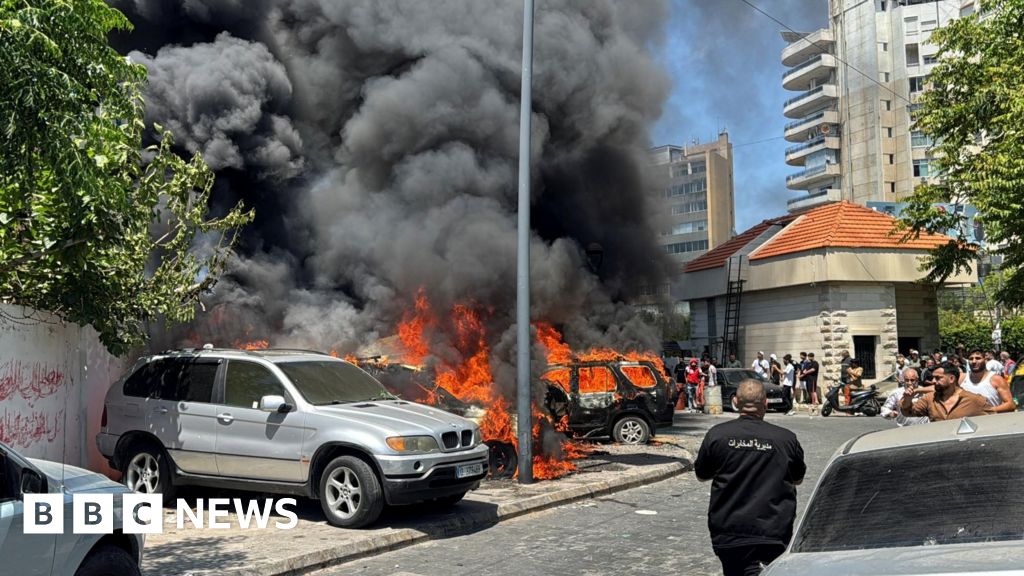
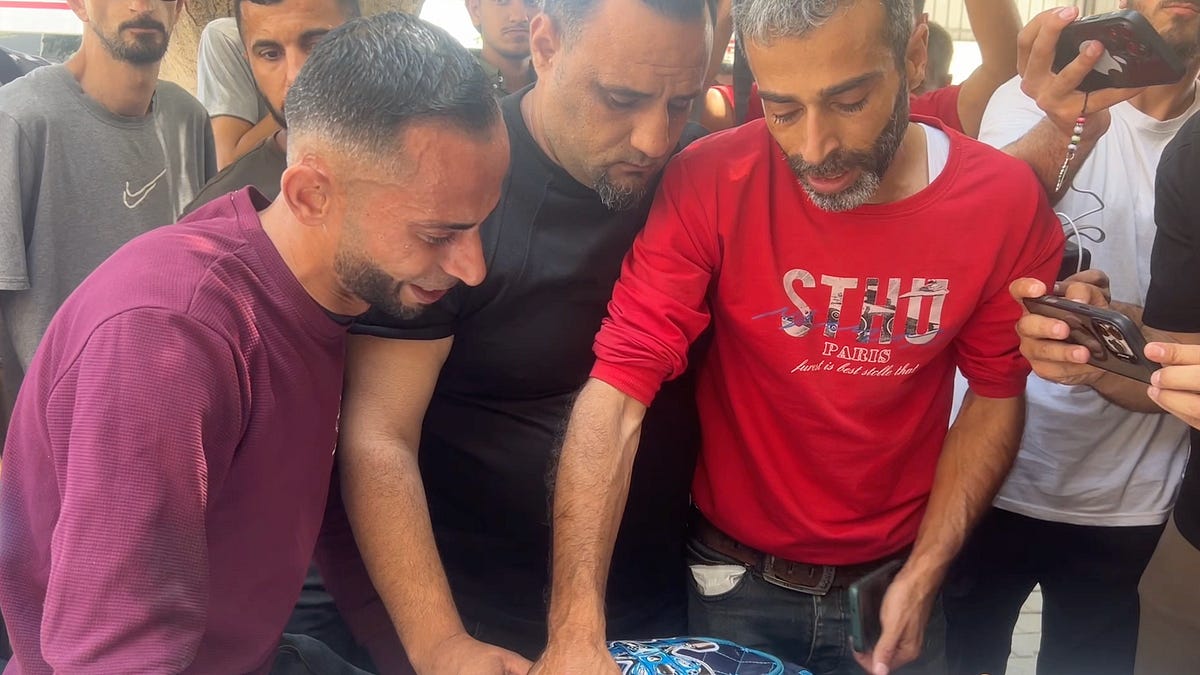
Israel and Hezbollah agreed to a ceasefire on 1 June, but Hezbollah publicly rejected the deal on 4 June and cross‑border fire resumed, including Hezbollah rockets into northern Israel and Israeli strikes across southern Lebanon with reported civilian casualties in Tyre. Iran fired missile barrages at Israel on 10 June; Israel struck inside Iran the same day, after which Israel’s prime minister said fire on that front was halted, even as Israeli leaders warned against Iranian linkage to Lebanon. Israel raised its national alert status to orange on 10 June. In Gaza, Israeli airstrikes since Sunday reportedly killed at least 13 people, including a strike on a police site west of Khan Younis; Kerem Shalom was closed on 4 June and reported reopened on 5 June. NASA recorded 37 thermal anomalies in Gaza on 10-11 June, and aid actors warn conditions approach catastrophic, with 77% facing acute food insecurity. In Lebanon, UN and official reporting cite nearly one million displaced and at least 3,696 killed as strikes and demolitions continue in the south, including tunnel demolitions in Qantara.
Change from previous assessment
Since the prior brief, reporting confirms the 10 June missile barrages from Iran and Israeli strikes inside Iran, followed by Israeli statements that fire on that front halted. Cross‑border hostilities along the Israel, Lebanon frontier continued despite earlier ceasefire steps, with additional reports of Tyre casualties and ongoing demolitions in southern Lebanon. In Gaza, closures at Kerem Shalom on 4 June and a reported reopening on 5 June were followed by renewed strikes and NASA‑observed thermal anomalies on 10-11 June. This update raises confidence that the Iran, Israel front is in a short pause while assessing persistent risk of resumption tied to activity in Lebanon.
Key judgments
- Cross‑border hostilities between Israel and Hezbollah are very likely to persist at an elevated tempo in the near term despite announced ceasefire steps and mediation. (Confidence: high · ASSESSED)
- I&W: Additional Israeli airstrikes reported in Tyre, Nabatieh, or Sidon alongside Hezbollah rocket launches into northern Israel (0-14 days)
- I&W: A verified week-long cessation of rocket launches and Israeli airstrikes along the Blue Line accompanied by formal statements from both Israel and Hezbollah (1-3 months)
- Direct Iran, Israel exchanges have paused, but there is a likely risk of renewed limited strikes within days if Israel’s campaign in Lebanon continues or Iran perceives ceasefire violations. (Confidence: medium · ASSESSED)
- I&W: Official announcements or observable launches indicating renewed Iranian missile or drone strikes toward Israel (0-14 days)
- I&W: A 14‑day period without Israeli or Iranian strikes paired with de‑escalatory public statements from senior leaders on both sides (0-1 month)
- Humanitarian access and conditions in Gaza are almost certainly being degraded by renewed Israeli airstrikes and intermittent closure of Kerem Shalom. (Confidence: high · ASSESSED)
- I&W: New COGAT announcements restricting or closing Kerem Shalom and additional reports of lethal airstrikes across Gaza (0-14 days)
- I&W: Sustained reopening of Kerem Shalom with publicly reported increases in aid entry volumes and fewer strike‑related casualty reports (1-3 months)
- Lebanon’s civilian toll and displacement are already severe and are likely to worsen absent a durable halt to strikes. (Confidence: medium · ASSESSED)
- I&W: Further Israeli airstrikes reported in Tyre, Sidon, or Nabatieh with rising casualty updates from Lebanese authorities (0-14 days)
- I&W: A multi‑week halt in strikes in southern Lebanon and initial reports of returns among the displaced (1-3 months)
- Hezbollah’s operational posture remains linked to Israeli operations in Gaza, making a near‑term stand‑down unlikely while strikes in Gaza continue. (Confidence: medium · ASSESSED)
- I&W: Hezbollah statements restating attacks will only cease after Israeli operations in Gaza stop, paired with additional cross‑border fire (0-14 days)
- I&W: Public Hezbollah declaration of a unilateral halt to attacks irrespective of Gaza operations (1-3 months)
- Israel’s domestic security posture remains elevated following the 10 June exchanges, indicating authorities expect further threats. (Confidence: high · ASSESSED)
- I&W: Continuation of the national orange alert status and ongoing restrictions on public activity and government schedules (0-14 days)
- I&W: Official downgrade of alert status with restoration of routine government schedules (0-1 month)
- Targeted demolitions and tunnel destruction by the IDF in southern Lebanon likely indicate preparation for or extension of ground security zones south of the Litani, elevating risks to civilians and services. (Confidence: medium · ASSESSED)
- I&W: Further reporting of large‑scale demolitions or tunnel detonations in villages south of the Litani and continued IDF ground activity beyond the river (0-14 days)
- I&W: Verified implementation of localized de‑escalation or ‘pilot zones’ in southern Lebanon with reduced demolition activity (1-3 months)
Outlook & scenarios
Persistent two‑front friction with a restrained Iran, Israel pause, 65%
Cross‑border fire between Israel and Hezbollah continues at a steady clip despite ceasefire language; Hezbollah rockets and targeted attacks persist and Israel maintains air and limited ground operations in southern Lebanon. Iran and Israel keep their front largely paused after 10 June but posture via threats tied to activity in Lebanon. Humanitarian access in Gaza remains fragile with intermittent closures and periodic strikes.
Short de‑escalation window holds, 40%
After the 10 June exchange, both Israel and Iran refrain from further direct strikes for several weeks. U.S. diplomatic pressure sustains a tenuous lull, and cross‑border fire along the Blue Line dips but does not stop. Kerem Shalom stays open more consistently, allowing modest aid improvements without resolving Gaza’s acute needs.
Sudden regional escalation triggered by a Beirut‑area strike, 20%
A high‑profile Israeli strike in Beirut’s southern suburbs or a mass‑casualty incident in Lebanon prompts rapid Iranian retaliation in line with prior warnings, re‑opening the Iran, Israel front and surging cross‑border attacks. Northern Israel displacement increases, and humanitarian needs in Lebanon and Gaza worsen sharply.
Recommendations
- Maintain a daily OSINT collection rhythm on Blue Line incidents and Gaza strike reports; tag each event with geolocation and time, and correlate with NASA FIRMS thermal detections to flag clusters indicative of new strike patterns.
- Track COGAT announcements and crossing status for Kerem Shalom; log closures/reopenings and associated aid entry reports to assess trendlines in humanitarian access.
- Develop a standing indicator matrix for Iran, Israel escalation: monitor official statements and observable launch activity; pre‑draft updates for posture shifts (alert levels, flight restrictions, government schedule changes) inside Israel.
- Map reported demolitions, tunnel discoveries, and evacuation orders in southern Lebanon to village level; assess impacts to health, education, and shelter services and identify potential civilian movement corridors.
- Prepare contingency notes for protective posture of personnel and partners in Tyre, Sidon, Nabatieh, Kiryat Shmona, and Metula given ongoing fire and displacement patterns; align triggers to relocate with the indicator matrix.
Confidence & uncertainty
Overall confidence is medium. Many judgments draw on multiple, independent sources (major media, official statements, and open‑source imagery reporting), supporting consistency on the resumption of cross‑border fire, the 10 June Iran, Israel exchange followed by a pause, and deteriorating humanitarian conditions. Key uncertainties include conflicting casualty figures in Tyre, varying attributions and scales of strikes across outlets, and reliance on some single‑source reporting for ground activity and demolitions in southern Lebanon. NASA thermal detections corroborate heat events but not causation, requiring triangulation with strike reporting.
Alternative analysis (red cell)
An alternative, evidence-consistent reading is that the situation is characterized by episodic, localized exchanges and competing political messaging rather than a uniform escalation across multiple fronts. Several high-profile incidents (missile strikes, tunnel demolitions, localized airstrikes) are documented, but the available reporting does not consistently demonstrate continuous elevated tempo, a definitive pause, or clear operational intentions such as preparing to extend ground-control zones. Absent corroborating time-series ISR, orders, or command-level communications, more restrained probabilistic language (e.g., intermittent flare-ups with uncertain duration and direction) is defensible.
Intelligence gaps
- [EEI 1.1 · PARTIAL] Number, type and geolocated coordinates of projectiles (rockets, mortars, anti-tank guided missiles) fired from Lebanon into Israel in the last 24/72 hours, including time-stamped launch and impact locations., recommended collection: signals/intel
- [EEI 1.2 · UNCOVERED] Satellite or aerial imagery showing movement, concentration, or forward displacement of Hezbollah-associated military assets (armored vehicles, artillery pieces, mobile rocket launchers, logistics convoys) to positions within 0-10 km of the Israel-Lebanon border., recommended collection: satellite/imagery
- [EEI 1.3 · UNCOVERED] Intercepted or captured Hezbollah command-and-control communications or orders explicitly directing cross-border operations or coordinated strikes with Palestinian groups (time-stamped messages, unit identifiers, orders to fire/move)., recommended collection: signals/intel
- [EEI 1.4 · PARTIAL] Observable changes in Israeli northern-front posture within Israel (numbers and types of reinforcements deployed to northern brigades, activation of reserves, air defense redeployments, evacuation orders or shelter alerts in northern towns), including timestamps and unit IDs where available., recommended collection: human/intel
- [EEI 2.1 · UNCOVERED] Official or corroborated reports of IDF reservist mobilization and unit-level deployment orders (number of reservists called, named brigades/units ordered to deploy, deployment timelines)., recommended collection: open-source/media
- [EEI 2.2 · UNCOVERED] Satellite or ground imagery showing concentrations of IDF heavy equipment (tanks, infantry fighting vehicles, engineering vehicles), staging areas, field hospitals or forward supply dumps within X km of the Gaza border and at known crossing points., recommended collection: satellite/imagery
- [EEI 2.3 · PARTIAL] Change in strike patterns consistent with pre-ground-attack shaping: sustained high-frequency airstrikes on tunnel networks, command nodes, coastal launch sites, and known insurgent concentrations (strike counts, munition types, locations, times)., recommended collection: open-source/media
- [EEI 2.4 · UNCOVERED] Logistics indicators: verified convoys of fuel/ammunition entering staging areas, establishment of forward logistics or medical bases, or documented requisitioning orders for bulk combat supplies with timestamps and quantities., recommended collection: human/intel
- [EEI 3.1 · PARTIAL] Number, participants and content of diplomatic contacts or negotiation sessions in the last 48 hours involving mediators (Egypt, Qatar, US, UN), including any proposed ceasefire text, prisoner/exchange lists, timelines or verification mechanisms., recommended collection: diplomatic
- [EEI 3.2 · UNCOVERED] Public statements, press releases or verified communiqués from Hamas and other Gaza armed groups specifying acceptance, rejection, or conditions for a ceasefire (explicit conditions such as prisoner release lists, withdrawal terms, lifting of blockades), with timestamps and speaker attribution., recommended collection: open-source/media
- [EEI 3.3 · PARTIAL] Humanitarian indicators relevant to ceasefire: establishment and operation of agreed humanitarian corridors/checkpoints, number of aid deliveries admitted, civilian evacuations completed, and NGO/hospital reports of access denials or safe-passage violations., recommended collection: humanitarian/NGO reports
- [EEI 3.4 · PARTIAL] Operational evidence of a de facto pause: verified sustained reduction (e.g., ≥12 hours) in strikes or launches from either side in specific sectors, supported by strike/impact logs, radar tracks and incident reports., recommended collection: open-source/media
Cited sources
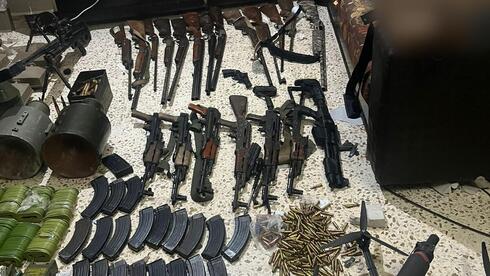
[1] Wikipedia, 2026 Israel, Lebanon ceasefire (B) · sha256:7d02a8897b17 [2] cnn.com, Why Lebanon may hold the key to the future of the Iran war | CNN (A) · sha256:0517c6c770fc [3] The Media Line, US pressure limits Israel as Iran steps in to save a weakened Hezbollah, experts say - analysis (B) · sha256:1973c8962aca [4] dropsitenews.com, Israel kills 29 in Lebanon strikes; DOJ moves to strip citizenship from 17; Trump’s World Cup restrictions (B) · sha256:47173c3e4ca5 [5] bbc.com, Israeli strikes in southern Lebanon kill 17, reports say (A) · sha256:0fd82485c7b8 [6] Wikipedia, Hezbollah, Israel conflict (2023, present) (B) · sha256:97df5a1d340e [7] The Jerusalem Post, Why isn't the war that was supposed to be over, over? - analysis (B) · sha256:794869d0658e [8] cnn.com, Iran’s new leaders are taking risks their predecessors avoided | CNN (A) · sha256:0610577e8e86 [9] Atlantic Council, From a gap to a chasm: Diverging US and Israeli interests in the war with Iran (C) · sha256:4801ff247aa1 [10] Prism Media, Israel strikes Iran after missile barrage, escalating regional war fears (B) · sha256:79026e18de18 [11] newsweek.com, Trump can succeed in Lebanon where Obama failed | Opinion (B) · sha256:9ebe4cf8c766 [12] watanonline.com, غزة تحت مقصلة "التصعيد الإقليمي": 13 شهيداً في غارات جديدة. وإسرائيل تغلق معبر المساعدات بذريعة "حرب إيران"! - وطن - يغرد خارج السرب (B) · sha256:da7c745d3715 [13] NASA, NASA FIRMS thermal detections, Gaza (2d) (A) · sha256:8bb3c046f7cb [14] Drop Site News, Israel Intensifies the Killing in Gaza as the World Looks Away (D) · sha256:7595c13839a9 [15] bbc.com, JD Vance says Netanyahu 'has got some things wrong' (A) · sha256:ce457c958e45 [16] bellingcat.com, Satellite Imagery Shows Ongoing Demolitions Across Southern Lebanon - bellingcat (B) · sha256:052733cd55f8 [17] ynetnews.com, IDF uncovers Hezbollah’s secret arsenal on Beaufort Ridge: ‘Gaza terror model in the north’ (B) · sha256:7066675baaa4
Source content hashes were computed at collection time; the cited text is preserved unmodified for the life of this product.
Red cell review: PARTIAL DISSENT
TLP:CLEAR