TLP:CLEAR · Disclosure is not limited.
Israel-Gaza Regional Escalation: Lebanon Front Hardens as Gaza Ceasefire Fails Operationally
Time window: Last 7 days · Audience: General analyst · Type: Situation report · DTG: 2026-09-12 13:07Z · Overall confidence: HIGH
BLUF
Very likely Israeli military activity in southern Lebanon will continue, keeping the June Israel-Lebanon framework and associated ceasefire arrangements operationally fragile. Gaza's ceasefire will remain ineffective in practice, while likely Houthi control of Mocha, Mayun and adjacent Bab al-Mandeb positions will widen the regional risk picture.
Executive summary
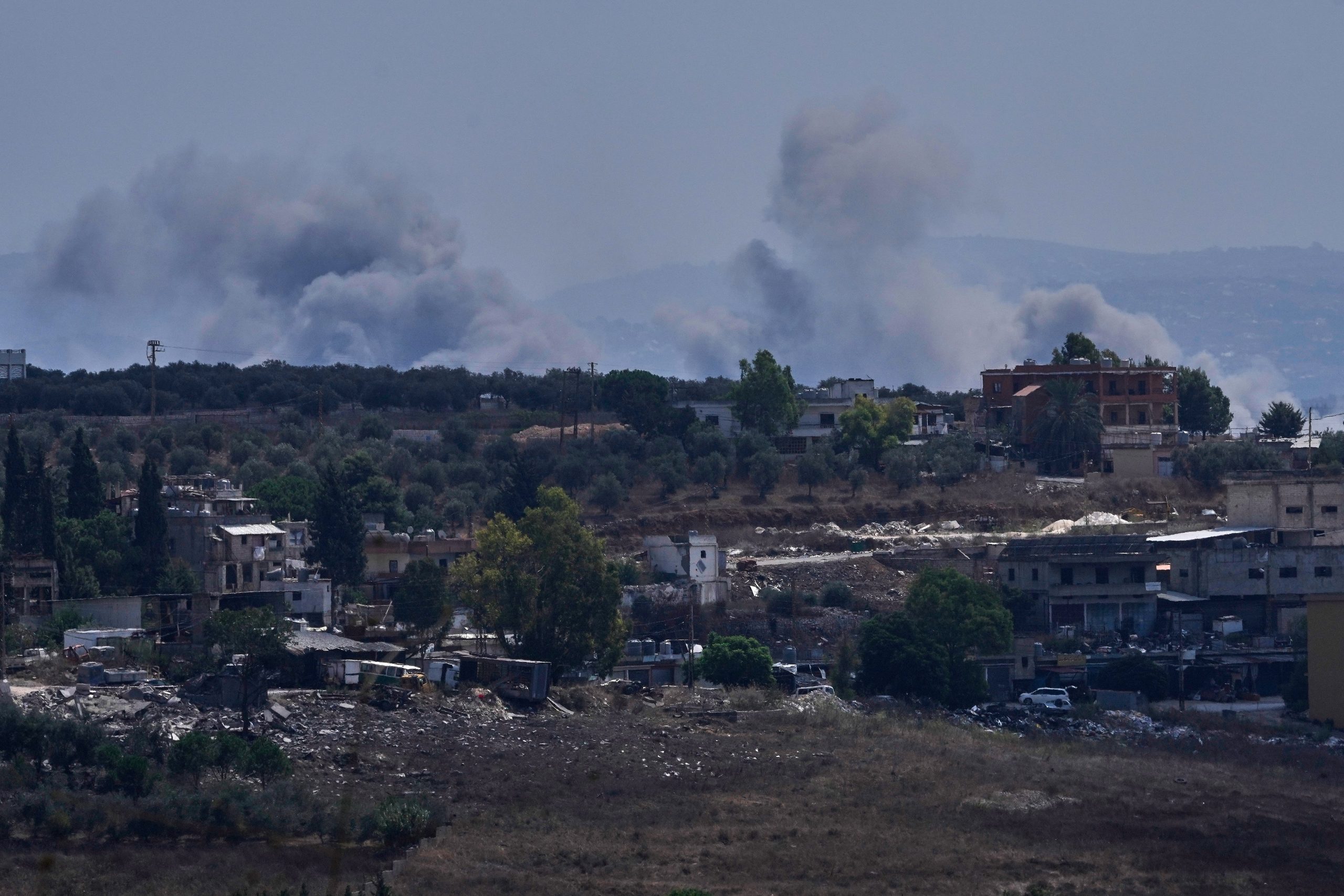
Between 5 and 12 September, Israeli forces continued strikes and artillery fire across southern Lebanon, while Israel announced control of the Ali al-Taher Ridge and pledged to retain forces in southern Lebanon until Hezbollah is disarmed. UNIFIL recorded 528 Israeli projectiles, 62 Israeli airspace violations on one day and one Hezbollah projectile during the reporting period. In Gaza, the reported ceasefire casualty toll reached 1,303 fatalities and 4,336 injuries, while 58 per cent of the population faced critical or catastrophic shelter needs and 91 per cent of surveyed households reported moderate-to-high water shortages. The Houthis captured Mocha and Mayun, while Yemeni government forces reported counterstrikes along the Mocha-Dhubab road. US-mediated Israel-Lebanon talks have been postponed to October according to US reporting, but Lebanese President Joseph Aoun said there would be no new negotiations with Israel at present.
Change from previous assessment
Since the 11 September brief, the assessment has shifted towards a higher likelihood of a major Israel-Hezbollah exchange, driven by Israel's destruction of the Ali al-Taher tunnel network, the pledge by Benjamin Netanyahu and Israel Katz to keep forces in southern Lebanon and fresh strikes around al-Mansouri, Nabatieh al-Fawqa and Kfar Reman. Confidence in that judgment remains medium because Iranian involvement at the ridge is still disputed. The diplomatic picture has also worsened or become less clear: US reporting describes a postponement to October, while Joseph Aoun describes a current halt to negotiations. The regional maritime assessment now incorporates Houthi captures of Mocha and Mayun, reported control around Perim and Dhubab, Yemeni government counterstrikes and the Saudi East-West pipeline disruption. Gaza's humanitarian assessment is unchanged in direction but now rests on additional water, shelter and structural-damage indicators. This is an update to the prior brief, not an initial assessment.
Key judgments
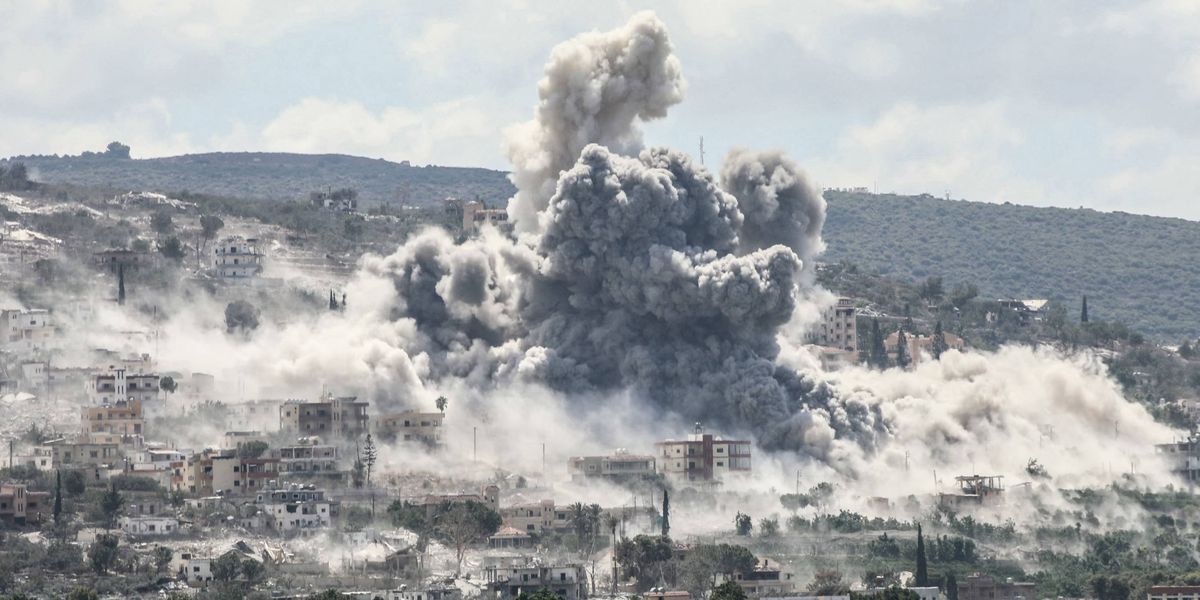
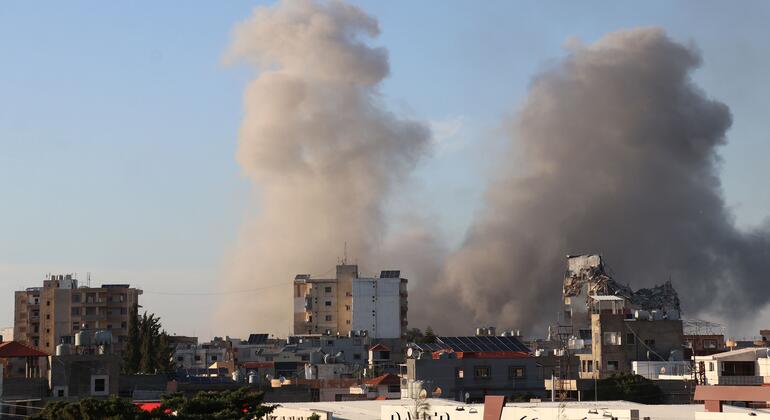
- Very likely Israeli military activity in southern Lebanon will continue over the next 0-14 days, keeping the June Israel-Lebanon framework and associated ceasefire arrangements operationally fragile. UNIFIL recorded 528 Israeli projectiles between Thursday and Monday and 62 Israeli airspace violations on Sunday, while it detected one Hezbollah projectile, the first since 21 June. Israeli forces also struck Kafr Rumman, al-Mansouri and Nabatieh al-Fawqa, shelled Kfar Reman, Arnoun and Wadi al-Salouqi, and Israeli leaders pledged to retain forces in southern Lebanon. Confidence is high because UNIFIL, Lebanese reporting and major-media accounts corroborate the continued activity, although the precise legal status of the ceasefire remains contested. (Confidence: high · ASSESSED)
- I&W: Confirm: UNIFIL records another sequence of Israeli projectile fire or more than 20 Israeli airspace violations in a day, alongside fresh strikes in Kafr Rumman, al-Mansouri or Nabatieh al-Fawqa. (0-14 days)
- I&W: Break: Israel announces a withdrawal from Ali al-Taher and UNIFIL records no Israeli projectile fire, Israeli airspace violations or Hezbollah launches for 14 consecutive days. (0-14 days)
- Likely a major Israel-Hezbollah exchange over the next 1-3 months, defined by repeated Hezbollah drone or projectile launches and further Israeli air or ground operations. Israel has destroyed the reported Hezbollah tunnel network beneath Ali al-Taher, pledged to remain in southern Lebanon until Hezbollah is disarmed and responded to claimed Hezbollah explosive-drone launches with strikes on Hezbollah infrastructure. The reported presence of IRGC-Quds Force officers at the site remains disputed by an Israeli military statement that no Iranian personnel were identified among those captured. Confidence is medium because the operational pattern is corroborated, but the Iranian role and the forecast of a major exchange rest partly on contested reporting. (Confidence: medium · ASSESSED)
- I&W: Confirm: Hezbollah launches at least three explosive drones or projectiles towards Israeli forces within seven days, or Israel begins new ground operations beyond the Ali al-Taher Ridge. (0-14 days)
- I&W: Break: No further Hezbollah projectile or drone launches are detected for 30 days and Israel halts operations at and beyond Ali al-Taher without announcing a new security-zone advance. (1-3 months)
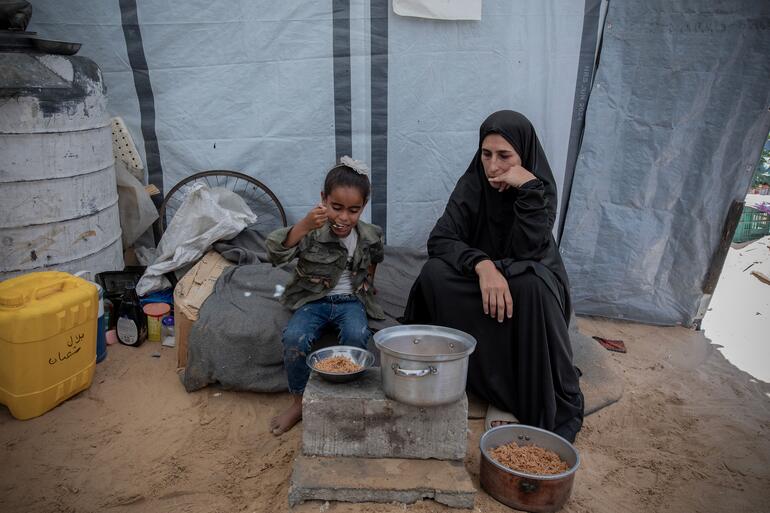
- Very likely the Gaza ceasefire will remain operationally ineffective and humanitarian pressure will worsen over the next 1-3 months. Gazan health authorities cited by OCHA reported 1,303 fatalities and 4,336 injuries since the ceasefire, while UN reporting described ongoing Israeli airstrikes, 58 per cent of the population facing critical or catastrophic shelter needs, 91 per cent of surveyed households facing moderate-to-high water shortages and most of Gaza's approximately 2.1 million people remaining displaced. Palestinians are confined to less than 40 per cent of the Gaza Strip, and UN assessments recorded extensive structural and housing damage. Confidence is high for the broad trend because UN, OCHA, UN Women and major-media reporting converge, although individual strike attribution and casualty accounting remain less certain. (Confidence: high · ASSESSED)
- I&W: Confirm: OCHA reports additional strike-related fatalities or injuries while shelter and water indicators remain at or above the current levels, including 58 per cent with critical or catastrophic shelter needs or 91 per cent with moderate-to-high water shortages. (0-14 days)
- I&W: Break: Israeli authorities lift restrictions beyond the Yellow and Orange lines and OCHA records no new strike-related fatalities for 14 consecutive days. (0-14 days)
- Likely Houthi control of Mocha, Mayun and adjoining Bab al-Mandeb positions will sustain maritime and regional security risk over the next 0-14 days. The Houthis captured Mocha and Mayun, Yemeni government sources reported a withdrawal from Perim and Houthi control of Dhubab, and Yemeni government forces launched airstrikes and reported attacks on Houthi vehicles and personnel near the Mocha-Dhubab road. Houthi military spokesperson Yahya Saree said shipping remained safe except for Saudi vessels, while Saudi Arabia halted its East-West oil pipeline after drone attacks. Confidence is medium because territorial-control reporting comes partly from Yemeni government sources and the extent of the maritime threat remains contested by Houthi statements. (Confidence: medium · ASSESSED)
- I&W: Confirm: Houthi authorities extend the shipping ban beyond Saudi vessels, or Yemeni government forces continue airstrikes and ground attacks along the Mocha-Dhubab road and around Mayun or Perim. (0-14 days)
- I&W: Break: Yemeni government forces retake Mocha or Mayun, or Houthi authorities publicly lift the ban on Saudi vessels and maritime traffic remains unaffected for 14 days. (0-14 days)
- Likely the US-mediated Israel-Lebanon diplomatic track will remain stalled or ambiguous through October. A US official reported that the next Rome round was postponed to October, while President Joseph Aoun said there would be no new negotiations with Israel at present. At the same time, the Lebanese and Israeli ambassadors are due to meet at the US Department of State to discuss implementation of the June framework, which calls for Hezbollah disarmament, gradual Israeli withdrawal and Lebanese army deployment in pilot zones. Confidence is medium because the reporting supports a postponement of the scheduled round but conflicts over whether the broader negotiating track is merely delayed or currently suspended. (Confidence: medium · ASSESSED)
- I&W: Confirm: The October Rome round receives no confirmed date, President Aoun repeats that negotiations are suspended, or the ambassadorial meeting produces no implementation timetable. (0-1 month)
- I&W: Break: The Lebanese and Israeli ambassadors meet at the Department of State and announce a dated October negotiating round with agreed steps for Lebanese army deployment or Israeli withdrawal. (0-1 month)
Outlook & scenarios
Likely fragile containment (45%)
Israeli strikes and surveillance activity continue in southern Lebanon without a sustained Hezbollah salvo. Gaza remains under an ineffective ceasefire with continuing casualties and humanitarian deterioration. The Israel-Lebanon diplomatic track remains delayed, while Houthi control around Mocha and Bab al-Mandeb produces persistent but uneven maritime pressure.
Expanded Israel-Hezbollah exchange (30%)
Hezbollah follows the reported drone activity with repeated attacks, and Israel expands operations beyond Ali al-Taher. Civilian casualties and displacement in Nabatieh District rise, the October diplomatic track is suspended in practice, and Lebanon's framework agreement loses further operational relevance.
Maritime spillover becomes the main regional channel (20%)
The Houthis retain Mocha, Mayun and nearby coastal positions while Yemeni government counterstrikes continue. Houthi restrictions on shipping widen beyond Saudi vessels, Saudi pipeline disruption persists and the separate Strait of Hormuz shipping crisis remains active.
Very unlikely direct Iran-Israel exchange (5%)
Iran implements its reported warning after the Ali al-Taher operation, or Iranian personnel involvement at the site is independently verified and followed by Israeli action against Iran. The result would be a direct Iran-Israel confrontation alongside the existing Lebanon, Gaza and maritime fronts.
Recommendations
- Treat southern Lebanon as an active ceasefire-monitoring priority for the next 14 days. Maintain a daily cross-check of UNIFIL projectile and airspace data against reporting from Kafr Rumman, al-Mansouri, Nabatieh al-Fawqa, Arnoun and Wadi al-Salouqi. Flag any new Hezbollah drone or projectile launch and any Israeli ground movement beyond Ali al-Taher.
- Maintain separate diplomatic baselines for a postponed October round and a broader suspension of negotiations. Verify whether the Lebanese and Israeli ambassadors meet at the US Department of State next week and whether they produce a dated negotiating round or implementation milestones for Lebanese army deployment and Israeli withdrawal.
- Track Gaza humanitarian deterioration through OCHA and UN Women indicators rather than individual anecdotal reports. Prioritise weekly changes in strike-related casualties, shelter needs, water shortages, displacement and access beyond the Yellow and Orange lines. Treat NASA FIRMS thermal detections as corroboration of heat only, not proof of a strike or attribution.
- Verify control of Mocha, Mayun and Perim through independent geospatial and reporting checks, then track Yemeni government operations along the Mocha-Dhubab road. Monitor whether the Houthi shipping ban expands beyond Saudi vessels and whether the East-West oil pipeline resumes operations.
- Keep Iranian involvement at Ali al-Taher as disputed in analytic products until independent reporting reconciles the reported IRGC-Quds Force presence with the Israeli military statement that no Iranian personnel were identified among those captured.
- Prepare a contingency update for a direct Iran-Israel exchange and for wider maritime disruption. Use as immediate warning signs a new Iranian attack on Israel, verified Iranian personnel at Ali al-Taher, Houthi attacks on non-Saudi commercial shipping or a renewed closure of Saudi's East-West oil pipeline.
Confidence & uncertainty
Overall confidence is high because the core activity pattern is corroborated by UNIFIL, OCHA, UN Women, United Nations reporting, major-media accounts, wire reporting and official satellite data. Confidence is highest for the persistence of Israeli activity in southern Lebanon, the ineffective Gaza ceasefire and the scale of humanitarian pressure. The main uncertainties concern the status of Israel-Lebanon negotiations, the exact casualty breakdown in Kafr Rumman, reported Iranian personnel at Ali al-Taher and the extent of Houthi control and maritime impact.
Intelligence gaps
- [EEI 1.1 · PARTIAL] Number, type and geolocated coordinates of projectiles (rockets, mortars, anti-tank guided missiles) fired from Lebanon into Israel in the last 24/72 hours, including time-stamped launch and impact locations. Recommended collection: signals/intel
- [EEI 1.2 · UNCOVERED] Satellite or aerial imagery showing movement, concentration, or forward displacement of Hezbollah-associated military assets (armored vehicles, artillery pieces, mobile rocket launchers, logistics convoys) to positions within 0-10 km of the Israel-Lebanon border. Recommended collection: satellite/imagery
- [EEI 1.3 · UNCOVERED] Intercepted or captured Hezbollah command-and-control communications or orders explicitly directing cross-border operations or coordinated strikes with Palestinian groups (time-stamped messages, unit identifiers, orders to fire/move). Recommended collection: signals/intel
- [EEI 1.4 · UNCOVERED] Observable changes in Israeli northern-front posture within Israel (numbers and types of reinforcements deployed to northern brigades, activation of reserves, air defense redeployments, evacuation orders or shelter alerts in northern towns), including timestamps and unit IDs where available. Recommended collection: human/intel
- [EEI 2.1 · UNCOVERED] Official or corroborated reports of IDF reservist mobilization and unit-level deployment orders (number of reservists called, named brigades/units ordered to deploy, deployment timelines). Recommended collection: open-source/media
- [EEI 2.2 · UNCOVERED] Satellite or ground imagery showing concentrations of IDF heavy equipment (tanks, infantry fighting vehicles, engineering vehicles), staging areas, field hospitals or forward supply dumps within X km of the Gaza border and at known crossing points. Recommended collection: satellite/imagery
- [EEI 2.3 · UNCOVERED] Change in strike patterns consistent with pre-ground-attack shaping: sustained high-frequency airstrikes on tunnel networks, command nodes, coastal launch sites, and known insurgent concentrations (strike counts, munition types, locations, times). Recommended collection: open-source/media
- [EEI 2.4 · UNCOVERED] Logistics indicators: verified convoys of fuel/ammunition entering staging areas, establishment of forward logistics or medical bases, or documented requisitioning orders for bulk combat supplies with timestamps and quantities. Recommended collection: human/intel
- [EEI 3.1 · PARTIAL] Number, participants and content of diplomatic contacts or negotiation sessions in the last 48 hours involving mediators (Egypt, Qatar, US, UN), including any proposed ceasefire text, prisoner/exchange lists, timelines or verification mechanisms. Recommended collection: diplomatic
- [EEI 3.2 · UNCOVERED] Public statements, press releases or verified communiqués from Hamas and other Gaza armed groups specifying acceptance, rejection, or conditions for a ceasefire (explicit conditions such as prisoner release lists, withdrawal terms, lifting of blockades), with timestamps and speaker attribution. Recommended collection: open-source/media
- [EEI 3.3 · PARTIAL] Humanitarian indicators relevant to ceasefire: establishment and operation of agreed humanitarian corridors/checkpoints, number of aid deliveries admitted, civilian evacuations completed, and NGO/hospital reports of access denials or safe-passage violations. Recommended collection: humanitarian/NGO reports
- [EEI 3.4 · PARTIAL] Operational evidence of a de facto pause: verified sustained reduction (e.g., ≥12 hours) in strikes or launches from either side in specific sectors, supported by strike/impact logs, radar tracks and incident reports. Recommended collection: open-source/media
TLP:CLEAR