TLP:CLEAR · Disclosure is not limited.
Israel-Gaza Regional Escalation: Lebanon Front Intensifies as Gaza Ceasefire Fails
Time window: Last 7 days · Audience: General analyst · Type: Situation report · DTG: 2026-09-13 13:07Z · Overall confidence: HIGH
BLUF
Very likely Israeli military activity in southern Lebanon will continue, keeping the June ceasefire framework operationally fragile and increasing pressure on Hezbollah to respond. Gaza's ceasefire remains ineffective in practice, while Houthi gains in Yemen and reported US-Iran maritime exchanges sustain a wider regional escalation risk.
Executive summary
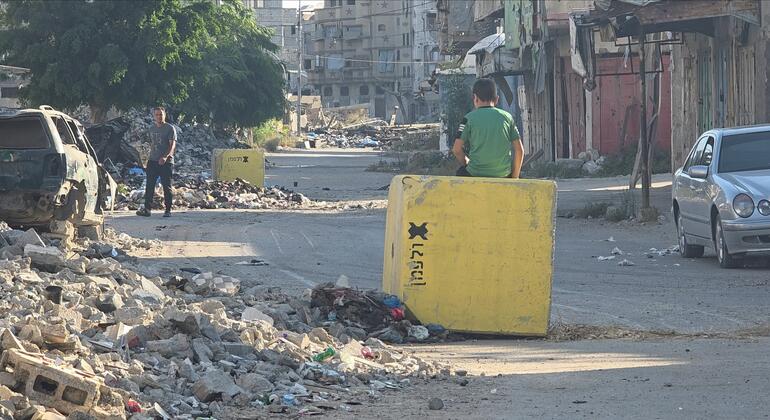
The latest reporting shows simultaneous deterioration in Gaza and southern Lebanon. UNIFIL recorded 528 Israeli projectiles and 62 Israeli airspace violations in southern Lebanon, alongside one Hezbollah projectile, while Israeli forces destroyed underground infrastructure at the Ali Al-Taher heights and stated that they would retain a security zone until Hezbollah is disarmed. In Gaza, Israeli strikes continue despite the October 2025 ceasefire, with more than 1,300 reported deaths since the agreement, further displacement, restricted access to less than 40 per cent of the Strip and hospital generator failures caused by shortages. The Israel-Lebanon diplomatic track remains undated, while Houthi advances along Yemen's Red Sea coast and disputed US-Iran maritime attacks add regional risk.
Change from previous assessment
Since the 12 September brief, the assessment places greater weight on the destruction of the Ali Al-Taher complex, including the stated use of more than 1,000 tonnes of explosives and Israel's expanded description of its security zone. The Gaza judgment is unchanged but has become more acute following the 13 September Tal al-Hawa strike and reports of hospital generator failures. The Israel-Lebanon diplomatic judgment is now more explicitly tied to the absence of an official date for the eighth negotiation round and the 16-17 September Paris preparatory meeting. The maritime judgment is retained, with medium confidence because new reporting adds both Houthi territorial gains and further conflicting accounts of US-Iran tanker and shipping incidents.
Key judgments
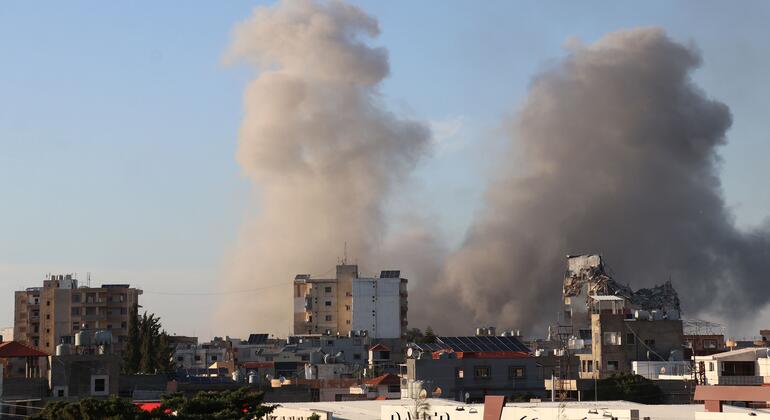
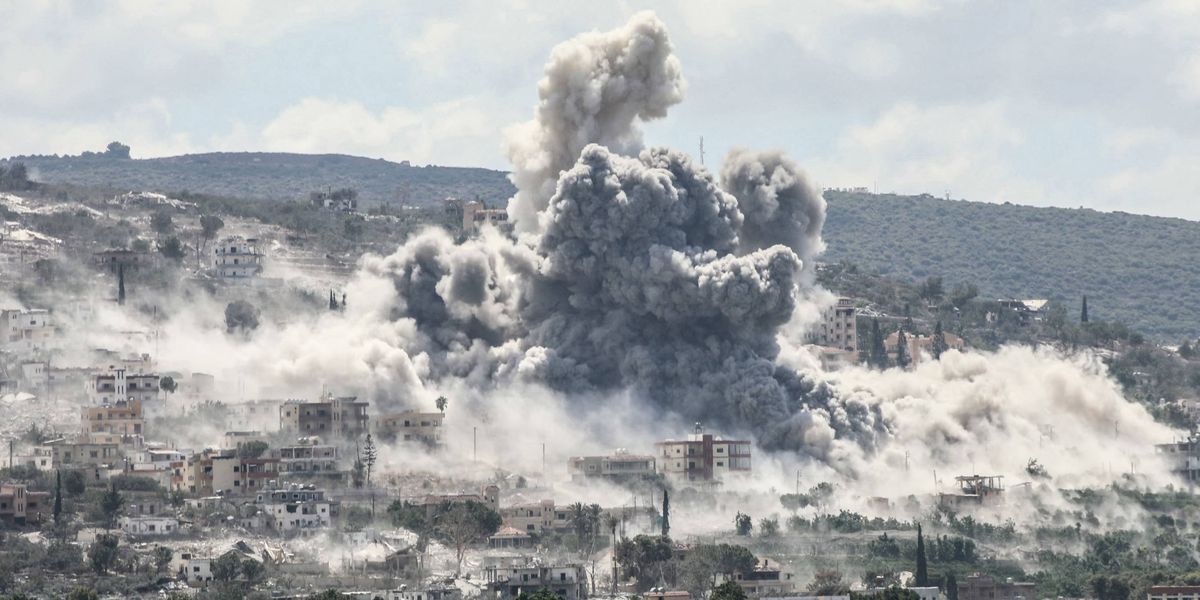
- Very likely Israeli military activity in southern Lebanon will continue over the next 0-14 days, keeping the June ceasefire framework operationally fragile. UNIFIL recorded 528 Israeli projectiles between Thursday and Monday and 62 Israeli airspace violations on Sunday, while detecting one Hezbollah projectile, the first since 21 June. Israeli forces also struck Kafr Rumman, Nabatieh, Nabatieh al-Fawqa and Mansouri. Israeli authorities attribute the operations to Hezbollah explosive-drone launches, while Lebanese and UN reporting attributes the escalation to Israeli attacks, so responsibility for the immediate breach remains contested. Confidence is high because UNIFIL, UN reporting and major-media accounts corroborate the continued military activity, although the trigger and legal status of the ceasefire remain disputed. (Confidence: high · ASSESSED)
- I&W: Confirm: UNIFIL records additional Israeli projectiles or airspace violations in southern Lebanon, or another Hezbollah projectile or explosive-drone launch. (0-14 days)
- I&W: Break: UNIFIL reports no Israeli projectiles or airspace violations and no Hezbollah projectile launches for 14 consecutive days. (0-14 days)
- Likely Israel will consolidate its security zone in southern Lebanon rather than rapidly withdraw over the next 1-3 months. Israel has retained control of the Ali Al-Taher heights, destroyed a large underground Hezbollah complex and stated that its security zone extends from the coast to Beaufort and Mount Hermon. Defence Minister Israel Katz also said the IDF would not withdraw until Hezbollah is disarmed. The scale of the destroyed tunnel network remains contested, with Israeli accounts describing either two tunnels spanning more than 2 kilometres or eight routes totalling more than 5,400 metres. Confidence is medium because the assessment rests heavily on Israeli statements and actions, while the tunnel description and ceasefire attribution are disputed. (Confidence: medium · ASSESSED)
- I&W: Confirm: Israel continues to deploy forces at or around Ali Al-Taher and publicly reaffirms that Israeli forces will remain in the security zone until Hezbollah is disarmed. (0-14 days)
- I&W: Break: Israel announces and begins a withdrawal from Ali Al-Taher or narrows the security zone described by Benjamin Netanyahu and Israel Katz. (1-3 months)
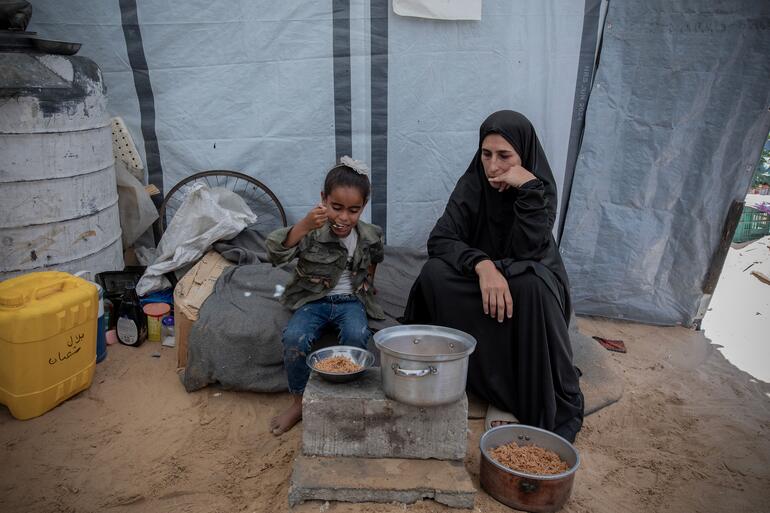
- Very likely Gaza's October 2025 ceasefire will remain operationally ineffective and humanitarian pressure will worsen over the next 1-3 months. UN agencies report continuing Israeli military operations and strikes, while local authorities cited by OCHA report 1,334 deaths and 4,429 injuries since the ceasefire announcement. An Israeli strike in Tal al-Hawa, Gaza City, on 13 September killed at least two people and wounded 13, and Gaza's Ministry of Health reported that several hospital generators had stopped working because of shortages of oil, fuel and spare parts. The UN reports that 2.1 million people remain displaced within the yellow line and that Palestinians live in less than 40 per cent of the Strip. Confidence is high for the broad trend because OCHA, UN agencies and major-media reporting converge, although casualty and shelter figures use different reporting dates and categories. (Confidence: high · ASSESSED)
- I&W: Confirm: UN agencies or OCHA report additional Israeli strikes and rising post-ceasefire casualties, while Gaza's Ministry of Health reports further hospital generator failures or fuel deliveries below the 2,500-litre monthly requirement. (0-14 days)
- I&W: Break: UN agencies report an end to Israeli strikes, sustained humanitarian access and fuel deliveries meeting the stated hospital requirement. (1-3 months)
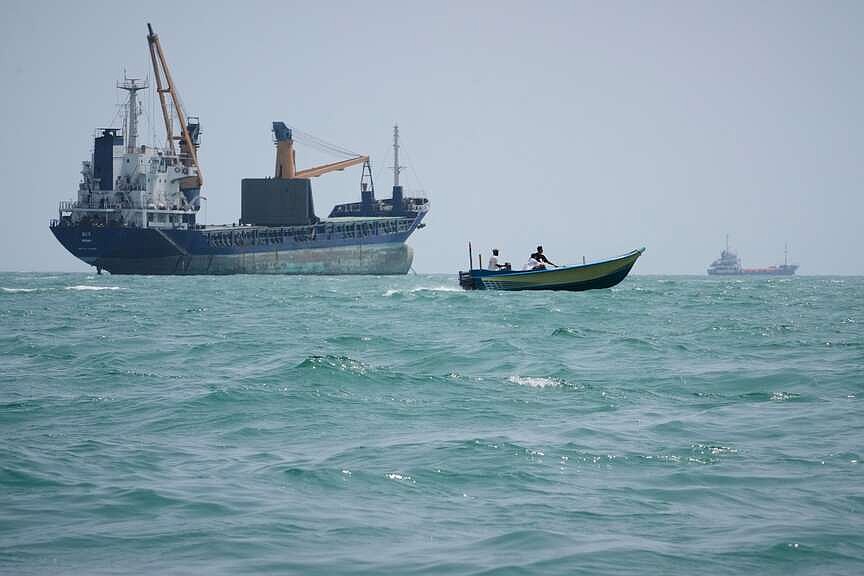
- Likely maritime and regional security risk will remain elevated over the next 0-14 days as Houthi forces consolidate positions along Yemen's Red Sea coast and US-Iran shipping exchanges continue. The Houthis have made a rapid advance across the southern Tihamah, reached Perim in the Bab al-Mandab on 4 September and reportedly captured as much as 130 kilometres of coastline. Satellite imagery shows an apparent attack on Saudi Arabia's East-West pipeline, while the Houthi military says navigation is safe except for Saudi vessels. Iran says it attacked 10 ships after the United States sank five Iranian oil tankers, whereas US reporting describes three tanker strikes and US Central Command denies that Iran struck an uncrewed US vessel. Record VLCC rates, including about 450 Worldscale, or roughly 11.50 dollars per barrel, indicate market pressure. Confidence is medium because territorial control, tanker losses and the scale of maritime attacks remain contested, and Yemen's internationally recognised government also reports recapturing areas of Hodeida and Taiz. (Confidence: medium · ASSESSED)
- I&W: Confirm: Houthi forces announce or demonstrate control of additional Bab al-Mandab positions, or attack another Saudi maritime or energy target. (0-14 days)
- I&W: Break: Yemen's internationally recognised government demonstrates sustained control of Perim and the adjacent Red Sea coast, while no additional ship attacks are reported and VLCC rates fall from record levels. (0-14 days)
- Likely the Israel-Lebanon diplomatic track will remain stalled or ambiguous through late September. A Lebanese official source said Lebanon had received no official US date for the eighth round of direct negotiations with Israel, although Paris is due to host a preparatory meeting supporting the Lebanese army on 16 and 17 September. UN and Lebanese officials continue to call for an immediate cessation of hostilities and Israeli withdrawal, while Lebanese President Joseph Aoun holds Israel responsible for the Nabatieh escalation. Confidence is medium because the forecast rests primarily on one report about the negotiating timetable and the schedule could change after the Paris meeting. (Confidence: medium · ASSESSED)
- I&W: Confirm: the 16-17 September Paris meeting occurs without the United States announcing a date for the eighth Israel-Lebanon negotiation round. (0-14 days)
- I&W: Break: the United States announces a date and Lebanese and Israeli representatives convene the eighth direct negotiation round. (0-14 days)
Outlook & scenarios
Contained but violent ceasefire breakdown (55%)
Over the next 0-14 days, Israel continues strikes and air activity in southern Lebanon, Hezbollah conducts sporadic drone or projectile launches, and Israeli operations continue in Gaza despite the October 2025 ceasefire. The June Israel-Lebanon framework remains formally relevant but ineffective on the ground, while humanitarian conditions in Gaza deteriorate without a formal regional war involving additional state actors.
Southern Lebanon security-zone entrenchment (20%)
Over the next 1-3 months, the IDF retains Ali Al-Taher and other positions in southern Lebanon, Israel maintains its stated security zone from the coast to Beaufort and Mount Hermon, and the eighth Israel-Lebanon negotiation round remains undated. Hezbollah responds through recurring drone or projectile attacks, prompting additional Israeli operations.
Diplomatic pause and partial de-escalation (15%)
The Paris preparatory meeting on 16 and 17 September produces enough movement for the United States to schedule the eighth Israel-Lebanon negotiation round. Israeli and Hezbollah activity declines, UNIFIL movement improves and Gaza receives more reliable humanitarian access, although the underlying disputes over Israeli withdrawal, Hezbollah disarmament and Hamas disarmament remain unresolved.
Very unlikely regional maritime expansion (10%)
A further US-Iran exchange near the Strait of Hormuz coincides with another Houthi attack on Saudi maritime or energy infrastructure. Houthi control of Perim and Red Sea coastal positions then combines with disputed tanker losses to raise shipping costs further and create pressure for wider military responses. This would be a low-probability, high-impact development affecting the Israel-Gaza and Lebanon crisis environment indirectly through regional escalation.
Recommendations
- Maintain a daily southern Lebanon incident matrix using UNIFIL counts of Israeli projectiles, Israeli airspace violations and Hezbollah launches. Separate independently observed activity from Israeli and Lebanese claims about who initiated each exchange.
- Track Ali Al-Taher, Nabatieh and the stated security-zone line as separate indicators. Record any Israeli troop retention, demolition activity, new military positions or official announcements of withdrawal, and flag the conflicting tunnel-size descriptions rather than combining them.
- Update the Gaza humanitarian picture by source and reporting date. Keep separate tallies for post-ceasefire deaths, injuries, critical or catastrophic shelter needs, wider shelter assistance needs, displacement and access restrictions.
- Prioritise confirmation of Gaza hospital operating capacity over the next 14 days. Monitor generator outages, oil and fuel deliveries and whether deliveries approach the stated 2,500-litre monthly hospital requirement.
- Monitor the 16-17 September Paris preparatory meeting and any US announcement of the eighth Israel-Lebanon negotiation round. Treat the absence of a date after the meeting as evidence of continued diplomatic stasis.
- Maintain a separate maritime escalation watch for Perim, Mocha, Dhubab, Saudi Arabia's East-West pipeline and the Strait of Hormuz. Reconcile Houthi, Iranian, US and Yemeni government accounts before assessing territorial control or tanker losses.
Confidence & uncertainty
Overall confidence is high because the central pattern is corroborated by multiple high-reliability sources, including UNIFIL, OCHA, UN News, the UN Secretary-General, BBC, Al Jazeera, Associated Press reporting and wire-service accounts. These sources independently support continued Israeli operations in southern Lebanon, ongoing Israeli strikes and humanitarian deterioration in Gaza, and heightened maritime risk. The main uncertainties concern responsibility for ceasefire violations, conflicting Gaza casualty and shelter figures, the extent of Houthi territorial control, the number of Iranian tankers struck or sunk, and the scale of the Ali Al-Taher tunnel network. Confidence is therefore higher for the direction of travel than for every individual figure or attribution.
Intelligence gaps
- [EEI 1.1 · PARTIAL] Number, type and geolocated coordinates of projectiles (rockets, mortars, anti-tank guided missiles) fired from Lebanon into Israel in the last 24/72 hours, including time-stamped launch and impact locations. Recommended collection: signals/intel
- [EEI 1.2 · UNCOVERED] Satellite or aerial imagery showing movement, concentration, or forward displacement of Hezbollah-associated military assets (armored vehicles, artillery pieces, mobile rocket launchers, logistics convoys) to positions within 0-10 km of the Israel-Lebanon border. Recommended collection: satellite/imagery
- [EEI 1.3 · UNCOVERED] Intercepted or captured Hezbollah command-and-control communications or orders explicitly directing cross-border operations or coordinated strikes with Palestinian groups (time-stamped messages, unit identifiers, orders to fire/move). Recommended collection: signals/intel
- [EEI 1.4 · UNCOVERED] Observable changes in Israeli northern-front posture within Israel (numbers and types of reinforcements deployed to northern brigades, activation of reserves, air defense redeployments, evacuation orders or shelter alerts in northern towns), including timestamps and unit IDs where available. Recommended collection: human/intel
- [EEI 2.1 · UNCOVERED] Official or corroborated reports of IDF reservist mobilization and unit-level deployment orders (number of reservists called, named brigades/units ordered to deploy, deployment timelines). Recommended collection: open-source/media
- [EEI 2.2 · UNCOVERED] Satellite or ground imagery showing concentrations of IDF heavy equipment (tanks, infantry fighting vehicles, engineering vehicles), staging areas, field hospitals or forward supply dumps within X km of the Gaza border and at known crossing points. Recommended collection: satellite/imagery
- [EEI 2.3 · PARTIAL] Change in strike patterns consistent with pre-ground-attack shaping: sustained high-frequency airstrikes on tunnel networks, command nodes, coastal launch sites, and known insurgent concentrations (strike counts, munition types, locations, times). Recommended collection: open-source/media
- [EEI 2.4 · UNCOVERED] Logistics indicators: verified convoys of fuel/ammunition entering staging areas, establishment of forward logistics or medical bases, or documented requisitioning orders for bulk combat supplies with timestamps and quantities. Recommended collection: human/intel
- [EEI 3.1 · UNCOVERED] Number, participants and content of diplomatic contacts or negotiation sessions in the last 48 hours involving mediators (Egypt, Qatar, US, UN), including any proposed ceasefire text, prisoner/exchange lists, timelines or verification mechanisms. Recommended collection: diplomatic
- [EEI 3.2 · PARTIAL] Public statements, press releases or verified communiqués from Hamas and other Gaza armed groups specifying acceptance, rejection, or conditions for a ceasefire (explicit conditions such as prisoner release lists, withdrawal terms, lifting of blockades), with timestamps and speaker attribution. Recommended collection: open-source/media
- [EEI 3.3 · PARTIAL] Humanitarian indicators relevant to ceasefire: establishment and operation of agreed humanitarian corridors/checkpoints, number of aid deliveries admitted, civilian evacuations completed, and NGO/hospital reports of access denials or safe-passage violations. Recommended collection: humanitarian/NGO reports
- [EEI 3.4 · PARTIAL] Operational evidence of a de facto pause: verified sustained reduction (e.g., ≥12 hours) in strikes or launches from either side in specific sectors, supported by strike/impact logs, radar tracks and incident reports. Recommended collection: open-source/media
Cited sources
[1] Common Dreams · 'There Is No Ceasefire': Israel Kills 12 More in Lebanon, Including Children | Common Dreams (B) · Mon Sep 07 2026 18:05:30 GMT+0000 (Coordinated Universal Time) · sha256:fd9f045dafdd [2] United Nations News · UN chief demands Israeli withdrawal from Lebanon amid Nabatieh escalation (A) · Tue Sep 08 2026 19:49:41 GMT+0000 (Coordinated Universal Time) · sha256:6d3bba612fe9 [3] Muslim Network TV (MNTV) · Israeli attacks kill 27 civilians in southern Lebanon - Muslim Network TV (B) · Mon Sep 07 2026 23:32:18 GMT+0000 (Coordinated Universal Time) · sha256:7393fec85f7f [4] BBC · Israel says it has destroyed major underground Hezbollah base (A) · Fri Sep 11 2026 11:34:07 GMT+0000 (Coordinated Universal Time) · sha256:5212b2a9e24b [5] Arab News (arabnews.jp) · After Ali Al-Taher blasts, is Israel recasting southern Lebanon? (A) · Sat Sep 12 2026 03:16:28 GMT+0000 (Coordinated Universal Time) · sha256:d51cbe70710f [6] United Nations (UN News) · ‘Where do we go?’: How Israel’s ‘yellow line’ is closing in on Palestinians (A) · Sat Sep 12 2026 16:00:00 GMT+0000 (Coordinated Universal Time) · sha256:a87b540da688 [7] Associated Press (via WVVA) · US denies that Iran struck an uncrewed US military ship in the Strait of Hormuz (A) · Mon Sep 07 2026 06:06:36 GMT+0000 (Coordinated Universal Time) · sha256:a1df3343cb1f [8] Al Jazeera · Israeli attack on Gaza kills two Palestinians (A) · Sun Sep 13 2026 10:22:01 GMT+0000 (Coordinated Universal Time) · sha256:f7eebc5beb09 [9] United Nations News · In Gaza, women-headed households face ‘impossible choices’ to survive (A) · Tue Sep 08 2026 12:25:03 GMT+0000 (Coordinated Universal Time) · sha256:9ded8b1b77d9 [10] BBC · Lightning Houthi advance in Yemen may bring dangerous new dimension to Iran war (A) · Fri Sep 11 2026 19:44:58 GMT+0000 (Coordinated Universal Time) · sha256:90f1d2fa09f7 [11] Reuters (republished by gCaptain) · Oil Tanker Rates Hit Record Highs Following Iran, US Shipping Attacks (A) · Fri Sep 11 2026 18:21:06 GMT+0000 (Coordinated Universal Time) · sha256:ea58de5951ab [12] Fortune · Iran’s chief negotiator warns retaliation will be 'faster, heavier and more painful' after U.S. hits tankers in response to attack attempt on warships | Fortune (A) · Sun Sep 06 2026 13:49:14 GMT+0000 (Coordinated Universal Time) · sha256:30c75e822d2f [13] Arkansas Democrat-Gazette (arkansasonline.com) · US denies Iran struck vessel (A) · Mon Sep 07 2026 09:00:00 GMT+0000 (Coordinated Universal Time) · sha256:af64ab4f0c54
Source content hashes were computed at collection time; the cited text is preserved unmodified for the life of this product.
TLP:CLEAR