TLP:CLEAR · Disclosure is not limited.
Israel-Gaza Regional Escalation: Persistent Gaza Strikes and Ali Taher Friction
Time window: Last 7 days · Audience: General analyst · Type: Situation report · DTG: 2026-08-26 13:16Z · Overall confidence: MEDIUM
BLUF
Israeli strikes in Gaza are very likely to continue over the next 1-3 months, and stable implementation of the October 2025 ceasefire is unlikely. Israeli forces and Hezbollah are likely to sustain armed friction around Ali Taher Heights and Nabatieh, while a sustained Israeli ground campaign into the tunnel network or Beirut remains unlikely.
Executive summary
Reporting through 26 August 2026 indicates continued Israeli military activity across Gaza, including an overnight 25 August strike that destroyed a nutrition warehouse and Israeli warnings that operations will intensify if kite, drone or balloon launches continue. NASA detected 50 thermal anomalies in Gaza from 25 to 26 August, including five high-confidence detections, but the data cannot establish cause or attribution. Humanitarian conditions remain fragile, with only 12 of approximately 34 oxygen stations operational and UNICEF reporting chronic malnutrition among 12.2 per cent of children. In southern Lebanon, Israeli forces continue operations around Ali Taher Heights and Nabatieh, where reporting describes casualties, route control and Hezbollah claims of resupply. Diplomatic contacts continue, but the presence of Iranian Revolutionary Guard officers inside the facility remains less well corroborated.
Change from previous assessment
Compared with the 25 August 2026 brief, the core outlook is unchanged: Israeli strikes in Gaza remain very likely, humanitarian conditions remain very likely to stay severe, Israeli-Hezbollah friction remains likely, and a sustained wider regional confrontation remains unlikely. New reporting adds Israel's 23 August warning that kite, drone or balloon launches will trigger intensified operations, a 25 August strike on a nutrition warehouse, NASA's detection of 50 thermal anomalies including five high-confidence detections, and further reporting on oxygen shortages. In Lebanon, the current assessment gives greater weight to continuing Israeli operations around Ali Taher Heights and the absence of a date for the next direct Israel-Lebanon negotiations. No prior judgment is retired, but confidence remains low on Israeli intent regarding a tunnel assault or expansion into Beirut.
Key judgments
- Very likely Israeli forces will continue strike activity across Gaza over the next 1-3 months. Reporting describes Israeli attacks that killed at least seven Palestinians, an overnight 25 August strike that destroyed a warehouse holding nutrition supplies, and Israeli warnings to Hamas that operations will intensify if kite, drone or balloon launches continue. NASA recorded 50 thermal anomalies, including five high-confidence detections, from 25 to 26 August, but thermal data record heat rather than cause. Confidence is medium because major-media reporting and NASA provide partial corroboration, while the satellite data do not attribute the activity and recent casualty reporting is not fully consistent. (Confidence: medium · ASSESSED)
- I&W: CONFIRM: The Israel Defense Forces or Israeli government announces intensified operations after further kite, drone or balloon launches, followed by reported strikes in Gaza. (0-14 days)
- I&W: BREAK: Fourteen consecutive days pass without reported Israeli strikes in Gaza and NASA FIRMS records no high-confidence thermal detections there. (0-14 days)
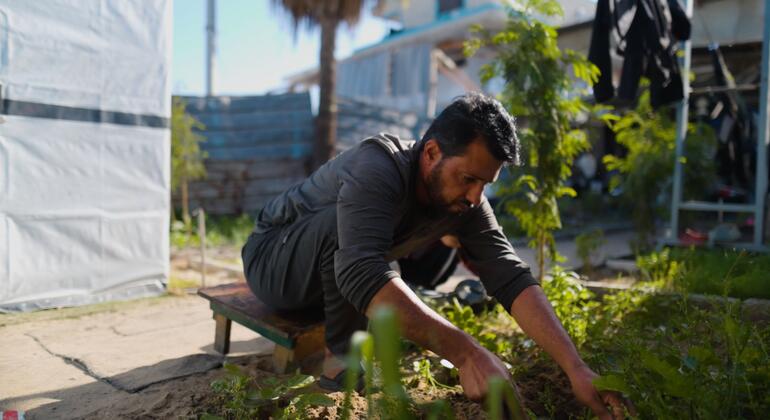
- Very likely severe humanitarian conditions will persist in Gaza over the next 1-3 months. UNICEF reports chronic malnutrition among 12.2 per cent of children and warns that the situation remains fragile. Gaza's Ministry of Health reports that only 12 of approximately 34 oxygen stations remain operational and warns of a complete collapse of basic necessities. The destruction of a nutrition-supply warehouse on 25 August adds a current constraint on assistance. Confidence is high because UNICEF and multilateral reporting corroborate the core assessment, although the oxygen and warehouse reporting relies on Gaza health authorities and major-media accounts. (Confidence: high · ASSESSED)
- I&W: CONFIRM: Gaza health authorities report a further breakdown among the 12 operational oxygen stations, or UNICEF reports continued chronic malnutrition and fragile underlying conditions. (0-14 days)
- I&W: BREAK: Gaza health authorities report that most of the approximately 34 oxygen stations have resumed operation and aid agencies report replenished nutrition supplies. (1-3 months)
- Unlikely stable implementation of the Gaza ceasefire over the next 1-3 months. Israeli forces have continued attacks during the ceasefire that took effect in October 2025, while Israel has warned Hamas that kite, drone or balloon launches will trigger intensified operations. Hamas political bureau member Basem Naim rejected the warning, and US President Donald Trump has called for Israel to halt its attacks. Reported Palestinian deaths since the ceasefire range from more than 1,280 to 1,288, so the casualty totals are inconsistent, but the disagreement does not alter the assessment that implementation is unstable. Confidence is medium because the opposing positions and current attacks are reported by major media, while some casualty figures are low-confidence or differently timed. (Confidence: medium · ASSESSED)
- I&W: CONFIRM: Israel implements the announced intensified operations after further kite, drone or balloon launches, while Hamas rejects the warning or reports additional ceasefire breaches. (0-14 days)
- I&W: BREAK: Israel and Hamas announce and sustain a cessation with no reported Israeli strikes in Gaza for 14 consecutive days. (0-14 days)
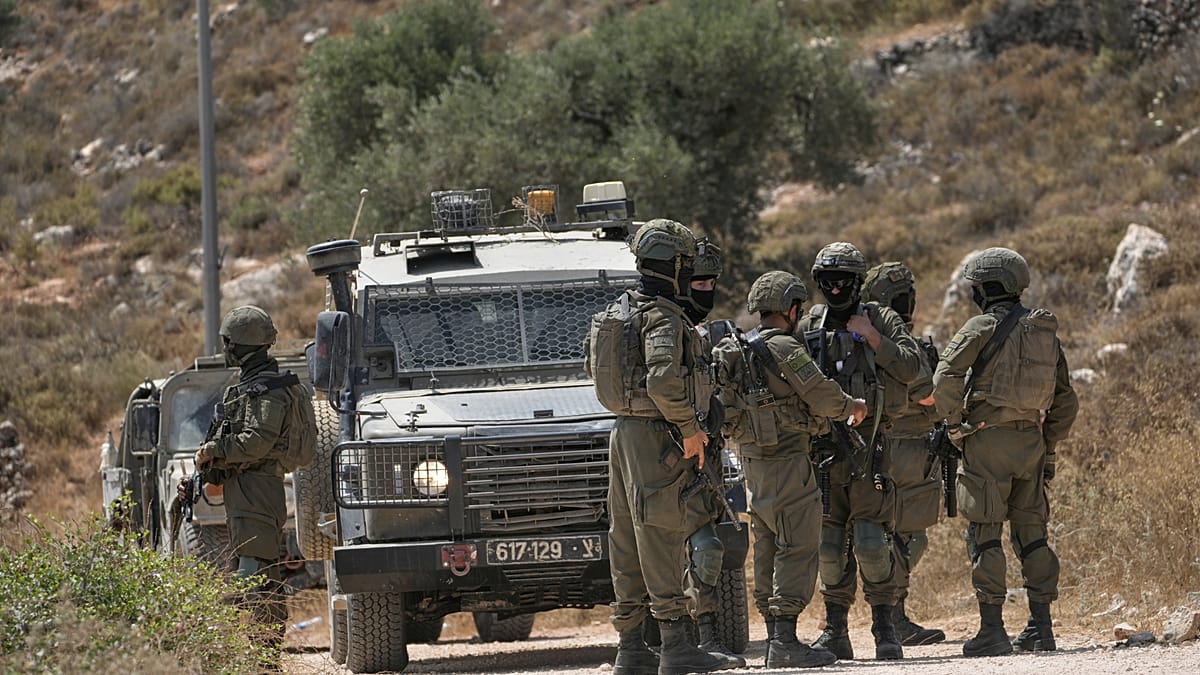
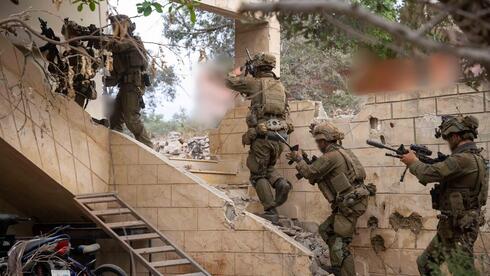
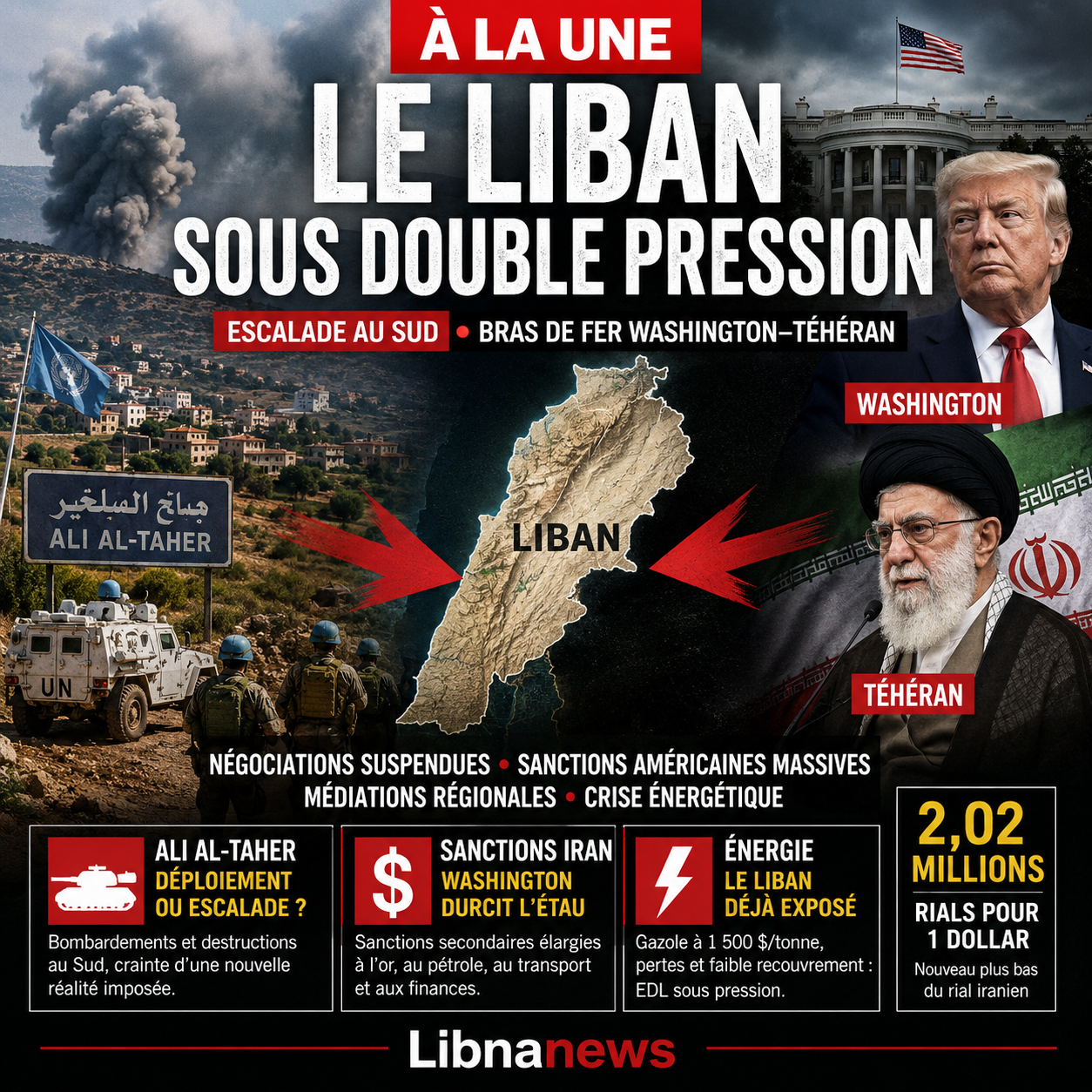
- Likely Israeli forces and Hezbollah will sustain armed friction around Ali Taher Heights and Nabatieh in southern Lebanon over the next 1-3 months. Israel continues military operations around Ali al-Tahir Heights, has deployed units from the 36th Division around Nabatieh and the ridge, and controls most access routes and tunnel entrances. Earlier clashes reportedly killed five IDF soldiers and officers and wounded 21, while Hezbollah lost more than 20 men. Claims that several dozen Hezbollah fighters and Iranian Revolutionary Guard officers remain underground and that Hezbollah has resupplied them are less well corroborated than reporting on Israeli activity. Confidence is medium because multiple major-media reports support the Israeli activity and casualties, while the underground presence and resupply claims remain largely single-source. (Confidence: medium · ASSESSED)
- I&W: CONFIRM: The IDF reports continued activity by 36th Division units around Nabatieh or Ali Taher Heights, or Hezbollah reports further resupply attempts and casualties at the facility. (0-14 days)
- I&W: BREAK: The Lebanese Army takes an acknowledged position on Ali Taher Heights and diplomatic contacts produce an arrangement that ends Israeli and Hezbollah activity there for 30 days. (1-3 months)
- Unlikely Israeli forces will launch a sustained ground assault into the Ali Taher tunnel network or expand current Lebanon operations into Beirut over the next 1-3 months. Israeli forces have the capability to escalate but are reportedly avoiding a step that would open a new regional round, and the Israeli military is cautious about prolonged tunnel combat. Continued control of access routes and ongoing diplomatic contacts support containment. This is a low-confidence assessment because it infers Israeli intent from medium-confidence major-media reporting rather than from a clear official decision. (Confidence: low · ASSESSED)
- I&W: CONFIRM: Israeli forces retain control of access routes, avoid entering the tunnel network and continue or expand diplomatic contacts over Ali Taher Heights. (0-14 days)
- I&W: BREAK: Israeli ground forces enter the tunnel network, conduct a new strike in Beirut or cause confirmed casualties among Hezbollah and Iranian Revolutionary Guard personnel at Ali Taher Heights. (0-14 days)
Outlook & scenarios
Contained but persistent Gaza and southern Lebanon friction (55%)
Israeli forces continue targeted operations across Gaza, including activity linked to kite, drone or balloon launches, while Hezbollah-Israel friction remains concentrated around Ali Taher Heights and Nabatieh. Israel retains control of the main access routes without entering the tunnel network, and diplomatic contacts continue. Humanitarian conditions remain severe in Gaza.
Gaza ceasefire degradation (30%)
Israel implements intensified operations after further launches from Gaza, and Hamas rejects the Israeli warning. Repeated strikes produce additional casualties and damage to aid warehouses or oxygen infrastructure. The October 2025 ceasefire remains nominal but fails to constrain Israeli military activity.
Ali Taher escalation (15%)
Further attempts to exit or resupply the Ali Taher complex produce additional IDF and Hezbollah casualties. Israeli forces enter parts of the tunnel network or expand strikes into Beirut, ending the current containment pattern and generating a wider Lebanon confrontation.
Rapid regional spillover involving Iran (8%)
Iranian Revolutionary Guard officers are confirmed inside Ali Taher Heights and are killed or captured during an Israeli operation. Hezbollah responds against Israel, and Iran resumes direct missile or drone strikes on Israeli territory. This is a low-probability, high-impact wildcard.
Recommendations
- Maintain separate Gaza and Lebanon timelines. Record every ceasefire announcement, extension, alleged violation and reported strike with its date, actor, duration and source reliability.
- Run a daily Gaza watch covering Israeli and IDF statements on kites, drones and balloons; reported activity in Khan Younis, Bureij, Deir al-Balah and Beit Lahiya; NASA FIRMS thermal detections; oxygen-station functionality; and the status of nutrition-supply warehouses.
- Treat the presence of Iranian Revolutionary Guard officers and Hezbollah resupply at Ali Taher Heights as unconfirmed until corroborated by at least two independent sources. Prioritise IDF, Hezbollah, Lebanese Army, UNIFIL and geolocated reporting.
- Set immediate escalation alerts for confirmed Israeli ground entry into the Ali Taher tunnel network, a new Israeli strike in Beirut, Hezbollah projectiles into northern Israel, or acknowledged Lebanese Army deployment on Ali Taher Heights.
- Report Gaza casualty figures with the reporting date, geographic scope and source. Do not combine the more than 1,280 and 1,288 figures until the different timeframes and counting methods are resolved.
- Use a 14-day no-strike period, alongside restoration of most oxygen stations and renewed nutrition supplies, as the minimum evidence threshold for lowering the assessment that Gaza ceasefire implementation is unstable.
Confidence & uncertainty
Overall confidence is medium. UNICEF, UN reporting, NASA observations, official Israeli statements and multiple major-media reports provide strong support for the assessments on Gaza's humanitarian conditions and continuing Israeli activity. Confidence is lower on the causes of NASA thermal detections, the precise Gaza casualty totals, the chronology and durability of Lebanon ceasefires, and claims that Iranian Revolutionary Guard officers are inside the Ali Taher facility. Reporting on Ali Taher is also concentrated in medium-confidence major-media and local-media accounts.
Intelligence gaps
- [EEI 1.1 · PARTIAL] Number, type and geolocated coordinates of projectiles (rockets, mortars, anti-tank guided missiles) fired from Lebanon into Israel in the last 24/72 hours, including time-stamped launch and impact locations. Recommended collection: signals/intel
- [EEI 1.2 · UNCOVERED] Satellite or aerial imagery showing movement, concentration, or forward displacement of Hezbollah-associated military assets (armored vehicles, artillery pieces, mobile rocket launchers, logistics convoys) to positions within 0-10 km of the Israel-Lebanon border. Recommended collection: satellite/imagery
- [EEI 1.3 · UNCOVERED] Intercepted or captured Hezbollah command-and-control communications or orders explicitly directing cross-border operations or coordinated strikes with Palestinian groups (time-stamped messages, unit identifiers, orders to fire/move). Recommended collection: signals/intel
- [EEI 1.4 · UNCOVERED] Observable changes in Israeli northern-front posture within Israel (numbers and types of reinforcements deployed to northern brigades, activation of reserves, air defense redeployments, evacuation orders or shelter alerts in northern towns), including timestamps and unit IDs where available. Recommended collection: human/intel
- [EEI 2.1 · UNCOVERED] Official or corroborated reports of IDF reservist mobilization and unit-level deployment orders (number of reservists called, named brigades/units ordered to deploy, deployment timelines). Recommended collection: open-source/media
- [EEI 2.2 · UNCOVERED] Satellite or ground imagery showing concentrations of IDF heavy equipment (tanks, infantry fighting vehicles, engineering vehicles), staging areas, field hospitals or forward supply dumps within X km of the Gaza border and at known crossing points. Recommended collection: satellite/imagery
- [EEI 2.3 · PARTIAL] Change in strike patterns consistent with pre-ground-attack shaping: sustained high-frequency airstrikes on tunnel networks, command nodes, coastal launch sites, and known insurgent concentrations (strike counts, munition types, locations, times). Recommended collection: open-source/media
- [EEI 2.4 · UNCOVERED] Logistics indicators: verified convoys of fuel/ammunition entering staging areas, establishment of forward logistics or medical bases, or documented requisitioning orders for bulk combat supplies with timestamps and quantities. Recommended collection: human/intel
- [EEI 3.1 · UNCOVERED] Number, participants and content of diplomatic contacts or negotiation sessions in the last 48 hours involving mediators (Egypt, Qatar, US, UN), including any proposed ceasefire text, prisoner/exchange lists, timelines or verification mechanisms. Recommended collection: diplomatic
- [EEI 3.2 · UNCOVERED] Public statements, press releases or verified communiqués from Hamas and other Gaza armed groups specifying acceptance, rejection, or conditions for a ceasefire (explicit conditions such as prisoner release lists, withdrawal terms, lifting of blockades), with timestamps and speaker attribution. Recommended collection: open-source/media
- [EEI 3.3 · PARTIAL] Humanitarian indicators relevant to ceasefire: establishment and operation of agreed humanitarian corridors/checkpoints, number of aid deliveries admitted, civilian evacuations completed, and NGO/hospital reports of access denials or safe-passage violations. Recommended collection: humanitarian/NGO reports
- [EEI 3.4 · PARTIAL] Operational evidence of a de facto pause: verified sustained reduction (e.g., ≥12 hours) in strikes or launches from either side in specific sectors, supported by strike/impact logs, radar tracks and incident reports. Recommended collection: open-source/media
Cited sources
[1] Al Jazeera · Israeli strikes hit water plant, warehouse in Gaza, killing at least seven (A) · sha256:4208184894a2 [2] Al Jazeera · Seven killed in Gaza as Israeli strike ‘destroys’ aid supply warehouse (A) · sha256:65690d005255 [3] aljazeera.com · UN rejects Israel’s threat to expel Gaza residents over kite-flying (A) · sha256:fba827b94122 [4] NASA · NASA FIRMS thermal detections — Gaza (2d) (A) · sha256:b9b448faf0ba [5] United Nations · Gaza: Children still at risk despite drop in acute hunger (A) · sha256:bad24cef5838 [6] libnanews.com · استعراض صحفي: لبنان تحت الضغط بين التصعيد في الأسلحة الجنوبية والأيرانية الأمريكية (D) · sha256:504f251813b3 [7] ynetnews.com · The IDF can decide how the battle on the Ali Taher Ridge ends. This is why it is in no hurry (B) · sha256:70c6dc07b00e [8] Euronews · حسابات إقليمية معقدة. لماذا تتجنب إسرائيل حسم معركة "علي الطاهر" في جنوب لبنان؟ (A) · sha256:b2bca985924e
Source content hashes were computed at collection time; the cited text is preserved unmodified for the life of this product.
TLP:CLEAR