TLP:CLEAR · Disclosure is not limited.
Israel-Gaza Regional Escalation: Situation Report, 19 October 2026
Time window: Last 7 days · Audience: General analyst · Type: Situation report · DTG: 2026-10-19 13:09Z · Overall confidence: HIGH
BLUF
The Gaza ceasefire is not preventing continued violence: reporting describes almost daily Israeli strikes, while the World Food Programme is cutting assistance. Settler attacks in the West Bank remain frequent, and the recent explosives seizure in Lebanon raises Hezbollah-Lebanese state tensions, but the supplied reporting does not establish a new Israel-Hezbollah escalation.
Executive summary
Reporting through 19 October describes continued Israeli strikes in Gaza despite the year-old ceasefire, alongside worsening humanitarian conditions as the World Food Programme reduces food assistance because of funding shortages. West Bank reporting adds attacks on Washington Post journalist Heidi Levine and European diplomats in Taybeh, at least 10 arrests, and high reported rates of settler violence during the olive harvest. In Lebanon, the government seized explosives linked to Hezbollah, which demanded their return; reporting also describes Israeli strikes continuing in southern Lebanon and an uncertain negotiation track. The evidence does not establish that the seizure has triggered renewed Israel-Hezbollah hostilities. UK pressure over the E1 settlement tender has continued, including new sanctions powers and a commitment to introduce legislation.
Change from previous assessment
This update adds reporting on the Sinjil night watch, arrests of six guard committee members and injuries to at least 10 people, as well as a West Bank tally of more than 530 settler-violence incidents since the harvest began. The new tally is not directly comparable with the prior brief's lower count because the supplied reporting does not align their definitions. The Gaza ceasefire, WFP cuts and UK pressure assessments are otherwise unchanged. The Lebanon assessment remains cautious: the explosives seizure and Hezbollah's demand sharpen the evidence of friction, but the supplied reporting still does not establish that the seizure triggered renewed Israel-Hezbollah hostilities.
Key judgments
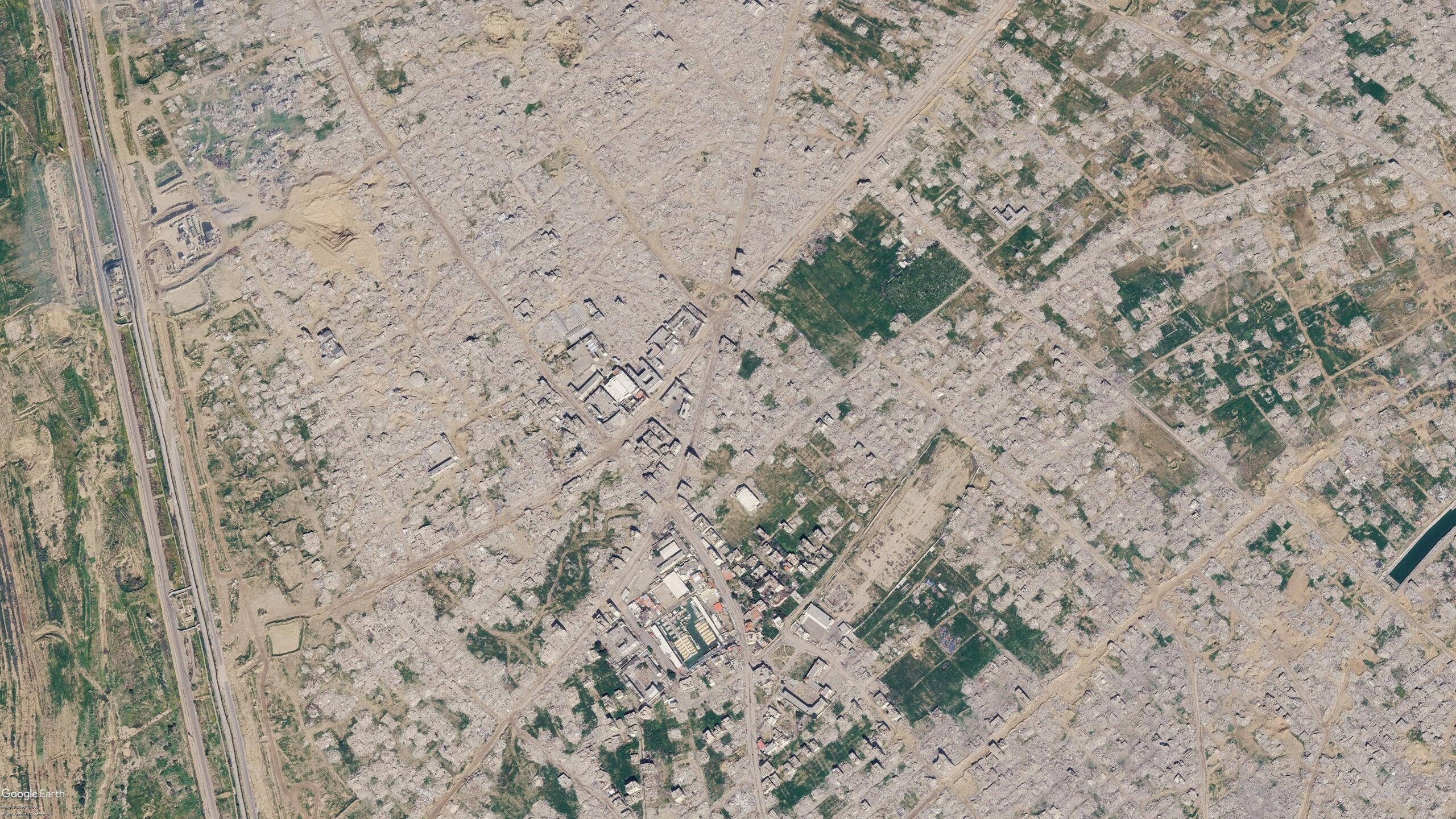
- Israeli strikes in Gaza are very likely to continue over the next 30 days, leaving the year-old ceasefire contested in practice. A 19 October account described almost daily strikes. September 2026 satellite imagery separately showed an IDF outpost in Bani Suheila and continued demolition in Shujaiya and Jabaliya; the imagery does not establish the cause or timing of each demolition. (Confidence: medium · ASSESSED)
- I&W: Confirm: two or more dated reports of Israeli strikes in Gaza within a seven-day period, with the reported locations corroborated by separate reporting. (0-14 days)
- I&W: Break: Israel and Hamas publicly reaffirm observance of the ceasefire and reporting records no Israeli strikes in Gaza for 14 consecutive days. (0-30 days)
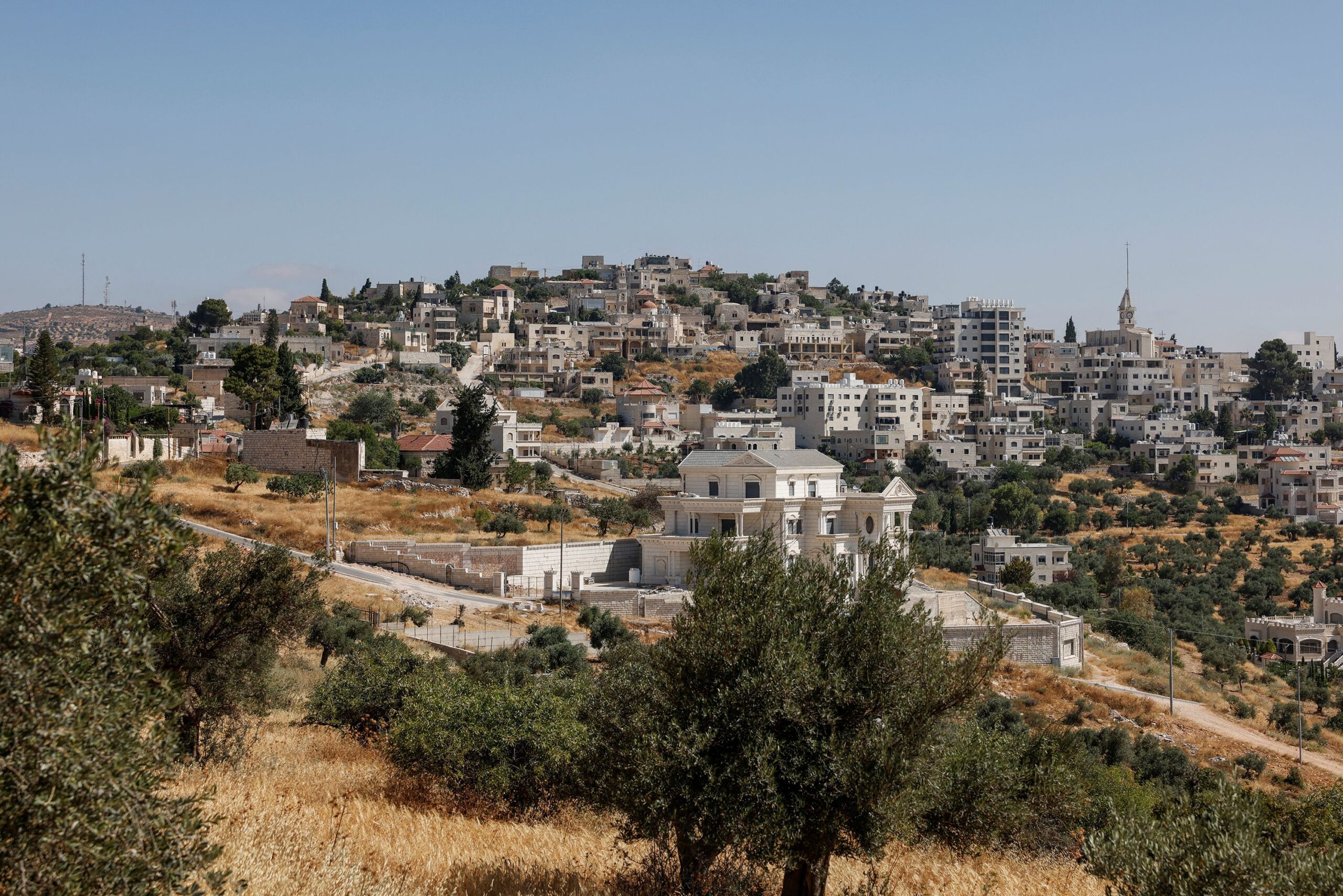
- Settler attacks in the West Bank are likely to continue during the olive harvest. Reporting describes the 16 October attack that hospitalised Washington Post photojournalist Heidi Levine, the 17 October attack on European diplomats in Taybeh, and at least 10 arrests on 19 October. Yesh Din reported more than 530 incidents since the harvest began in late September, averaging 27 per day; the supplied reporting does not establish that this tally uses the same definitions as earlier counts. (Confidence: medium · ASSESSED)
- I&W: Confirm: Yesh Din or another named monitor reports new attacks on olive harvesters or residents in Jalud, Turmus Ayya, Taybeh, Sinjil or al-Mughayyir. (0-30 days)
- I&W: Break: monitoring reports no new attacks in those locations for 14 consecutive days and Israeli police announce prosecutions or convictions arising from the October attacks. (0-30 days)
- The WFP's announced cuts are very likely to reduce food assistance in Gaza. The agency said the number of people it helps will fall from 1.6 million to 1.1 million, monthly recipients of flour and ration boxes from 1.1 million to 600,000, and daily hot meals from 250,000 to 150,000. It attributed the cuts to funding shortages and said it needs $450 million to maintain critical operations for six months. (Confidence: medium · REPORTED)
- I&W: Confirm: WFP distribution updates show assistance at or below the announced levels, including 600,000 or fewer monthly flour and ration recipients or 150,000 or fewer daily hot meals. (0-30 days)
- I&W: Break: WFP announces new funding and confirms that it has maintained its previous recipient and meal levels. (0-3 months)
- The explosives seizure is unlikely by itself to trigger a new, broad Israel-Hezbollah escalation in the next 30 days, although Hezbollah-Lebanese state friction is likely to persist. Lebanese authorities seized hundreds of kilogrammes of explosives linked to Hezbollah, and Hezbollah MP Hassan Fadlallah demanded their return and the release of those arrested. Lebanese President Joseph Aoun said Israeli strikes continued in the South. Reporting on the negotiation track is incomplete, including whether Lebanon received an invitation to the scheduled talks in Tampa. (Confidence: low · ASSESSED)
- I&W: Confirm: Lebanese-Israeli talks proceed at US Central Command headquarters in Tampa on the reported dates, with no verified Hezbollah attack followed by Israeli retaliation. (0-14 days)
- I&W: Break: a verified Hezbollah attack on Israeli forces is followed by an Israeli strike in Lebanon, or the reverse. (0-30 days)
- The reported Iranian transfer of $200 million to Hezbollah is unresolved and should not be treated as established fact. Reuters reported the transfer, while a US State Department official denied that Iran was able to make it. The supplied reporting provides no independent confirmation that resolves the disagreement. (Confidence: low · ASSESSED)
- I&W: Confirm the transfer: Iran or Hezbollah acknowledges receipt, or independently reported financial documentation verifies the transaction. (0-3 months)
- I&W: Break the transfer claim: Reuters corrects its report or independently verifiable documentation shows that the funds were not transferred. (0-3 months)
- UK pressure on Israel over the E1 settlement tender is likely to continue over the next three months. The Israeli tender bid deadline was 19 October; the UK has created powers to sanction individuals and companies involved in settlement construction and committed to legislation on settlement goods and related services. These announced measures do not establish that sanctions have been imposed or legislation enacted. (Confidence: medium · ASSESSED)
- I&W: Confirm: the UK announces named sanctions or introduces the promised settlement goods and services legislation. (0-3 months)
- I&W: Break: the Israeli Government formally withdraws the E1 tender or announces a suspension of the associated development plans. (0-3 months)
Outlook & scenarios
Continued violence under a contested Gaza ceasefire (55%)
Israeli strikes continue in Gaza while the ceasefire remains a reference point in public reporting. WFP reductions proceed, and settler attacks continue during the olive harvest. This is the most likely near-term course on the supplied reporting.
Partial humanitarian relief and reduced violence (20%)
If the WFP secures substantial new funding and Israel permits additional humanitarian supplies into Gaza, announced aid reductions are unlikely to proceed at their stated scale. Fewer reported strikes and attacks would indicate a broader easing, but the supplied reporting does not establish that these changes are under way.
West Bank attacks deepen political pressure (20%)
Settler attacks continue across harvest locations, prompting further arrests and stronger US and UK pressure on Israel. The reported attack rate and the recent attacks on Levine and European diplomats make this a plausible alternative to a gradual reduction in violence.
Lebanon escalation wildcard (5%)
A verified Hezbollah operation or Israeli strike following the explosives seizure could trigger a direct exchange and broader fighting. This is a low-probability, high-impact scenario; the supplied reporting does not establish that either side has initiated a new exchange.
Recommendations
- Maintain a dated incident log for Gaza that records strike locations and reported actors separately from satellite thermal detections. Do not treat heat signatures as proof of a strike or its cause.
- Track WFP distribution figures against the announced recipient and meal levels, and record any confirmed funding against the agency's $450 million requirement.
- Compare subsequent West Bank incident tallies with the same monitors and definitions. Track separately attacks on harvesters, attacks on foreign visitors, arrests, prosecutions and convictions.
- Seek confirmation from Lebanese and US official channels on whether the Tampa talks occurred and whether the Lebanese Government received an invitation. Treat the explosives seizure and the alleged Iranian funding transfer as separate issues.
- Monitor the E1 tender's status and distinguish UK announcements from completed sanctions or enacted legislation.
Confidence & uncertainty
Confidence is high in the broad assessment of continued Gaza violence, worsening food assistance, persistent West Bank attacks and increased political pressure. The picture draws on major-media reporting, official statements, monitoring organisations and separate satellite-imagery reporting. Confidence is lower on exact casualty figures, the scale and definitions behind settler-violence tallies, and the alleged Iranian transfer to Hezbollah. A low-reliability social-media report of an Israeli drone over Beirut does not establish a new attack or Israel-Hezbollah exchange.
Intelligence gaps
- [EEI 1.1 · PARTIAL] Number, type and geolocated coordinates of projectiles (rockets, mortars, anti-tank guided missiles) fired from Lebanon into Israel in the last 24/72 hours, including time-stamped launch and impact locations. Recommended collection: signals/intel
- [EEI 1.2 · UNCOVERED] Satellite or aerial imagery showing movement, concentration, or forward displacement of Hezbollah-associated military assets (armored vehicles, artillery pieces, mobile rocket launchers, logistics convoys) to positions within 0-10 km of the Israel-Lebanon border. Recommended collection: satellite/imagery
- [EEI 1.3 · UNCOVERED] Intercepted or captured Hezbollah command-and-control communications or orders explicitly directing cross-border operations or coordinated strikes with Palestinian groups (time-stamped messages, unit identifiers, orders to fire/move). Recommended collection: signals/intel
- [EEI 1.4 · UNCOVERED] Observable changes in Israeli northern-front posture within Israel (numbers and types of reinforcements deployed to northern brigades, activation of reserves, air defense redeployments, evacuation orders or shelter alerts in northern towns), including timestamps and unit IDs where available. Recommended collection: human/intel
- [EEI 2.1 · UNCOVERED] Official or corroborated reports of IDF reservist mobilization and unit-level deployment orders (number of reservists called, named brigades/units ordered to deploy, deployment timelines). Recommended collection: open-source/media
- [EEI 2.2 · UNCOVERED] Satellite or ground imagery showing concentrations of IDF heavy equipment (tanks, infantry fighting vehicles, engineering vehicles), staging areas, field hospitals or forward supply dumps within X km of the Gaza border and at known crossing points. Recommended collection: satellite/imagery
- [EEI 2.3 · PARTIAL] Change in strike patterns consistent with pre-ground-attack shaping: sustained high-frequency airstrikes on tunnel networks, command nodes, coastal launch sites, and known insurgent concentrations (strike counts, munition types, locations, times). Recommended collection: open-source/media
- [EEI 2.4 · UNCOVERED] Logistics indicators: verified convoys of fuel/ammunition entering staging areas, establishment of forward logistics or medical bases, or documented requisitioning orders for bulk combat supplies with timestamps and quantities. Recommended collection: human/intel
- [EEI 3.1 · UNCOVERED] Number, participants and content of diplomatic contacts or negotiation sessions in the last 48 hours involving mediators (Egypt, Qatar, US, UN), including any proposed ceasefire text, prisoner/exchange lists, timelines or verification mechanisms. Recommended collection: diplomatic
- [EEI 3.2 · UNCOVERED] Public statements, press releases or verified communiqués from Hamas and other Gaza armed groups specifying acceptance, rejection, or conditions for a ceasefire (explicit conditions such as prisoner release lists, withdrawal terms, lifting of blockades), with timestamps and speaker attribution. Recommended collection: open-source/media
- [EEI 3.3 · PARTIAL] Humanitarian indicators relevant to ceasefire: establishment and operation of agreed humanitarian corridors/checkpoints, number of aid deliveries admitted, civilian evacuations completed, and NGO/hospital reports of access denials or safe-passage violations. Recommended collection: humanitarian/NGO reports
- [EEI 3.4 · PARTIAL] Operational evidence of a de facto pause: verified sustained reduction (e.g., ≥12 hours) in strikes or launches from either side in specific sectors, supported by strike/impact logs, radar tracks and incident reports. Recommended collection: open-source/media
Red cell review: CONCUR WITH COMMENT
TLP:CLEAR