TLP:CLEAR · Disclosure is not limited.
Israel-Gaza Regional Escalation Situation Report
Time window: Last 7 days · Audience: General analyst · Type: Situation report · DTG: 2026-09-17 13:08Z · Overall confidence: HIGH
BLUF
Very likely Israeli military operations in Gaza and southern Lebanon will continue over the next 0-14 days, leaving the Gaza ceasefire and the ceasefire with Hezbollah operationally ineffective. Humanitarian pressure in Gaza is likely to worsen, while Houthi-US contacts offer a narrow containment channel and Red Sea shipping recovery remains conditional and reversible.
Executive summary
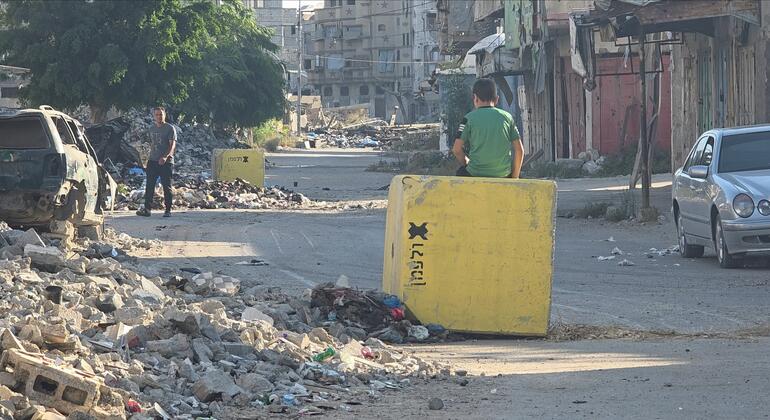
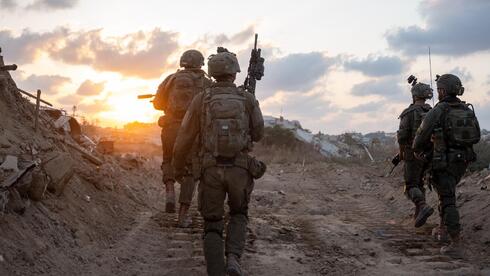
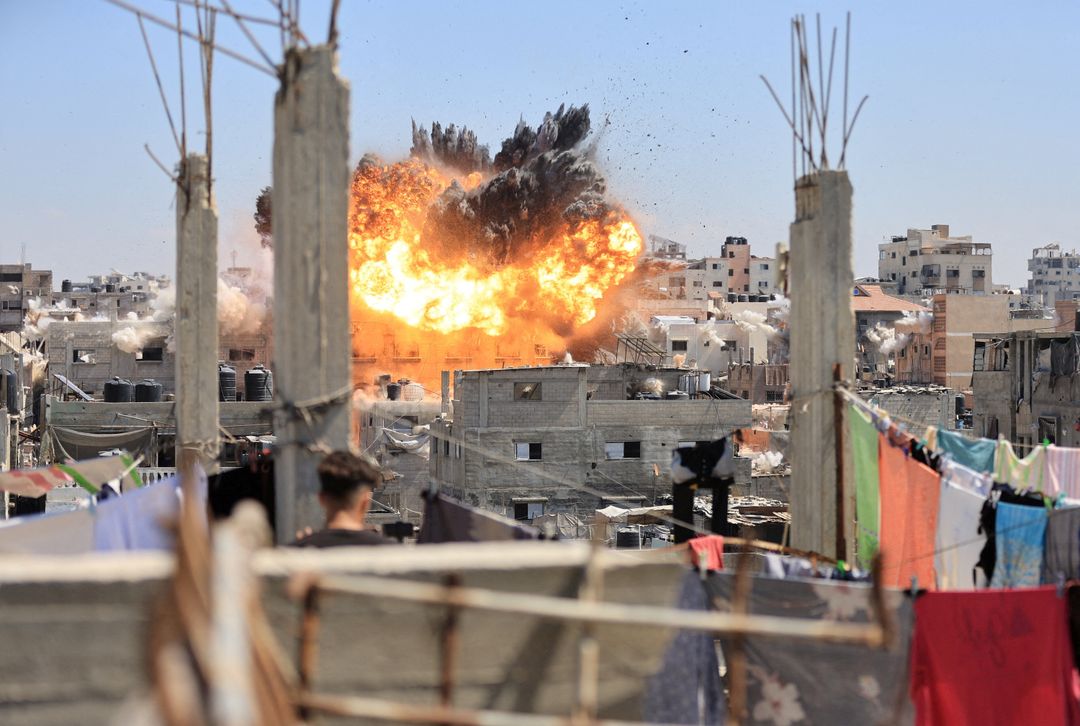
Israeli forces continued airstrikes, shelling, gunfire and naval fire across Gaza despite the October 2025 ceasefire. The IDF is fortifying positions along the Yellow Line, marking the boundary with posts and barriers, and conducting targeted strikes against Hamas personnel and facilities. In southern Lebanon, UNIFIL recorded at least 32 airstrikes and numerous Lebanese airspace violations, while Israel said its troops would remain indefinitely in the buffer zone. Gaza faces acute humanitarian pressure, with 1.98 million people requiring shelter assistance and roughly nine in ten people internally displaced. Houthi representatives told US officials in Muscat that they would not attack US or Israeli vessels, but fighting with Saudi Arabia and pressure on Saudi shipping continue. Some container services are returning to the Suez Canal, although carriers retain the option to reverse course if Red Sea security deteriorates.
Change from previous assessment
Since the 15 September brief, the assessment that Israeli operations in Gaza and southern Lebanon will continue is unchanged and remains high confidence. New reporting shows the IDF physically marking and fortifying the Yellow Line, conducting further strikes against Hamas commanders, and Israel stating that its troops will remain indefinitely in southern Lebanon. The Gaza humanitarian judgement is reinforced by updated shelter, displacement and aid-access figures. The Houthi assessment now includes secret US-Houthi talks in Muscat and explicit Houthi commitments not to attack US or Israeli vessels, lowering the assessed likelihood of immediate direct Houthi-US escalation while leaving Saudi shipping exposed. The shipping assessment has shifted from persistent disruption towards partial reopening, but remains conditional because carriers retain the option to return to Cape of Good Hope routing.
Key judgments
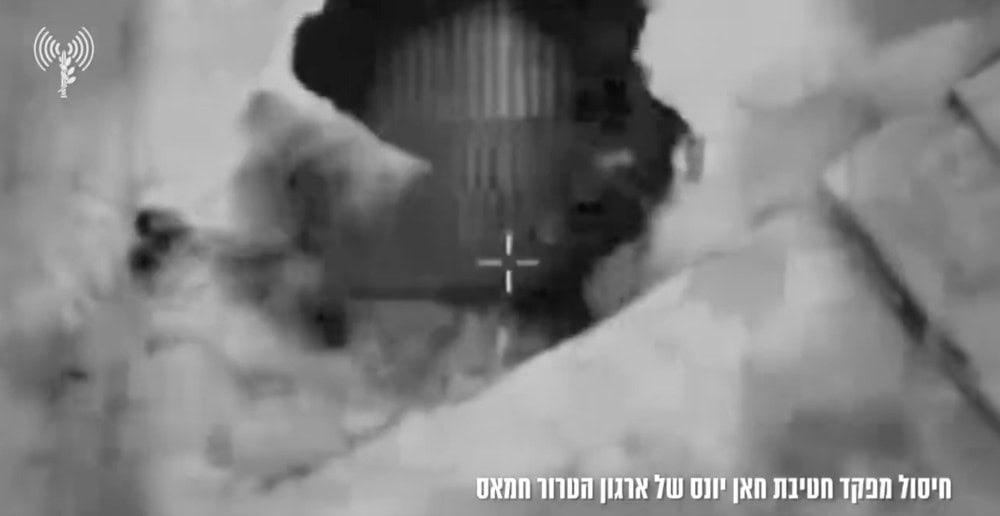
- Very likely Israeli military operations in Gaza will continue over the next 0-14 days, leaving the October 2025 ceasefire operationally ineffective. UN safety and security partners reported airstrikes, shelling, gunfire and naval fire across Gaza, particularly west of the Yellow Line. The IDF reported 14 ceasefire violations between 4 and 15 September, while the IDF Southern Command was fortifying Yellow Line positions and conducting targeted strikes. The IDF and Shin Bet also reported killing Ahmed Betesh, commander of Hamas's Jabalia Battalion, in northern Gaza on 15 September. Hamas remains armed and controls significant parts of the Gaza Strip. (Confidence: high · ASSESSED)
- I&W: UN reporting or major-media accounts record another Israeli airstrike, artillery attack, gunfire incident or naval fire west of the Yellow Line, or the IDF announces another operation against Hamas personnel or facilities. (0-14 days)
- I&W: A consecutive 14-day period passes without a reported Israeli strike, exchange of fire or additional IDF ceasefire violation in Gaza, accompanied by an end to Yellow Line fortification activity. (0-14 days)
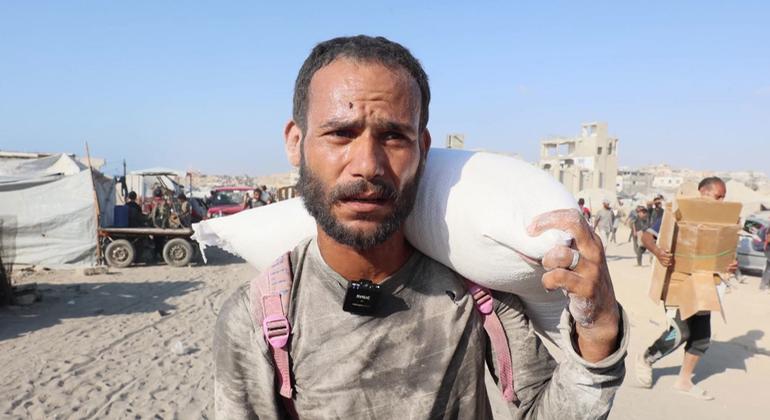
- Very likely humanitarian pressure in Gaza will worsen over the next 1-3 months. OCHA reported that 1.98 million people, or 94 per cent of Gaza's population, need shelter and non-food assistance. UN reporting put internal displacement at roughly nine in ten people, with 2.1 million people living within the Yellow Line and Palestinians confined to less than 40 per cent of the Strip's land area. OCHA also reported that Israeli denials and delays affecting engine oil and spare parts threaten generator-dependent water, sanitation, health and waste services. The direction of travel is strongly corroborated, although reported post-ceasefire casualty totals remain unsettled, with OCHA citing 1,334 deaths and 4,429 injuries and Gaza's Health Ministry citing 1,372 deaths and 4,659 injuries. (Confidence: high · ASSESSED)
- I&W: OCHA reports additional denials or delays of engine oil and spare parts, or documents new failures in generator-dependent water, sanitation, health or waste services in Gaza. (0-14 days)
- I&W: OCHA reports a sustained reduction from the current level of roughly 600 aid trucks entering Gaza each day, alongside a further increase in displacement or shelter requirements. (1-3 months)
- Likely Israel will retain and consolidate its security zone in southern Lebanon over the next 1-3 months, leaving the ceasefire with Hezbollah operationally ineffective. Israel said its troops would remain indefinitely in the buffer zone, and reporting placed Israeli control at almost 6 per cent of Lebanon, with more than 300,000 people displaced and more than 20,000 homes demolished during the ceasefire lull. UNIFIL recorded at least 32 airstrikes, numerous Lebanese airspace violations and the detention of a UNIFIL patrol near Kafer Chouba. The IDF also reported locating Hezbollah rockets and a launcher near Mount Dov. Confidence is medium because the attribution of drone activity near Al Mansuri is contested, and the territorial and demolition figures rely primarily on official statements and major-media reporting. (Confidence: medium · ASSESSED)
- I&W: Israel continues to station troops, demolish homes or maintain military positions in named areas such as Shamaa and Mount Dov, while Israeli officials repeat that the southern Lebanon buffer zone is indefinite. (0-14 days)
- I&W: Israel announces a verified withdrawal from the buffer zone and UNIFIL confirms that Israeli positions have been vacated without replacement fortifications. (1-3 months)
- Likely Houthi pressure on Saudi shipping will continue over the next 0-14 days, while a direct Houthi attack on a US, Israeli or non-Saudi commercial vessel is unlikely. Houthi representatives told US officials in Muscat that they would honour their earlier ceasefire, would not attack American or Israeli vessels, and would restrict attacks to Saudi shipping. The Houthis have declared a blockade on Saudi shipping, and the Saudi-led coalition reported intercepting a Houthi drone south of Mecca. Reporting supports Houthi gains at Mocha and islands near the Bab el-Mandeb Strait, but the broader claim that the Houthis control Yemen's entire Red Sea coastline remains uncorroborated and lowers confidence. (Confidence: medium · ASSESSED)
- I&W: The Houthis conduct another attack or attempted interdiction against a Saudi vessel, or the Saudi-led coalition reports another interception linked to Saudi Red Sea shipping. (0-14 days)
- I&W: The Houthis attack or attempt to board a US, Israeli or non-Saudi commercial vessel, breaking the limits stated during the Muscat talks. (0-14 days)
- Likely Suez Canal traffic will expand further over the next 1-3 months, but the recovery will remain reversible. Maersk and Hapag-Lloyd announced that services AE5, AE11, AE12 and ME2 would shift from the Cape of Good Hope to the Suez Canal, while the 24,188-TEU OOCL Portugal completed COSCO SHIPPING Lines' first southbound passage through the canal since the Red Sea security crisis began. The Suez Canal Authority reported 39 ships carrying 2.3 million net tons on 16 September and said major services operated by CMA CGM, Maersk, MSC, Hapag-Lloyd and COSCO had returned to varying degrees. The carriers still condition future routing on Red Sea stability, while commercial traffic through the Strait of Hormuz remains well below normal and the reported attack on a US-contracted vessel remains unconfirmed by US Central Command and gCaptain. (Confidence: medium · ASSESSED)
- I&W: AE5, AE11, AE12 and ME2 complete southbound Suez passages, followed by additional announced returns by container services that are currently using the Cape of Good Hope. (0-14 days)
- I&W: Maersk or Hapag-Lloyd announce cancellations or a return to Cape of Good Hope routing, citing renewed Red Sea attacks or instability. (0-14 days)
Outlook & scenarios
Entrenched Gaza and Lebanon fronts (55%)
Likely over the next 1-3 months. Israeli forces continue strikes and Yellow Line fortification in Gaza, while Israel retains the southern Lebanon buffer zone and UNIFIL records further airspace violations or strikes. Gaza's shelter, displacement and generator problems worsen. Houthi attacks remain focused on Saudi shipping, allowing only partial and reversible Suez Canal reopening.
Fragile regional containment (30%)
Likely over the next 1-3 months. The Muscat understandings hold sufficiently to prevent Houthi attacks on US, Israeli and most commercial vessels, although Saudi shipping remains exposed. More container services use the Suez Canal. Israeli operations in Gaza and southern Lebanon continue at lower intensity without producing a durable ceasefire implementation mechanism.
Wider maritime escalation (15%)
Unlikely, but high impact, over the next 0-14 days. The Houthis attack a US, Israeli or non-Saudi commercial vessel, or the reported Iranian attack on a US-contracted vessel near the Strait of Hormuz receives independent confirmation. Carriers reverse Suez routing, Hormuz traffic falls further, and the maritime crisis becomes a more direct US regional security issue.
Recommendations
- Prioritise daily cross-source collection on Gaza activity west of the Yellow Line. Compare UN safety reporting, IDF announcements, major-media casualty reporting and NASA FIRMS thermal detections, while treating thermal data as evidence of heat rather than proof of cause.
- Maintain a separate Gaza humanitarian tracker covering aid-truck entries, approvals for engine oil and spare parts, generator-dependent service outages, displacement estimates and post-ceasefire casualty reporting. Record OCHA and Gaza Health Ministry figures by reporting date rather than merging them.
- Require two-source confirmation before assigning responsibility for drone activity near Al Mansuri, reporting control of Yemen's entire Red Sea coastline, or treating the US-contracted vessel attack near the Strait of Hormuz as confirmed.
- Monitor southern Lebanon for three concrete changes: new Israeli positions or demolitions in Shamaa and Mount Dov, additional UNIFIL patrol detentions, and further airstrikes or Lebanese airspace violations. Treat an Israeli withdrawal announcement as unconfirmed until UNIFIL verifies vacated positions.
- Track the identity of any vessel targeted by Houthi forces. A strike on a US, Israeli or non-Saudi commercial vessel should trigger an immediate reassessment of the Muscat understandings and the Suez Canal reopening outlook.
- Track completion or cancellation of the AE5, AE11, AE12 and ME2 Suez services, alongside daily Suez passages and Hormuz traffic. Use carrier routing decisions as the primary near-term indicator of whether maritime risk is easing or returning.
Confidence & uncertainty
Overall confidence is high for the central assessment that Gaza and southern Lebanon remain active fronts and that the Gaza humanitarian situation is under sustained pressure. The assessment draws on multiple reporting streams, including high-reliability UN, OCHA and UNIFIL reporting, official Israeli statements, major-media accounts, satellite observations and trade reporting. The main uncertainties concern the exact Gaza casualty and displacement totals, responsibility for the Al Mansuri drone activity, the scope of Houthi territorial control in Yemen, and the unconfirmed report of an attack on a US-contracted vessel near the Strait of Hormuz.
Intelligence gaps
- [EEI 1.1 · PARTIAL] Number, type and geolocated coordinates of projectiles (rockets, mortars, anti-tank guided missiles) fired from Lebanon into Israel in the last 24/72 hours, including time-stamped launch and impact locations. Recommended collection: signals/intel
- [EEI 1.2 · UNCOVERED] Satellite or aerial imagery showing movement, concentration, or forward displacement of Hezbollah-associated military assets (armored vehicles, artillery pieces, mobile rocket launchers, logistics convoys) to positions within 0-10 km of the Israel-Lebanon border. Recommended collection: satellite/imagery
- [EEI 1.3 · UNCOVERED] Intercepted or captured Hezbollah command-and-control communications or orders explicitly directing cross-border operations or coordinated strikes with Palestinian groups (time-stamped messages, unit identifiers, orders to fire/move). Recommended collection: signals/intel
- [EEI 1.4 · UNCOVERED] Observable changes in Israeli northern-front posture within Israel (numbers and types of reinforcements deployed to northern brigades, activation of reserves, air defense redeployments, evacuation orders or shelter alerts in northern towns), including timestamps and unit IDs where available. Recommended collection: human/intel
- [EEI 2.1 · PARTIAL] Official or corroborated reports of IDF reservist mobilization and unit-level deployment orders (number of reservists called, named brigades/units ordered to deploy, deployment timelines). Recommended collection: open-source/media
- [EEI 2.2 · UNCOVERED] Satellite or ground imagery showing concentrations of IDF heavy equipment (tanks, infantry fighting vehicles, engineering vehicles), staging areas, field hospitals or forward supply dumps within X km of the Gaza border and at known crossing points. Recommended collection: satellite/imagery
- [EEI 2.3 · PARTIAL] Change in strike patterns consistent with pre-ground-attack shaping: sustained high-frequency airstrikes on tunnel networks, command nodes, coastal launch sites, and known insurgent concentrations (strike counts, munition types, locations, times). Recommended collection: open-source/media
- [EEI 2.4 · UNCOVERED] Logistics indicators: verified convoys of fuel/ammunition entering staging areas, establishment of forward logistics or medical bases, or documented requisitioning orders for bulk combat supplies with timestamps and quantities. Recommended collection: human/intel
- [EEI 3.1 · UNCOVERED] Number, participants and content of diplomatic contacts or negotiation sessions in the last 48 hours involving mediators (Egypt, Qatar, US, UN), including any proposed ceasefire text, prisoner/exchange lists, timelines or verification mechanisms. Recommended collection: diplomatic
- [EEI 3.2 · UNCOVERED] Public statements, press releases or verified communiqués from Hamas and other Gaza armed groups specifying acceptance, rejection, or conditions for a ceasefire (explicit conditions such as prisoner release lists, withdrawal terms, lifting of blockades), with timestamps and speaker attribution. Recommended collection: open-source/media
- [EEI 3.3 · PARTIAL] Humanitarian indicators relevant to ceasefire: establishment and operation of agreed humanitarian corridors/checkpoints, number of aid deliveries admitted, civilian evacuations completed, and NGO/hospital reports of access denials or safe-passage violations. Recommended collection: humanitarian/NGO reports
- [EEI 3.4 · PARTIAL] Operational evidence of a de facto pause: verified sustained reduction (e.g., ≥12 hours) in strikes or launches from either side in specific sectors, supported by strike/impact logs, radar tracks and incident reports. Recommended collection: open-source/media
Cited sources
[1] United Nations News · Six UN staff killed in Gaza school strike; Lebanon violations mount (A) · Mon Sep 14 2026 21:11:44 GMT+0000 (Coordinated Universal Time) · sha256:c22eb09aefdf [2] United Nations (UN News) · ‘Where do we go?’: How Israel’s ‘yellow line’ is closing in on Palestinians (A) · Sat Sep 12 2026 16:00:00 GMT+0000 (Coordinated Universal Time) · sha256:a87b540da688 [3] Foundation for Defense of Democracies (Long War Journal) · Israeli elections stall Board of Peace plans, IDF reports 14 Gaza ceasefire violations Sept. 4–15 (C) · Tue Sep 15 2026 20:09:25 GMT+0000 (Coordinated Universal Time) · sha256:01ead2ab80d1 [4] Ynetnews · Israel prepares for renewed Gaza ground offensive as Hamas shows no sign of disarming (B) · Wed Sep 16 2026 06:59:06 GMT+0000 (Coordinated Universal Time) · sha256:fd6c5004ee5c [5] TRT World · Israeli strike kills Palestinian, wounds 2 in latest Gaza ceasefire agreement violation (B) · Tue Sep 15 2026 08:28:16 GMT+0000 (Coordinated Universal Time) · sha256:345d83d0b20c [6] NPR · A rare glimpse inside Israeli-occupied southern Lebanon (A) · Tue Sep 15 2026 21:45:42 GMT+0000 (Coordinated Universal Time) · sha256:28428722f27f [7] The Jerusalem Post · Live Updates: Latest from Israel, Iran, and the Middle East | The Jerusalem Post (B) · Tue Sep 15 2026 05:36:42 GMT+0000 (Coordinated Universal Time) · sha256:204593ad24e5 [8] Reuters (republished by gCaptain) · U.S. Held Secret Talks With Houthis After Red Sea Offensive, Reuters Reports (A) · Wed Sep 16 2026 16:42:40 GMT+0000 (Coordinated Universal Time) · sha256:8ca566bc12d6 [9] gCaptain · Container Shipping Returns to Suez Despite Rising Red Sea Risks (B) · Wed Sep 16 2026 21:51:10 GMT+0000 (Coordinated Universal Time) · sha256:f90029c10067 [10] United Nations (UN News) · Civilians bear the brunt, with deadly US strikes in Iran and thousands displaced in Yemen (A) · Mon Sep 14 2026 17:49:42 GMT+0000 (Coordinated Universal Time) · sha256:09a759600f1a [11] gCaptain · Fox News: Iran Attack Hits U.S.-Contracted Ship Carrying American Personnel (C) · Wed Sep 16 2026 15:12:42 GMT+0000 (Coordinated Universal Time) · sha256:b1f54976a840
Source content hashes were computed at collection time; the cited text is preserved unmodified for the life of this product.
TLP:CLEAR