TLP:CLEAR · Disclosure is not limited.
Israel-Gaza Regional Escalation: Situation Report, 7 October 2026
Time window: Last 7 days · Audience: General analyst · Type: Situation report · DTG: 2026-10-07 13:12Z · Overall confidence: HIGH
BLUF
Reporting describes the Gaza ceasefire as still in effect, but Israeli strikes and demolitions continued through 7 October; reported deaths since the ceasefire began are at least 1,460, with the Gaza Health Authority reporting 1,462 killed and 5,151 wounded. The announced Hamas disarmament and transfer of Gaza governance remain unimplemented in available reporting. Southern Lebanon reports indicate Israeli military activity, but do not establish a renewed Israel-Hezbollah campaign.
Executive summary
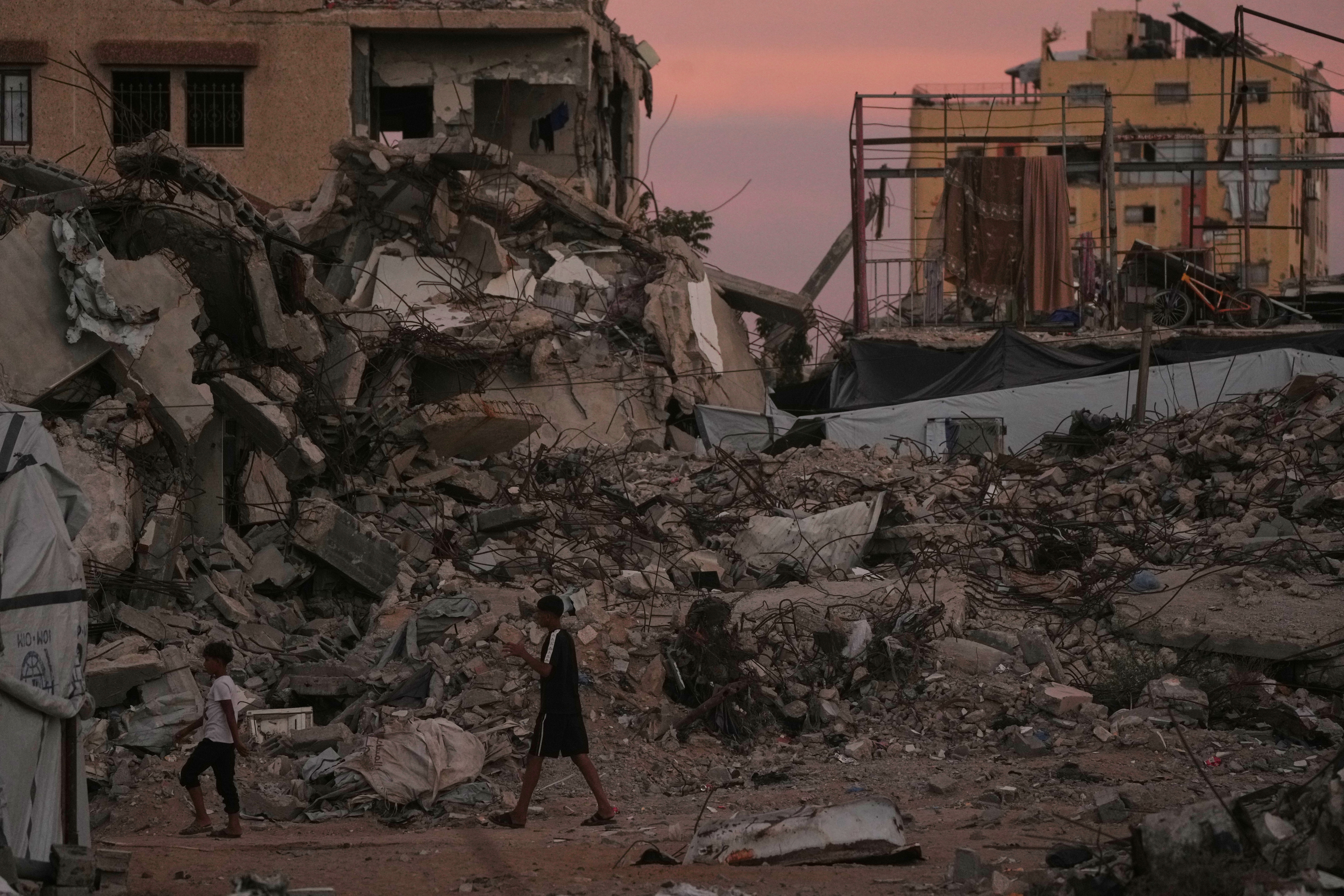
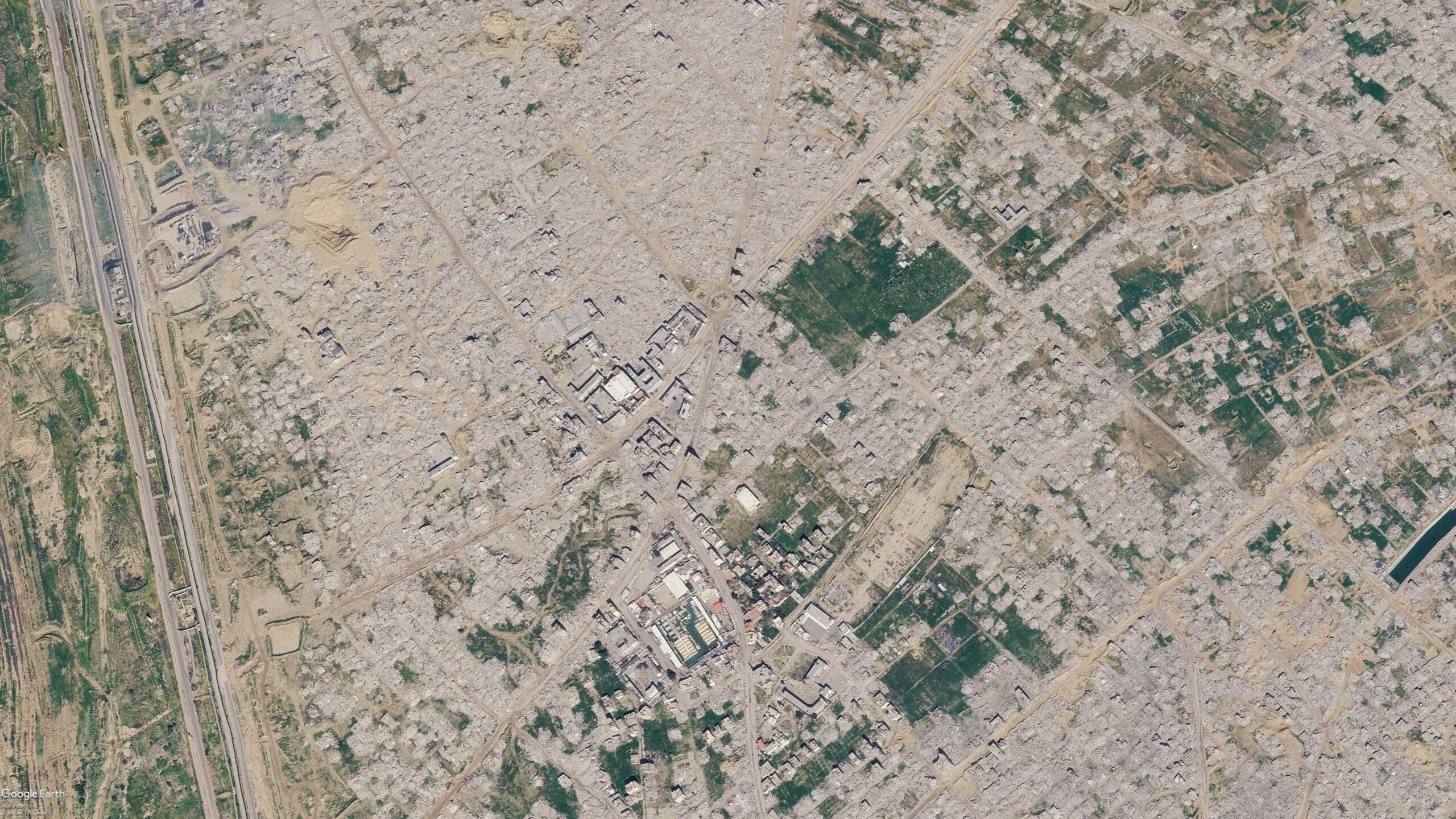
Reports describe Israeli strikes in Gaza on 6 and 7 October, alongside demolitions in Gaza City and Khan Younis. The Gaza Health Authority reported 1,462 deaths and 5,151 injuries since the ceasefire began; another report gave 1,460 deaths. The United Nations reports that about 82 percent of Gaza’s structures are damaged, with two-thirds of those destroyed, while about 1.9 million people have been displaced. A Board of Peace blueprint proposes $2.45 billion for 66 reconstruction projects over six months, but reporting says large-scale reconstruction is stalled. Prospects for Gulf funding are disputed. In south Lebanon, reports describe Israeli strikes and demolitions, including around Khyam, but the reports are partly undated and do not identify a Hezbollah response.
Change from previous assessment
The core assessment from 6 October is unchanged: the Gaza ceasefire remains operationally degraded, but the reporting does not establish that it has formally ended. New reports of strikes on 6 and 7 October, further demolitions and a slightly higher reported post-ceasefire death toll strengthen the case for continuing violations, while the precise toll remains unsettled. South Lebanon reporting has expanded beyond the prior single observer and social-media accounts to include reports from Lebanon’s National News Agency and an Israeli army statement about two wounded personnel; these raise confidence that local military activity occurred, but not that a renewed Israel-Hezbollah campaign has begun. This brief adds judgments on the unimplemented governance announcement and stalled reconstruction, including conflicting assessments of Gulf funding.
Key judgments
- The reported post-ceasefire death toll in Gaza is at least 1,460, with the Gaza Health Authority reporting 1,462 killed and 5,151 wounded by 6 October. The exact total remains unresolved because reports differ by two deaths. (Confidence: medium · REPORTED)
- I&W: Confirm: A subsequent Gaza Health Authority update reports a cumulative post-ceasefire death toll of at least 1,462 and gives a dated count. (0-14 days)
- I&W: Break: A revised, reconciled tally places the post-ceasefire death toll below 1,460 or identifies a material counting error in the earlier figures. (0-14 days)
- Likely Israeli strikes or demolitions will continue in Gaza over the next 0-14 days, leaving the ceasefire operationally degraded, although current reporting does not establish that it has formally ended. Reports describe a 6 October drone strike in Tal al-Hawa that killed one person and wounded several, a bombardment of Hamad camp with no casualties reported, and 7 October attacks that killed at least four Palestinians across Gaza, including Palestinian Civil Defence volunteer Mohamed Tamous and 60-year-old Hisham Ibrahim Abu Mustafa. Reports also describe demolitions east of Tuffah and in Khan Younis. Casualty accounts rely largely on Palestinian medical or news-agency reporting; satellite imagery supports ongoing destruction but does not independently verify each reported strike. (Confidence: medium · ASSESSED)
- I&W: Confirm: At least one additional Israeli strike or demolition in Gaza is reported by two independent sources with a named location before 21 October. (0-14 days)
- I&W: Break: Israel and Hamas publicly affirm a cessation of strikes, followed by 14 consecutive days without reported strikes or demolitions in Gaza. (0-14 days)
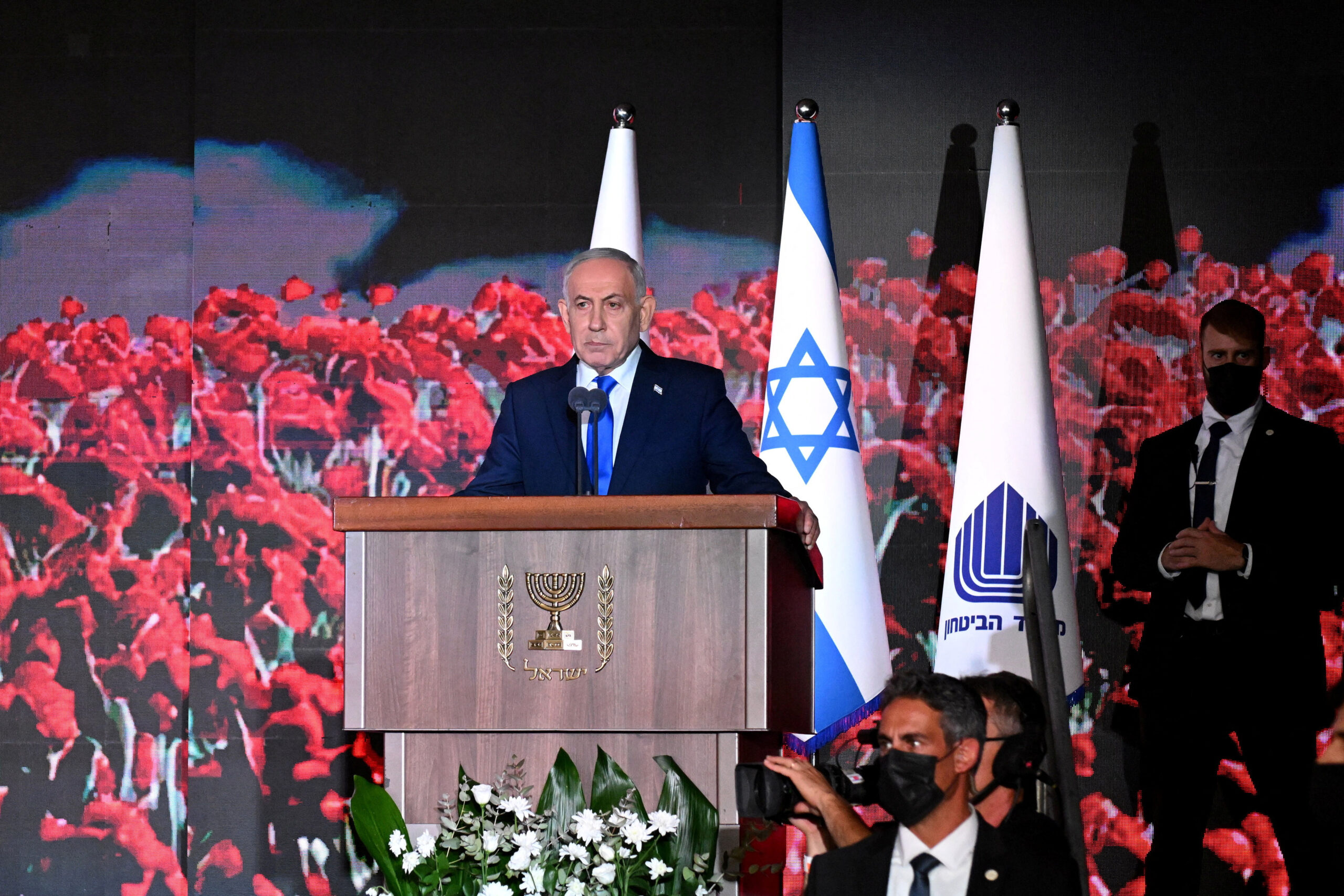
- Unlikely the announced transfer of Gaza’s civilian and security administration from Hamas to a technocratic authority will be implemented in the next 1-3 months. Donald Trump announced a Board of Peace agreement on disarmament and transfer in July, but an October account put Hamas in control of about 35 percent of Gaza, and other reporting says reconstruction is stalled over disarmament and Israeli withdrawal. Benjamin Netanyahu has said there will be no Hamas rule in Gaza. The announcement and its implementation are therefore distinct; the control estimate rests on a single think-tank account. (Confidence: medium · ASSESSED)
- I&W: Confirm: By 7 January 2027, no published transfer schedule or Israeli withdrawal timetable exists, and reporting continues to identify Hamas control in parts of Gaza. (1-3 months)
- I&W: Break: The Board of Peace and Hamas publish a disarmament and withdrawal timetable, name a technocratic authority, and report an initial transfer of security administration. (1-3 months)
- Very likely Gaza’s reconstruction and basic recovery will remain severely constrained over the next 1-3 months. The Board of Peace’s six-month blueprint covers 66 projects and $2.45 billion, but reporting says large-scale reconstruction has stalled. Other reporting says Israel continues to bar most construction materials. The US expectation that Gulf Arab states will supply most funding conflicts with a separate assessment that those states are unlikely to provide substantial support. The causes of the delay and the likely funders remain disputed. (Confidence: medium · ASSESSED)
- I&W: Confirm: By 7 January 2027, the Board of Peace reports no project disbursement and Israel has issued no permits for construction materials for named reconstruction projects. (1-3 months)
- I&W: Break: The Board of Peace reports a verified initial disbursement and Israel authorises entry of construction materials for named projects. (1-3 months)
- Likely localised Israeli military activity will continue in south Lebanon over the next 0-14 days, but current reporting does not establish a renewed Israel-Hezbollah campaign or a Hezbollah response. Lebanon’s National News Agency reported Israeli air strikes and demolitions in south Lebanon, including Khyam; other accounts describe activity around Iqlim al-Tuffah, Jabal al-Rayhan and Jezzine. The Israeli army reported that an officer and a soldier were wounded during activity in south Lebanon. Most reports are undated or thinly corroborated, so confidence in the forward assessment is low. (Confidence: low · ASSESSED)
- I&W: Confirm: Lebanon’s National News Agency or the Israeli army reports a dated follow-on strike or demolition at a named south Lebanon location before 21 October. (0-14 days)
- I&W: Break: The Lebanese National News Agency and Israeli army report no further south Lebanon strikes or demolitions for 14 consecutive days. (0-14 days)
Outlook & scenarios
Degraded Gaza ceasefire persists (55%)
Likely: Israeli strikes and demolitions continue intermittently in Gaza, while neither side formally announces the end of the ceasefire. The humanitarian toll rises, and the reconstruction plan remains largely at the planning stage.
Gaza ceasefire collapses into renewed large-scale operations (20%)
Unlikely: Further incidents and unresolved disputes over Hamas disarmament and Israeli withdrawal lead Israel and Hamas to abandon the ceasefire framework. Large-scale Israeli operations resume, delaying any transfer of Gaza governance or reconstruction.
Limited governance and reconstruction steps begin (15%)
Unlikely: Israel, Hamas and the Board of Peace agree on initial disarmament, withdrawal and transfer steps. A named technocratic authority takes on limited functions, while initial funding and construction-material access permit a small number of projects to start. The disputed availability of Gulf funding remains a constraint.
South Lebanon becomes a wider Israel-Hezbollah front (10%)
Very unlikely, but high impact: Hezbollah responds to continued Israeli strikes in south Lebanon, and Israel expands its operations. Current reporting does not establish Hezbollah attacks or a renewed campaign.
Recommendations
- Track Gaza ceasefire status separately from reported violations. Reconcile the 10 and 11 October 2025 effective dates before using either as the definitive start date.
- Seek confirmation of reported Gaza incidents through named hospitals, Palestinian Civil Defence accounts and later satellite imagery. Treat NASA’s 33 thermal detections for 6-7 October as unconfirmed indicators, since none was classified as high confidence.
- Monitor implementation, not announcements: record any published Hamas disarmament milestones, Israeli withdrawal timetable, named technocratic authority, Gulf funding commitments and verified reconstruction disbursements.
- For south Lebanon, prioritise dated reports from Lebanon’s National News Agency and the Israeli army, and record any independently reported Hezbollah action separately. Do not infer a renewed Israel-Hezbollah campaign from undated strike reports alone.
Confidence & uncertainty
Overall confidence is high for the broad picture of a badly degraded Gaza ceasefire and continuing humanitarian damage. Major-media reporting, Gaza Health Authority figures, United Nations structural estimates and satellite imagery support that assessment, although they do not verify every incident independently. Confidence is lower in the exact post-ceasefire death toll, whether announced governance arrangements will be implemented, the expected source of reconstruction funding, and south Lebanon incident details. The Lebanon reporting is partly undated and thinly corroborated.
Alternative analysis (red cell)
The announced transfer may be proceeding incrementally even if Hamas retains control of approximately 35 percent of Gaza, so current residual control does not by itself demonstrate that implementation will fail within 1-3 months. The evidence supports substantial obstacles and uncertainty, but a phased transfer remains a defensible reading of claims 706cc627-e4b3-45ba-b03b-b6538504da02 and 76668065-3ddd-4bd8-b80c-f7383f56ba8a. Netanyahu's position in claim 8715ee8f-0dff-42c9-a3a0-3b50835b3b67 indicates opposition to Hamas rule but does not establish the feasibility or timing of the alternative authority.
Intelligence gaps
- [EEI 1.1 · PARTIAL] Number, type and geolocated coordinates of projectiles (rockets, mortars, anti-tank guided missiles) fired from Lebanon into Israel in the last 24/72 hours, including time-stamped launch and impact locations. Recommended collection: signals/intel
- [EEI 1.2 · UNCOVERED] Satellite or aerial imagery showing movement, concentration, or forward displacement of Hezbollah-associated military assets (armored vehicles, artillery pieces, mobile rocket launchers, logistics convoys) to positions within 0-10 km of the Israel-Lebanon border. Recommended collection: satellite/imagery
- [EEI 1.3 · UNCOVERED] Intercepted or captured Hezbollah command-and-control communications or orders explicitly directing cross-border operations or coordinated strikes with Palestinian groups (time-stamped messages, unit identifiers, orders to fire/move). Recommended collection: signals/intel
- [EEI 1.4 · UNCOVERED] Observable changes in Israeli northern-front posture within Israel (numbers and types of reinforcements deployed to northern brigades, activation of reserves, air defense redeployments, evacuation orders or shelter alerts in northern towns), including timestamps and unit IDs where available. Recommended collection: human/intel
- [EEI 2.1 · UNCOVERED] Official or corroborated reports of IDF reservist mobilization and unit-level deployment orders (number of reservists called, named brigades/units ordered to deploy, deployment timelines). Recommended collection: open-source/media
- [EEI 2.2 · UNCOVERED] Satellite or ground imagery showing concentrations of IDF heavy equipment (tanks, infantry fighting vehicles, engineering vehicles), staging areas, field hospitals or forward supply dumps within X km of the Gaza border and at known crossing points. Recommended collection: satellite/imagery
- [EEI 2.3 · PARTIAL] Change in strike patterns consistent with pre-ground-attack shaping: sustained high-frequency airstrikes on tunnel networks, command nodes, coastal launch sites, and known insurgent concentrations (strike counts, munition types, locations, times). Recommended collection: open-source/media
- [EEI 2.4 · UNCOVERED] Logistics indicators: verified convoys of fuel/ammunition entering staging areas, establishment of forward logistics or medical bases, or documented requisitioning orders for bulk combat supplies with timestamps and quantities. Recommended collection: human/intel
- [EEI 3.1 · PARTIAL] Number, participants and content of diplomatic contacts or negotiation sessions in the last 48 hours involving mediators (Egypt, Qatar, US, UN), including any proposed ceasefire text, prisoner/exchange lists, timelines or verification mechanisms. Recommended collection: diplomatic
- [EEI 3.2 · PARTIAL] Public statements, press releases or verified communiqués from Hamas and other Gaza armed groups specifying acceptance, rejection, or conditions for a ceasefire (explicit conditions such as prisoner release lists, withdrawal terms, lifting of blockades), with timestamps and speaker attribution. Recommended collection: open-source/media
- [EEI 3.3 · UNCOVERED] Humanitarian indicators relevant to ceasefire: establishment and operation of agreed humanitarian corridors/checkpoints, number of aid deliveries admitted, civilian evacuations completed, and NGO/hospital reports of access denials or safe-passage violations. Recommended collection: humanitarian/NGO reports
- [EEI 3.4 · PARTIAL] Operational evidence of a de facto pause: verified sustained reduction (e.g., ≥12 hours) in strikes or launches from either side in specific sectors, supported by strike/impact logs, radar tracks and incident reports. Recommended collection: open-source/media
Cited sources
[1] Arab News · Israeli drone strike kills Palestinian, wounds several in Gaza City (B) · 6 October 2026 · sha256:7a842cd2efc3 [2] Al Jazeera · US military aid to Israel continues three years into Gaza genocide (B) · 7 October 2026 · sha256:c4d65ad20222 [3] aljazeera.com · Israeli attacks across Gaza kill at least four Palestinians (F) · 7 October 2026 · sha256:1126efc548af [4] Bellingcat · Viral Google Maps Images Shared Widely This Week Show Gaza Ruins. We Obtained More Recent Satellite Imagery - bellingcat (B) · 1 October 2026 · sha256:2d0e4dc853e8 [5] Business Standard · October 7 attack to Gaza ceasefire: Three years of Israel-Hamas conflict (A) · 7 October 2026 · sha256:b99ff9b32a6c [6] Atlantic Council · Three years after October 7, Israel is facing inward (C) · 6 October 2026 · sha256:72b3b9b593e7 [7] aljazeera.com · Photos: Three years of Israel’s war on Gaza as tent cities spread amid ruin (F) · 7 October 2026 · sha256:3f33edc4e6c2 [8] CGTN · Gaza: A ceasefire without peace (B) · 7 October 2026 · sha256:1fb06e4043ac [9] skynewsarabia.com · حزب الله يهدد بتكتيكات الثمانينيات جنوبا (F) · sha256:4a8114df1c0d
Source content hashes were computed at collection time; the cited text is preserved unmodified for the life of this product.
Red cell review: PARTIAL DISSENT
TLP:CLEAR