TLP:CLEAR · Disclosure is not limited.
Israel-Gaza Regional Escalation: Situation Report, 8 November 2026
Time window: Last 7 days · Audience: General analyst · Type: Situation report · DTG: 2026-11-08 13:18Z · Overall confidence: HIGH
BLUF
Israeli military activity in southern Lebanon continues alongside a fragile ceasefire framework, while Gaza’s first winter storm flooded about 70,000 tents and left hundreds of thousands of displaced people exposed to further flooding. The immediate risks are a worsening shelter emergency and renewed Israel-Hezbollah exchanges; Gadi Eisenkot’s government-formation mandate has begun, but the 67 recommendations he received do not establish a stable coalition.
Executive summary
Reporting from 1 to 8 November describes heavy rain and strong winds flooding about 70,000 tents in Gaza, more than 1,500 calls to Civil Defence, and warnings that over 2,000 buildings are at risk of collapse. OCHA estimates that about 950,000 displaced people are in areas exposed to flooding. In southern Lebanon, reports describe Israeli artillery fire, air strikes, demolitions and raids in named towns on 4, 7 and 8 November. Reporting also differs on whether the Israel-Hezbollah ceasefire began in April or June. In Israel, President Isaac Herzog tasked Gadi Eisenkot with forming a government. Eisenkot’s bloc has 48 seats; Arab-led parties hold 19 seats and endorsed his attempt, but reporting says they would support a minority government from outside rather than join it. We assess that humanitarian pressure in Gaza will remain severe and that the northern ceasefire remains vulnerable. The aid-cut announcement from Donald Trump remains without a clear implementation date, with Ambassador Mike Huckabee saying he was unsure whether it meant the end of 2026 or 2028.
Change from previous assessment
Since the 7 November brief, the anticipated Israeli government-formation decision has become a reported mandate for Eisenkot, with the 48-seat bloc, 53-seat Netanyahu bloc and disputed role of the 19 Arab-led seats now clearer. The Lebanon assessment is updated with reports of Israeli operations in named towns on 7 and 8 November, while the ceasefire’s April or June start date remains unresolved. New Gaza reporting adds OCHA’s estimate of 950,000 displaced people in flood-exposed areas and Civil Defence warnings about buildings at risk, alongside further reports of about 70,000 flooded tents. The US aid assessment remains unresolved, with Ambassador Huckabee adding explicit uncertainty over a 2026 or 2028 end date.
Key judgments
- Gaza’s shelter emergency is very likely to remain acute and worsen over the next 1-3 months. The Gaza Government Media Office reported about 70,000 flooded tents, and Civil Defence reported more than 1,500 emergency calls. OCHA estimates about 950,000 displaced people are living in flood-exposed areas; Gaza Civil Defence says more than 2,000 buildings are at risk of collapse and at least 300,000 tents are needed. We assess that further rain will compound the damage while fuel shortages and damaged equipment constrain local response. The figures rely partly on Gaza authorities, with OCHA reporting providing separate corroboration of the exposure risk. (Confidence: medium · ASSESSED)
- I&W: An OCHA update continues to count large numbers of displaced people in flood-exposed areas, or Gaza authorities report new camp inundations and emergency calls after further rain. (0-14 days)
- I&W: Gaza Civil Defence reports fewer than 100 flood-related calls in a 24-hour period and local authorities document the relocation of tens of thousands of people from flood-prone sites. (0-14 days)
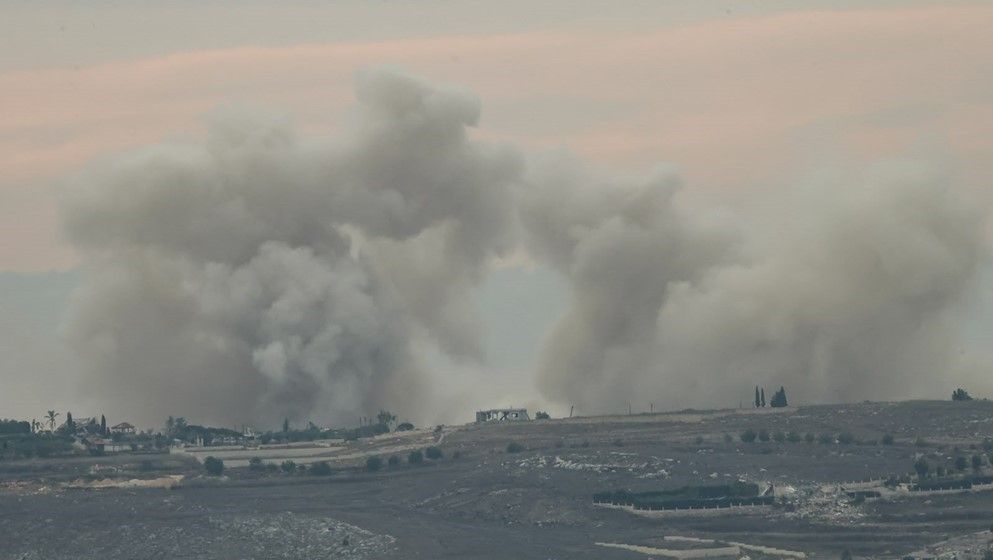
- Renewed Israel-Hezbollah exchanges are likely over the next 1-3 months, although the reporting for 1-8 November documents Israeli operations and does not report a Hezbollah attack. Reports describe Israeli air strikes on 4 November and artillery fire, demolitions and raids in Bani Hayyan, Khiam, Mayfadoun, Zibqin, al-Mansouri, Touline, Haddatha, Aita al-Jabal, Qantara and Zawtar al-Sharqiya on 7 and 8 November. Israeli forces are also reported to remain in a zone extending up to 10 kilometres from the Lebanese border. Town-level incident details rely heavily on regional reporting, and claims place the ceasefire’s start in either April or June, reducing confidence in the chronology. (Confidence: medium · ASSESSED)
- I&W: A reported Hezbollah rocket, drone or anti-tank attack into Israel is followed by Israeli strikes in southern Lebanon. (0-14 days)
- I&W: Reports document Lebanese army deployment in the framework agreement’s pilot zones alongside Israeli withdrawal from those areas. (1-3 months)
- Israeli air strikes in Gaza are very likely to continue over the next 30 days despite the ceasefire that took effect in October 2025. Reporting says strikes have continued almost every day and attributes at least 1,610 Palestinian deaths to the period since the ceasefire began. This assessment rests on major-media reporting, but the claims do not provide a dated incident-by-incident tally for the current week. (Confidence: medium · ASSESSED)
- I&W: Reports record Israeli air strikes on at least five of the next seven days. (0-14 days)
- I&W: Seven consecutive days pass without a reported Israeli air strike, and Israel and Hamas publicly confirm adherence to the ceasefire. (0-30 days)
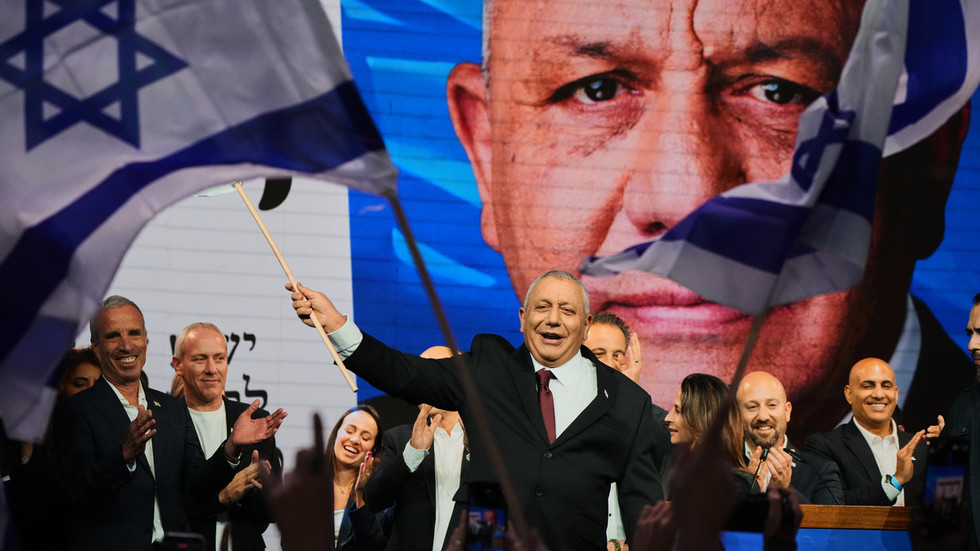
- Eisenkot is unlikely to secure a durable majority coalition during his initial 28-day mandate, although support from Arab-led parties outside the government gives him a route to attempt a minority government. His four-party bloc has 48 seats, while Netanyahu’s bloc has 53; the Arab-led parties hold 19 seats and endorsed Eisenkot’s attempt to form a government. Reporting says Eisenkot has ruled out including them in his government, and accounts differ on whether their support will extend to parliamentary votes. The seat totals and mandate are reported by multiple major-media outlets, but the parties’ eventual voting commitments remain unsettled. (Confidence: medium · ASSESSED)
- I&W: By the midpoint of the 28-day mandate, no signed coalition agreement exists and the parties publicly committed to join Eisenkot’s government still account for fewer than 61 seats. (0-14 days)
- I&W: Eisenkot signs coalition agreements with parties holding at least 61 seats in the Knesset. (0-28 days)
- The announced US aid cutoff is not yet a settled policy timetable. Donald Trump described an end to annual assistance, with reporting giving figures of $3.8 billion and $4 billion, while Ambassador Mike Huckabee said he was unsure whether aid would end in 2026 or when the current memorandum ends in 2028. The scope also remains unclear between military aid and broader funding. The announcement is reported by several outlets, but the conflicting timetable and absence of a reported implementation step lower confidence. (Confidence: medium · ASSESSED)
- I&W: A written US government directive specifies the aid programme, amount and termination date. (0-2 months)
- I&W: No US government directive or formal notice clarifies whether the announcement concerns military assistance or broader funding, or whether the date is 2026 or 2028. (0-2 months)
Outlook & scenarios
Brittle containment with worsening humanitarian pressure (55%)
Israeli operations continue intermittently in southern Lebanon and Israeli air strikes continue in Gaza, but Hezbollah does not launch a reported attack that triggers a wider exchange. Gaza’s flooded shelters and limited response capacity sustain high humanitarian pressure. Eisenkot’s mandate proceeds without a settled majority coalition.
Israel-Hezbollah ceasefire breaks down (25%)
Further Israeli strikes and demolitions in southern Lebanon prompt Hezbollah attacks into Israel. The US-brokered framework stalls, Israeli forces remain in border areas, and Lebanese displacement rises. This is a low-probability, high-impact path relative to continued limited exchanges.
Partial political and security stabilisation (15%)
Eisenkot secures enough parliamentary support to form a government, potentially relying on Arab-led parties’ votes from outside the cabinet. In Lebanon, the Lebanese army deploys to pilot zones as Israeli forces withdraw. These steps reduce immediate political and security uncertainty, but do not by themselves resolve the Gaza shelter emergency.
Iran-related regional spillover (5%)
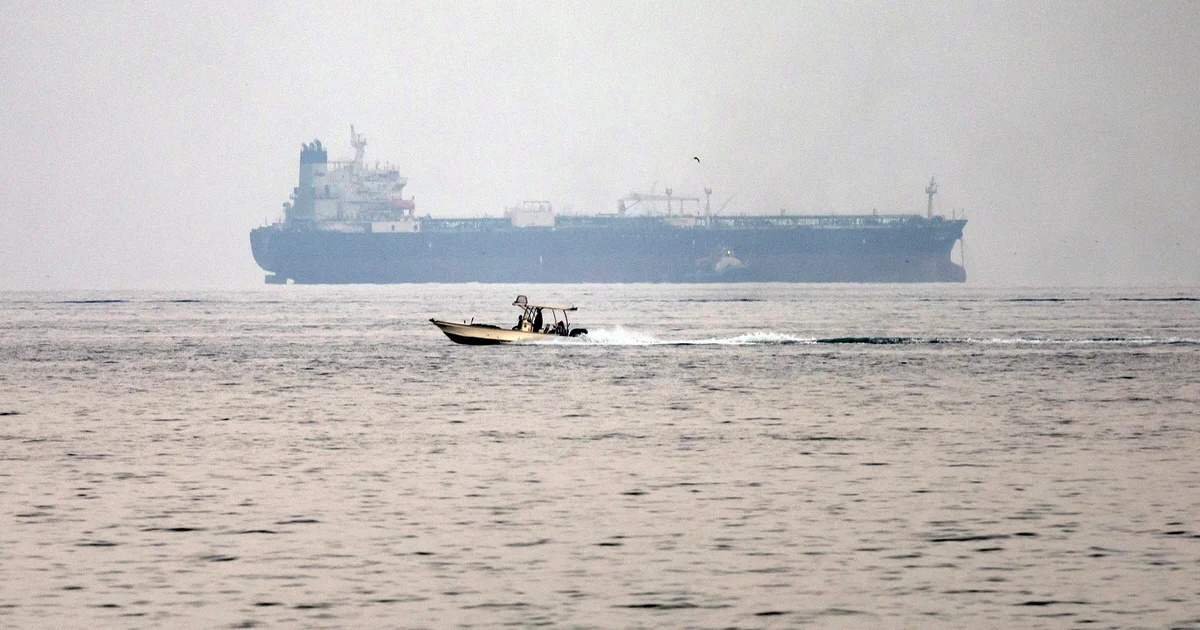
A new US-Israeli attack on Iran prompts Iranian retaliation against regional targets and increases pressure on Israel’s other fronts. This remains a low-probability, high-impact wildcard: reporting says Trump has considered another round of attacks, but also says he told the Financial Times there were no immediate plans, while Iran has warned of retaliation if attacked.
Recommendations
- Maintain a daily incident log for southern Lebanon that records the date, location, weapon or activity reported, and source. Prioritise Bani Hayyan, Khiam, Mayfadoun, Zibqin, al-Mansouri, Touline, Haddatha, Aita al-Jabal, Qantara and Zawtar al-Sharqiya; distinguish independently corroborated incidents from single-outlet reports.
- Track Gaza flooding through the next OCHA updates and Gaza Civil Defence reporting. Record changes in flood-exposed population, damaged tents, emergency calls, building-collapse warnings and reported shelter deliveries as separate measures.
- For Israel’s government formation, distinguish presidential recommendations from signed coalition agreements and pledges on confidence votes. Track whether United Torah Judaism engages in negotiations and whether Arab-led parties commit to support parliamentary votes without joining the cabinet.
- Do not treat the US aid announcement as implemented. Seek a written US government statement that specifies the programme, amount, termination date and any continued weapons sales before updating the aid assessment.
- Keep the April and June 2026 dates for the Israel-Hezbollah ceasefire unresolved in reporting until a reliable account establishes whether they refer to one agreement or separate events.
Confidence & uncertainty
Overall confidence is high in the factual baseline because major-media reporting relays statements and figures from OCHA, UNICEF, IOM, Gaza Civil Defence and the Israeli presidency, while separate regional outlets report Israeli activity in southern Lebanon. Confidence in the outlook judgments is lower: recent town-level strike details rely heavily on regional reporting, claims conflict on the ceasefire start date and the role of Arab-led parties, and the US aid timetable remains explicitly unclear.
Alternative analysis (red cell)
The Lebanon reporting more clearly indicates continuing Israeli operations and possible ceasefire violations than renewed bilateral Israel-Hezbollah exchanges. No Hezbollah attack is documented in the cited period (df9a6e8c-e74b-406f-8e5c-b376f5a9113b; 5013d5dd-edde-41f0-929b-547f95fddbb4), and the ceasefire date itself is disputed between April and June (4d613c09-9092-4f60-8975-03c7097e72db; 0de27bd5-3379-433d-8b61-88ae6be5636f). A more defensible estimate is that localized Israeli actions and sporadic violations are likely to persist, while the probability of renewed reciprocal exchanges remains insufficiently established.
Intelligence gaps
- [EEI 1.1 · PARTIAL] Number, type and geolocated coordinates of projectiles (rockets, mortars, anti-tank guided missiles) fired from Lebanon into Israel in the last 24/72 hours, including time-stamped launch and impact locations. Recommended collection: signals/intel
- [EEI 1.2 · UNCOVERED] Satellite or aerial imagery showing movement, concentration, or forward displacement of Hezbollah-associated military assets (armored vehicles, artillery pieces, mobile rocket launchers, logistics convoys) to positions within 0-10 km of the Israel-Lebanon border. Recommended collection: satellite/imagery
- [EEI 1.3 · UNCOVERED] Intercepted or captured Hezbollah command-and-control communications or orders explicitly directing cross-border operations or coordinated strikes with Palestinian groups (time-stamped messages, unit identifiers, orders to fire/move). Recommended collection: signals/intel
- [EEI 1.4 · UNCOVERED] Observable changes in Israeli northern-front posture within Israel (numbers and types of reinforcements deployed to northern brigades, activation of reserves, air defense redeployments, evacuation orders or shelter alerts in northern towns), including timestamps and unit IDs where available. Recommended collection: human/intel
- [EEI 2.1 · UNCOVERED] Official or corroborated reports of IDF reservist mobilization and unit-level deployment orders (number of reservists called, named brigades/units ordered to deploy, deployment timelines). Recommended collection: open-source/media
- [EEI 2.2 · PARTIAL] Satellite or ground imagery showing concentrations of IDF heavy equipment (tanks, infantry fighting vehicles, engineering vehicles), staging areas, field hospitals or forward supply dumps within X km of the Gaza border and at known crossing points. Recommended collection: satellite/imagery
- [EEI 2.3 · PARTIAL] Change in strike patterns consistent with pre-ground-attack shaping: sustained high-frequency airstrikes on tunnel networks, command nodes, coastal launch sites, and known insurgent concentrations (strike counts, munition types, locations, times). Recommended collection: open-source/media
- [EEI 2.4 · UNCOVERED] Logistics indicators: verified convoys of fuel/ammunition entering staging areas, establishment of forward logistics or medical bases, or documented requisitioning orders for bulk combat supplies with timestamps and quantities. Recommended collection: human/intel
- [EEI 3.1 · UNCOVERED] Number, participants and content of diplomatic contacts or negotiation sessions in the last 48 hours involving mediators (Egypt, Qatar, US, UN), including any proposed ceasefire text, prisoner/exchange lists, timelines or verification mechanisms. Recommended collection: diplomatic
- [EEI 3.2 · UNCOVERED] Public statements, press releases or verified communiqués from Hamas and other Gaza armed groups specifying acceptance, rejection, or conditions for a ceasefire (explicit conditions such as prisoner release lists, withdrawal terms, lifting of blockades), with timestamps and speaker attribution. Recommended collection: open-source/media
- [EEI 3.3 · PARTIAL] Humanitarian indicators relevant to ceasefire: establishment and operation of agreed humanitarian corridors/checkpoints, number of aid deliveries admitted, civilian evacuations completed, and NGO/hospital reports of access denials or safe-passage violations. Recommended collection: humanitarian/NGO reports
- [EEI 3.4 · UNCOVERED] Operational evidence of a de facto pause: verified sustained reduction (e.g., ≥12 hours) in strikes or launches from either side in specific sectors, supported by strike/impact logs, radar tracks and incident reports. Recommended collection: open-source/media
Red cell review: PARTIAL DISSENT
TLP:CLEAR