TLP:CLEAR · Disclosure is not limited.
Israel-Gaza Regional Escalation Situation Report
Time window: Last 7 days · Audience: General analyst · Type: Situation report · DTG: 2026-08-24 12:23Z · Overall confidence: MEDIUM
BLUF
Israeli strikes in Gaza and armed friction between Israel and Hezbollah in southern Lebanon are very likely to persist over the next 1 to 3 months. Stable implementation of the Gaza ceasefire remains unlikely because Israel conditions reconstruction and withdrawal on Hamas disarmament, while Hamas conditions implementation on Israeli withdrawal and an end to attacks.
Executive summary
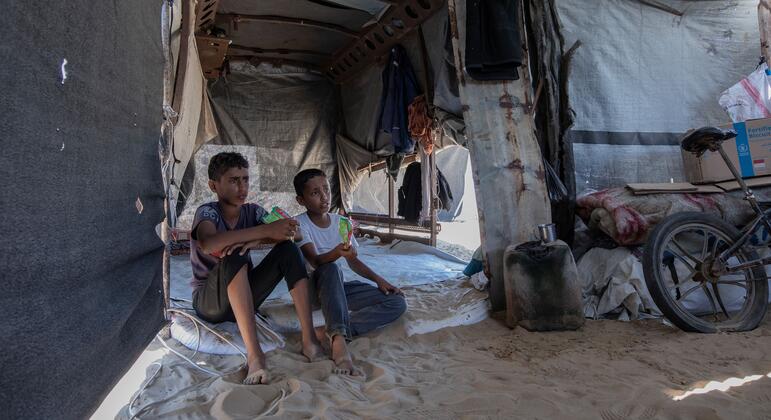
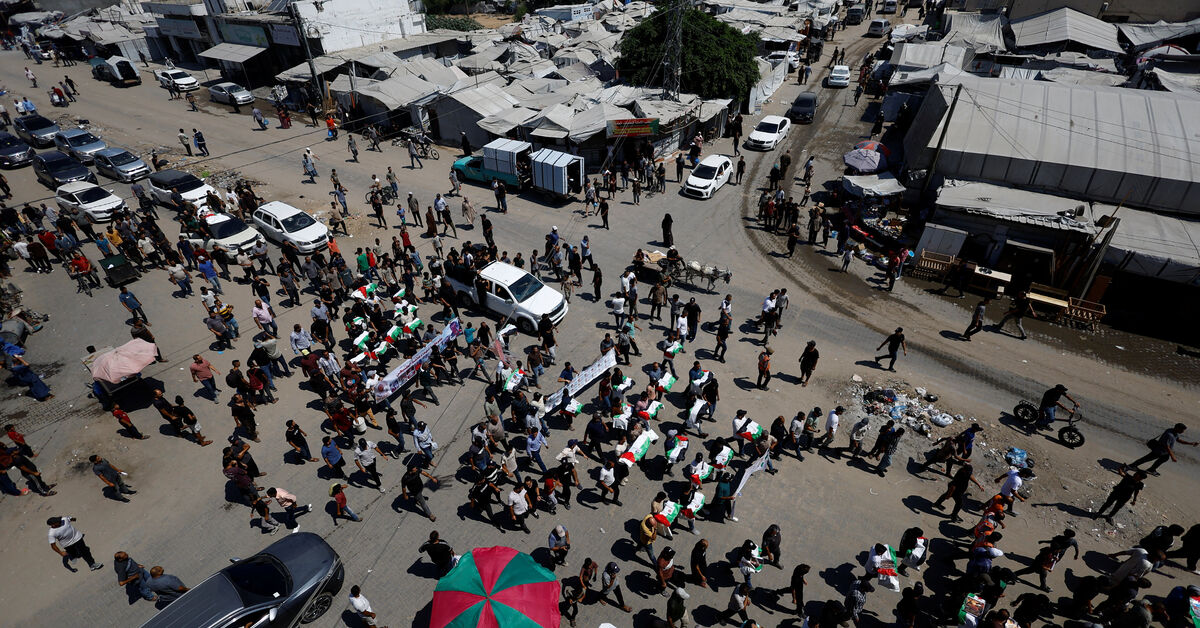
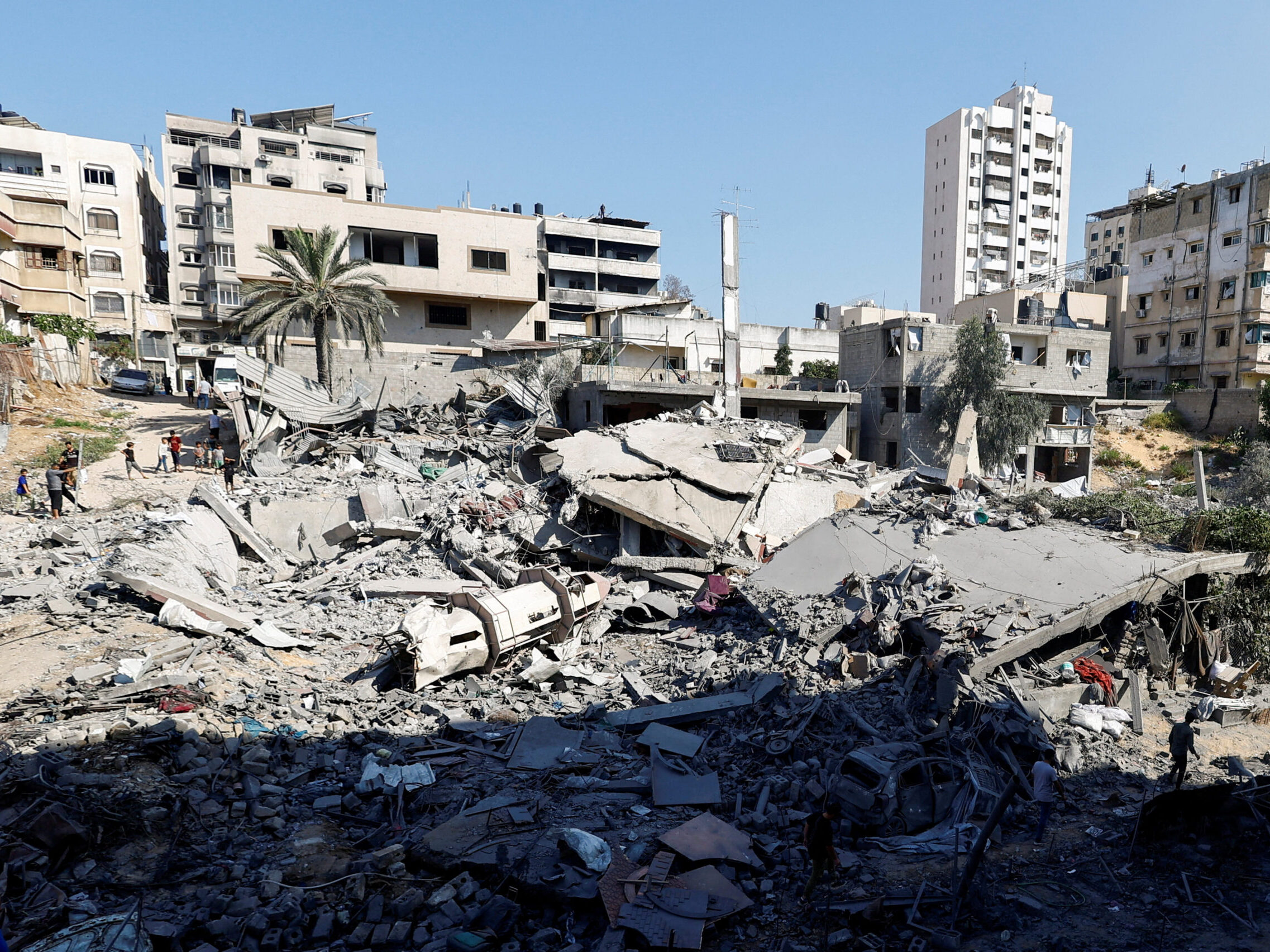
On 24 August, Israel struck Gaza and Hamas condemned the strikes. Recent reporting also identifies Israeli drone attacks in southern Khan Younis and against a tent sheltering displaced people at Al-Aqsa Martyrs Hospital in Deir el-Balah. Gaza's humanitarian conditions remain severe: UN agencies report that 94 per cent of the enclave's 2.1 million residents need shelter, while more than four out of five families face critical or catastrophic conditions. In southern Lebanon, UNIFIL reported 86 Israeli airspace violations, nine airstrikes and 265 projectiles during its observation period, alongside separate reporting of a Hezbollah explosive-drone attack and Israeli retaliatory strikes. Israel's tender for more than 1,200 E1 settlement units is adding diplomatic friction with the UK and regional governments.
Change from previous assessment
Since the 23 August brief, the overall assessment is broadly unchanged: Gaza strikes, severe humanitarian conditions, Gaza ceasefire deadlock and Israel-Hezbollah friction remain the principal judgements. New reporting records an Israeli strike in Gaza on 24 August, Hamas condemnation, 24 NASA thermal detections between 23 and 24 August, and a quantified Israeli E1 tender for more than 1,200 units. Confidence in the Gaza strike forecast is lowered from high to medium because the latest satellite data contain no high-confidence detections and do not establish cause, although direct reporting still supports continued Israeli activity. No prior judgement has been retired.
Key judgments
- Very likely Israeli strikes and drone attacks will continue in Gaza over the next 1 to 3 months. Israel was reported to have struck Gaza on 24 August, while Israeli drone attacks were reported in southern Khan Younis and against a displacement tent at Al-Aqsa Martyrs Hospital in Deir el-Balah. NASA FIRMS detected 24 thermal anomalies in Gaza between 23 and 24 August, but none were high-confidence detections and the system records heat rather than cause. This is an assessed forecast with medium confidence because direct major-media reporting supports current Israeli activity, while the satellite data cannot establish attribution and the timing of the reported drone attacks is unspecified. (Confidence: medium · ASSESSED)
- I&W: Confirm: Israeli forces are reported to conduct another strike or drone attack in Gaza, Khan Younis or Deir el-Balah. (0-14 days)
- I&W: Break: no reported Israeli kinetic incident occurs in Gaza and NASA FIRMS records no thermal detections there for 14 consecutive days. (0-14 days)
- Very likely Gaza's humanitarian conditions will remain severe over the next 1 to 3 months. UN agencies and peacekeepers report that 94 per cent of Gaza's 2.1 million residents need shelter, and UN agencies and partners report that more than four out of five families face critical or catastrophic living conditions. Israeli restrictions continue to impede aid deliveries and services. Gaza has only 19 partially functioning hospitals, six operational UNRWA clinics and 2,200 inpatient beds, while UN partners estimate that 562 million dollars is needed to improve living conditions. This is an assessed forecast with high confidence, supported by corroborating UN, official and major-media reporting. (Confidence: high · ASSESSED)
- I&W: Confirm: UN reporting continues to record shelter needs near 94 per cent and critical or catastrophic conditions for more than four out of five families. (0-30 days)
- I&W: Break: UN agencies report a sustained fall in shelter needs below 80 per cent, or report more than 19 of 34 hospitals and more than six UNRWA clinics functioning for 30 days. (1-3 months)
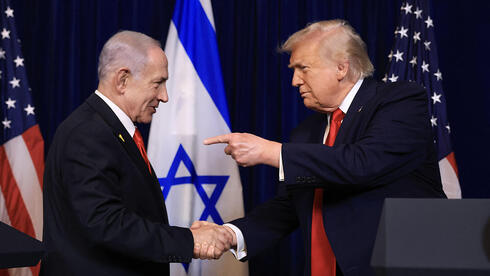
- Unlikely stable implementation of the Gaza ceasefire over the next 1 to 3 months. Israel states that Gaza reconstruction cannot begin until Hamas is fully disarmed, and Benjamin Netanyahu rejected sequencing that would place Israeli withdrawal before Hamas disarmament. Hamas demands Israeli adherence to the ceasefire, withdrawal from Gaza and an end to Israeli attacks, while reporting also indicates that Hamas continues to resist disarmament. This is an assessed judgement with medium confidence. The opposing positions are reported by major media and think-tank sources, but the current status of any joint Israeli-Hamas implementation decision is not directly established. (Confidence: medium · ASSESSED)
- I&W: Confirm: Israel repeats that disarmament must precede withdrawal or reconstruction, while Hamas repeats that implementation requires Israeli withdrawal and an end to attacks. (0-30 days)
- I&W: Break: Israel and Hamas announce a mutually accepted sequence and begin verified withdrawal, disarmament or reconstruction steps. (1-3 months)
- Likely Israeli forces and Hezbollah will sustain armed friction in southern Lebanon over the next 1 to 3 months. UNIFIL reported 86 Israeli airspace violations, nine airstrikes and 265 projectiles during its observation period. Separate reporting states that Hezbollah launched an explosive drone at Israeli troops and that the IDF responded with strikes, while Israeli airstrikes and demolitions continue in Lebanon. This is an assessed forecast with medium confidence. UNIFIL provides reliable corroboration of Israeli activity, but reporting on the 2026 Israel-Lebanon ceasefire and the wider pattern of Hezbollah activity remains partly contested and includes medium- and low-reliability sources. (Confidence: medium · ASSESSED)
- I&W: Confirm: UNIFIL records new Israeli airspace violations or airstrikes in southern Lebanon, or reporting records another Hezbollah drone or projectile attack. (0-30 days)
- I&W: Break: UNIFIL records no Israeli violations or airstrikes and no Hezbollah attacks for 30 consecutive days, alongside a public reaffirmation of the ceasefire. (0-60 days)
- Likely Israel's E1 settlement tender will increase diplomatic friction over the next 1 to 3 months. The Israeli government invited bids for more than 1,200 units in the E1 settlement on 24 August. The UK condemned the tender, summoned Israel's Chargé d'Affaires and demanded an immediate reversal, while Israeli Foreign Minister Gideon Saar criticised the UK's statement and foreign ministers from Egypt, Indonesia, Jordan, Pakistan, Qatar, Saudi Arabia, Turkiye and the United Arab Emirates rejected the project. This is an assessed inference with medium confidence, based on a current settlement decision and multiple diplomatic responses, although the tender's implementation timeline is not established. (Confidence: medium · ASSESSED)
- I&W: Confirm: additional governments issue formal condemnations, summon Israeli diplomats or impose policy measures linked to the E1 tender. (0-30 days)
- I&W: Break: Israel retracts the tender or formally halts the bidding process. (0-90 days)
Outlook & scenarios
Continued Gaza strikes and contained Lebanon friction (60%)
Likely over the next 1 to 3 months. Israeli strikes continue in Gaza, Gaza's humanitarian indicators remain severe, and Israel and Hezbollah exchange limited attacks in southern Lebanon without a confirmed wider regional conflict. Mediators continue to condemn Israeli strikes but do not secure stable ceasefire implementation.
Renewed mediation produces a partial Gaza pause (25%)
Unlikely over the next 1 to 3 months. Turkiye, Egypt and Qatar intensify efforts around the US-backed peace plan, Israel and Hamas accept limited implementation steps, and aid access improves without resolving the core dispute over disarmament and Israeli withdrawal.
High-impact wildcard: Lebanon escalation disrupts Gaza diplomacy (15%)
Unlikely but high impact over the next 1 to 3 months. A Hezbollah attack followed by a larger Israeli response expands armed exchanges beyond southern Lebanon, while Gaza strikes continue and mediator efforts lose traction. The main consequence would be a reduced prospect of ceasefire implementation and a sharper humanitarian burden in Gaza and Lebanon.
Recommendations
- Maintain a daily incident log for Israeli strikes and drone attacks in Gaza, with separate entries for southern Khan Younis, Deir el-Balah and other named locations. Cross-check direct reporting against NASA FIRMS data, and treat thermal detections as evidence of heat rather than proof of a strike or attribution.
- Track Israeli and Hamas statements against four implementation variables: Hamas disarmament, Israeli withdrawal from Gaza, the end of Israeli attacks and the start of reconstruction. Report any joint announcement or verified implementation step as a change to the current ceasefire assessment.
- Prioritise UNIFIL reporting on southern Lebanon. Record Israeli airspace violations, airstrikes and projectiles separately from Hezbollah drone or projectile attacks to avoid conflating activity by the two sides.
- Use 94 per cent shelter need, more than four out of five families facing critical or catastrophic conditions, 19 partially functioning hospitals, six operational UNRWA clinics and 2,200 inpatient beds as the baseline for humanitarian monitoring. Flag any deterioration or sustained improvement against these measures.
- Monitor the E1 tender for a formal Israeli pause or reversal, and separately record new diplomatic actions by the UK, Egypt, Jordan, Qatar, Turkiye, Saudi Arabia and the United Arab Emirates.
- Treat the status and effective dates of the Israel-Lebanon ceasefire as contested in future reporting. Separate high-reliability UNIFIL observations from lower-reliability historical or unattributed claims before revising the Lebanon escalation assessment.
Confidence & uncertainty
Overall confidence is medium. Recent Gaza humanitarian conditions are supported by UN reporting, while current Israeli activity is supported by major-media reporting and a NASA observation that corroborates heat but not cause. UNIFIL provides reliable evidence of Israeli activity in southern Lebanon, but the ceasefire framework and the extent of Hezbollah activity remain less firmly corroborated. The Gaza implementation assessment also relies partly on think-tank reporting and lacks direct evidence of a current joint Israeli-Hamas decision.
Intelligence gaps
- [EEI 1.1 · UNCOVERED] Number, type and geolocated coordinates of projectiles (rockets, mortars, anti-tank guided missiles) fired from Lebanon into Israel in the last 24/72 hours, including time-stamped launch and impact locations. Recommended collection: signals/intel
- [EEI 1.2 · UNCOVERED] Satellite or aerial imagery showing movement, concentration, or forward displacement of Hezbollah-associated military assets (armored vehicles, artillery pieces, mobile rocket launchers, logistics convoys) to positions within 0-10 km of the Israel-Lebanon border. Recommended collection: satellite/imagery
- [EEI 1.3 · UNCOVERED] Intercepted or captured Hezbollah command-and-control communications or orders explicitly directing cross-border operations or coordinated strikes with Palestinian groups (time-stamped messages, unit identifiers, orders to fire/move). Recommended collection: signals/intel
- [EEI 1.4 · UNCOVERED] Observable changes in Israeli northern-front posture within Israel (numbers and types of reinforcements deployed to northern brigades, activation of reserves, air defense redeployments, evacuation orders or shelter alerts in northern towns), including timestamps and unit IDs where available. Recommended collection: human/intel
- [EEI 2.1 · UNCOVERED] Official or corroborated reports of IDF reservist mobilization and unit-level deployment orders (number of reservists called, named brigades/units ordered to deploy, deployment timelines). Recommended collection: open-source/media
- [EEI 2.2 · UNCOVERED] Satellite or ground imagery showing concentrations of IDF heavy equipment (tanks, infantry fighting vehicles, engineering vehicles), staging areas, field hospitals or forward supply dumps within X km of the Gaza border and at known crossing points. Recommended collection: satellite/imagery
- [EEI 2.3 · PARTIAL] Change in strike patterns consistent with pre-ground-attack shaping: sustained high-frequency airstrikes on tunnel networks, command nodes, coastal launch sites, and known insurgent concentrations (strike counts, munition types, locations, times). Recommended collection: open-source/media
- [EEI 2.4 · UNCOVERED] Logistics indicators: verified convoys of fuel/ammunition entering staging areas, establishment of forward logistics or medical bases, or documented requisitioning orders for bulk combat supplies with timestamps and quantities. Recommended collection: human/intel
- [EEI 3.1 · PARTIAL] Number, participants and content of diplomatic contacts or negotiation sessions in the last 48 hours involving mediators (Egypt, Qatar, US, UN), including any proposed ceasefire text, prisoner/exchange lists, timelines or verification mechanisms. Recommended collection: diplomatic
- [EEI 3.2 · PARTIAL] Public statements, press releases or verified communiqués from Hamas and other Gaza armed groups specifying acceptance, rejection, or conditions for a ceasefire (explicit conditions such as prisoner release lists, withdrawal terms, lifting of blockades), with timestamps and speaker attribution. Recommended collection: open-source/media
- [EEI 3.3 · PARTIAL] Humanitarian indicators relevant to ceasefire: establishment and operation of agreed humanitarian corridors/checkpoints, number of aid deliveries admitted, civilian evacuations completed, and NGO/hospital reports of access denials or safe-passage violations. Recommended collection: humanitarian/NGO reports
- [EEI 3.4 · UNCOVERED] Operational evidence of a de facto pause: verified sustained reduction (e.g., ≥12 hours) in strikes or launches from either side in specific sectors, supported by strike/impact logs, radar tracks and incident reports. Recommended collection: open-source/media
Cited sources
[1] SAMAA TV · Iran US War LIVE | Israel Strikes Gaza | Hamas Condemns | 10:30 AM News Update | 24 Aug 2026 (B) · sha256:3eeee9a3ccd8 [2] Al Jazeera · Israel accused of using kites as pretext to justify escalating Gaza attacks (A) · sha256:e2c22a9398de [3] NASA FIRMS · NASA FIRMS thermal detections — Gaza (2d) (A) · sha256:1f587c6b57cc [4] United Nations · Middle East: 94 per cent need shelter in Gaza, Israel ramps up demolitions in Lebanon (A) · sha256:aa5d2b0f402c [5] Al Jazeera · The right to health in Gaza is now a privilege (B) · sha256:3f9078eea2dd [6] arabnews.com · Israel says Gaza reconstruction hinges on Hamas disarmament as regional trio condemns strikes (B) · sha256:44505ebfd216 [7] al-monitor.com · Gaza mediators say latest Israeli strikes undermine efforts to end conflict at critical stage (B) · sha256:8007acce51c6 [8] Atlantic Council · The future of money in Palestine (B) · sha256:8da911927b79 [9] ynetnews.com · Israel keeps testing America’s red lines and Trump keeps deciding which ones matter (B) · sha256:1390ef09bd80 [10] Wikipedia · 2026 Israel–Lebanon ceasefire (F) · sha256:ef8219dfb5a8 [11] Wikipedia · 2024 Israel–Lebanon ceasefire agreement (B) · sha256:a41d9274f3d6 [12] Al Jazeera · E1 settlement: Why Netanyahu, Israel’s right might not mind global outrage (B) · sha256:c80a68e0b7e5 [13] UK Government · Foreign Secretary statement on Government of Israel launch of a tender for the E1 settlement project (A) · sha256:1e4c0fa15c66
Source content hashes were computed at collection time; the cited text is preserved unmodified for the life of this product.
TLP:CLEAR