TLP:CLEAR · Disclosure is not limited.
Israel-Gaza Regional Escalation: Storm Damage and Continued Military Activity
Time window: Last 7 days · Audience: General analyst · Type: Situation report · DTG: 2026-11-09 13:16Z · Overall confidence: HIGH
BLUF
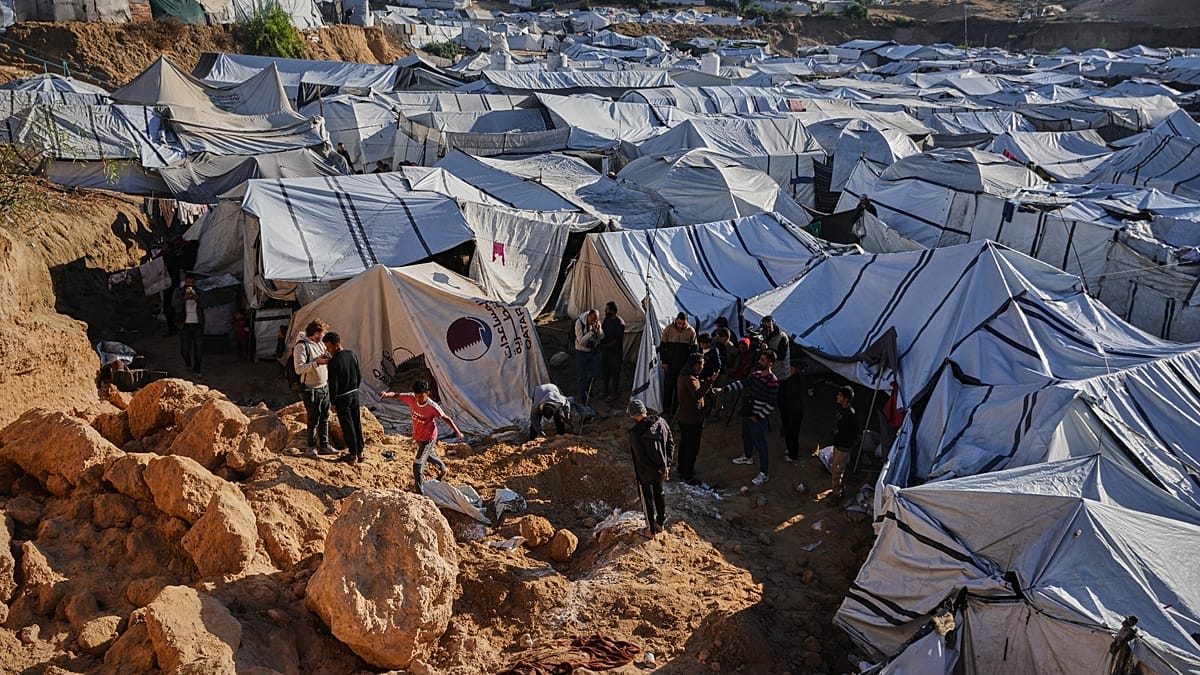
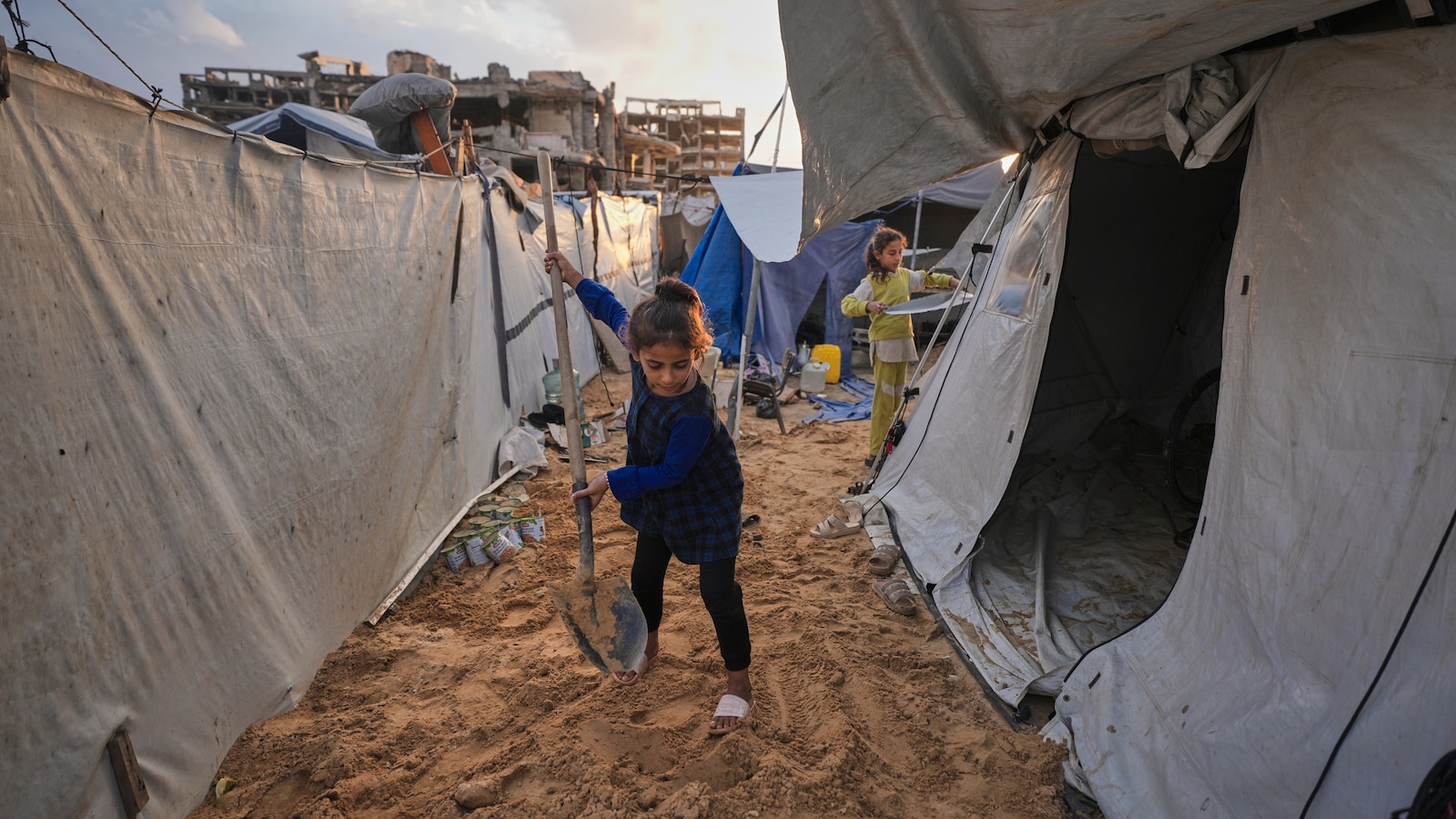
Gaza’s shelter emergency has worsened, with reports of five deaths after a sandbank collapse, about 70,000 flooded tents and severely constrained emergency response. Israeli military activity continues in Gaza and southern Lebanon; renewed Israel-Hezbollah exchanges are likely, but the evidence for an imminent exchange remains limited.
Executive summary
The first winter storm brought widespread flooding to Gaza displacement sites. Reports describe about 70,000 flooded tents, deaths and injuries after a sandbank collapsed onto tents near Deir al-Balah, and a Gaza Civil Defence response rate of only 10% of 2,100 distress calls. The UN estimates 1.2 million people are living in tents or makeshift shelters. Separately, Israeli reporting describes continued military activity in southern Lebanon, including operations by the 91st Division and IDF-reported weapons discoveries near UN positions. Reporting also describes Israeli airstrikes in Gaza continuing despite the ceasefire. President Isaac Herzog has formally given Gadi Eisenkot the first chance to form Israel’s next government, but the reported seat totals do not establish a governing coalition.
Change from previous assessment
Since the 8 November brief, reporting adds the fatal sandbank collapse near Deir al-Balah and a Gaza Civil Defence account that responders handled only 10% of 2,100 distress calls. This reinforces the prior assessment of an acute shelter emergency, while the differing call totals remain unresolved. New reporting provides more detail on IDF operations and alleged weapons discoveries near UN positions in Meiss El Jabal and a-Tiri. The assessment of likely continued Israeli activity in southern Lebanon is retained; the forecast of renewed Israel-Hezbollah exchanges remains low confidence because the current reporting does not establish Hezbollah intent to attack. Eisenkot’s government-formation mandate is now formally reported, but no coalition outcome is established.
Key judgments
- Gaza’s shelter emergency is very likely to remain acute and worsen over the next 1-3 months if heavy rain recurs. Gaza Civil Defence reported water levels of up to 1.5 metres in some locations and said responders handled only 10% of 2,100 distress calls; another report attributed at least 1,500 calls to the same service, so the call total is unsettled. Reports from Palestinian media and major news outlets describe about 70,000 flooded tents, while the UN estimates 1.2 million people are living in tents or makeshift shelters. Cogat says more than 91,000 tents have been delivered, while Gaza’s Ministry of Public Works and Housing says about 270,000 are needed. The broad exposure and storm damage are corroborated across reporting, but exact figures and the adequacy of deliveries remain contested. Confidence is medium because major-media reporting and UN estimates support the overall picture, while several operational and needs figures come from interested parties or differ between reports. (Confidence: medium · ASSESSED)
- I&W: Confirm: Gaza Civil Defence reports new flood-related rescue calls, tent damage or water levels above 1 metre at named displacement sites. (0-14 days)
- I&W: Break: A dated UN or IOM field update reports that flood-exposed displacement sites have been cleared of standing water and residents moved into safe shelter. (1-3 months)
- Israeli airstrikes and ground operations in Gaza are very likely to continue over the next 30 days despite the ceasefire. Major-media reporting says Israeli airstrikes have continued almost every day after the ceasefire, and a report on 9 November describes an Israeli shooting incident, artillery shelling and gunfire in Gaza. These reports support a continuing pattern, but the available claims do not provide a dated, incident-by-incident tally for the current week. Confidence is medium: the broader pattern appears in major-media reporting, while the latest specific incident is reported by local media. (Confidence: medium · ASSESSED)
- I&W: Confirm: Two independent major-media outlets report separate, dated Israeli strikes or ground operations in Gaza. (0-14 days)
- I&W: Break: Israeli authorities announce a halt to strikes and ground operations, followed by 14 consecutive days without a reported Israeli attack in Gaza. (0-30 days)
- Israeli military activity in southern Lebanon is very likely to continue over the next 30 days. The IDF said the 91st Division was operating in its Security Zone on 8 November. The IDF also attributed weapons discoveries in Meiss El Jabal to the Oded Brigade Combat Team, the 9th Brigade; The Times of Israel reported a separate alleged Hezbollah military apartment found by Kfir Brigade troops in a-Tiri. Other reporting describes an Israeli strike in Qabrikha on 4 November, sound-bomb drops near Mansouri and Kfarchouba, and an armoured advance with road works towards Wadi Sheba on 5 November. The operations are reported by multiple outlets, but the weapons and Hezbollah-use allegations rely chiefly on Israeli military accounts and have not been independently confirmed in the available reporting. Confidence is medium. (Confidence: medium · ASSESSED)
- I&W: Confirm: The IDF reports another 91st Division operation, strike or road-building activity in southern Lebanon, or a major-media outlet reports a new Israeli strike in a named border-area town. (0-14 days)
- I&W: Break: UNIFIL or the Lebanese army reports a verified Israeli withdrawal from the Security Zone, with no new Israeli operation reported for 14 consecutive days. (0-30 days)
- Renewed direct Israel-Hezbollah exchanges are likely within 1-3 months, but confidence in this forecast is low. The reporting describes Israeli strikes and activity in southern Lebanon, an Israeli military readiness report concerning a possible broad Lebanon front, and a French warning that continued ambiguity over implementing UN Resolution 1701 risks renewed war. These sources support concern about escalation, not a confirmed Hezbollah decision to attack. The readiness account is indirect, and the available reporting is weighted towards Israeli operations and statements. Confidence is low because the forecast rests on limited indicators of intent and does not establish an imminent exchange. (Confidence: low · ASSESSED)
- I&W: Confirm: A credible report or official statement attributes cross-border fire to Hezbollah, followed by an Israeli strike or other documented response. (0-3 months)
- I&W: Break: No Hezbollah attack is reported and Israeli operations in southern Lebanon cease for 30 consecutive days. (0-3 months)
- Eisenkot is unlikely to secure a durable governing majority solely on the basis of the 67-seat anti-Netanyahu total. Herzog has given Eisenkot the first opportunity to form a government; the Netanyahu bloc holds 53 seats, and Palestinian parties in Israel hold 19. Those figures do not establish that the anti-Netanyahu members will support a common coalition. An Al Jazeera opinion writer assesses that neither bloc will form a government and that new elections will follow within six months. Confidence is low because the mandate and seat totals are reported by major media, but the forecast relies on an opinion assessment and the available claims do not specify party commitments. (Confidence: low · ASSESSED)
- I&W: Confirm: Eisenkot’s mandate ends without a coalition agreement, or a party publicly withdraws support for his government. (0-1 month)
- I&W: Break: Eisenkot announces a signed coalition agreement with named parties and publicly stated support from enough Knesset members to form a government. (0-1 month)
Outlook & scenarios
Continued Israeli operations with contained Lebanon tensions (55%)
Israeli airstrikes and ground activity in Gaza continue, while the IDF maintains operations in southern Lebanon. The Gaza shelter emergency remains severe after the storm. Israel and Hezbollah avoid a sustained exchange.
Escalation along the Israel-Lebanon border (25%)
Further Israeli operations in southern Lebanon prompt Hezbollah fire and Israeli retaliation. The reported Israeli readiness preparations and French warning about Resolution 1701 become more relevant, but do not by themselves establish that escalation will occur.
Reduced military activity and renewed diplomatic effort (15%)
Diplomatic pressure supports a reduction in Israeli operations in Gaza and southern Lebanon. Gaza’s shelter needs remain, while further arrangements for the Gaza plan and implementation of Resolution 1701 become points for monitoring.
Regional spillover wildcard (5%)
Renewed US-Israel military action against Iran draws Hezbollah into a broader Lebanon front. This is a low-probability, high-impact scenario. Reporting on preparations is indirect and does not establish an operational decision.
Recommendations
- Track Gaza storm impacts using dated Civil Defence, UN and IOM updates. Keep the 1,500 and 2,100 distress-call figures separate until the source and reporting period are reconciled.
- Compare Cogat’s reported deliveries with the Ministry of Public Works and Housing’s stated tent requirement. Record the date, type and quantity of each reported delivery, and distinguish tents from caravans and other shelter supplies.
- For southern Lebanon, maintain a dated incident log for Meiss El Jabal, a-Tiri, Qabrikha, Mansouri, Kfarchouba and Wadi Sheba. Separate IDF statements about weapons discoveries from independently corroborated reporting.
- Monitor for a reported Hezbollah attack followed by an Israeli response, and for verifiable IDF withdrawal or changes in activity by the 91st Division, Oded Brigade and Kfir Brigade.
- Track Eisenkot’s coalition negotiations through public party commitments and any signed agreement. Do not treat the 67-seat anti-Netanyahu total as proof of a governing coalition.
Confidence & uncertainty
Overall confidence is high for the broad situation picture: multiple major-media reports describe Gaza storm damage, UN estimates corroborate the scale of displacement into tents and makeshift shelters, and reporting identifies ongoing Israeli activity in Gaza and southern Lebanon. Confidence is lower for exact Gaza response and casualty figures, for IDF claims about weapons near UN positions, and for the forecast of a direct Israel-Hezbollah exchange. Those uncertainties reduce confidence in individual judgments but do not overturn the broad assessment.
Alternative analysis (red cell)
The available evidence more firmly indicates continued unilateral Israeli activity and contingency planning than an impending direct Israel-Hezbollah exchange. Claims, and b6b06d36-1283-4851-aff1-2cdde0c89055 show Israeli actions and warnings, but bb553ce3-7619-4c82-8a2b-c5f92897a9df does not demonstrate Hezbollah intent. On this record, renewed exchanges remain possible but are not clearly more likely than continued low-level tension without a direct exchange.
Intelligence gaps
- [EEI 1.1 · UNCOVERED] Number, type and geolocated coordinates of projectiles (rockets, mortars, anti-tank guided missiles) fired from Lebanon into Israel in the last 24/72 hours, including time-stamped launch and impact locations. Recommended collection: signals/intel
- [EEI 1.2 · UNCOVERED] Satellite or aerial imagery showing movement, concentration, or forward displacement of Hezbollah-associated military assets (armored vehicles, artillery pieces, mobile rocket launchers, logistics convoys) to positions within 0-10 km of the Israel-Lebanon border. Recommended collection: satellite/imagery
- [EEI 1.3 · UNCOVERED] Intercepted or captured Hezbollah command-and-control communications or orders explicitly directing cross-border operations or coordinated strikes with Palestinian groups (time-stamped messages, unit identifiers, orders to fire/move). Recommended collection: signals/intel
- [EEI 1.4 · UNCOVERED] Observable changes in Israeli northern-front posture within Israel (numbers and types of reinforcements deployed to northern brigades, activation of reserves, air defense redeployments, evacuation orders or shelter alerts in northern towns), including timestamps and unit IDs where available. Recommended collection: human/intel
- [EEI 2.1 · UNCOVERED] Official or corroborated reports of IDF reservist mobilization and unit-level deployment orders (number of reservists called, named brigades/units ordered to deploy, deployment timelines). Recommended collection: open-source/media
- [EEI 2.2 · UNCOVERED] Satellite or ground imagery showing concentrations of IDF heavy equipment (tanks, infantry fighting vehicles, engineering vehicles), staging areas, field hospitals or forward supply dumps within X km of the Gaza border and at known crossing points. Recommended collection: satellite/imagery
- [EEI 2.3 · UNCOVERED] Change in strike patterns consistent with pre-ground-attack shaping: sustained high-frequency airstrikes on tunnel networks, command nodes, coastal launch sites, and known insurgent concentrations (strike counts, munition types, locations, times). Recommended collection: open-source/media
- [EEI 2.4 · UNCOVERED] Logistics indicators: verified convoys of fuel/ammunition entering staging areas, establishment of forward logistics or medical bases, or documented requisitioning orders for bulk combat supplies with timestamps and quantities. Recommended collection: human/intel
- [EEI 3.1 · UNCOVERED] Number, participants and content of diplomatic contacts or negotiation sessions in the last 48 hours involving mediators (Egypt, Qatar, US, UN), including any proposed ceasefire text, prisoner/exchange lists, timelines or verification mechanisms. Recommended collection: diplomatic
- [EEI 3.2 · PARTIAL] Public statements, press releases or verified communiqués from Hamas and other Gaza armed groups specifying acceptance, rejection, or conditions for a ceasefire (explicit conditions such as prisoner release lists, withdrawal terms, lifting of blockades), with timestamps and speaker attribution. Recommended collection: open-source/media
- [EEI 3.3 · PARTIAL] Humanitarian indicators relevant to ceasefire: establishment and operation of agreed humanitarian corridors/checkpoints, number of aid deliveries admitted, civilian evacuations completed, and NGO/hospital reports of access denials or safe-passage violations. Recommended collection: humanitarian/NGO reports
- [EEI 3.4 · PARTIAL] Operational evidence of a de facto pause: verified sustained reduction (e.g., ≥12 hours) in strikes or launches from either side in specific sectors, supported by strike/impact logs, radar tracks and incident reports. Recommended collection: open-source/media
Red cell review: PARTIAL DISSENT
TLP:CLEAR