TLP:CLEAR · Disclosure is not limited.
Israel, Gaza strikes persist as Israel, Lebanon talks open in Rome; humanitarian access in Gaza remains constrained
Time window: Last 7 days · Audience: General analyst · Type: Situation report · DTG: 2026-07-14 13:33Z · Overall confidence: HIGH
BLUF
Israeli strikes in Gaza continued through 14 July with civilian fatalities while Israeli and Lebanese negotiators opened a new US‑mediated round in Rome. Near‑term de‑escalation on the northern front is uncertain, and aid access inside Gaza remains tightly constrained despite new UK and EU support.
Executive summary
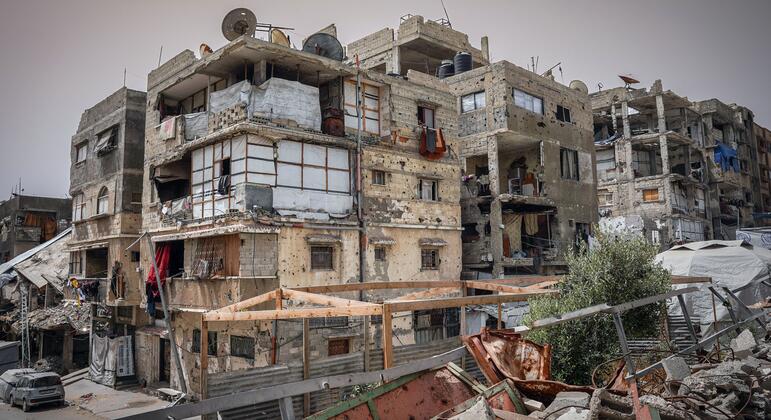
Multiple Israeli air and drone strikes across the Gaza Strip in recent days killed civilians, including children, and the IDF reported killing a Hamas naval commander on 14 July. In parallel, Israeli and Lebanese negotiators convened in Rome for a two‑day US‑mediated round aimed at border de‑escalation. Humanitarian access in Gaza remains hampered by Israeli restrictions, route insecurity and funding gaps, with most of the enclave’s more than two million residents still displaced, even as the UK and EU mobilise new recovery financing and UNDP rolls out transitional shelters. Post‑ceasefire casualty tallies since October 2025 vary slightly across sources but point to continued lethal violence.
Change from previous assessment
Since the 13 July brief, Israeli strikes on 14 July resulted in additional fatalities and the IDF reported killing a Hamas naval commander. Israeli and Lebanese negotiators commenced a new two‑day round in Rome, adding a fresh diplomatic track on the northern front. We therefore revise the northern outlook from a flatly negative trajectory to a roughly even chance of limited de‑escalation tied to talks, while retaining caution given Hezbollah’s stated linkage to Gaza operations. Humanitarian access constraints in Gaza are reaffirmed, with continued reporting on route limits and funding responses.
Key judgments
- Very likely Israeli forces maintained a high tempo of air and drone strikes across the Gaza Strip through 14 July, causing multiple civilian deaths, while the IDF reported killing a Hamas naval commander. (Confidence: high · REPORTED)
- I&W: Confirming: Additional Palestinian Health Ministry or hospital‑corroborated reports of fatalities from Israeli strikes in Gaza City, Khan Younis, or central camps within the next reporting cycle. (0-14 days)
- I&W: Breaking: An IDF‑announced 72‑hour halt to air and drone strikes in Gaza matched by an absence of wire‑service or hospital casualty reports over the same period. (0-14 days)
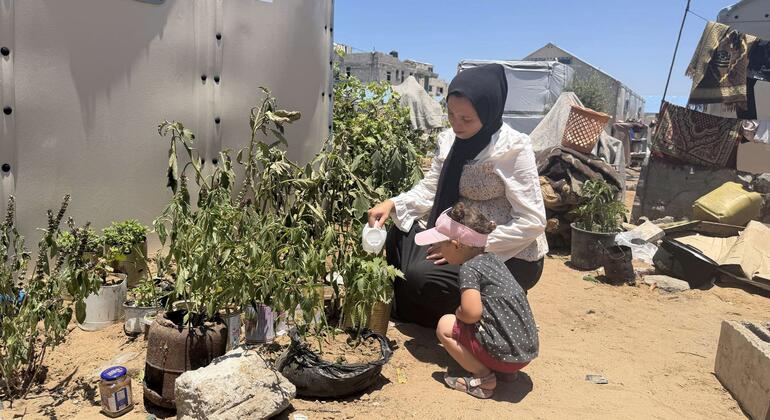
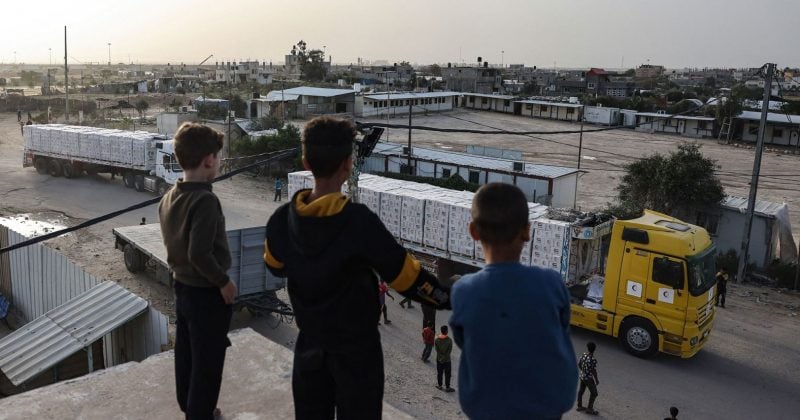
- Almost certainly Gaza’s humanitarian operating environment remains severely constrained by access restrictions and insecurity, with over two million people displaced and aid delivery bottlenecks, despite new UK and EU funding and UNDP shelter rollouts. (Confidence: high · REPORTED)
- I&W: Confirming: OCHA or WFP updates citing route closures or further reductions in shelter distributions relative to June baselines. (0-14 days)
- I&W: Breaking: Israeli authorities publicly open additional road corridors enabling WFP deliveries to northern Gaza at scale, validated by WFP movement reports. (0-14 days)
- There is a roughly even chance the 14 July Rome talks between Israeli and Lebanese negotiators deliver near‑term de‑escalation along the border, given Hezbollah’s stated intent to keep firing until Israel halts operations in Gaza and continued Israeli strikes there. (Confidence: medium · ASSESSED)
- I&W: Confirming: Joint communiqué from Rome detailing pilot withdrawal zones or verification steps along the Blue Line, or public confirmation of pilot zones by US Central Command. (0-14 days)
- I&W: Breaking: Renewed Hezbollah rocket or anti‑tank fire causing Israeli fatalities, or Israeli airstrikes into southern Lebanon acknowledged by either side during the talks window. (0-14 days)
- It is likely the northern theatre will remain volatile, with continued exchanges of fire and high civilian risk in Lebanon, including the possibility of drone and missile strikes in Beirut, alongside heightened movement restrictions for US personnel. (Confidence: medium · ASSESSED)
- I&W: Confirming: New cross‑border strike claims by the IDF or Hezbollah, or fresh displacement advisories in Israel’s north. (0-14 days)
- I&W: Breaking: A full week with no reported rocket, missile, drone or artillery incidents across the Blue Line in official or major‑media reporting. (0-14 days)
- Very likely more than 1,080 Palestinians have been killed in Gaza since the 10 October 2025 ceasefire came into effect, indicating continued lethal violence despite truce frameworks, though totals vary slightly by source. (Confidence: medium · REPORTED)
- I&W: Confirming: Gaza Health Ministry or multilateral updates revising cumulative fatality figures upward. (1-3 months)
- I&W: Breaking: Independent monitoring showing zero conflict‑related fatalities in Gaza for a continuous 30‑day period. (1-3 months)
Outlook & scenarios
Managed de‑escalation on the northern front (40%)
Talks in Rome produce a limited confidence‑building package, possibly including pilot withdrawal zones or verification steps, which reduces the frequency of cross‑border incidents without resolving core demands. Gaza strikes persist at a lower tempo. This outcome aligns with active US‑mediated engagement and public hosting offers from Italy.
Protracted low‑intensity conflict in Gaza and along the Blue Line (60%)
Israeli strikes and targeted killings in Gaza continue intermittently, while exchanges with Hezbollah persist at a low to moderate rate. Humanitarian access inside Gaza remains constrained by route and security limits, and displacement patterns change little. Talks yield process but no enforceable arrangements.
Escalation linked to Gaza operations (30%)
Hezbollah sustains or intensifies fire, citing ongoing Israeli operations in Gaza, prompting broader Israeli strikes into southern Lebanon. Civilian risk in Lebanon rises, movement restrictions harden, and displacement in northern Israel increases.
Humanitarian access uptick in Gaza (20%)
Israeli authorities expand usable road corridors, enabling WFP‑coordinated deliveries to northern Gaza, while UK and EU financing accelerates UNDP shelter deployment. Immediate needs remain high but pressure on shelter and food distributions eases modestly.
Recommendations
- Stand up a daily collection track on Gaza strike activity drawing on hospital casualty reports, Gaza Health Ministry tallies, and wire‑service incident logs to quantify strike tempo and civilian harm.
- Task monitoring of official outputs from the Rome talks and mediators for any reference to pilot zones, force repositioning, or verification mechanisms; maintain a tripwire list to pivot if a communiqué is issued.
- Maintain a Hezbollah watchboard that logs claimed launches, IDF retaliatory actions, and geolocated impact sites to detect shifts in the northern theatre’s cadence.
- Map Gaza aid access by collating WFP route usage, OCHA distribution metrics, and Israeli access announcements; flag any corridor openings that could qualitatively change delivery to northern Gaza.
- Track disbursement and programming against the UK’s £10m for the UN Horizon Fund, the EU’s €900m pledge, and UNDP shelter rollouts to assess delivery against needs and identify bottlenecks.
- Update internal risk posture for Lebanon analysts and contractors in line with official advisories citing drone and missile strike risks across the country, including Beirut, and movement restrictions.
Confidence & uncertainty
Overall confidence is high because key developments rest on multiple, mutually reinforcing high‑reliability sources: wire‑service and major‑media reporting on Gaza strikes and casualties, official communiqués and multilateral reporting on humanitarian access, and government advisories on Lebanon’s security environment. Some judgments carry medium confidence due to minor discrepancies in post‑ceasefire fatality tallies and the inherently uncertain outcome of newly opened Israel, Lebanon talks, but these do not undermine the core picture supported by corroborated reporting.
Alternative analysis (red cell)
Reporting indicates strikes, civilian casualties, and severe humanitarian constraints, but several central items rely on single‑cluster reporting (origin_cluster_id ca813e24) and lower‑Admiralty (A4) claims that are internally inconsistent (tradecraft_lint_findings: contradiction_unaddressed). Casualty and displacement totals vary across sources and are contradicted in the file, and the Rome talks are thinly sourced while Hezbollah’s public precondition reduces the prospects for immediate de‑escalation. Additional independent, time‑stamped corroboration is required before adopting the brief’s stronger probabilistic language.
Intelligence gaps
- [EEI 1.1 · PARTIAL] Number, type and geolocated coordinates of projectiles (rockets, mortars, anti-tank guided missiles) fired from Lebanon into Israel in the last 24/72 hours, including time-stamped launch and impact locations. Recommended collection: signals/intel
- [EEI 1.2 · PARTIAL] Satellite or aerial imagery showing movement, concentration, or forward displacement of Hezbollah-associated military assets (armored vehicles, artillery pieces, mobile rocket launchers, logistics convoys) to positions within 0–10 km of the Israel-Lebanon border. Recommended collection: satellite/imagery
- [EEI 1.3 · UNCOVERED] Intercepted or captured Hezbollah command-and-control communications or orders explicitly directing cross-border operations or coordinated strikes with Palestinian groups (time-stamped messages, unit identifiers, orders to fire/move). Recommended collection: signals/intel
- [EEI 1.4 · PARTIAL] Observable changes in Israeli northern-front posture within Israel (numbers and types of reinforcements deployed to northern brigades, activation of reserves, air defense redeployments, evacuation orders or shelter alerts in northern towns), including timestamps and unit IDs where available. Recommended collection: human/intel
- [EEI 2.1 · UNCOVERED] Official or corroborated reports of IDF reservist mobilization and unit-level deployment orders (number of reservists called, named brigades/units ordered to deploy, deployment timelines). Recommended collection: open-source/media
- [EEI 2.2 · UNCOVERED] Satellite or ground imagery showing concentrations of IDF heavy equipment (tanks, infantry fighting vehicles, engineering vehicles), staging areas, field hospitals or forward supply dumps within X km of the Gaza border and at known crossing points. Recommended collection: satellite/imagery
- [EEI 2.3 · PARTIAL] Change in strike patterns consistent with pre-ground-attack shaping: sustained high-frequency airstrikes on tunnel networks, command nodes, coastal launch sites, and known insurgent concentrations (strike counts, munition types, locations, times). Recommended collection: open-source/media
- [EEI 2.4 · UNCOVERED] Logistics indicators: verified convoys of fuel/ammunition entering staging areas, establishment of forward logistics or medical bases, or documented requisitioning orders for bulk combat supplies with timestamps and quantities. Recommended collection: human/intel
- [EEI 3.1 · PARTIAL] Number, participants and content of diplomatic contacts or negotiation sessions in the last 48 hours involving mediators (Egypt, Qatar, US, UN), including any proposed ceasefire text, prisoner/exchange lists, timelines or verification mechanisms. Recommended collection: diplomatic
- [EEI 3.2 · UNCOVERED] Public statements, press releases or verified communiqués from Hamas and other Gaza armed groups specifying acceptance, rejection, or conditions for a ceasefire (explicit conditions such as prisoner release lists, withdrawal terms, lifting of blockades), with timestamps and speaker attribution. Recommended collection: open-source/media
- [EEI 3.3 · PARTIAL] Humanitarian indicators relevant to ceasefire: establishment and operation of agreed humanitarian corridors/checkpoints, number of aid deliveries admitted, civilian evacuations completed, and NGO/hospital reports of access denials or safe-passage violations. Recommended collection: humanitarian/NGO reports
- [EEI 3.4 · PARTIAL] Operational evidence of a de facto pause: verified sustained reduction (e.g., ≥12 hours) in strikes or launches from either side in specific sectors, supported by strike/impact logs, radar tracks and incident reports. Recommended collection: open-source/media
Cited sources
[1] haaretz.com · Direct Israel-Lebanon talks commence in Rome (A) · sha256:29256750bcd1 [2] Associated Press · Israeli fire in Gaza kills 6 people, including a little girl, health officials say (A) · sha256:7621f42f4e43 [3] gov.uk · UK backs Gaza recovery as Foreign Secretary urges renewed push for peace (A) · sha256:f11cc38a0fdd [4] United Nations · World News in Brief: Aid deliveries to Gaza restricted, UN prepares El Nino response, El Salvador eliminates disease (A) · sha256:814f15558088 [5] Associated Press · EU rallies $1 billion in pledges for Gaza's recovery (A) · sha256:6d3b5e74f82d [6] UN Development Programme (UNDP) · Reviving communities home by home in Gaza (A) · sha256:22887ca14102 [7] aljazeera.com · Lebanon, Israel hold talks in Rome on implementing framework deal (A) · sha256:15ea7aac9a57 [8] Wikipedia · 2024 Israel–Lebanon ceasefire agreement (B) · sha256:ea1529c6f848 [9] cryptobriefing.com · Israel conducts multiple airstrikes across Gaza amidst ceasefire violations (B) · sha256:60e8a7faa2e3 [10] U.S. Department of State · Lebanon Travel Advisory | Travel.State.gov (A) · sha256:a9c302d69f7c [11] Wikipedia · Hezbollah–Israel conflict (2023–present) (B) · sha256:0524547deeb8
Source content hashes were computed at collection time; the cited text is preserved unmodified for the life of this product.
Red cell review: PARTIAL DISSENT
TLP:CLEAR