TLP:CLEAR · Disclosure is not limited.
Israel-Lebanon ceasefire fragility, Gaza humanitarian strain, and US-Iran strikes heighten regional risk, 20-27 June 2026
Time window: Last 7 days · Audience: General analyst · Type: Situation report · DTG: 2026-06-27 13:12Z · Overall confidence: HIGH
BLUF
Cross-border hostilities persisted within 24 hours of a US-brokered Israel-Lebanon agreement, while Gaza’s humanitarian crisis remains acute and US-Iran strikes around the Strait of Hormuz raised regional risk. Without clear Israeli withdrawal terms acceptable to Hezbollah, there is a likely continuation of low- to mid-level clashes and a roughly even chance of renewed escalation.
Executive summary
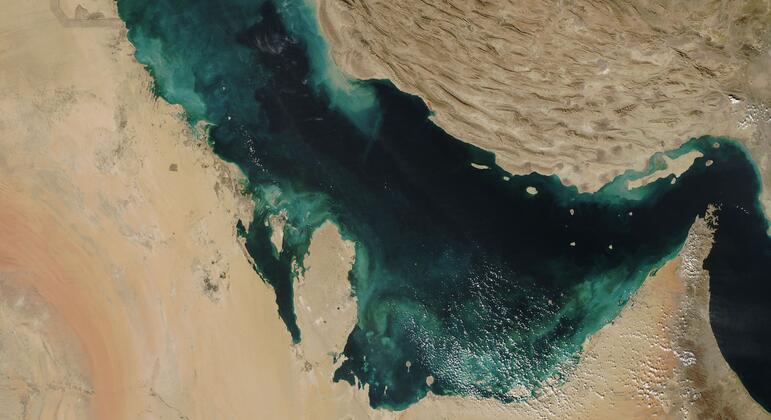
Representatives of Israel, Lebanon and the United States signed a new agreement in Washington, yet Israeli strikes and drone activity in southern Lebanon were reported the next day, and Hezbollah has rejected partial withdrawal terms and warned of further clashes if Israel does not fully withdraw. Reporting indicates the IDF remains inside a six-mile security span in southern Lebanon and has conducted large-scale demolitions, including detonating 450 tonnes of explosives at tunnels in Qantara, alongside satellite imagery showing at least 46 of 54 Yellow Line localities heavily damaged or flattened. In Gaza, UN operations continue through Kerem Shalom, currently the sole operational cargo entry, but severe needs persist with about 1.7 million people in 1,600 displacement sites, an estimated 600,000 lacking sufficient drinking water, and fresh thermal detections signalling ongoing hostilities. US forces struck Iranian missile, drone and radar sites on 26 June, Iran’s IRGC claimed retaliatory hits on US-linked sites, and a tanker was struck in the Strait of Hormuz, all against a backdrop of about 80 mines in the waterway and industry warnings to delay transits. These dynamics keep the Israel-Lebanon front unstable, sustain acute humanitarian pressure in Gaza, and elevate the risk that maritime incidents and US-Iran friction spill over into the Levant theatre.
Change from previous assessment
New reporting confirms Israeli strikes and drone activity in southern Lebanon within a day of the US-brokered deal, reinforcing that the agreement has not halted hostilities. Imagery-backed details of demolition operations at Qantara and across Yellow Line localities further substantiate earlier assessments of extensive damage. Hezbollah signalling remains hard-line on withdrawal, while Israeli leadership reiterates staying in the security zone until Hezbollah disarms. US-Iran exchanges on 26-27 June, a tanker hit in the Strait of Hormuz, and maritime safety advisories elevate spillover risk beyond what was captured in the prior brief. Gaza indicators remain consistent with severe humanitarian strain, with Kerem Shalom still the sole cargo entry and ongoing hostilities reflected in fresh thermal detections.
Key judgments
- Clashes along the Israel-Lebanon frontier are likely to continue despite the US-brokered agreement signed in Washington, as both sides conducted strikes and airspace violations within 24 hours of the signing. (Confidence: high · REPORTED)
- I&W: Additional Israeli air or drone strikes reported in Nabatieh, Markaba or near the security zone. (0-14 days)
- I&W: UNIFIL reporting shows no airspace violations or cross-border fire for two consecutive weeks. (1-3 months)
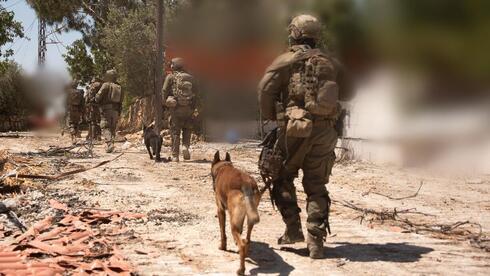
- The IDF is almost certainly maintaining a security zone and conducting large-scale demolition operations in southern Lebanon, resulting in widespread damage including at Qantara and across at least 46 of 54 localities within the IDF’s Yellow Line. (Confidence: high · REPORTED)
- I&W: New commercial satellite before-and-after imagery shows further demolition in Aadshit or Majdal Zoun. (1-3 months)
- I&W: Official scaling back or cancellation of IDF evacuation orders south of the Litani and Zahrani Rivers. (1-3 months)
- Severe humanitarian needs in Gaza are very likely to persist, with Kerem Shalom as the only operational cargo entry, daily UN collections there, large-scale displacement, widespread water shortages and fresh thermal detections indicating ongoing hostilities. (Confidence: high · REPORTED)
- I&W: UN operational updates continue to cite Kerem Shalom as the sole cargo entry point. (0-14 days)
- I&W: Public announcement of an additional operational crossing for humanitarian cargo or sustained absence of FIRMS thermal anomalies. (1-3 months)
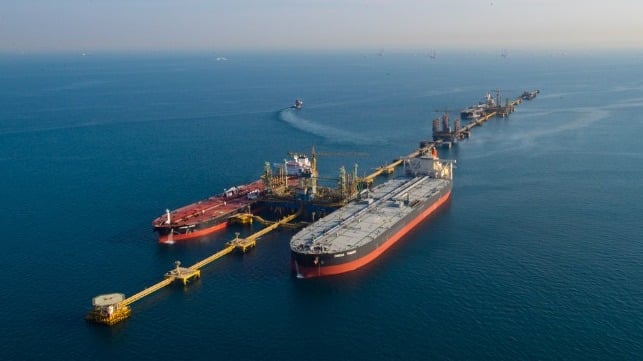
- US-Iran strikes on 26-27 June have likely increased risk to regional maritime traffic and raised doubts over the US-Iran memorandum of understanding, with tankers attacked in or near the Strait of Hormuz, mines still present, and industry advisories to delay transits. (Confidence: high · ASSESSED)
- I&W: New UKMTO or company advisories report additional attacks or damage to commercial vessels in or near the Strait of Hormuz. (0-14 days)
- I&W: Observable reduction in UKMTO incident alerts and an IMO notice reopening the traffic separation scheme. (1-3 months)
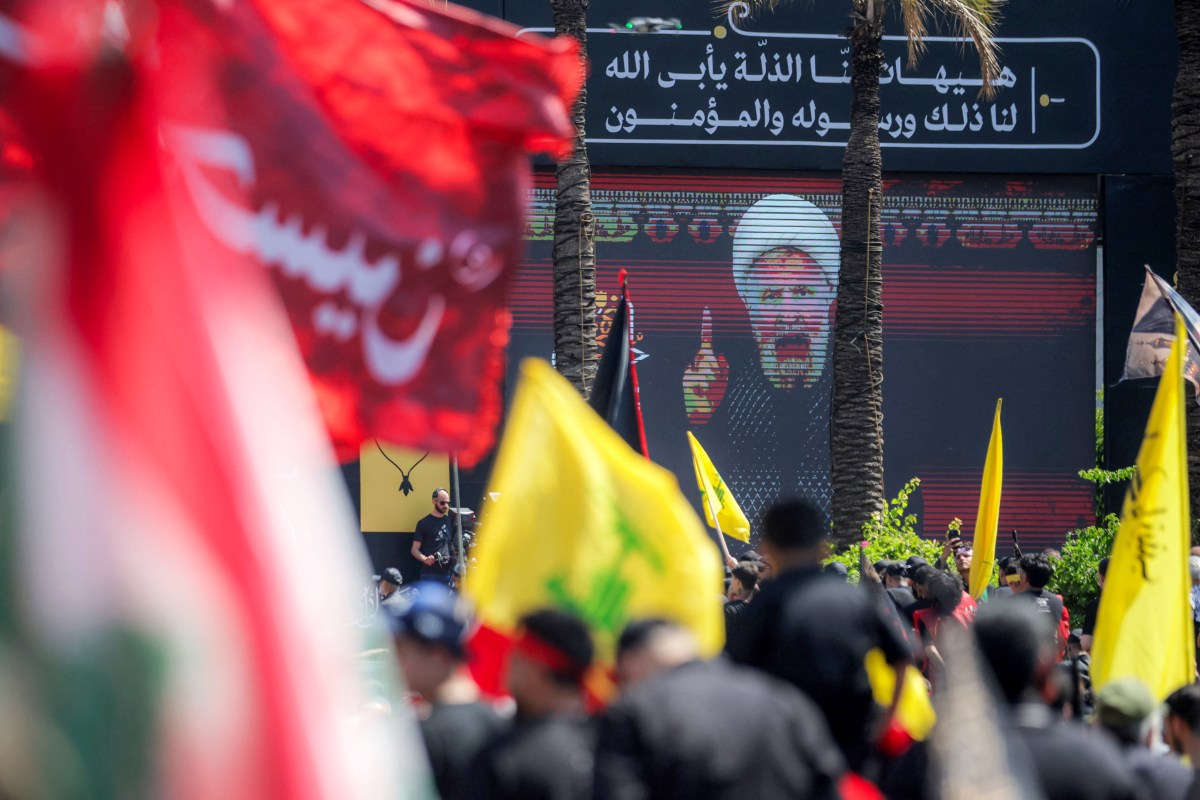
- Hezbollah is likely to maintain an armed posture while regrouping during the ceasefire, and the IDF is likely to entrench a defensive and counter-drone posture, leaving a roughly even chance of renewed escalation if Israel does not commit to full withdrawal. (Confidence: medium · ASSESSED)
- I&W: Hezbollah public statements continue to reject partial withdrawal, paired with renewed rocket or artillery fire into northern Israel. (1-3 months)
- I&W: Israeli issuance of a timeline committing to full withdrawal from southern Lebanon as part of a formal framework. (1-3 months)
Outlook & scenarios
Managed containment: ceasefire largely holds with intermittent violations (60%)
Israel maintains a defensive posture inside southern Lebanon while deploying additional counter-drone systems, Hezbollah regroups without large-scale attacks, and UNIFIL reports the ceasefire is generally holding. Cross-border incidents persist at a low tempo, and indirect talks in Washington continue but do not resolve withdrawal terms.
Negotiated framework gains traction (30%)
Follow-on diplomacy in Washington and regional channels produces an outline for Israeli withdrawal sequencing and security arrangements acceptable to Beirut and tacitly to Hezbollah. Lebanese political leaders voice support, and violations decline as de-escalation steps begin along the security zone.
Renewed escalation on the northern front (35%)
Unresolved withdrawal terms and continued IDF presence beyond the security zone timeframe prompt Hezbollah to step up cross-border fire, triggering expanded Israeli air and artillery strikes into southern Lebanon. Civilian displacement rises and demolition operations intensify along the Yellow Line localities.
Maritime spillover amplifies regional instability (20%)
Further attacks on tankers in or near the Strait of Hormuz and mine-related hazards prompt prolonged industry rerouting and higher rates. US-Iran friction distracts diplomatic bandwidth, complicating enforcement and monitoring of the Israel-Lebanon ceasefire.
Recommendations
- Prioritise geospatial monitoring of Qantara, Aadshit and Majdal Zoun to document demolition pace and new military works; compare monthly Planet Labs or equivalent imagery against the 46-of-54 Yellow Line baseline.
- Maintain a daily watch on UNIFIL and Lebanese National News Agency reporting for airspace violations, drone strikes and artillery fire in Nabatieh, Markaba and Al Bayyadah; log incident frequency and locations to detect trend shifts.
- Task collection against Israeli decision-making on the southern Lebanon security zone, including Prime Minister’s Office statements on withdrawal timelines and IDF posture guidance.
- Exploit Hezbollah public communications, including statements by Hassan Fadlallah and Naim Qassem, for acceptance criteria and red lines related to withdrawal and rules of engagement.
- For Gaza, track Kerem Shalom throughput and any changes to Israeli import restrictions; correlate NASA FIRMS detections with reported strikes and UN access constraints to flag emerging hotspots that risk aid suspension.
- Establish a maritime risk dashboard fusing UKMTO alerts, shipowner advisories, Intertanko guidance and IMO notices to alert policymakers to incident clusters or route closures in and near the Strait of Hormuz.
- Prepare contingency analysis on displacement surges in southern Lebanon if demolition continues, including routes north of the Litani and pressure points on Lebanese Armed Forces support and UN aid delivery.
- Coordinate with economic analysts to assess how prolonged maritime risk and higher tanker rates could affect regional fuel supply lines into Israel and Lebanon, feeding back into escalation incentives.
Confidence & uncertainty
The judgments rest on multiple, mutually reinforcing sources: UN and humanitarian reporting on Gaza access and needs, major media and satellite imagery evidence of IDF operations and destruction in southern Lebanon, official statements and coverage of the Israel-Lebanon signing in Washington, UNIFIL’s noted airspace violations, and multi-source accounts of US-Iran strikes and maritime incidents around the Strait of Hormuz. Some uncertainties remain, including differing timelines and labels around truce and framework agreements, and the mix of reports that the ceasefire is largely holding alongside continued clashes. Where inference extends beyond direct reporting, confidence is lowered and flagged as assessed. On balance, cross-source corroboration supports a high overall confidence rating.
Alternative analysis (red cell)
The cited incidents (strikes, drone overflights, maritime attacks, and demolition videos) show that violations and probes occurred after the Washington signing and that humanitarian conditions remain dire. However, many supporting items are B1-coded, conditional, or snapshot-based, and some reporting is internally contradictory (tradecraft_lint_findings: contradiction_unaddressed), so the evidence better supports a characterization of fragility and elevated short-term risk rather than definitive, sustained collapse of agreements or inevitable high-intensity escalation.
Intelligence gaps
- [EEI 1.1 · UNCOVERED] Number, type and geolocated coordinates of projectiles (rockets, mortars, anti-tank guided missiles) fired from Lebanon into Israel in the last 24/72 hours, including time-stamped launch and impact locations. Recommended collection: signals/intel
- [EEI 1.2 · UNCOVERED] Satellite or aerial imagery showing movement, concentration, or forward displacement of Hezbollah-associated military assets (armored vehicles, artillery pieces, mobile rocket launchers, logistics convoys) to positions within 0–10 km of the Israel-Lebanon border. Recommended collection: satellite/imagery
- [EEI 1.3 · UNCOVERED] Intercepted or captured Hezbollah command-and-control communications or orders explicitly directing cross-border operations or coordinated strikes with Palestinian groups (time-stamped messages, unit identifiers, orders to fire/move). Recommended collection: signals/intel
- [EEI 1.4 · PARTIAL] Observable changes in Israeli northern-front posture within Israel (numbers and types of reinforcements deployed to northern brigades, activation of reserves, air defense redeployments, evacuation orders or shelter alerts in northern towns), including timestamps and unit IDs where available. Recommended collection: human/intel
- [EEI 2.1 · UNCOVERED] Official or corroborated reports of IDF reservist mobilization and unit-level deployment orders (number of reservists called, named brigades/units ordered to deploy, deployment timelines). Recommended collection: open-source/media
- [EEI 2.2 · UNCOVERED] Satellite or ground imagery showing concentrations of IDF heavy equipment (tanks, infantry fighting vehicles, engineering vehicles), staging areas, field hospitals or forward supply dumps within X km of the Gaza border and at known crossing points. Recommended collection: satellite/imagery
- [EEI 2.4 · UNCOVERED] Logistics indicators: verified convoys of fuel/ammunition entering staging areas, establishment of forward logistics or medical bases, or documented requisitioning orders for bulk combat supplies with timestamps and quantities. Recommended collection: human/intel
- [EEI 3.2 · UNCOVERED] Public statements, press releases or verified communiqués from Hamas and other Gaza armed groups specifying acceptance, rejection, or conditions for a ceasefire (explicit conditions such as prisoner release lists, withdrawal terms, lifting of blockades), with timestamps and speaker attribution. Recommended collection: open-source/media
- [EEI 3.4 · PARTIAL] Operational evidence of a de facto pause: verified sustained reduction (e.g., ≥12 hours) in strikes or launches from either side in specific sectors, supported by strike/impact logs, radar tracks and incident reports. Recommended collection: open-source/media
Cited sources
[1] haaretz.com · Israel strikes southern Lebanon day after U.S.-brokered deal, report says (A) · sha256:f9394e7e3d46 [2] Jerusalem Post · IDF kills 17 terrorists, arrests over 100 suspects in operations over past week (A) · sha256:f81f63c7819b [3] United Nations · From Lebanon to the Strait of Hormuz, a Middle East hanging on fragile peace talks (A) · sha256:d0d950f95951 [4] Wikipedia · 2024 Israel–Lebanon ceasefire agreement (B) · sha256:62a3e9b94d0c [5] Newsweek · Hezbollah reacts to new Israel-Lebanon deal: "Our hands are on our weapons" (B) · sha256:e1d2ba1a769e [6] bellingcat.com · Satellite Imagery Shows Ongoing Demolitions Across Southern Lebanon - bellingcat (B) · sha256:052733cd55f8 [7] United Nations · World News in Brief: UN launches Hormuz evacuation plan, UNICEF youth champion killed in Gaza, Lebanon ceasefire ‘largely holding’ (A) · sha256:41dca8a20228 [8] NASA · NASA FIRMS thermal detections — Gaza (2d) (A) · sha256:affa7fa3ed15 [9] Al Jazeera · US, Iran trade strikes: What to know, will it unravel the MoU? (A) · sha256:013385e41073 [10] The Jerusalem Post · Live Updates: Latest from Israel, Iran, and Middle East | The Jerusalem Post (B) · sha256:8b13fe15061f [11] aljazeera.com · Iran and US trade blame for attacks, threatening fragile ceasefire (A) · sha256:f27947e04520 [12] haaretz.com · Iran says it hits U.S.-linked targets as Bahrain reports drone attack (A) · sha256:d06a72c36a61 [13] gcaptain.com · IMO Estimates There Are 80 Mines in Hormuz’s Shipping Lanes (B) · sha256:19d28892a0d8 [14] maritime-executive.com · Full Steam Ahead In the Strait of Hormuz? Not So Fast (B) · sha256:dc8023b563e8 [15] ynetnews.com · Hezbollah regroups as Israel holds fire under Lebanon ceasefire (B) · sha256:1d2974c86098
Source content hashes were computed at collection time; the cited text is preserved unmodified for the life of this product.
Red cell review: PARTIAL DISSENT
TLP:CLEAR