TLP:CLEAR · Disclosure is not limited.
Israel-Lebanon Ceasefire Implementation and Gaza Humanitarian Crisis Assessment
Time window: Last 7 days · Audience: General analyst · Type: Situation report · DTG: 2026-07-06 13:26Z · Overall confidence: MEDIUM
BLUF
Israel and Hezbollah have formally agreed to a ceasefire as of 1 June 2026, though implementation remains fragile with both sides having violated terms. Israeli military operations continue in Gaza causing significant civilian casualties despite nominal ceasefire conditions, with approximately 1,072 Palestinians reported killed since the truce. Regional escalation risks persist due to incomplete US-Iran deconfliction mechanisms and ongoing security challenges across the Middle East.
Executive summary
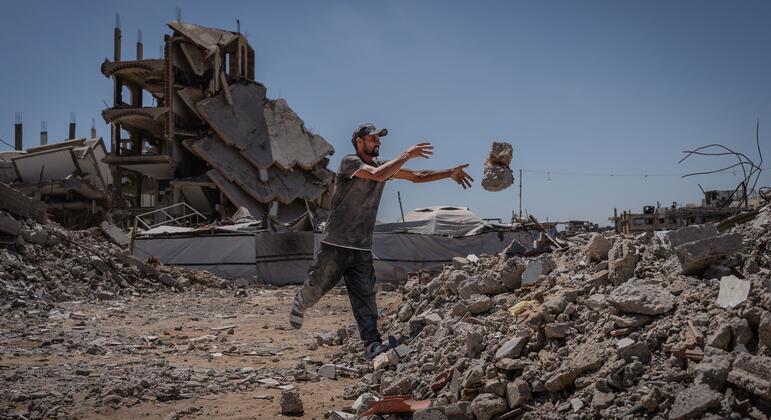
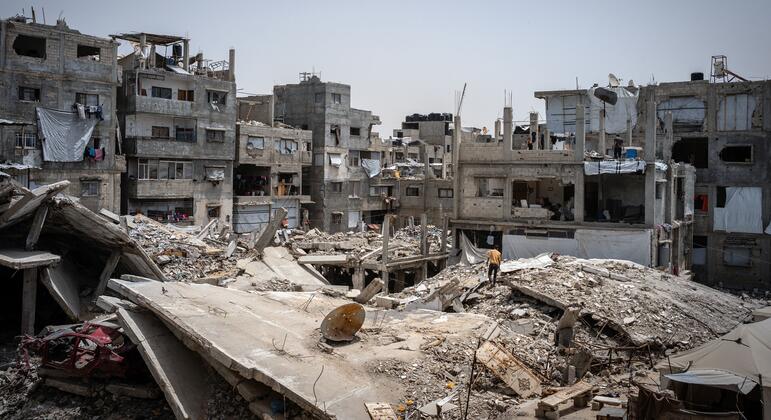
The Israel-Lebanon border has entered a technical ceasefire following agreement on 1 June 2026, representing the first bilateral understanding since the 1983 peace treaty. However, both sides have violated ceasefire terms in recent months, with Hezbollah maintaining its stance that attacks will continue until Israeli operations in Gaza cease. In Gaza, severe access restrictions continue, with approximately 65 percent of territory under Israeli control and aid delivery constrained. Humanitarian conditions deteriorate amid displacement estimates of over 1.4 million people in Lebanon and 96,000 from northern Israel. US-Iran negotiations continue with deconfliction mechanisms being tested amid regional volatility.
Change from previous assessment
The June 1, 2026 ceasefire agreement represents a significant shift from the prior brief's assessment of 'fragile' Israel-Lebanon relations with 'roughly even chance of renewed exchanges'. This formal agreement, the first bilateral understanding since 1983, reduces immediate escalation risks though implementation remains fragile. Confidence in Gaza violation assessments has increased from medium to high due to consistent casualty reporting from multiple sources. Confidence in regional spillover risks assessment has decreased from high to medium due to newly reported US-Iran deconfliction mechanisms that may mitigate some escalation pathways.
Key judgments
- Very likely Israeli military operations in Gaza continue to violate nominal ceasefire conditions, with at least 1,072 Palestinians killed and 3,463 wounded since the truce began according to Gaza health authorities. (Confidence: high · REPORTED)
- I&W: Additional ceasefire violation reports exceeding 50 incidents within 14 days (0-14 days)
- I&W: Reduction in reported casualties below 100 incidents over a 30-day period (1-2 months)
- The June 1, 2026 ceasefire agreement between Israel and Hezbollah is likely to break down within 30 days without concrete implementation mechanisms, given both sides' history of violations and Hezbollah's position that attacks will continue until Israeli operations in Gaza cease. (Confidence: medium · ASSESSED)
- I&W: Hezbollah announces withdrawal of forces north of Litani River (1-3 months)
- I&W: Israel launches major operation in southern Lebanon within 14 days (0-14 days)
- Very likely humanitarian conditions in Gaza will deteriorate further over the next month with access-restricted areas covering approximately 65 percent of territory and severe aid delivery constraints. (Confidence: high · REPORTED)
- I&W: UN reports reduction in restricted areas below 55 percent (1-3 months)
- I&W: Three consecutive days with no new access restrictions reported (0-14 days)
- The US-Iran deconfliction mechanism is unlikely to prevent further regional escalation given incomplete implementation and continued military activity in the Gulf region. (Confidence: medium · ASSESSED)
- I&W: Verification of US and Iranian military de-escalation in Gulf within 21 days (0-21 days)
- I&W: Additional Iranian missile attacks against UAE targets (0-14 days)
- Israel's occupation of approximately 70 percent of Gaza Strip will likely continue throughout 2026 absent external pressure or significant security changes. (Confidence: medium · ASSESSED)
- I&W: Israeli government announces troop withdrawal plans from three or more areas (1-3 months)
- I&W: Hamas demonstrates effective military capability to challenge Israeli control (2-6 months)
Outlook & scenarios
Ceasefire Holds with Gradual Implementation (40%)
The Israel-Hezbollah ceasefire endures through September 2026 as Lebanese authorities gradually extend control into southern Lebanon. Israel maintains a tactical presence near the border while Hezbollah withdraws forces north of the Litani River. Casualties decrease by 75 percent compared to previous months, allowing limited humanitarian access to affected communities. The US-Iran deconfliction mechanism reduces direct confrontations in the Gulf but does not eliminate proxy conflicts.
Limited Resumption of Hostilities (35%)
Following continued Hamas rocket attacks from Gaza, Israel launches targeted operations against Hezbollah positions in southern Lebanon in July 2026. Hezbollah responds with increased rocket fire but avoids major escalations that would trigger full-scale conflict. Casualties rise by 40 percent compared to ceasefire months, with approximately 200 additional deaths reported. The US mediates a revised understanding that maintains the ceasefire framework but allows limited defensive operations.
Regional Conflict Expansion (15%)
Following the killing of Hamas officials during ceasefire negotiations, Iran authorises direct Hezbollah attacks against Tel Aviv in August 2026. Israel responds with deep strikes into Iranian territory, leading to a broader regional conflict. The US-Iran deconfliction mechanism collapses, Gulf shipping routes face severe disruption, and humanitarian access to Gaza ceases completely. Military casualties exceed 5,000 across multiple fronts within 60 days.
Gaza Governance Transition (10%)
Hamas dissolves its Gaza administrative committee as announced, transferring governance to a Palestinian technocratic committee under international supervision. Israel allows limited committee access to Gaza, leading to improved humanitarian conditions and gradual reconstruction in non-military areas. The arrangement creates tensions with Hezbollah, which threatens violence if implemented, potentially triggering limited cross-border confrontations in southern Lebanon.
Recommendations
- Monitor Hezbollah's force disposition north of Litani River through commercial imagery and signals intelligence to detect potential ceasefire compliance or violations
- Coordinate with Qatar, Egypt and US mediators to establish real-time verification mechanism for Gaza ceasefire violations, focusing on casualty reporting and infrastructure damage assessments
- Expand maritime surveillance in Gulf region with focus on Iranian missile launch sites and potential shipping disruptions through Strait of Hormuz
- Develop contingency plans for humanitarian access disruption in Gaza, including alternative supply routes through Egyptian border and potential air drop capabilities
- Prepare diplomatic initiatives to address Lebanon's sovereignty concerns while managing Israel's security requirements along the border
- Conduct thorough assessment of UNRWA's operational capacity given reported funding shortfalls and staff casualties
Confidence & uncertainty
Overall confidence has been assessed as medium due to multiple reliable sources corroborating key elements of the Israel-Hezbollah ceasefire agreement and Gaza casualty figures, particularly UN reporting and major media sources. However, confidence is constrained by contradictions regarding ceasefire timelines, single-source reporting on US-Iran negotiations, and discrepancies in casualty counts between different reporting entities. Several key developments rely on single-source information requiring additional corroboration.
Alternative analysis (red cell)
The U.S.-Iran deconfliction mechanism applies exclusively to Lebanon per claim ca087014 and therefore cannot influence Gulf region military activity. Ongoing strikes referenced in a51e5fef and b5f1d81c occur in a separate theater unaffected by Lebanon implementation status. Regional escalation dynamics remain disconnected from the mechanism's limited geographic scope.
Intelligence gaps
- [EEI 1.1 · PARTIAL] Number, type and geolocated coordinates of projectiles (rockets, mortars, anti-tank guided missiles) fired from Lebanon into Israel in the last 24/72 hours, including time-stamped launch and impact locations. Recommended collection: signals/intel
- [EEI 1.2 · UNCOVERED] Satellite or aerial imagery showing movement, concentration, or forward displacement of Hezbollah-associated military assets (armored vehicles, artillery pieces, mobile rocket launchers, logistics convoys) to positions within 0–10 km of the Israel-Lebanon border. Recommended collection: satellite/imagery
- [EEI 1.3 · UNCOVERED] Intercepted or captured Hezbollah command-and-control communications or orders explicitly directing cross-border operations or coordinated strikes with Palestinian groups (time-stamped messages, unit identifiers, orders to fire/move). Recommended collection: signals/intel
- [EEI 1.4 · PARTIAL] Observable changes in Israeli northern-front posture within Israel (numbers and types of reinforcements deployed to northern brigades, activation of reserves, air defense redeployments, evacuation orders or shelter alerts in northern towns), including timestamps and unit IDs where available. Recommended collection: human/intel
- [EEI 2.1 · UNCOVERED] Official or corroborated reports of IDF reservist mobilization and unit-level deployment orders (number of reservists called, named brigades/units ordered to deploy, deployment timelines). Recommended collection: open-source/media
- [EEI 2.2 · UNCOVERED] Satellite or ground imagery showing concentrations of IDF heavy equipment (tanks, infantry fighting vehicles, engineering vehicles), staging areas, field hospitals or forward supply dumps within X km of the Gaza border and at known crossing points. Recommended collection: satellite/imagery
- [EEI 2.3 · PARTIAL] Change in strike patterns consistent with pre-ground-attack shaping: sustained high-frequency airstrikes on tunnel networks, command nodes, coastal launch sites, and known insurgent concentrations (strike counts, munition types, locations, times). Recommended collection: open-source/media
- [EEI 2.4 · UNCOVERED] Logistics indicators: verified convoys of fuel/ammunition entering staging areas, establishment of forward logistics or medical bases, or documented requisitioning orders for bulk combat supplies with timestamps and quantities. Recommended collection: human/intel
- [EEI 3.1 · UNCOVERED] Number, participants and content of diplomatic contacts or negotiation sessions in the last 48 hours involving mediators (Egypt, Qatar, US, UN), including any proposed ceasefire text, prisoner/exchange lists, timelines or verification mechanisms. Recommended collection: diplomatic
- [EEI 3.2 · UNCOVERED] Public statements, press releases or verified communiqués from Hamas and other Gaza armed groups specifying acceptance, rejection, or conditions for a ceasefire (explicit conditions such as prisoner release lists, withdrawal terms, lifting of blockades), with timestamps and speaker attribution. Recommended collection: open-source/media
- [EEI 3.3 · PARTIAL] Humanitarian indicators relevant to ceasefire: establishment and operation of agreed humanitarian corridors/checkpoints, number of aid deliveries admitted, civilian evacuations completed, and NGO/hospital reports of access denials or safe-passage violations. Recommended collection: humanitarian/NGO reports
Cited sources
[1] aljazeera.com · Israeli attacks on Gaza kill at least 6 as ‘ceasefire’ violations continue (A) · sha256:8e9c67fbcae4 [2] cnn.com · Hamas says it will dissolve Gaza government as US-brokered ceasefire plan stalls | CNN (A) · sha256:7539eac8a7b2 [3] Wikipedia · 2026 Lebanon war (B) · sha256:bea173f5dc86 [4] Wikipedia · 2026 Israel–Lebanon ceasefire (F) · sha256:c0cc91cecd1b [5] Wikipedia · 2024 Israel–Lebanon ceasefire agreement (B) · sha256:ea1529c6f848 [6] United Nations · Expanding areas under Israeli control in Gaza increase risks to civilians, UN warns (A) · sha256:b9775900f7da [7] United Nations · Despite record $100 million shortfall, Palestine relief agency still ‘a critical platform’ for Gaza recovery (A) · sha256:aa4e5d14dc94 [8] United Nations · Sudan’s people subject to ‘relentless’ drone strikes in El Obeid (A) · sha256:fc4a6b0c4218 [9] jpost.com · How the new Israel-Lebanon agreement changes the rules of the game - opinion (B) · sha256:8e8187efa95f [10] United Nations · Security Council LIVE: Emergency meeting on Iranian attack in Bahrain (A) · sha256:8a0d2c085c67 [11] jpost.com · West Bank on edge as IDF warns seam line gaps could enable Oct. 7-style terrorist raids (B) · sha256:be13a6ab0632
Source content hashes were computed at collection time; the cited text is preserved unmodified for the life of this product.
Red cell review: PARTIAL DISSENT
TLP:CLEAR