TLP:CLEAR · Disclosure is not limited.
Israel-Lebanon Ceasefire Tested by Border Incidents Amid Diplomatic Efforts
Time window: Last 7 days · Audience: General analyst · Type: Situation report · DTG: 2026-06-25 15:32Z · Overall confidence: MEDIUM
BLUF
New deconfliction efforts are testing stability along the Israel-Lebanon border as IDF operations targeting Hezbollah positions continue, despite a ceasefire framework backed by US mediation. While satellite imagery confirms extensive destruction in southern Lebanon, diplomatic channels seek limited Israeli withdrawals while Lebanese authorities cannot guarantee full security against potential attacks.
Executive summary
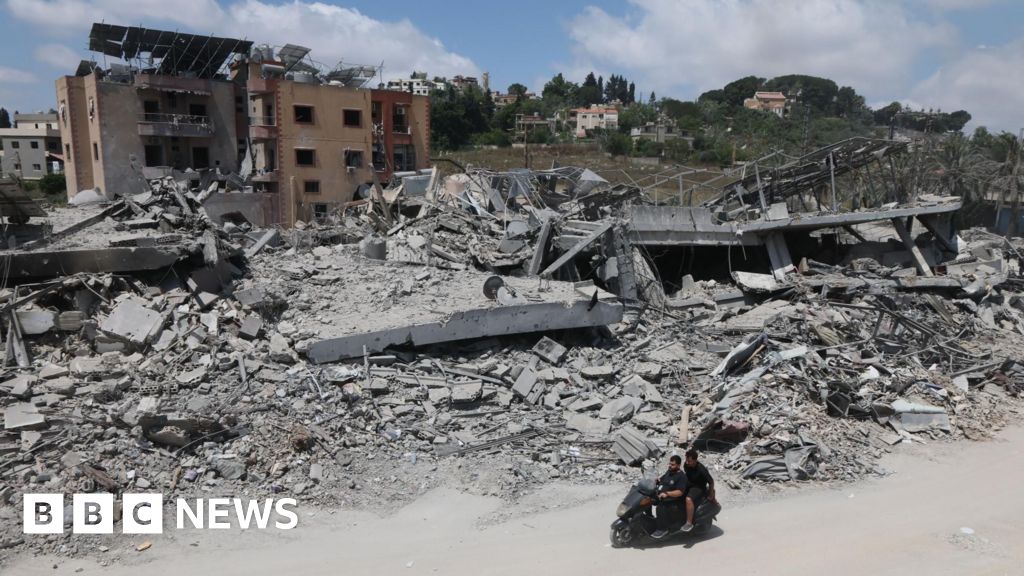
Israeli military operations have conducted more than 150 air strikes against Hezbollah targets following renewed border incidents near Tebnit and Ali al-Taher ridge. A newly established deconfliction mechanism aims to limit Israeli responses to imminent threats rather than broader security concerns, with US backing but mixed Lebanese government reception. Southern Lebanon shows extensive damage with satellite imagery confirming 46 of 54 towns heavily damaged, while over a million Lebanese remain displaced. Meanwhile, diplomatic negotiations continue in Washington regarding potential limited Israeli withdrawals and Hezbollah disarmament.
Change from previous assessment
Since the June 25 briefing, a formal deconfliction mechanism has been established that appears to limit Israeli military action to responses to 'imminent threats' rather than broader 'emerging threats'. Additionally, renewed border incidents on June 23-24 involved IDF engagements with Hezbollah operatives at Ali al-Taher ridge, showing the ceasefire remains fragile despite US-brokered mediation. Satellite evidence confirms significantly more extensive destruction in southern Lebanon than previously assessed, with at least 46 of 54 towns heavily damaged.
Key judgments
- Hezbollah fighters approaching Israeli positions at Ali al-Taher ridge were killed by IDF soldiers on June 23-24, 2026, with Israeli military stating the operatives posed an imminent threat while Hezbollah claimed the action violated the ceasefire. (Confidence: medium · REPORTED)
- I&W: Confirmation from UNIFIL of specific casualties and location of border incident (0-7 days)
- I&W: Official Lebanese government statement acknowledging or denying violation claims (0-14 days)
- Satellite imagery analysis confirms at least 46 of 54 towns and villages within the IDF 'Yellow Line' in southern Lebanon have been heavily damaged or entirely destroyed, with much of this destruction occurring in recent weeks as nearly one million Lebanese remain displaced. (Confidence: high · REPORTED)
- I&W: Updated UN damage assessments confirming extent of destruction (1-4 weeks)
- I&W: Documented returns of displaced population to damaged areas (2-6 weeks)
- US-backed deconfliction mechanism limits Israeli military actions to responding to 'imminent threats' rather than broader 'emerging threats', with the mechanism reportedly established through mediation by Qatar and Pakistan, though Lebanese President Aoun has expressed concerns about US facilitation of renewed Iranian influence. (Confidence: medium · ASSESSED)
- I&W: Documented cases of IDF refraining from response due to 'imminent threat' criteria (2-4 weeks)
- I&W: Official statement from Hezbollah acknowledging deconfliction mechanism (1-3 months)
- Israeli military conducted more than 150 air strikes against Hezbollah targets across Lebanon following renewed border hostilities, with Iran's Foreign Minister lauding the deconfliction efforts as progress toward ending the Lebanon War while Hezbollah remains outside official negotiation channels. (Confidence: high · REPORTED)
- I&W: New UNIFIL reports documenting specific attack locations exceeding deconfliction terms (0-14 days)
- I&W: Confirmation from IDF of Hezbollah casualty figures related to strikes (1-4 weeks)
Outlook & scenarios
Deconfliction Mechanism Stabilises Border with Limited Withdrawals (45%)
The new deconfliction mechanism holds as both sides adhere to 'imminent threat' criteria for military actions. Israel implements modest withdrawals from Tebnit and Ali al-Taher ridge areas while Hezbollah refrains from attacks on northern Israel, allowing displaced Lebanese families to return with limited infrastructure rebuilding commencing.
Localized Escalation Despite Ceasefire Framework (40%)
Despite the ceasefire framework, repeated incidents at positions like Qantara and Nabatieh al-Fawqa lead to cycle of attacks with Hezbollah firing rockets and Israel conducting retaliatory strikes, preventing large-scale refugee returns and drawing US diplomatic intervention to prevent broader conflict.
Deteriorating Diplomatic Relations Undermine Ceasefire (15%)
Lebanon's concerns about US facilitating Iranian influence and Hezbollah remaining outside official negotiations undermine the deconfliction mechanism, leading to increased cross-border attacks, renewed Israeli military advance further into southern Lebanon with substantial Lebanese displacement.
Recommendations
- Track UNIFIL assessments of border incidents to distinguish between genuine violations and self-defence actions according to 'imminent threat' criteria
- Monitor satellite imagery for new construction or repair activity in damaged villages across southern Lebanon as indicator of confidence in ceasefire
- Cross-reference thermal detection data against specific border villages to identify potential escalation patterns
- Analyse Israeli government statements for shifts in position regarding potential withdrawal areas from southern Lebanon
- Assess diplomatic reporting for evidence of Hezbollah leadership accepting or rejecting the deconfliction mechanism
Confidence & uncertainty
The headline confidence is assessed as medium due to good multilateral and open-source reporting on physical damage in Lebanon and humanitarian impacts, but thinner coverage on specific military intentions and diplomatic nuances. The assessment relies on media reports of diplomatic developments which lack immediate official confirmation, creating some interpretive uncertainty. However, satellite imagery provides independent verification of physical damage in southern Lebanon at high confidence levels, balancing the overall assessment.
Intelligence gaps
- [EEI 1.1 · UNCOVERED] Number, type and geolocated coordinates of projectiles (rockets, mortars, anti-tank guided missiles) fired from Lebanon into Israel in the last 24/72 hours, including time-stamped launch and impact locations. Recommended collection: signals/intel
- [EEI 1.2 · UNCOVERED] Satellite or aerial imagery showing movement, concentration, or forward displacement of Hezbollah-associated military assets (armored vehicles, artillery pieces, mobile rocket launchers, logistics convoys) to positions within 0–10 km of the Israel-Lebanon border. Recommended collection: satellite/imagery
- [EEI 1.3 · UNCOVERED] Intercepted or captured Hezbollah command-and-control communications or orders explicitly directing cross-border operations or coordinated strikes with Palestinian groups (time-stamped messages, unit identifiers, orders to fire/move). Recommended collection: signals/intel
- [EEI 1.4 · UNCOVERED] Observable changes in Israeli northern-front posture within Israel (numbers and types of reinforcements deployed to northern brigades, activation of reserves, air defense redeployments, evacuation orders or shelter alerts in northern towns), including timestamps and unit IDs where available. Recommended collection: human/intel
- [EEI 2.1 · UNCOVERED] Official or corroborated reports of IDF reservist mobilization and unit-level deployment orders (number of reservists called, named brigades/units ordered to deploy, deployment timelines). Recommended collection: open-source/media
- [EEI 2.2 · UNCOVERED] Satellite or ground imagery showing concentrations of IDF heavy equipment (tanks, infantry fighting vehicles, engineering vehicles), staging areas, field hospitals or forward supply dumps within X km of the Gaza border and at known crossing points. Recommended collection: satellite/imagery
- [EEI 2.3 · PARTIAL] Change in strike patterns consistent with pre-ground-attack shaping: sustained high-frequency airstrikes on tunnel networks, command nodes, coastal launch sites, and known insurgent concentrations (strike counts, munition types, locations, times). Recommended collection: open-source/media
- [EEI 2.4 · UNCOVERED] Logistics indicators: verified convoys of fuel/ammunition entering staging areas, establishment of forward logistics or medical bases, or documented requisitioning orders for bulk combat supplies with timestamps and quantities. Recommended collection: human/intel
- [EEI 3.1 · UNCOVERED] Number, participants and content of diplomatic contacts or negotiation sessions in the last 48 hours involving mediators (Egypt, Qatar, US, UN), including any proposed ceasefire text, prisoner/exchange lists, timelines or verification mechanisms. Recommended collection: diplomatic
- [EEI 3.2 · UNCOVERED] Public statements, press releases or verified communiqués from Hamas and other Gaza armed groups specifying acceptance, rejection, or conditions for a ceasefire (explicit conditions such as prisoner release lists, withdrawal terms, lifting of blockades), with timestamps and speaker attribution. Recommended collection: open-source/media
- [EEI 3.3 · PARTIAL] Humanitarian indicators relevant to ceasefire: establishment and operation of agreed humanitarian corridors/checkpoints, number of aid deliveries admitted, civilian evacuations completed, and NGO/hospital reports of access denials or safe-passage violations. Recommended collection: humanitarian/NGO reports
- [EEI 3.4 · UNCOVERED] Operational evidence of a de facto pause: verified sustained reduction (e.g., ≥12 hours) in strikes or launches from either side in specific sectors, supported by strike/impact logs, radar tracks and incident reports. Recommended collection: open-source/media
Cited sources
[1] BBC · Israeli troops kill two in south Lebanon after lull in fighting, authorities say (A) · sha256:3fd245f880e7 [2] jpost.com · IDF kills Hezbollah operatives in two small incidents, but ceasefire holds (A) · sha256:c9f149cec5ae [3] bellingcat.com · Satellite Imagery Shows Ongoing Demolitions Across Southern Lebanon - bellingcat (B) · sha256:052733cd55f8 [4] haaretz.com · Returning Southern Lebanon residents find rubble where their homes once stood (A) · sha256:db515919c182 [5] Al Jazeera · Deconfliction and disarmament: Can both be pursued in Lebanon? (A) · sha256:872ce8c09d23 [6] jpost.com · New US-Iran Lebanon oversight body excludes Israel, gives Tehran say over IDF actions - editorial (B) · sha256:e5f508fc637b [7] UK Government · Europe’s security cannot be built on coercion or spheres of influence: UK statement to the OSCE (A) · sha256:933edced162c [8] Wikipedia · 2024 Israel–Lebanon ceasefire agreement (B) · sha256:62a3e9b94d0c [9] Wikipedia · Hezbollah–Israel conflict (2023–present) (B) · sha256:b1aa997b56c7 [10] aljazeera.com · Iran, Israel and the Bomb (B) · sha256:990820e1fcba [11] bellingcat.com · “Make Iran Ungovernable” – Tracking Efforts To Destroy Iran’s Police Infrastructure - bellingcat (B) · sha256:3e3732f01d88 [12] Wikipedia · 2026 Iran war ceasefire (B) · sha256:44bd61ce5669 [13] Wikipedia · Gaza peace plan (A) · sha256:6f29c9e31b69 [14] gcaptain.com · Major Saudi Oil Terminal to Restart as Gulf Reboot Ramps Up (B) · sha256:41386fb66129
Source content hashes were computed at collection time; the cited text is preserved unmodified for the life of this product.
TLP:CLEAR