TLP:CLEAR · Disclosure is not limited.
Israel-Lebanon Ceasefire Tests Escalate as Gaza Humanitarian Crisis Continues
Time window: Last 7 days · Audience: General analyst · Type: Situation report · DTG: 2026-06-25 13:16Z · Overall confidence: MEDIUM
BLUF
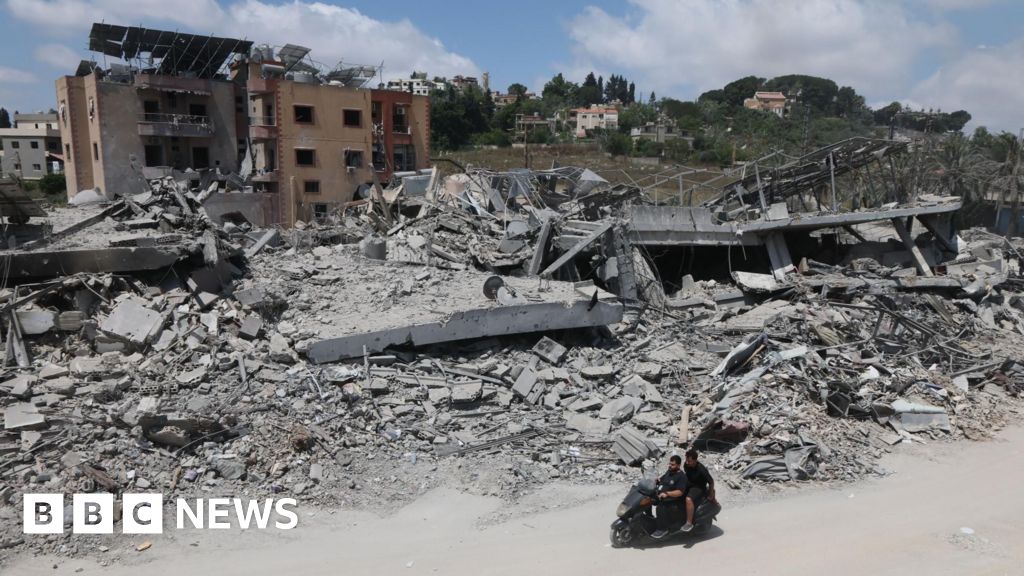
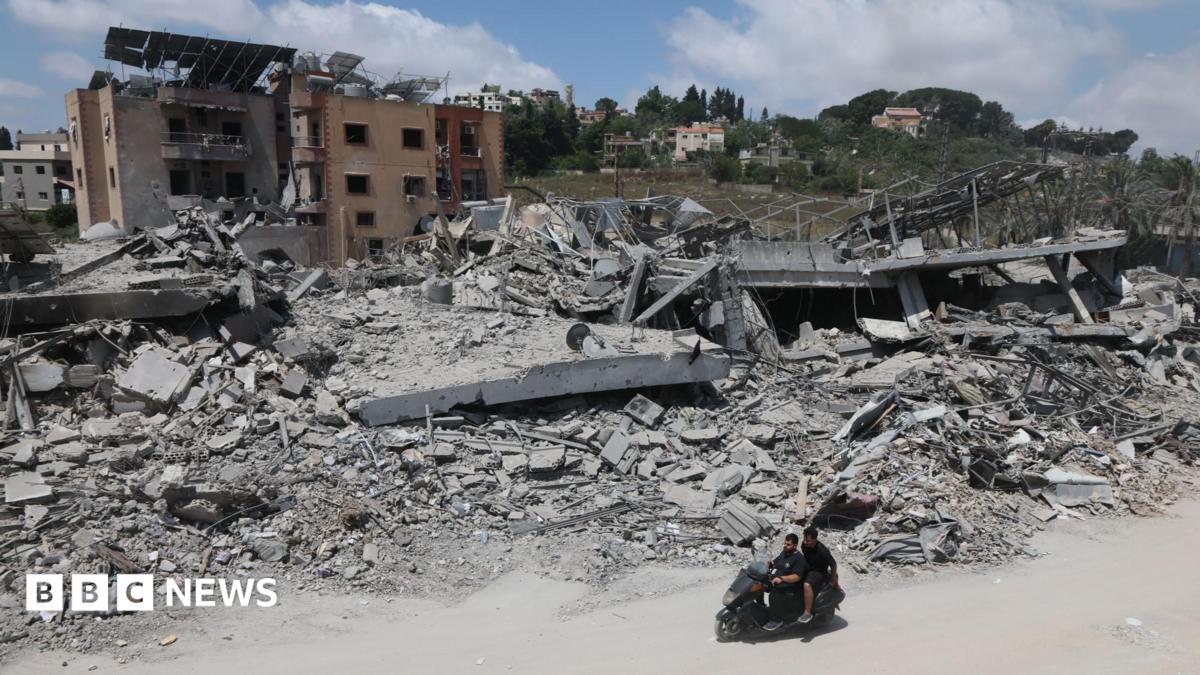
Israeli military operations have killed two Lebanese civilians in Nabatieh al-Fawqa, likely the first fatal incident under the current ceasefire, with Hezbollah condemning the action as a violation. Washington talks continue but face obstacles as Israel demands concrete security measures before withdrawal while thermal data confirms persistent combat in Gaza and the UN reports catastrophic child casualties.
Executive summary
Cross-border hostilities between Israel and Lebanon have intensified following Israeli military actions that killed Mohammed Amhaz and Sajed al-Hajj Ali in Nabatieh al-Fawqa. Hezbollah has condemned the incident as a blatant ceasefire violation, marking the first such fatality since the latest truce. Concurrent US-mediated talks in Washington face significant hurdles as Israel insists on Lebanese army deployment prior to withdrawal while Lebanon seeks security guarantees. In Gaza, NASA thermal detections confirm ongoing combat with 33 thermal anomalies recorded from June 24-25, and UN reports detail continued child casualties and irreversible infrastructure damage.
Change from previous assessment
Confidence in persistent Gaza combat has increased from medium to high with new NASA thermal data confirming 33 active fire points. An immediate change is the first confirmed fatal cross-border incident under the current ceasefire with Israeli soldiers killing two Lebanese civilians in Nabatieh al-Fawqa. Previous assessment that Israeli withdrawal would be unlikely without limited pullbacks now reflects Israeli government demands for concrete Lebanese army deployment steps before withdrawal. Washington talks now face specific new obstacles regarding security guarantees and model area implementation rather than general red lines.
Key judgments
- Israeli military operations very likely killed two Lebanese civilians in Nabatieh al-Fawqa on June 25, 2026, almost certainly constituting the first fatal incident since the most recent ceasefire. (Confidence: high · REPORTED)
- I&W: Further Israeli military statements confirming or denying specific actions in Nabatieh al-Fawqa (0-14 days)
- I&W: Additional local media footage verified by independent sources showing casualties in southern Lebanon (0-7 days)
- The ceasefire between Israel and Lebanon is very likely to face further tests within two weeks, with both sides likely to engage in reciprocal actions following the Nabatieh al-Fawqa incident. (Confidence: medium · ASSESSED)
- I&W: Hezbollah or Iranian media reporting retaliation strikes against Israeli territory (0-7 days)
- I&W: Israeli Defence Forces announcing additional security restrictions along Lebanon border (0-14 days)
- Low-level combat continues in Gaza, very likely reflected in NASA thermal detections showing 33 active fire points over the June 24-25 period with no high-confidence indicators. (Confidence: high · REPORTED)
- I&W: Increased thermal detections above 40 over a two-day period (0-7 days)
- I&W: Israeli Defence Forces releasing additional statements about strikes against rocket positions (0-14 days)
- Humanitarian conditions in Gaza remain life-threatening, very likely including the killing of 20,000 children since October 7 2023 according to UN data, with infrastructure destruction causing irreversible damage to health and educational systems. (Confidence: high · REPORTED)
- I&W: UN Office for the Coordination of Humanitarian Affairs updating child casualty figures above 21,000 (1-3 months)
- I&W: Independent medical organisations reporting complete depletion of critical medicine stocks in Gaza (0-14 days)
- Direct talks in Washington are very unlikely to deliver a rapid Israeli withdrawal from southern Lebanon before concrete security measures are implemented by the Lebanese army as demanded by Israel. (Confidence: medium · ASSESSED)
- I&W: Israeli Prime Minister Netanyahu publicly ruling out specific timetable for withdrawal (0-21 days)
- I&W: Lebanese government announcing deployment plans for army units to border areas (1-3 months)
Outlook & scenarios
Controlled De-escalation (45%)
Diplomatic channels successfully contain the Nabatieh al-Fawqa incident with US mediators facilitating mutual restraint. The Lebanese army gradually deploys to border areas with Israeli withdrawal following verification. Humanitarian access improves in Gaza as truce holds, though infrastructure recovery remains slow with over 1.2 million displaced in Lebanon and 1.7 million in Gaza displacement sites. Regional stability improves incrementally through late summer 2026.
Persistent Low-Intensity Conflict (40%)
The ceasefire continues to hold formally but suffers frequent violations with periodic exchanges of fire between Israel and Hezbollah across the border. US-brokered talks make minimal progress as Israel insists on full Lebanese army control before withdrawal while Lebanon demands binding Israeli security guarantees. In Gaza, humanitarian conditions remain dire with persistent low-level combat preventing substantial recovery while child casualties continue to mount.
Major Escalation (15%)
A significant retaliatory strike following the Nabatieh al-Fawqa incident triggers wider hostilities between Israel and Hezbollah, overwhelming the ceasefire framework. Southern Lebanon witnesses mass returns of displaced persons amid intensified fighting, with infrastructure damage spreading beyond the Yellow Line. The conflict spills into diplomatic arenas with international mediation efforts collapsing. This scenario has heightened risk of renewed large-scale displacement in both Gaza and southern Lebanon.
Recommendations
- Intensify immediate US diplomatic engagement to establish reciprocal restraint measures following the Nabatieh al-Fawqa incident, with specific verification protocols to prevent escalation
- Accelerate humanitarian corridor implementation in southern Lebanon to facilitate safe returns of displaced persons and address critical needs including shelter, clean water, and medical assistance at affected sites
- Expand United Nations Truce Supervision Organisation monitoring along the Israel-Lebanon border with increased technical verification capabilities to document potential violations in real time
- Coordinate with multilateral partners to increase specialised paediatric medical capacity in Gaza and neighbouring territories to address chronic shortages impacting 80,000 diabetes patients including 2,500 children
Confidence & uncertainty
Confidence is medium due to multiple corroborating sources from official government statements, UN reports, and major media outlets describing border incidents, humanitarian conditions, and diplomatic efforts. Key areas of uncertainty include the precise intentions of Hezbollah leadership following the Nabatieh al-Fawqa incident and the timeline for Israeli forces to implement proposed withdrawals. Single-source claims about specific casualty figures in Gaza contribute to lowered confidence in exact humanitarian impact metrics despite consensus on the acute nature of the crisis.
Intelligence gaps
- [EEI 1.1 · UNCOVERED] Number, type and geolocated coordinates of projectiles (rockets, mortars, anti-tank guided missiles) fired from Lebanon into Israel in the last 24/72 hours, including time-stamped launch and impact locations. Recommended collection: signals/intel
- [EEI 1.2 · UNCOVERED] Satellite or aerial imagery showing movement, concentration, or forward displacement of Hezbollah-associated military assets (armored vehicles, artillery pieces, mobile rocket launchers, logistics convoys) to positions within 0–10 km of the Israel-Lebanon border. Recommended collection: satellite/imagery
- [EEI 1.3 · UNCOVERED] Intercepted or captured Hezbollah command-and-control communications or orders explicitly directing cross-border operations or coordinated strikes with Palestinian groups (time-stamped messages, unit identifiers, orders to fire/move). Recommended collection: signals/intel
- [EEI 1.4 · UNCOVERED] Observable changes in Israeli northern-front posture within Israel (numbers and types of reinforcements deployed to northern brigades, activation of reserves, air defense redeployments, evacuation orders or shelter alerts in northern towns), including timestamps and unit IDs where available. Recommended collection: human/intel
- [EEI 2.1 · UNCOVERED] Official or corroborated reports of IDF reservist mobilization and unit-level deployment orders (number of reservists called, named brigades/units ordered to deploy, deployment timelines). Recommended collection: open-source/media
- [EEI 2.2 · UNCOVERED] Satellite or ground imagery showing concentrations of IDF heavy equipment (tanks, infantry fighting vehicles, engineering vehicles), staging areas, field hospitals or forward supply dumps within X km of the Gaza border and at known crossing points. Recommended collection: satellite/imagery
- [EEI 2.3 · PARTIAL] Change in strike patterns consistent with pre-ground-attack shaping: sustained high-frequency airstrikes on tunnel networks, command nodes, coastal launch sites, and known insurgent concentrations (strike counts, munition types, locations, times). Recommended collection: open-source/media
- [EEI 2.4 · UNCOVERED] Logistics indicators: verified convoys of fuel/ammunition entering staging areas, establishment of forward logistics or medical bases, or documented requisitioning orders for bulk combat supplies with timestamps and quantities. Recommended collection: human/intel
- [EEI 3.1 · UNCOVERED] Number, participants and content of diplomatic contacts or negotiation sessions in the last 48 hours involving mediators (Egypt, Qatar, US, UN), including any proposed ceasefire text, prisoner/exchange lists, timelines or verification mechanisms. Recommended collection: diplomatic
- [EEI 3.2 · UNCOVERED] Public statements, press releases or verified communiqués from Hamas and other Gaza armed groups specifying acceptance, rejection, or conditions for a ceasefire (explicit conditions such as prisoner release lists, withdrawal terms, lifting of blockades), with timestamps and speaker attribution. Recommended collection: open-source/media
- [EEI 3.3 · UNCOVERED] Humanitarian indicators relevant to ceasefire: establishment and operation of agreed humanitarian corridors/checkpoints, number of aid deliveries admitted, civilian evacuations completed, and NGO/hospital reports of access denials or safe-passage violations. Recommended collection: humanitarian/NGO reports
- [EEI 3.4 · PARTIAL] Operational evidence of a de facto pause: verified sustained reduction (e.g., ≥12 hours) in strikes or launches from either side in specific sectors, supported by strike/impact logs, radar tracks and incident reports. Recommended collection: open-source/media
Cited sources
[1] bbc.co.uk · Israeli troops kill two in south Lebanon after lull in fighting, authorities say (A) · sha256:3fdd611a4b4a [2] BBC · Israeli troops kill two in south Lebanon after lull in fighting, authorities say (A) · sha256:3fd245f880e7 [3] NASA · NASA FIRMS thermal detections — Gaza (2d) (A) · sha256:33e6ef754e45 [4] jpost.com · WATCH: IDF strikes four new Hamas rocket-firing positions built in Gaza post-ceasefire (B) · sha256:db9c9734d8d6 [5] United Nations · Israel continues to commit genocide, atrocity crimes by deliberately targeting Palestinian children, UN independent commission finds (A) · sha256:cf138637d640 [6] jpost.com · Can Lebanon's army disarm Hezbollah? Inside the new US-backed pilot proposal - analysis (B) · sha256:deb346a36f97 [7] ynetnews.com · Israel demands Lebanon take ‘concrete action’ against Hezbollah before any withdrawal, official says (B) · sha256:57cea1311d68
Source content hashes were computed at collection time; the cited text is preserved unmodified for the life of this product.
TLP:CLEAR