TLP:CLEAR · Disclosure is not limited.
Jordan's Daraa strikes: civilian toll and ISIS attribution remain contested
Time window: Last 1 day · Audience: General analyst · Type: Situation report · DTG: 2026-11-02 09:39Z · Overall confidence: HIGH
BLUF
Jordan very likely carried out airstrikes in Daraa on 26 October after the 23 October attack on St George's Church in Hamoud, Karak. Jordan's claim that the strikes killed more than 20 ISIS members is not independently established, while Syrian and media reports describe civilian deaths; Amman and Damascus have reportedly agreed to establish a joint security committee.
Executive summary
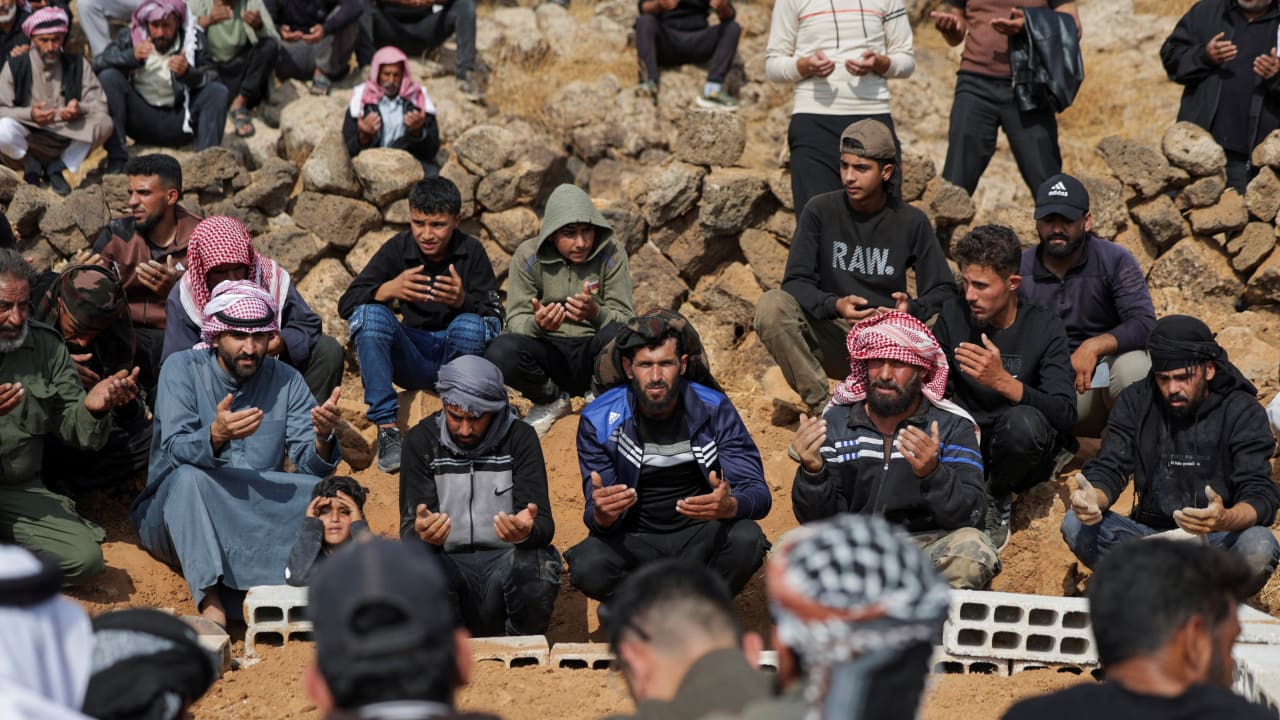
Jordanian reporting says the Royal Jordanian Air Force struck sites in Daraa on 26 October, naming the operation Jordanian Deterrence-Hamoud. Jordanian officials attributed the targets to ISIS and gave a preliminary estimate of more than 20 ISIS members killed and a weapons depot destroyed. Syrian reporting says seven civilians died in strikes in Daraa; a separate report identifies four members of one family, including three children, killed in a reported Jordanian strike at Al-Mismiyah on 27 October. The relationship between those casualty accounts and the 26 October operation is unclear. Syria condemned strikes conducted without prior coordination, while Jordan expressed regret over civilian casualties. Both sides have reportedly agreed to establish a joint security committee, but the available reporting does not establish that it has met.
Change from previous assessment
Since the 1 November brief, reporting has added the Jordanian operation name, Jordan's preliminary estimate of more than 20 ISIS members killed and a weapons depot destroyed, and an investigative account linking one church attack cell member to ISIS-affiliated cells in southern Syria. These reports add detail but do not independently verify that the strike targets were ISIS positions. Civilian harm is more strongly supported by the Syrian Health Ministry's seven-death account, the report of four family members killed at Al-Mismiyah, and Jordan's reported expression of regret; the relationship between these accounts remains unresolved. Reports of a joint security committee are now repeated across several outlets, but no meeting or outcome is reported. Initial assessment of the topic.
Key judgments
- Jordan very likely carried out multiple airstrikes in Daraa, southern Syria, on 26 October. Reports identify the operation as Jordanian Deterrence-Hamoud and place the strikes inside Syrian territory. (Confidence: high · REPORTED)
- I&W: A further Jordanian Armed Forces statement identifying strike sites or operation details in Daraa would confirm the reported location and operation. (0-14 days)
- I&W: A Jordanian or Syrian official correction stating that no Jordanian strikes occurred in Daraa would break this judgment. (0-14 days)
- It is unlikely that the available reporting independently establishes the Jordanian claim that the strikes killed more than 20 ISIS members and destroyed a weapons depot. Jordanian officials made that preliminary claim, and Jordanian investigators reportedly linked one church attack cell member to ISIS-affiliated cells in southern Syria, but the reporting does not establish that the struck targets were those same cells. An ISIS claim of responsibility for the church attack circulated without a verified source. (Confidence: medium · ASSESSED)
- I&W: A Jordanian investigation naming the Syrian strike targets and documenting their link to the church attack cell or ISIS would strengthen the attribution. (0-3 months)
- I&W: A joint Jordanian-Syrian account identifying the targets as unrelated to ISIS would break the attribution. (0-3 months)
- Jordanian strikes likely caused civilian deaths in Daraa, but the total and the relationship between the reported casualty accounts remain unresolved. Syria's Health Ministry reported seven civilian deaths in the Daraa countryside; a separate report described four family members, including three children, killed at Al-Mismiyah on 27 October. Jordanian officials expressed regret over civilian casualties, while Jordanian reporting also claimed more than 20 ISIS members were killed. (Confidence: medium · ASSESSED)
- I&W: A site-specific account from Syria's Health Ministry or the joint security committee matching the Al-Mismiyah deaths to a Jordanian strike would confirm civilian deaths and help reconcile the reports. (0-30 days)
- I&W: A joint inquiry finding that the Al-Mismiyah deaths resulted from a separate incident, and that no civilians died in the Jordanian strikes, would break this judgment. (0-30 days)
- Jordan and Syria have reportedly agreed to establish a joint security committee, but the reporting does not establish that it has met or that it has constrained either side's actions. Damascus has condemned strikes conducted without prior coordination; Amman has expressed regret over civilian deaths and announced a joint follow-up mechanism. (Confidence: medium · REPORTED)
- I&W: A published readout naming a meeting date, participants and committee mandate would confirm that the mechanism is operational. (0-30 days)
- I&W: A further Jordanian strike in Daraa or a Syrian statement rejecting committee participation would break the expectation that the committee is serving as a working channel. (0-30 days)
Outlook & scenarios
Managed diplomatic containment (65%)
Jordan and Syria use the announced joint security committee to address the strike and civilian casualty accounts. Damascus maintains its objection to uncoordinated operations, while both governments preserve security contacts. This is the likely near-term course, but no committee meeting has yet been reported.
Committee stalls and dispute deepens (30%)
The committee does not meet or fails to reconcile the target and casualty accounts. Further public criticism, or another Jordanian strike in Daraa, deepens bilateral tension. This outcome is unlikely, but the Syrian sovereignty objection and the unresolved civilian casualty reports leave room for it.
Renewed attack prompts a wider confrontation (5%)
A new attack in Jordan is credibly linked by investigators to ISIS-affiliated cells in southern Syria, prompting another Jordanian operation and a Syrian diplomatic rupture. This is very unlikely, but it is the high-impact wildcard because it would place the reported security committee under immediate strain.
Recommendations
- Keep Jordan's preliminary estimate of more than 20 ISIS members killed attributed to Jordanian officials. Do not present the target identity or casualty figure as independently verified.
- Track separate casualty accounts for the Daraa strikes and Al-Mismiyah. Avoid combining the Syrian Health Ministry's seven deaths with the report of four family members unless a site-specific account establishes whether they describe the same or separate incidents.
- Monitor for a joint committee meeting, a published mandate and findings on the strike targets and civilian deaths. Treat the committee as an announced mechanism, not an operational constraint, until a meeting or outcome is reported.
- Update the bilateral risk assessment if Jordan announces another operation in Daraa or Syria reports a further uncoordinated strike. Record official statements from both governments alongside any confirmed operational details.
Confidence & uncertainty
The headline confidence is high for the core sequence: the 23 October church attack, Jordanian airstrikes in Daraa on 26 October, and public reactions from Jordan and Syria are corroborated across major-media, NGO and local-media reporting. Confidence is lower on strike target attribution, casualty totals and whether the reported civilian deaths relate to the same operation. Source reliability is not uniform, and the convergence on the core sequence does not resolve those disputed details.
Intelligence gaps
- [EEI 1.1 · PARTIAL] Jordanian Armed Forces aircraft, drones, artillery, or ground units identified operating near or across the Jordan-Syria border after the initial strikes. Recommended collection: military activity/satellite imagery
- [EEI 1.2 · UNCOVERED] Changes in Jordanian force posture, border closures, air-defense deployments, or military alert levels along the Syria border. Recommended collection: official statements/local reporting
- [EEI 1.3 · PARTIAL] Jordanian government statements defining red lines, attribution standards, or conditions for additional strikes. Recommended collection: government statements
- [EEI 1.4 · UNCOVERED] New attacks on Jordanian territory, border personnel, security forces, or religious sites attributed to ISIS or Syria-based actors. Recommended collection: incident reporting/security services
- [EEI 2.1 · PARTIAL] ISIS claims of responsibility, threats, operational instructions, or propaganda referencing the church attack, Jordan, or the retaliatory airstrikes. Recommended collection: militant communications
- [EEI 2.4 · UNCOVERED] Attempts to move ISIS personnel, weapons, or facilitators across the Jordan-Syria border after the strikes. Recommended collection: border security reporting
- [EEI 3.2 · UNCOVERED] Military movements or operational changes by Syrian forces, Iran-aligned groups, or other armed actors near southern Syria and the Jordanian border. Recommended collection: satellite imagery/local security reporting
- [EEI 3.3 · PARTIAL] Public or private diplomatic interventions by the United States, Russia, Gulf states, Israel, or Arab League members concerning the strikes. Recommended collection: diplomatic statements
- [EEI 3.4 · UNCOVERED] New cross-border incidents, airspace violations, rocket or drone launches, or attacks on Jordanian, Syrian, or coalition-linked positions. Recommended collection: military incident reporting
- [EEI 4.1 · UNCOVERED] Additional attacks, sectarian threats, protests, communal violence, or mobilization linked to the church attack or the airstrikes. Recommended collection: local media/social media
- [EEI 4.3 · UNCOVERED] Changes in travel advisories, embassy security measures, foreign force protection, or warnings concerning Jordan and southern Syria. Recommended collection: government advisories
Red cell review: CONCUR WITH COMMENT
TLP:CLEAR